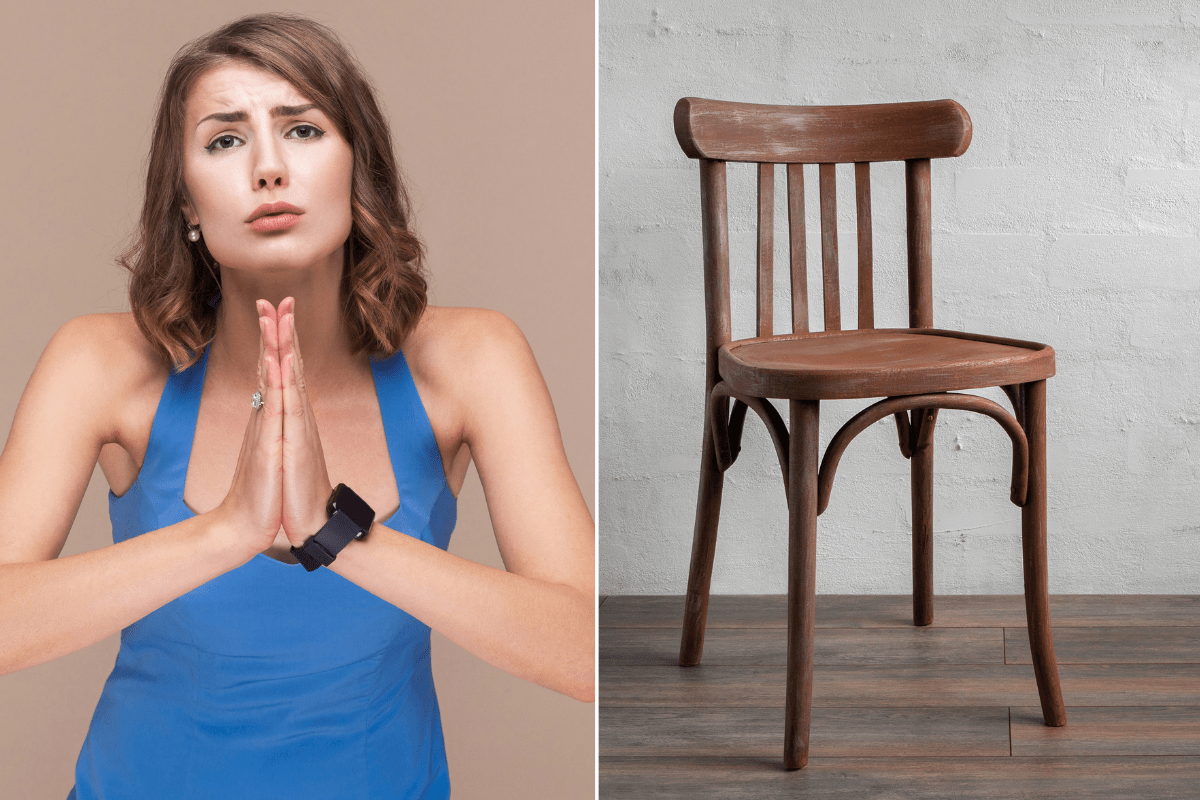
We’ve all done it, but some of us do it more than others: saying “Sorry!” after bumping into a doorframe or “Excuse me!” while nudging past a chair in the privacy of our own homes.
If you’re one of the people who apologize to inanimate objects, you’re not alone. It’s common for people to apologize for things that are out of our control, in general. In fact, about a quarter of Americans do it every day.
Even better, if you’ve recently apologized to your refrigerator, it actually says a lot about you, most of it good. Psychologists say people who apologize reflexively like this, even to nonliving things, likely share these personality traits:
1. Self-aware
For some people, it simply doesn’t register when they bump into a sofa or accidentally kick the coffee table. Others notice immediately.
“[A] typical characteristic of these people is that they appear to be aware of themselves,” said Dr. Robert Davies, a board-certified psychiatrist at Chroma Wellness Center. “People who have been known to say ‘sorry’ after hitting a chair with an elbow or closing the door just a little bit too strongly are generally very sensitive about how others see them in relation to what they do.”
Stacy Sheller, a licensed marriage and family therapist at The Grove Recovery Community, adds that these people are not just highly aware of themselves, but of their surroundings and routines as well.
“They are in no way apologizing for their wrongdoing. Rather, it’s the recognition of the break in routine that leads to an expression of regret,” Sheller said, adding that they tend to pick up on little details around them that others miss.
2. Highly conscientious
Doing the polite and courteous thing when no one’s even watching? That’s a sign of good character, even if the polite thing is saying “sorry” to the curb for bumping it with your car.
“When someone says ‘sorry’ for accidentally dropping a spoon or for slamming a door too loudly, he or she is demonstrating that being courteous has become part of his/her personality rather than just something to do because of social norms,” Sheller said.
Davies agreed: “People who have this type of behavior will typically exhibit some form of empathy, conscientiousness, and a higher level of sensitivity toward the social environment.”
3. Good at self-regulating
Interestingly, people who apologize to objects aren’t actually apologizing, per se. They aren’t trying to soothe the doorframe they just bumped into. Rather, they’re soothing themselves and regulating their own reactions.
“An apology is an easy way to help someone emotionally ‘recharge’ right after a surprise. The person doesn’t think about their anger first; they immediately respond with something like this, which will help them calm down again,” Sheller said.
Moriah O’Barr, PsyD and co-clinical director at Cultivating Courage Psychological Services, adds that these types of apologizers may be highly anxious people by nature. The reflexive “sorry” is just one tool they use to self-regulate.
“When someone runs anxious or is super sensitive to others and surroundings then they may find the ‘sorry’ as soothing to their own reaction,” O’Barr said.
4. Courteous and kind
“People who do this frequently tend to be more likely to be people pleasers, perfectionists, and fawners. They tend to feel responsible for having others feel comfortable,” Elizabeth Lombardo, a psychologist and author, said.
Being a people-pleasing perfectionist isn’t typically viewed as a good thing. But there’s an upside: People-pleasers are highly empathetic, socially intelligent people who are generally well liked. They’re friendly and easy to get along with.
“This [type of apologizing] isn’t necessarily about thinking the product or item has feelings but rather to show an outward expression of the person’s inherent nature for kindness and respect,” Davies said.
5. Respectful of others
That penchant for self-awareness and default kindness manifests in a great deal of respect for the people around reflexive apologizers.
“A few individuals have an instinctive desire to be harmonious in all interactions,” Sheller said. “When they experience even the slightest interruption, such as walking into a wall or spilling coffee, their brains will produce a polite reply. The apology is a reflection of the internal values that prioritize respect for others over evaluating if other humans are present.”
If you’re someone who apologizes to inanimate objects instinctively, there’s good news: There’s nothing wrong with you. Experts agree you’re probably a polite, empathetic, and highly conscientious human being. So there’s no need to be embarrassed over this silly little reflex that, if you really think about it, is quite endearing. And it’s more common than you might think.