When reading the words “filling wrapped in dough,” what pops into mind? Dumplings? Empanadas? Hostess Fruit Pies? An Instagram post has people discussing the near-universality of cultures around the world having their own version of a tasty filling encased in delicious dough.
No matter where a person comes from, it seems like there is some form of “filling wrapped in dough” food in every country. Folks from different nations flocked to Reddit to discuss their favorites:
“Sambousek. We make it filled with minced meat, onion, and pine nuts all mixed together with some pomegranate molasses.” (from Lebanon)
“Cornish pasties. Or maybe sausage rolls. Then again, beef wellington is basically ‘filling wrapped in dough.’” (from the United Kingdom)
“Pastel. Very thin and crispy dough, deep fried. National favorites include heart of palm, and cheese & ham. My favorite is shrimp.” (from Brazil)
“Calzone.” (from Italy)
“My French-Canadian grandma makes tourtiere in a hand pie format every Christmas and they’re incredible. I look forward to them every year.” (from Canada)
“Here’s a curry goat patty.” (from Jamaica)
“Pierogi, my beloved.” (from Poland)
“Pitepalt. A potato and barley dumpling the size of a tennis ball. It is filled with salt pork and served swimming in butter and lingonberry jam.” (from Sweden)
“Irish sausage rolls… Not to be confused with a sausage in a roll.” (from Ireland)
“I have a steak and cheese pie for breakfast most mornings.” (from New Zealand)
“Give me one of them handheld dessert pies from the gas station and I’ll be all over them.” (from the United States)
Pro chefs share their favorite “filling wrapped in dough” foods and recipes
Many professional chefs and food experts who spoke to Upworthy shared their favorite versions of dough-wrapped foods and the stories behind them.
“I’ve rarely met a dough stuffed with filling that I didn’t like, and I also think it’s fun to reimagine popular foods and let their worlds collide,” said award-winning pastry chef Katherine Sprung. “I was a winner of the show Chopped Sweets, where our challenge was to create mash-up desserts. For my first round I made a cheesecake egg roll, made a raspberry cheesecake mixture, enclosed in an egg roll wrapper, and fried, which, luckily, the judges really loved!”
Sprung also said that making those cheesecake egg rolls on TV inspired her to create another simple recipe: cashew butter and jelly rolls.
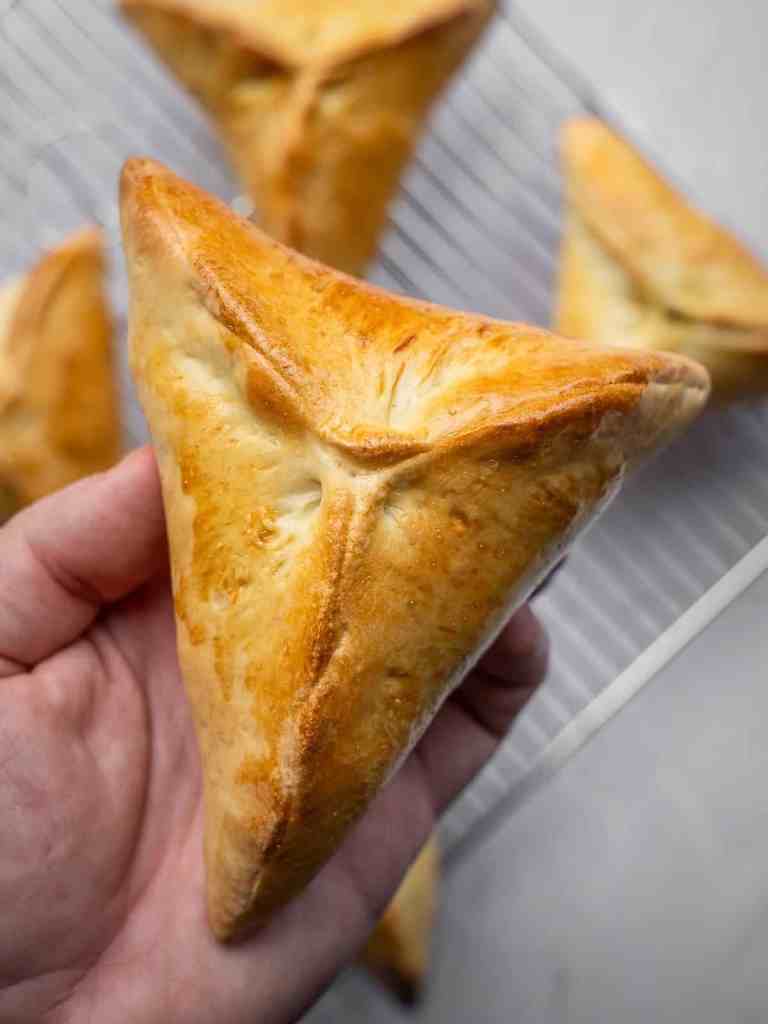
“Spinach fatayer are portable and are perfect for picnics, potlucks, and special occasions,” said cookbook author Luay Ghafari. “My grandmother used to prepare them on the weekends so they would be ready to go into our school lunchboxes come Monday.”
If you want to try this savory hand pie, Ghafari kindly provided a recipe. Ghafari said that fatayer can also be made for meat or cheese lovers.
A “filling in wrapped dough” started a career
These filling-wrapped-in-dough foods aren’t just favorites springing from a chef’s imagination or family roots. In some cases, they can even inspire lifelong vocations.
“My favorite ‘filling in wrapped dough’ food is the Himalayan momo,” said Jessica Randhawa, chef and recipe developer at The Forked Spoon. “I never knew what a momo was until my boyfriend, now husband, and I traveled to Asia for six months in 2011. Those travels are what initially got me into cooking classes and schools abroad and writing about them.”
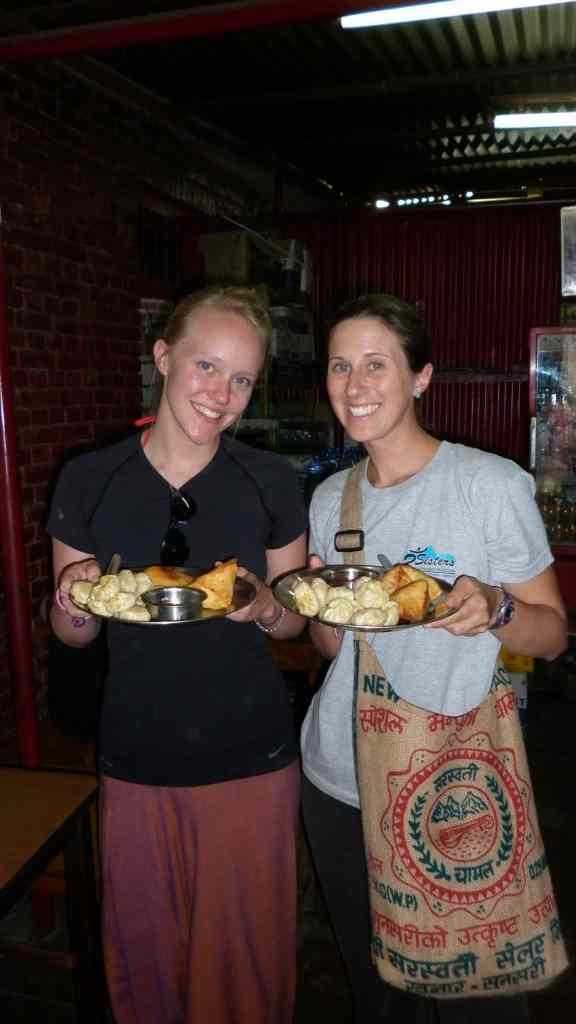
Photo credit: Jessica Randhawa
“When I got back to Kathmandu, I had to take a cooking class to learn how to make them, which was one of my first experiences learning to cook from professionals,” she added. “So, momos are really special to me because learning about them and how to make them 15 years ago inadvertently kicked off a long and winding road that led to growing one of the largest recipe websites in the world.”
Wrapped in dough, wrapped with love
Celebrity chef Mariko Amekodommo told Upworthy that her upbringing and her travels while training to be a chef were filled with dough-wrapped delights.
She recalled learning how to make handmade ravioli by watching her mom and grandma as a child. Among many other foods, she said she learned to cook and eat tamales, bánh cuốn, samosas, and ovocné knedlíky while living in Los Angeles, Vietnam, India, and the Czech Republic. While all of those dishes use different ingredients, Amekodommo saw many similarities.
“What strikes me, having lived and cooked professionally across multiple countries, is that these aren’t really different dishes,” said Amekodommo. “They’re the same dish built from whatever the land provided—wheat in Europe and North India, corn in Latin America, rice in Southeast Asia.”
“The form is universal because it solves the same problems everywhere: stretch protein with starch, make it portable, feed a lot of people from not very much,” she added. “And they became holiday food everywhere for the same reason—you can’t really make them alone. They require hands, time, and people around a table. That part never changes.”
It seems that “filling wrapped in dough” brings people together, whether worldwide or within your own household.