Madeline Swegle breaks 110-year record and becomes the Navy’s first Black female fighter pilot
When Madeline Swegle was a little girl growing up in Burke, VA, she loved watching the Blue Angels zip through the sky. Her family went to see the display every time it was in town, and it was her parents' encouragement to pursue her dreams that led her to the U.S. Naval Academy in 2017.
Before beginning the intense three-year training required to become a tactical air (TACAIR) pilot, Swegle had never been in an aircraft before; piloting was simply something she was interested in. It turns out she's got a gift for it—and not only is she skilled, she finds the "exhilaration to be unmatched."
"I'm excited to have this opportunity to work harder and fly high performance jet aircraft in the fleet," Swegle said in a statement released by the Navy. "It would've been nice to see someone who looked like me in this role; I never intended to be the first. I hope it's encouraging to other people."
As Swegle's story shows, representation and equality matter. And the responsibility to advance equality for all people - especially Black Americans facing racism - falls on individuals, organizations, businesses, and governmental leadership. This clear need for equality is why P&G established the Take On Race Fund to fight for justice, advance economic opportunity, enable greater access to education and health care, and make our communities more equitable. The funds raised go directly into organizations like NAACP Legal Defense and Education Fund, YWCA Stand Against Racism and the United Negro College Fund, helping to level the playing field.
Putting a cross-generational large group of stressed out and maskless people in an indoor room during a pandemic sounds like a disaster waiting to happen. It also sounds a like Thanksgiving. An Ohio State University survey found that nearly two in five Americans are planning a Thanksgiving gathering with more than 10 people. Those two in five people should probably rethink their plans.
According to the director of the CDC, small gatherings in people's homes (which is exactly what Thanksgiving is) is a big source of COVID spread. They recently updated their guidelines for holiday celebrations. Virtual activities are the safest way to gather right now. The more people who show up to an event in person, the higher the risk is.
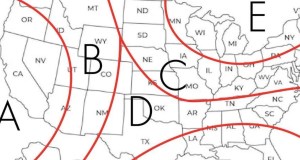
An analysis found that there's a near 100% chance of a COVID positive person showing up at a mid-sized gathering in the hardest-hit parts of the country, like the Dakotas. The odds are only slightly less for regions that have fared better in the COVID crisis, but it's still not great.
- Native Americans will hold a National Day of Mourning this ... ›
- This viral tweet about Thanksgiving and Native Americans deserves ... ›
- We owe a huge thanks to the heroes on the front line of the ... ›
After facing food insecurity as a child, Shawn now ensures families in his community have enough to eat
This year more than ever, many families are anticipating an empty dinner table. Shawn Kaplan lived this experience when his father passed away, leaving his mother who struggled to provide food for her two children. Shawn is now a dedicated volunteer and donor with Second Harvest Food Bank in Middle Tennessee and encourages everyone to give back this holiday season with Amazon.
Watch the full story:
Over one million people in Tennessee are at risk of hunger every day. And since the outbreak of COVID-19, Second Harvest has seen a 50% increase in need for their services. That's why Amazon is Delivering Smiles and giving back this holiday season by fulfilling hundreds of AmazonSmile Charity Lists, donating essential pantry and food items to help organizations like Second Harvest to feed those hit the hardest this year.
Visit AmazonSmile Charity Lists to donate directly to a local food bank or charity in your community, or simply shop smile.amazon.com and Amazon will donate a portion of the purchase price of eligible products to your selected charity.
- Local farmers are stepping in to ensure no families in need go hungry. ›
- Caring for older loved ones around the holidays? These 11 tips may ... ›
- Skip Black Friday and try Shop for Good Sunday, instead - Upworthy ›
Mississippi town mayor fights back tears as he signs order to remove confederate flags
Laurel, Mississippi is home to a little over 18,000 people, more than 61% of whom are Black. On Tuesday, the town's mayor, Johnny Magee, issued a historic executive order to remove the state's flag from the City of Laurel government properties—a moment that moved him to tears.
In a state that once declared its official position as "thoroughly identified with the institution of slavery—the greatest material interest of the world," and listed as one of its reasons for joining the Confederacy the fact that the Union "advocates negro equality, socially and politically," the removal of a symbol of the fight to enslave Black people is a big deal. But the history of slavery is just the beginning. Mississippi was the most segregated state in the country in 1964, a full hundred years after slavery was abolished. Racism has always been rooted deeply in the history and culture of the state—including the state flag, which includes the battle flag of the Confederacy in its upper left corner.
- A major university in the South just removed its Confederate statues ... ›
- Still think the Civil War wasn't fought over slavery? The Confederate ... ›
- An epic new ad from Republicans explains why Confederate flags ... ›
As great as being a cat owner is, one of the most frustrating parts about it is not being able to understand your cat. You can't really get a straight answer from questions like, "What's so important that you feel you need to block my computer screen while I'm working" or "Why do you keep on peeing on everything?" But thanks to technology, we might be able to better understand our cats, even though we don't speak the same language or even have the same type of vocal chords.
Javier Sanchez, a former Amazon engineer who worked on Alexa, has developed a new app that can translate your cat's cute mews into human words. It's called MeowTalk, and it incorporates similar technology to that of Alexa to bridge the language barrier between human and cats.
Sanchez, both a cat lover and cat owner, was inspired by the NPR series "The Secret Language of Cats. According to Sanchez, cats can develop their own vocabulary, which they employ constantly to do things - like ask for a treat even though they literally just already had a treat. "It's not a language. They don't share words or communicate with each other. Cats never meow at each other out in nature," Sanchez told KING 5.
- A retired Spanish teacher went viral after falling asleep brushing cats. ›
- Here's just a bunch of cats who don't understand the concept of ... ›
- Quilty the shelter cat breaks other cats out of confinement - Upworthy ›