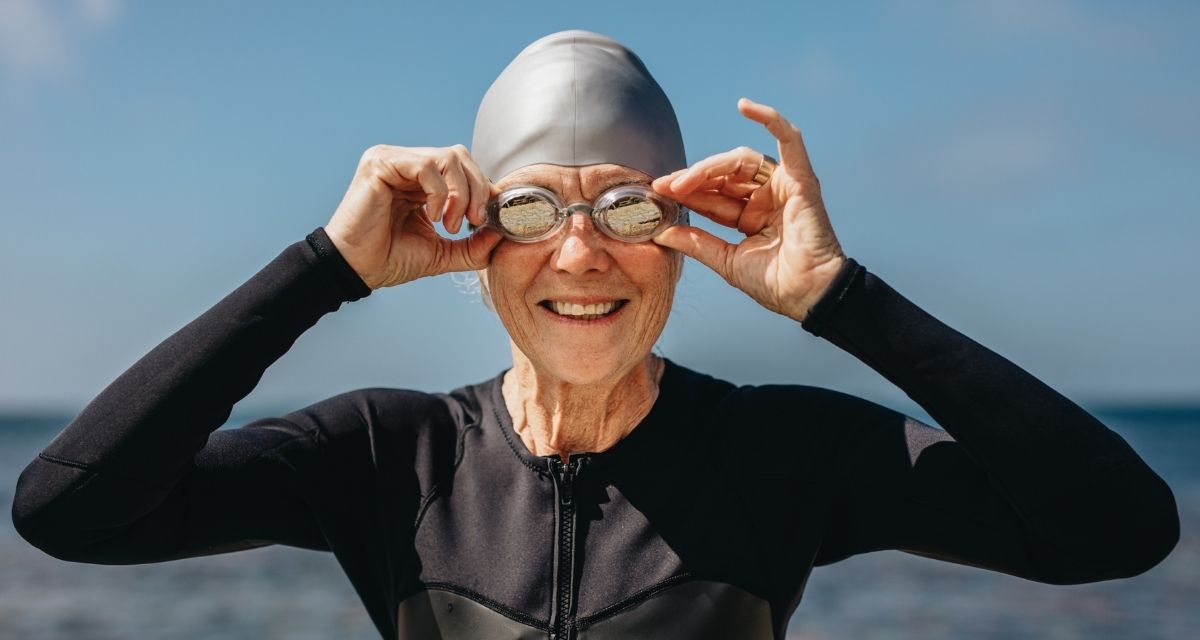
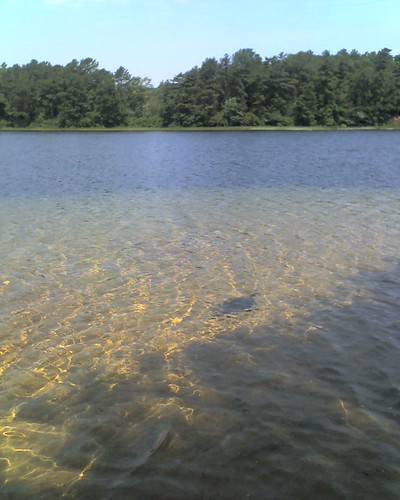
Imagine yourself on Cape Cod on a bright summer afternoon. The water looks perfect: glassy, blue, reflecting the clouds like it’s a computer screensaver. Suddenly, a dozen or so women burst onto the scene. Not one is a day under 65, and they’re zipping themselves into wetsuits and spitting into their masks (to prevent fogging) before slipping beneath that pretty blue surface to retrieve all the secrets the pond’s been hiding: beer cans, golf balls, a car tire, and once, an 80-pound toilet.
Who are these silver-haired, litter-busting sirens?
Meet the elite squad known as the “Old Ladies Against Underwater Garbage” (OLAUG), a Cape Cod nonprofit made up of senior women who kayak, free-dive, and pull submerged trash out of freshwater ponds. They’re really good at it, too: By their own estimation, OLAUG has removed roughly 6,000 pounds of waste since the group’s founding in 2017. There are requirements to join, of course:
- Be a woman.
- Be at least 64 years old.
- Pass a swim test. (Tryouts are held in the spring, and members must be able to swim half a mile in under 30 minutes and free-dive to a minimum depth of 8 feet.)
The magic lies within the first two prerequisites. Many of the group’s members arrive at OLAUG in search of something: identity, friends, purpose, excitement, joie de vivre. Rarely, trash.
“By the time a woman is in her late 60s, she has experienced loss. People in our group have lost breasts, homes, husbands, and wealth,” says OLAUG’s 85-year-old founder, Susan Baur. “They are in the age of gratitude.”
It started with turtles, not trash
Baur is a retired psychologist who settled on Cape Cod in her early sixties and learned to love its ponds after deciding the open Atlantic was too dangerous to swim in.
She got attached to the ponds’ snapping turtles, giving them names like “Mr. Spot” and “Silver Patches.” This was strictly for practical reasons, she assures, claiming she needed a way to “distinguish them” in her mind. As more visitors arrived at the turtle pond, she tried everything to protect their habitat, from signs to homemade “turtle housing,” but nothing worked.
Frustrated, Baur headed to the pond in 2017 and waved down a man in a yellow kayak, dropped a laundry basket between his legs, and the two of them—plus a couple of friends—fished out a haul of golf balls, cans, and bottles. Someone in the group joked they were “a bunch of old ladies against underwater garbage.” The name stuck.
This is a serious operation (that refuses to take itself seriously)
Yes, the group has a goofy name. But don’t underestimate them: the Old Ladies Against Underwater Garbage mean serious business. Before each dive, ponds are systematically scouted and assessed, then verified with local pond coalitions to ensure they’re ready to be cleaned. Waters are tested for harmful blue-green algae and the toxins produced by its blooms, which can harm people, pets, and wildlife.
On dive day, the roles are assigned, with each diver covering an area of expertise. Walkie-talkies are passed out, and safety protocols are carefully reviewed. A “beach boss” is at the helm of the operation, handling logistics and checking swimmers in and out of the water. The women gear up for battle, donning swimsuits, water shoes, swim caps, and wetsuits. Sunscreen and hats are in no short supply.
Then the ladies get to work. “It’s kind of a treasure hunt for stuff that’s not supposed to be there,” Baur told WBZ-TV. A wildlife lookout swims point, steering everyone around snapping turtles. Divers plunge; kayakers collect. OLAUG cleans around 20 ponds a season, which runs from May through early October, and the water is cold enough that swimmers surface “mottled blue,” teeth chattering, grinning anyway. These women are as tough as the nails they extract from the ponds’ depths.
“It’s just the best thing in the world, it really is,” said Susan Dropo, a member from Sandwich, Massachusetts. “[OLAUG] what we all didn’t know we needed, and every time we get together, it’s a blast.”
Men can be helpful, but not in the water. As Baur put it, OLAUG’s male volunteers are welcome to “run the kayaks or bake cookies,” but they are not invited to swim. (They’re “too competitive,” she said.) Which brings up how the group gets paid: When pond associations offer to pay for OLAUG’s cleaning services, the group refuses cash but will happily work for cookies and hot chocolate.
The ‘Old Ladies’ hit a flow state
Somewhere in the pond’s blue waters, the women of OLAUG reach a flow state. “We’re addicted to vitality. We’re addicted to putting our finger in the socket of life,” said Baur. “The more ponds we clean up, the more enthusiastic we get, the happier we get, and it just revitalizes us every dive.”
For a few members, these expeditions have caused them to think differently about nature and their relationship to it. In an interview with the Cape Cod Times, Robin Melavalin recalls her first plunge into the pond and how she was struck by a “natural connection and desire” to keep this freshwater environment clean. “I have seen trash at ponds, but I was enveloped by the whole underwater experience as I became aware of the trash beneath the surface and saw it for myself,” she remembers.
When the divers put on their masks, “there’s not one woman who’s thinking about what she’s making for dinner that night,” explained Baur. “You are totally out of your own head, immersed in the experience.” In a way, this form of free-diving acts as a spiritual practice: “We wade out of the water wetter, kinder, happier, and more empowered women,” she continued. “It’s the Zen of trash picking.”
There are about 30 members in OLAUG now, ranging in age from 64 to 85. Everyone seems to want a spot, too. Its waitlist has grown so long that recent joiners admitted to begging their way in.
Why it actually matters
Cape Cod is home to nearly 900 freshwater ponds, and pollution in them is a problem. Baur describes hauls that include hazardous waste—”spent fireworks that are leaking perchlorates and car batteries”—and, in general, a lot of stuff that “really shouldn’t be there.” Golf balls pose a unique problem, too: Research teams at the Danish Golf Union discovered that it takes between 100 and 1,000 years for a golf ball to decompose naturally. When submerged underwater, it releases a “high quantity of heavy metals” and “dangerous levels of zinc” while breaking down.

For our ladies in wetsuits, it’s difficult to measure the impact of OLAUG’s trash expeditions. But that’s almost beside the point. One member, Maggie Megaw, put it this way to The New York Times: “We are surrounded by so many really intractable problems. The water quality issues on Cape Cod are really serious, and the solutions have such a far horizon… [OLAUG’s work] is so tangible and immediate. We show up at the pond and swim, and we bring back a big pile of trash.”
The psychology hiding in a snorkel
Baur spent her career as a psychologist, so it’s only fitting that her “retirement project”—for which she’s earned a climate resiliency hero award from the American Red Cross of Massachusetts and was named to the 2025 class of the Explorers Club 50 (which honors people changing the world)—reads like an accidental study in aging well. She didn’t set out to build a wellness program. But anyone in her profession would recognize the importance of an organization like OLAUG, particularly for women over 65.
In 2022, Marci Johnson found her way to the group amid a year marked by trauma. She had recently lost her husband, then discovered she had developed breast cancer. “I had tried other volunteer things,” Johnson explained on NPR’s Morning Edition. From stuffing envelopes to planting trees to picking up trash on the side of the road, “None of them gave me that sense of adventure,” she said.
OLAUG was different. Suddenly, she found herself surrounded by strong women, similar in age, who understood her grief. The baby snapping turtles gave her a renewed sense of purpose. “As I aged, I had the feeling of being invisible. When you get to be in your 60s, 70s, 80s, you just kind of fade into the background,” said Johnson. Then she laughs. “But with the work that we’re doing, I’m not in the background anymore.”
Lisa Weiss, a retired high school math teacher, shared a similar sentiment. “I don’t quilt, I don’t crochet, that’s not how I’m going to fit in as I age,” she said. “This feeds you in a different way.”
Finding your own pond
The Old Ladies Against Underwater Garbage didn’t wait for permission, funding, or approval from anyone but themselves. Baur and her crew of divers looked at their little corner of the world and asked, “How can we make this better?” When they found the answer, they slapped on a snorkel, hopped in the water, and went diving.
And now, as the group grows larger, its members are starting to discover, one pond at a time, that the trash was never the point—not fully. With every bucket of balls, pound of garbage, and bright blue toilet unearthed from the depths, they’re also pulling up proof: that you can be strong, still be useful, and surprise yourself, no matter what age you are.
Your pond is out there. It’s filled with your version of snapping turtles. Whatever your version of freshly baked cookies is on the other side, waiting to reward you. So whatever you’ve been telling yourself you’re too old to start, first consider: What would OLAUG think?