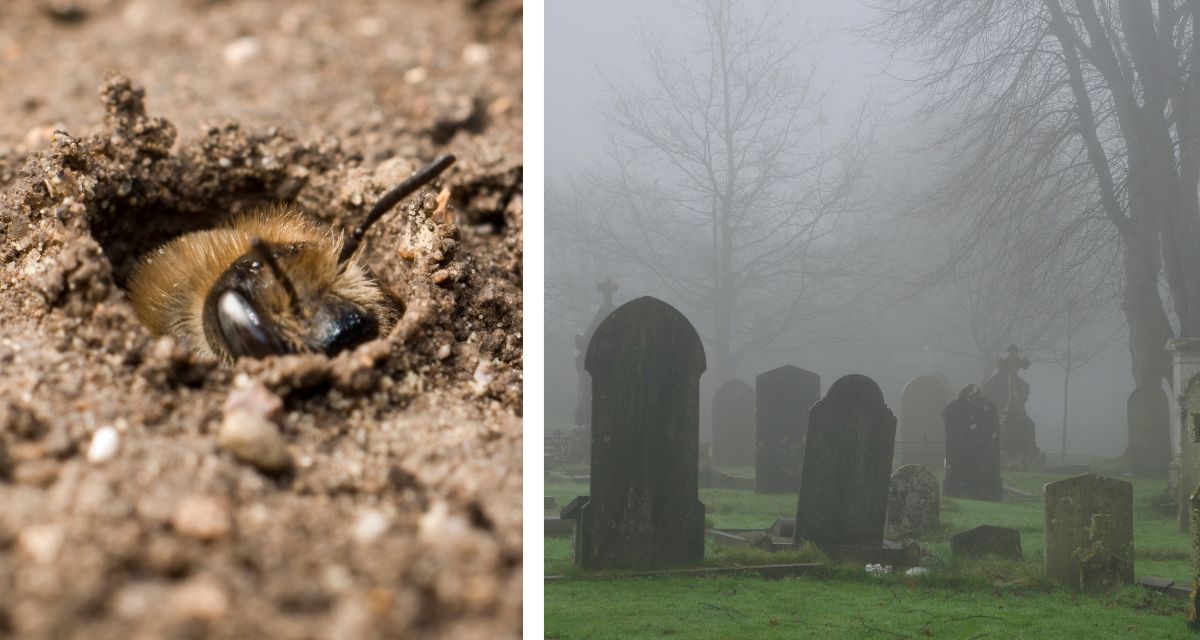
A few years ago (spring of 2022, to be precise), lab tech for Cornell University’s entomology department Rachel Fordyce had taken her usual morning stroll through East Lawn Cemetery in Ithaca, New York, when something altogether unusual happened.
Out of seemingly nowhere, a bee appeared.
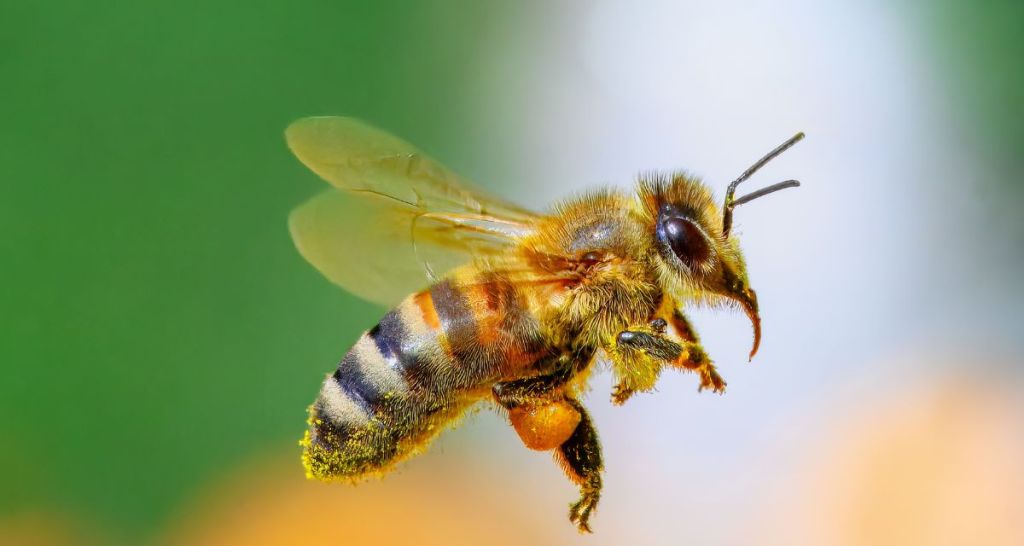
Then another, and another. Pretty soon she’d noticed they were actually all over the cemetery. And yet, no hives were to be seen.
Knowing she had to investigate further, Fordyce captured a few specimens in a jar (brave soul) and continued on to work.
This finding would lead to an incredible discovery
It turns out these bees were just part of a whopping 5.5 million bee mega-colony living underground throughout the property. For context: if these bees were the hive-dwelling sort, we’d see more than 200 hives throughout the cemetery’s 1.5 acres.
“I was completely floored,” Bryan Danforth, a professor of entomology in the College of Agriculture and Life Sciences whom Fordyce collaborated with, told Scientific American.
Not only that, but historical data revealed that these ground-nesting bees (known as the Andrena regularis species or “regular mining bee”) had been living there since at least the early 1900s. The cemetery itself was founded in 1878.
A bee community unlike the ones we usually imagine
Technically, calling it a “colony” might be a bit of a misnomer. Unlike honeybees, mining bees are solitary insects, meaning there isn’t a queen or hive structure. Instead, the female digs and maintains her own nest, laying eggs and storing pollen underground for her offspring. Though we tend to associate bees with hives, roughly 75% of all bee species prefer this type of lifestyle.
Why a cemetery turned out to be the perfect home

Surprisingly, the cemetery provides several conditions that make it an ideal bee habitat. The sandy soil is easy to dig in, the grounds experience very little disturbance or alterations, and pesticide exposure is limited. Not only that, but the cemetery sits close to Cornell Orchards, where apple trees and other fruit crops bloom each spring.
Aside from showing that bees are clearly goth at heart, this discovery portrays how vital pollinators naturally thrive in untouched environments. That’s why the study’s authors have launched a global citizen science initiative, where people can report any sightings of underground bees, so that these spots might be protected from getting destroyed.
The longstanding connection between bees and the afterlife
Throughout history, various cultures have linked bees with death and the underworld, likely due to the fact that they were often found underground, in caves, and on hollow rock faces. The Celts had a practice of “telling the bees” of a death by knocking on the hive or draping black cloth over it to avoid bad fortune. Ancient Egyptians used honey in their embalming rituals. Meanwhile, many of the Greeks believed that human souls could be reincarnated as bees. So it feels very fitting that, of all places, bees would be finding new life in a place centered around human death.
This all goes to show that no matter how far we advance in technology, our relationship to nature is deep-rooted and eternal. Our ancestors knew this, and it’s something we are continuing to relearn.