Imagine being a scientist scanning the ocean floor when suddenly a powder blue, golf ball-sized, eight-legged critter that looked like it’s been put through a kawaii filter shows up. Obviously, all professionalism goes out the proverbial window.
That is exactly what happened for the Charles Darwin Foundation when they unexpectedly discovered a brand new species of (very cute) octopus deep below the water’s surface near the Galapagos Islands.
A tiny scene-stealer enters the underwater chat
“He’s tiny!” “It’s blue!” These are the remarks that can be heard over the audio of footage captured by a remotely operated vehicle (ROV) camera as the cerulean cephalopod made its grand entrance.
Unsure which species this mysterious and adorable creature belonged to, the team sent octopus expert Janet Voight, who immediately knew “it was something really special.”
“I’d never seen anything like it,” noted Voight, who used X-Ray images from CT scans to make a 3D model of the octopus, revealing its insides, rather than cutting open the one specimen she had.
A built-in survival superpower that feels like a fashion statement
While its top side features blue, nature’s rarest hue, the new species, dubbed Microeledone galapagensis, has a “very deep purple” underside, which researchers believe is to camouflage itself while eating.
“We think this color pattern helps keep it safe. If the octopus grabs a prey item that emits light, that light may attract predators that might then eat the octopus. So the octopus puts its dark-colored web over the prey item, keeping itself safe,” explained Voight.
This little guy showed up where nobody expected it
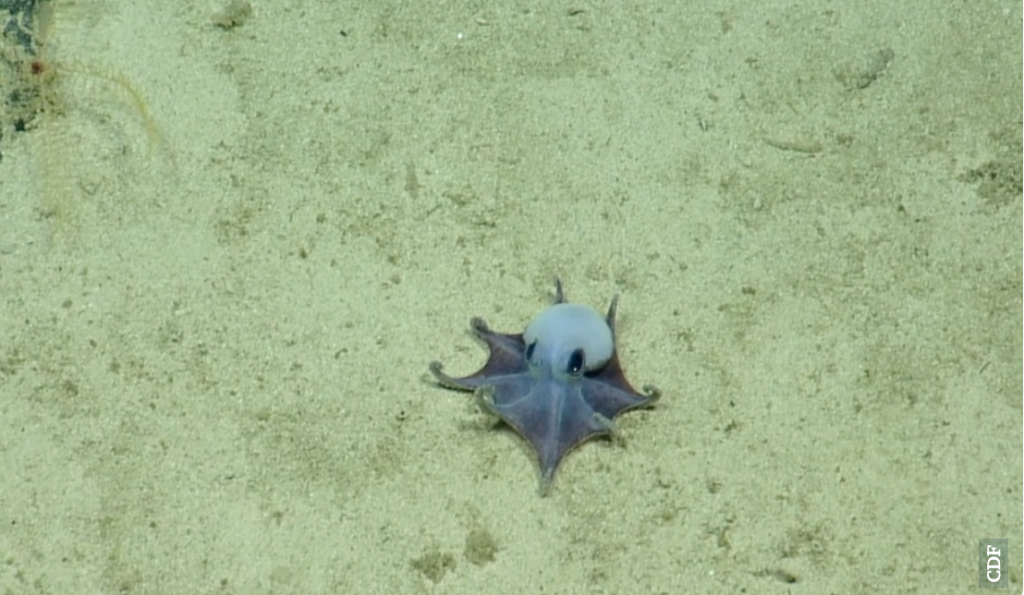
But unusual coloring aside, what’s also remarkable about this newly discovered octopus is that no other similar species lives anywhere near it. Members of the Megaleledonidae family, distinguished by their single row of suckers, are normally much larger and inhabit cold Antarctic waters…a little ways away from the Galapagos.
The Microeledone galapagensis joins the four new species of octopus that were discovered in Costa Rica in 2024, all of which are part of a 300-ish species of octopus family living throughout all of the world’s oceans.
The ocean still has plenty of surprises left
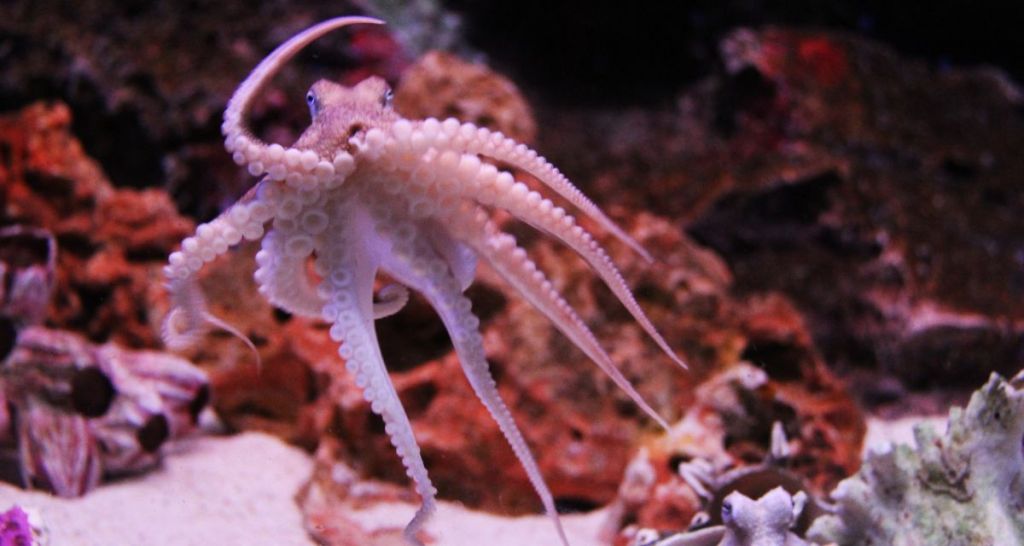
The wild thing about ocean exploration is how much remains hidden from us. Scientists estimate that huge portions of the deep sea are still largely unexplored. Entire landscapes, unusual animals, and species no one has documented yet may still be waiting below.
Octopuses themselves already seem almost custom-built to inspire fascination. They can solve puzzles, squeeze through openings that appear impossible, and use specialized pigment cells called chromatophores to change their appearance in astonishing ways.
And still, with each new species that’s discovered, we never seem to lose our sense of wonder for these creatures.
Even Voight, who has spent four decades studying octopuses, notes what a miracle it is to witness them, especially those that live in deep waters.
“Hardly anybody on Earth has ever gotten to see them. I just feel lucky that I got to work with them,” she said.
Scientists…they’re just like us.