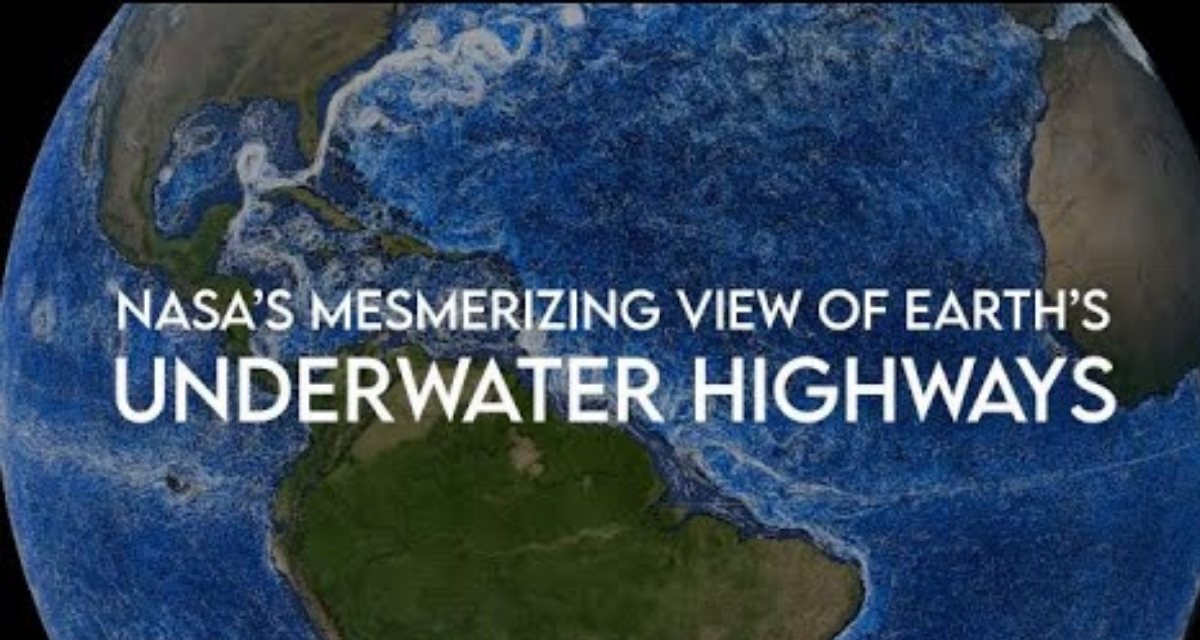
When you look at Earth from space, it looks like a big blue marble. But if you zoom in, most of that marble is in motion. Our planet’s oceans aren’t just moving in tidal waves, but in layers of currents beneath the ocean’s surface that we can’t see.
Only now we can see them, or at least a visualization of them based on NASA data. And not only is it educational, but it’s artistically beautiful as well.
Check out the Vincent van Gogh-esque visual of Earth’s “underwater highways” and enjoy seeing our world in a whole new way:
Watching the Earth’s ocean currents move
NASA used a model called Estimating the Circulation and Climate of the Ocean, or ECCO, to create the visualization. Senior research scientist Josh Willis explains what we’re looking at as the white and blue swirls move around the planet:
“All of this movement starts with physics. Because the Earth is spinning, the water feels something called the Coriolis effect. This pushes some of the strongest currents, like the Gulf Stream and the East Australian Current, against the east side of the continents. Because these currents wind up on the west side of the ocean basins they sit in, scientists call them western boundary currents. In this visualization, the currents closer to the surface are white, and the deeper currents are blue, almost like you’re seeing those deep currents through the top layer of water.”
But as cool as the visual is, it does have some limitations.
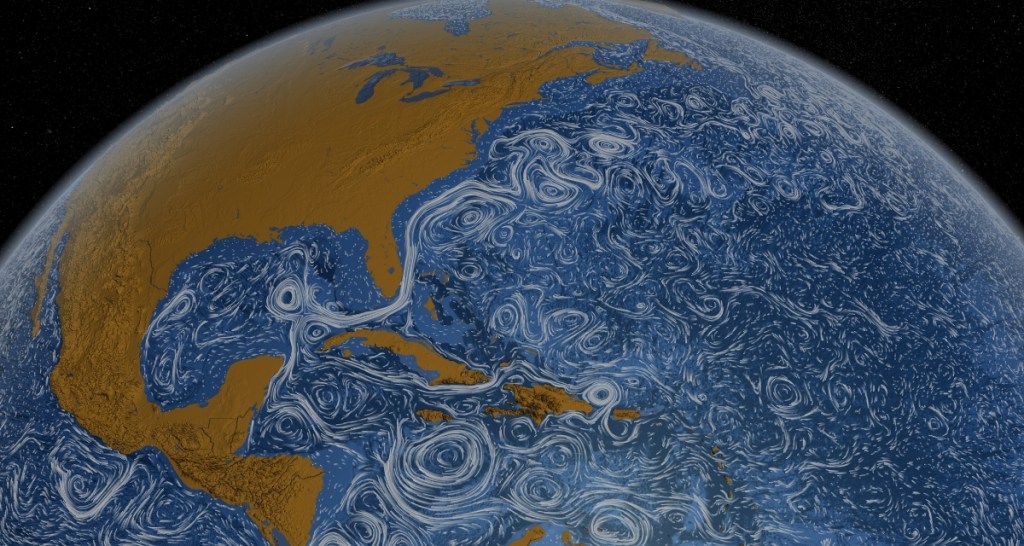
“This visualization makes it easy to see how the ocean moves water across the planet,” says Willis. “But what’s hard to see are the places where the water moves up or down. This is called upwelling or downwelling. When upwelling brings cold, deep nutrients into the sunlight near the surface, it creates a feeding ground for all sorts of ocean life.”
The global ocean conveyor belt circulates heat and salt
Not only does the movement of ocean currents support ocean life, but it also regulates climate all over the world. Currents circulate salt and heat in what’s called the “global conveyor belt.” Without it, we’d see more dramatic temperatures and droughts in various parts of the world.
“But the oceans do more than just move heat around,” Willis explains. “In some places, they absorb heat from the sun, and in others, they release it back to the air. We can see that in the Gulf Stream, yet another part of the ocean’s conveyor belt, the Gulf Stream starts in the tropics, where the water is very warm. As it drags warm water up the east coast of North America, it acts like a heater for the atmosphere. By the time this water has wandered across the Atlantic and wrapped around Europe, Iceland, and Greenland, it’s gotten so cold that it sinks deep into the North Atlantic Ocean.”
Salinity also plays a role in the conveyor belt. Saltier water sinks. Less salty water rises. Temperature and salinity work together to move water up or down.
What if the oceans stopped circulating?
Seeing this visualization and how the oceans’ currents work as a system affecting the whole planet raises a question. What if those currents stopped?
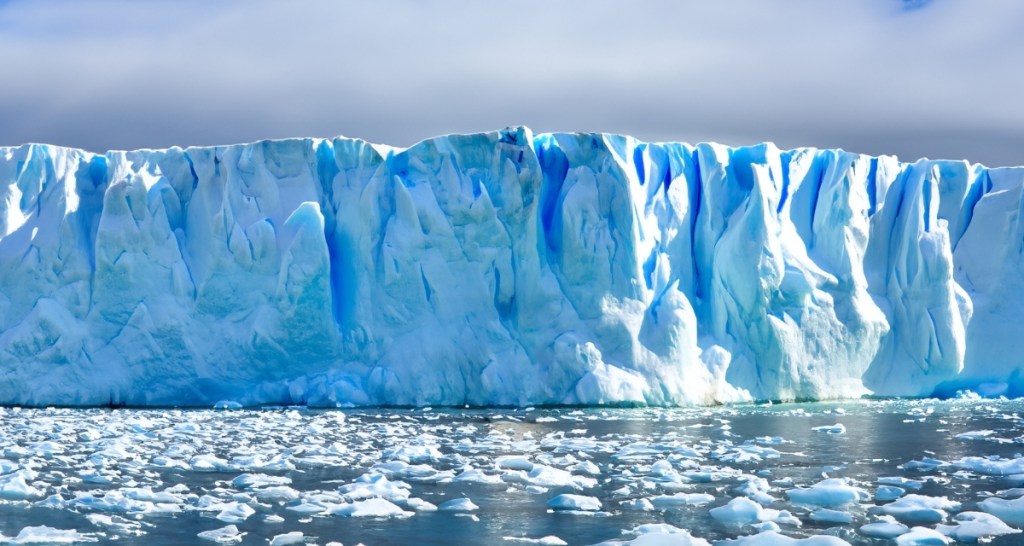
It’s not an unreasonable question. Scientists have feared the effects of global warming on ocean currents for some time, with concerns focused on the North Atlantic. However, research reported by Yale in 2023 also turned attention to the Southern Ocean. As ice melts in Antarctica, adding an influx of fresh water into the ocean, changes in salinity risk disrupting currents. Because all oceans are connected, a disruption in one could affect them all, leading to circulation collapse.
The Atlantic Meridional Overturning Circulation (AMOC), the main ocean current in the Atlantic, is of prime concern. In November of 2025, Iceland declared the risk of AMOC collapse a national security threat, and if it happens, we’re looking at drastic, catastrophic changes in climate across much of the world.
“I have personally researched this for 35 years,” Stefan Rahmstorf, a physical oceanographer at the Potsdam Institute for Climate Impact Research in Germany, told Yale 360. “For the first 30 years we considered this a low likelihood event — I would have said a 5 percent chance of occurring. It’s more like 50/50 now. I would even say more likely than not.”
Of course, models are constantly creating possible scenarios, which change as more real-time data is put into them. No one knows for sure what will happen, but trying to stem the tide (pun intended) of human influence on climate change is something we can do to reduce the possibility of a worst-case scenario.