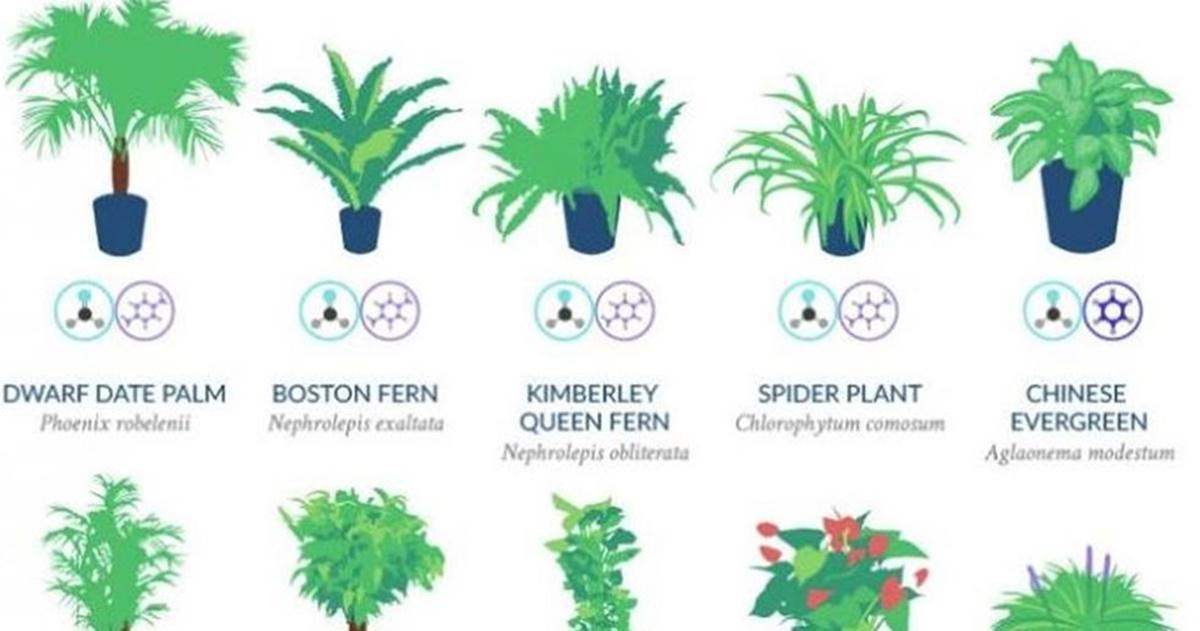
Back in the late ’80s, NASA was looking for ways to detoxify the air in its space stations. So it conducted a study to determine the most effective plants for filtering the air of toxic agents and converting carbon dioxide to oxygen.
In 1989, their results were published in a clean air study that provided a definitive list of the plants that are most effective at cleaning indoor air. The report also suggested having at least one plant per every hundred square feet of home or office space.
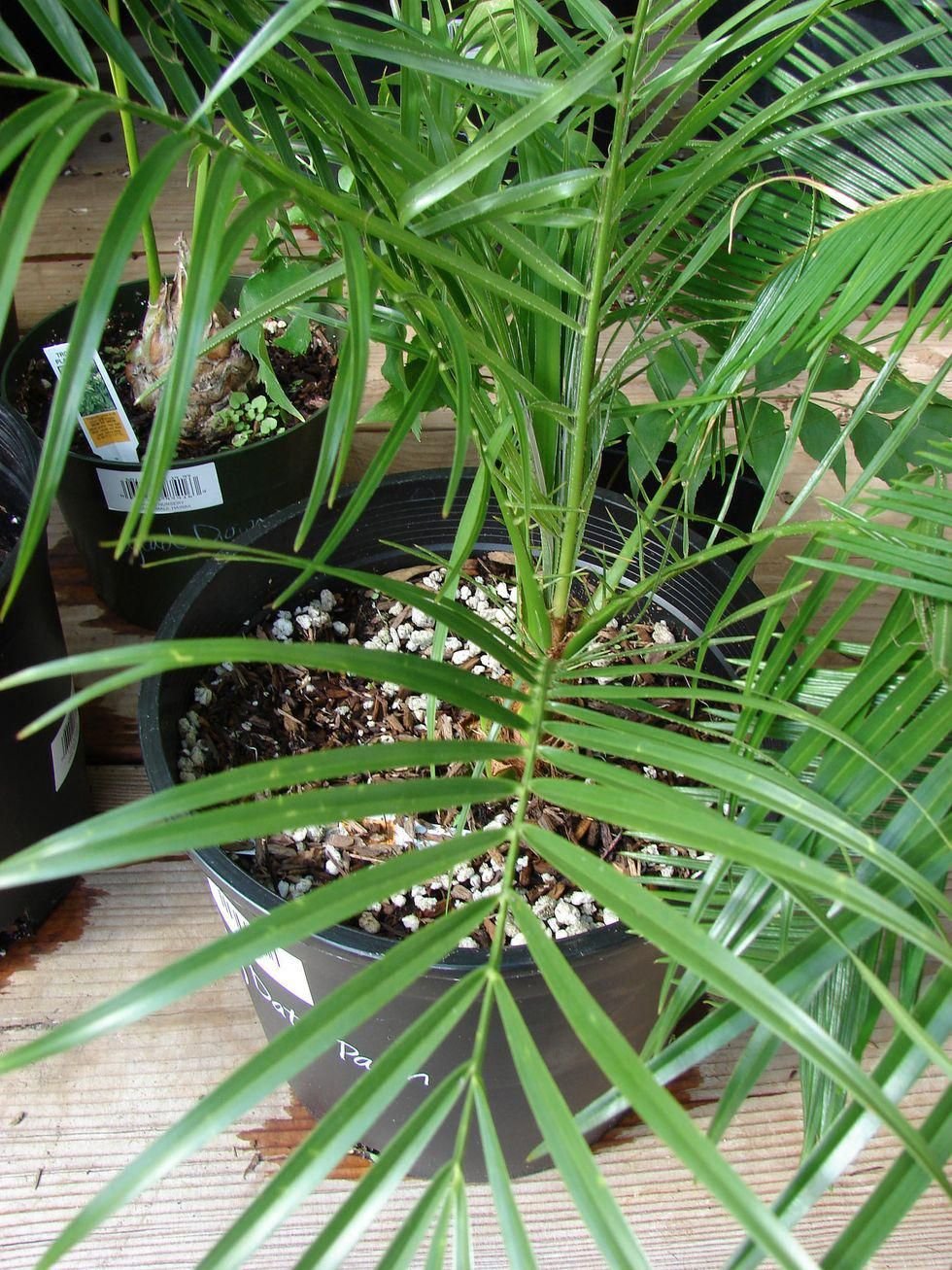
1. Dwarf Date Palm
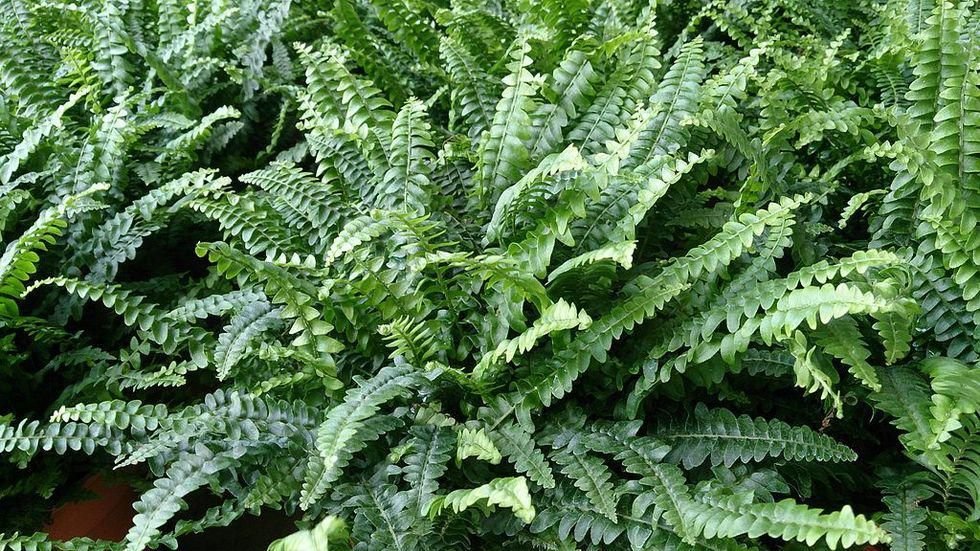
2. Boston Fern
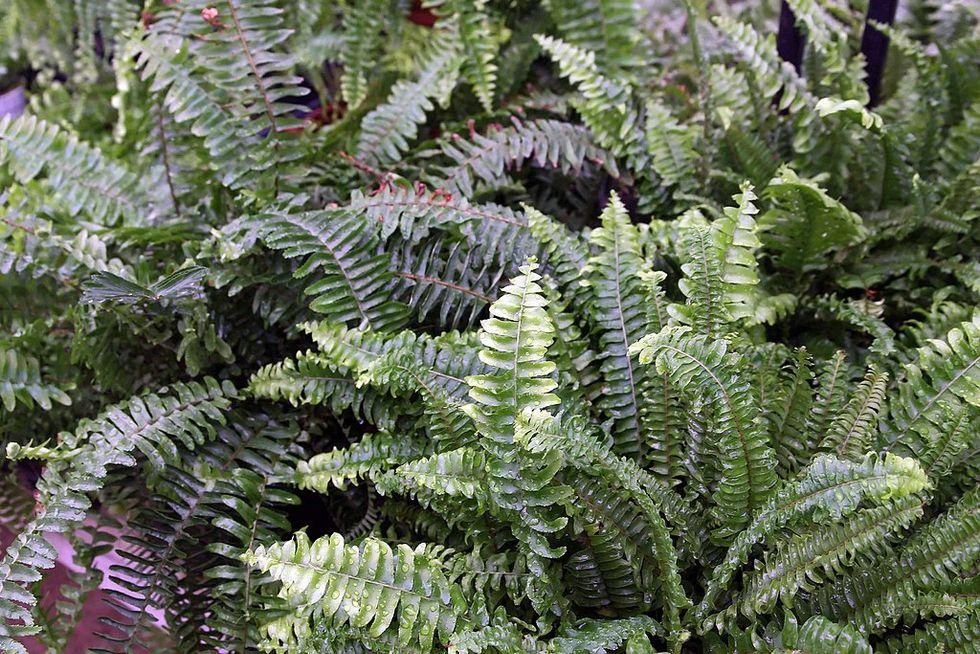
3. Kimberly Queen Fern
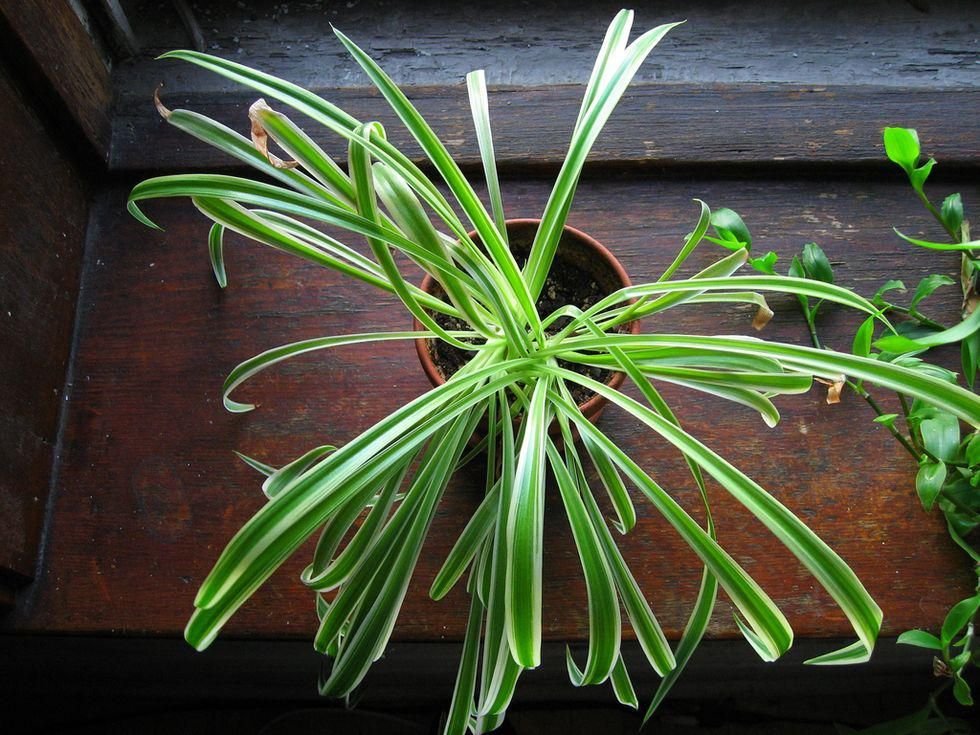
4. Spider Plant
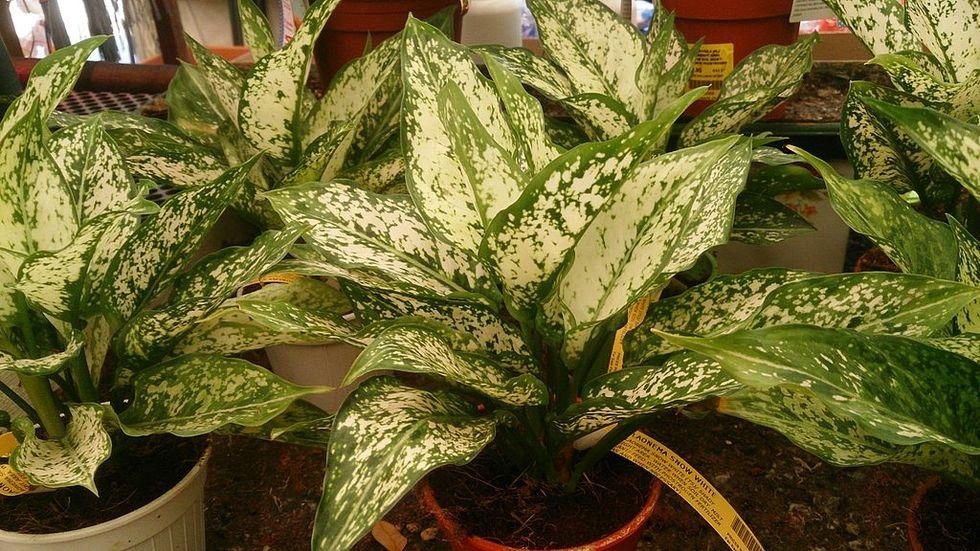
5. Chinese Evergreen
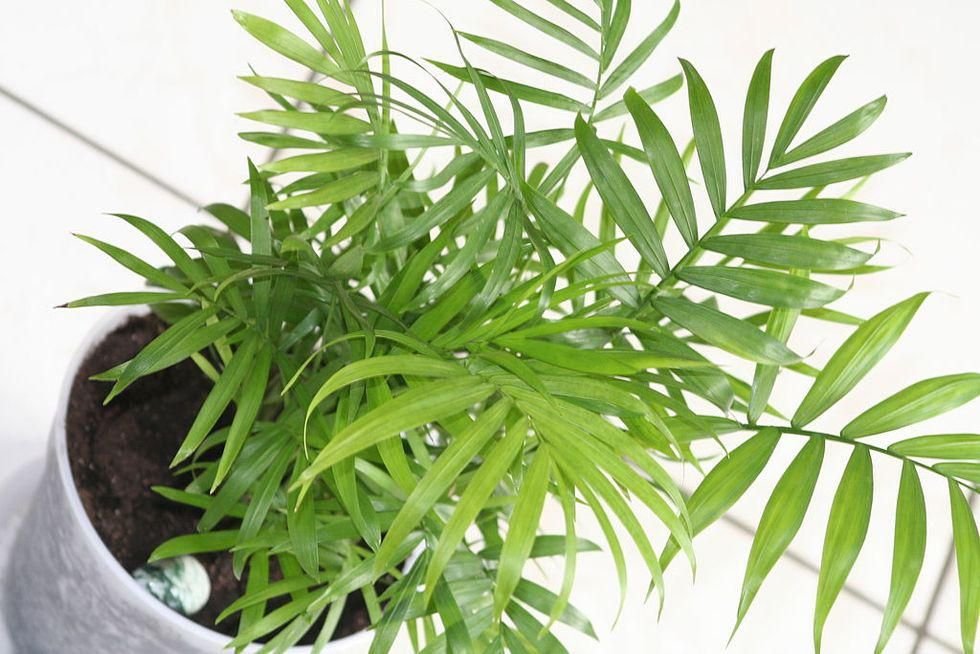
6. Bamboo Palm
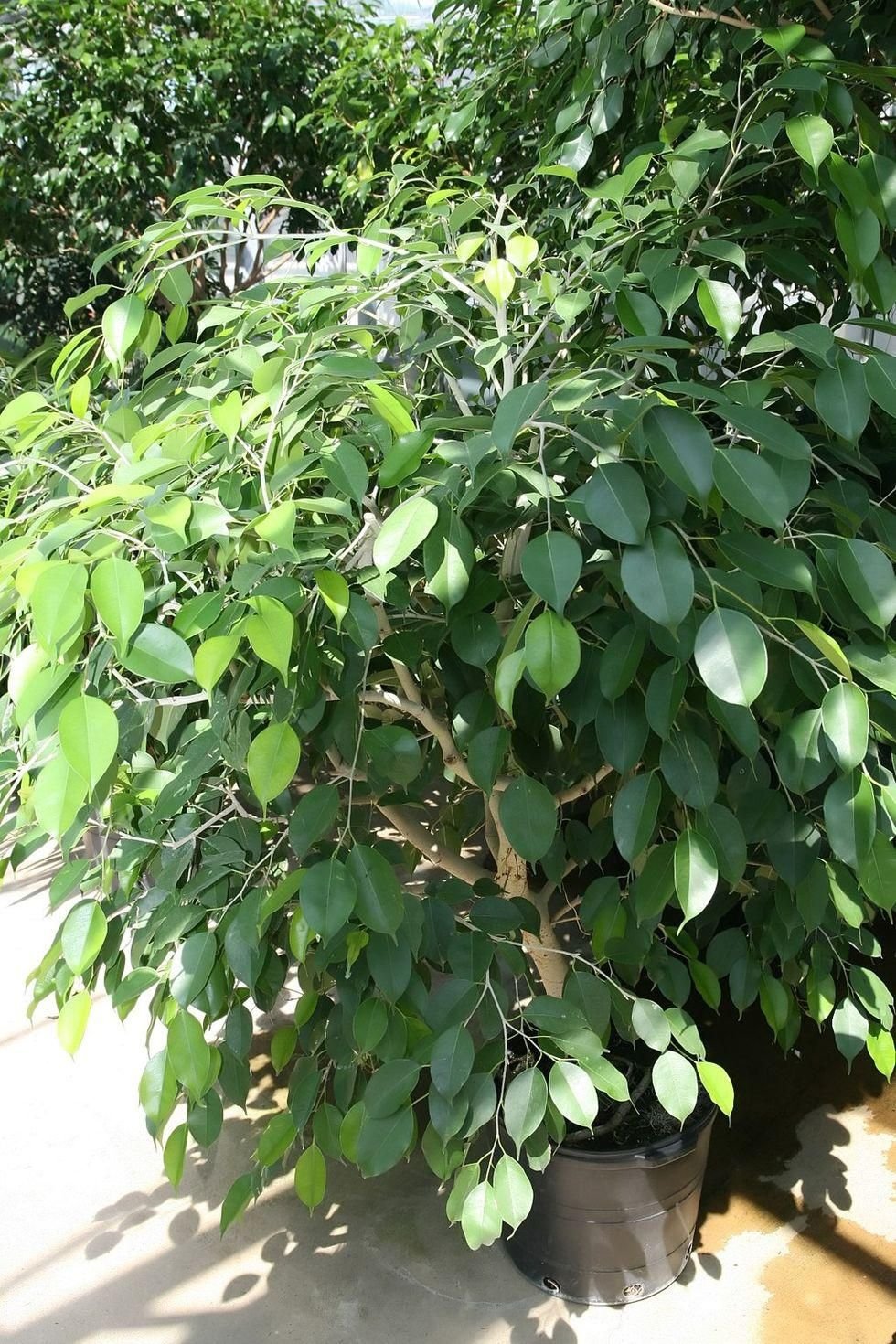
7. Weeping Fig
8. Devil’s Ivy
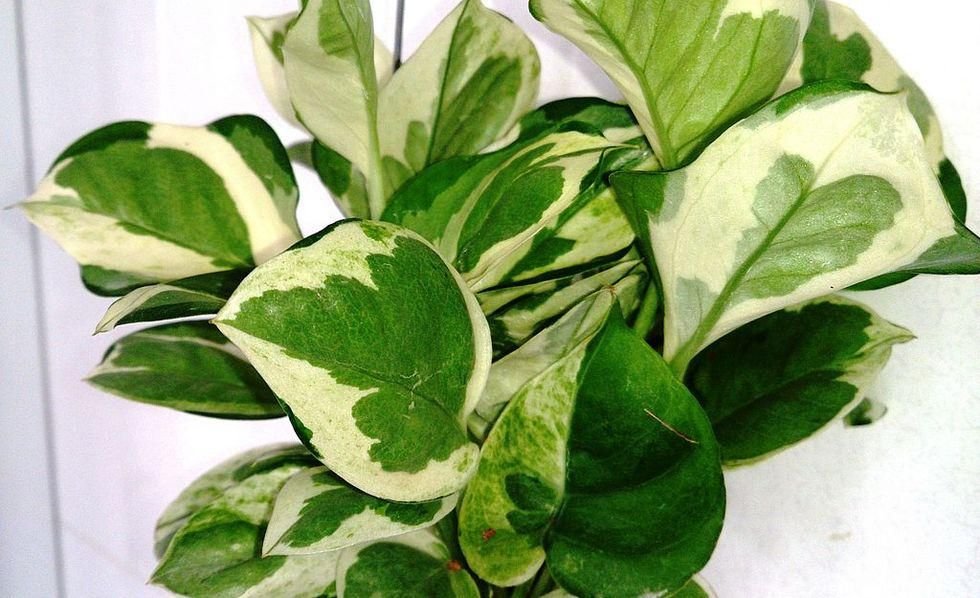
9. Flamingo Lily
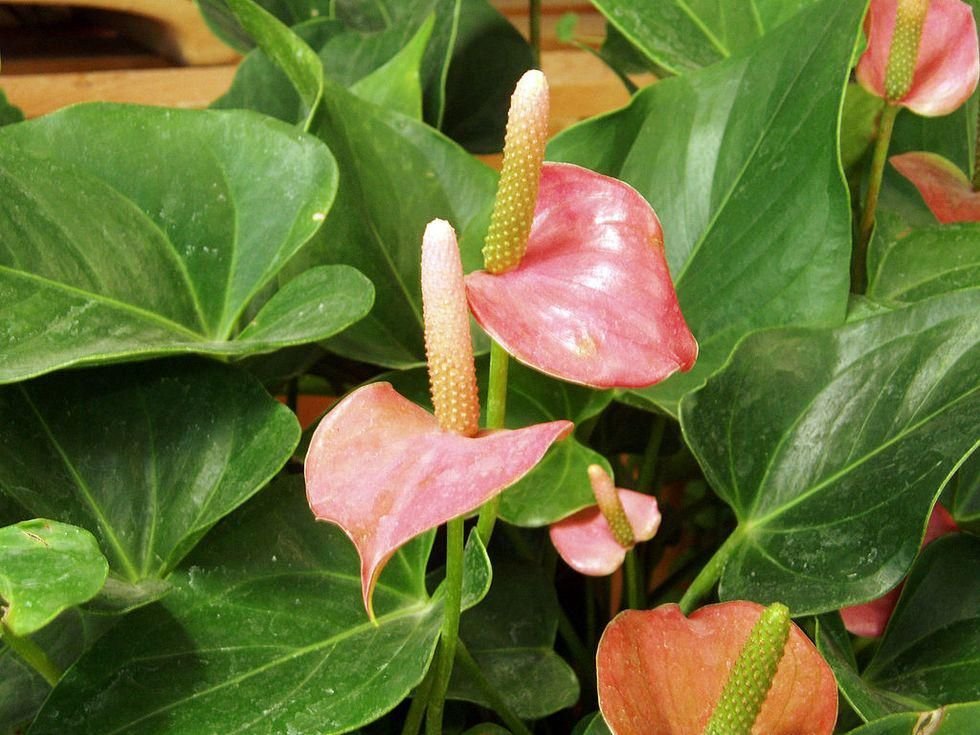
10. Lilyturf
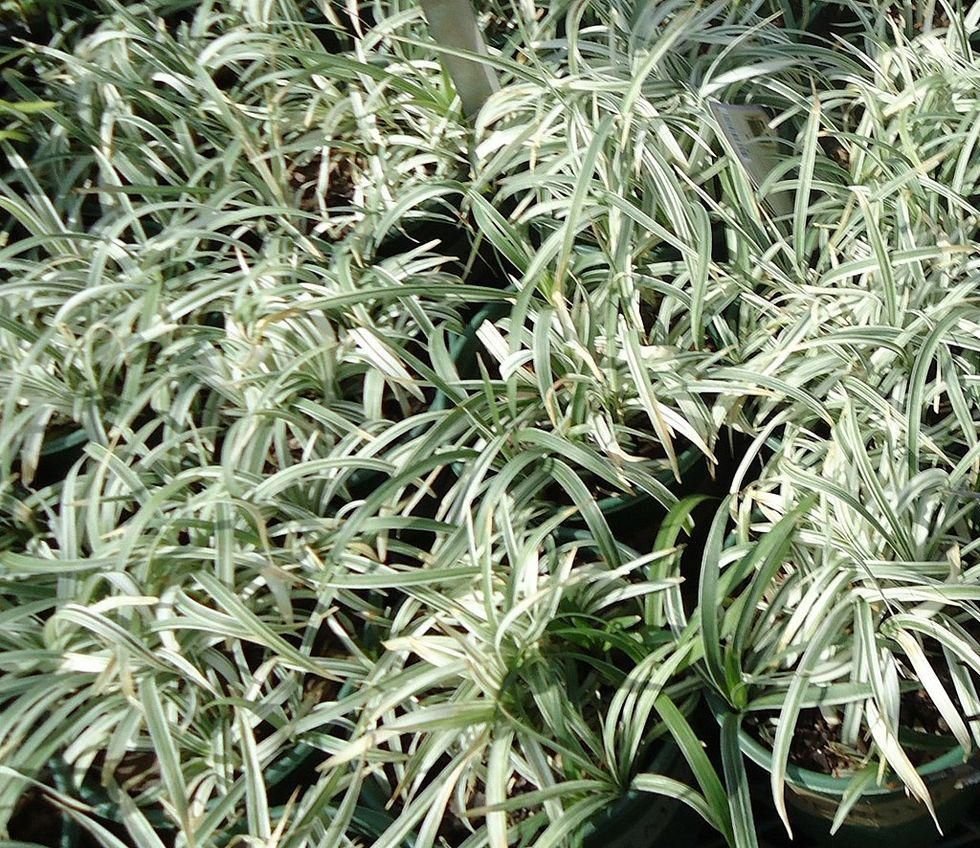
11. Broadleaf Lady Palm
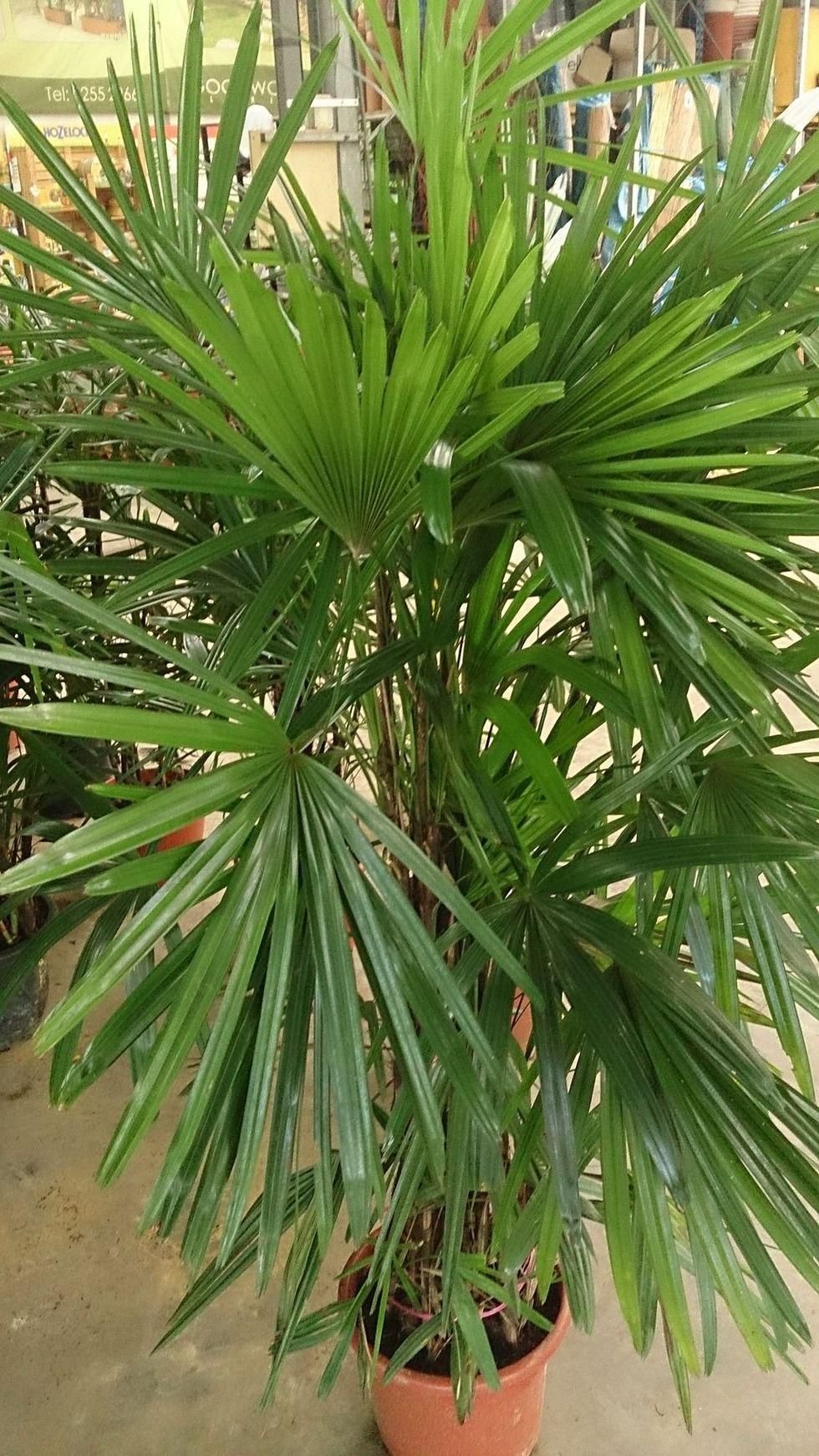
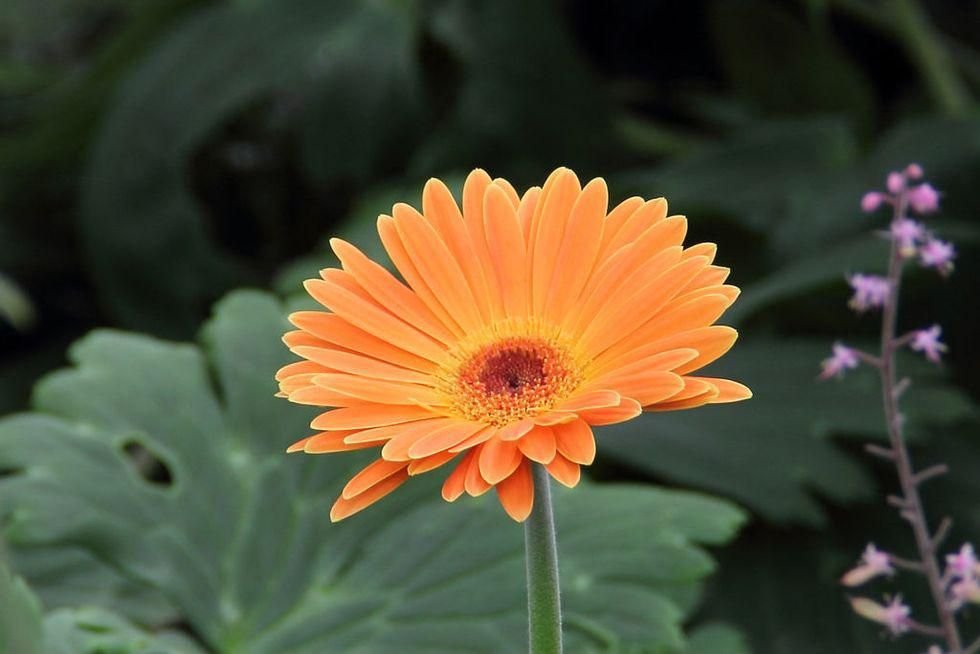
12. Barberton Daisy
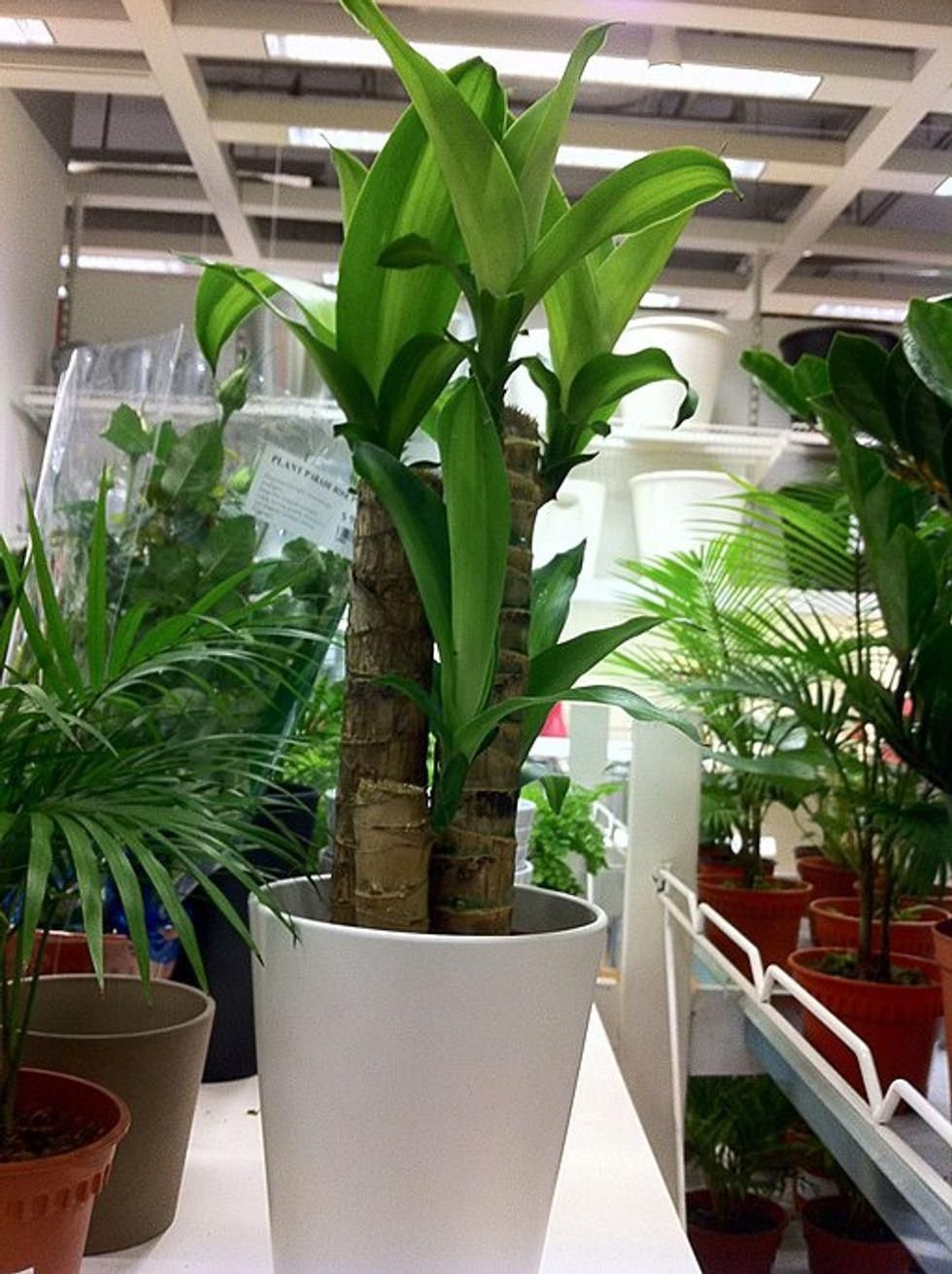
13. Cornstalk Dracena
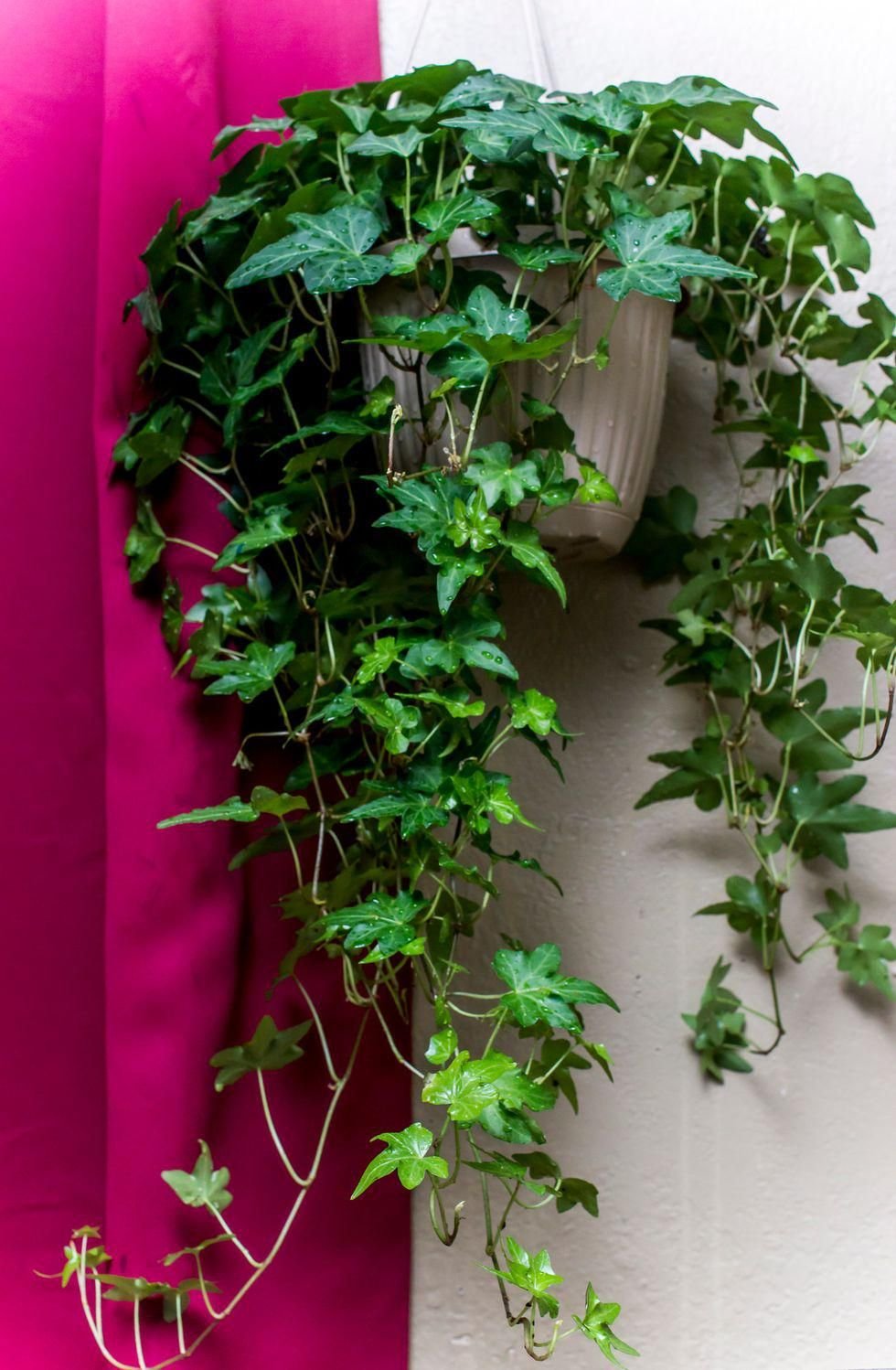
14. English Ivy
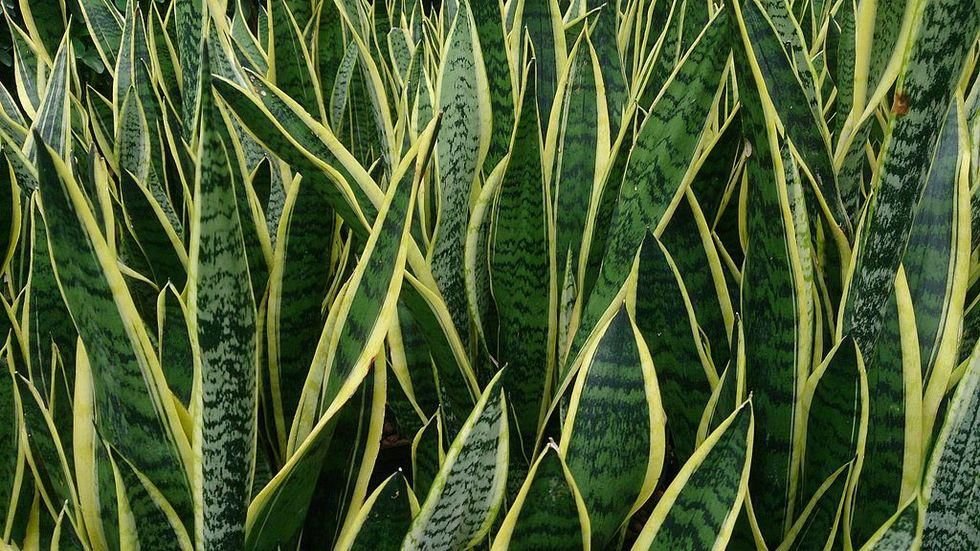
15. Varigated Snake Plant
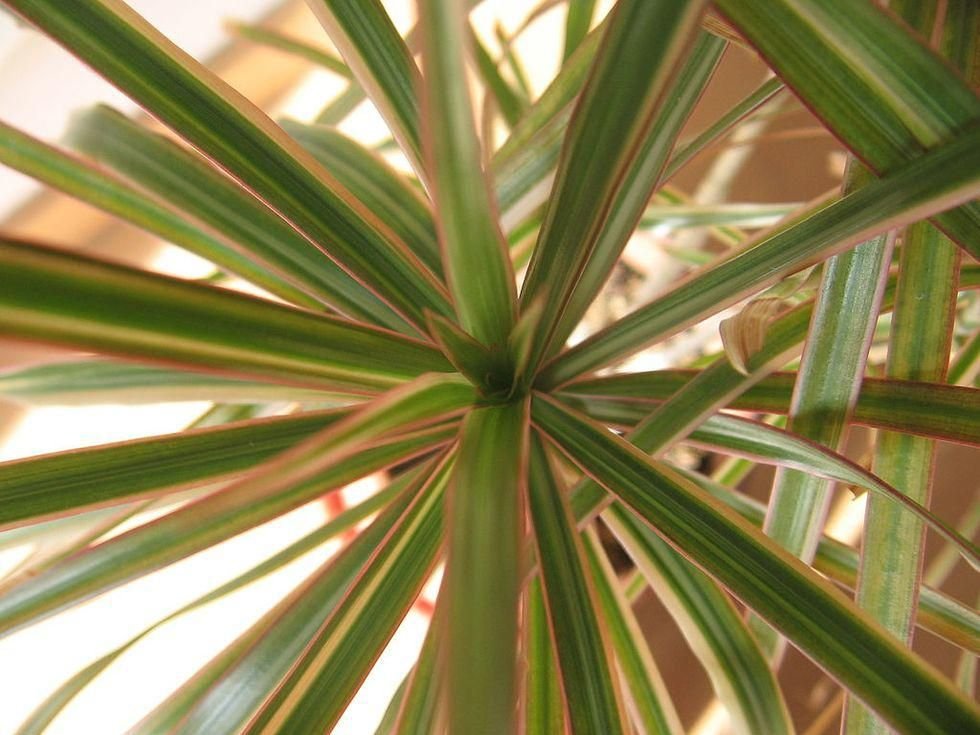
16. Red-Edged Dracaena
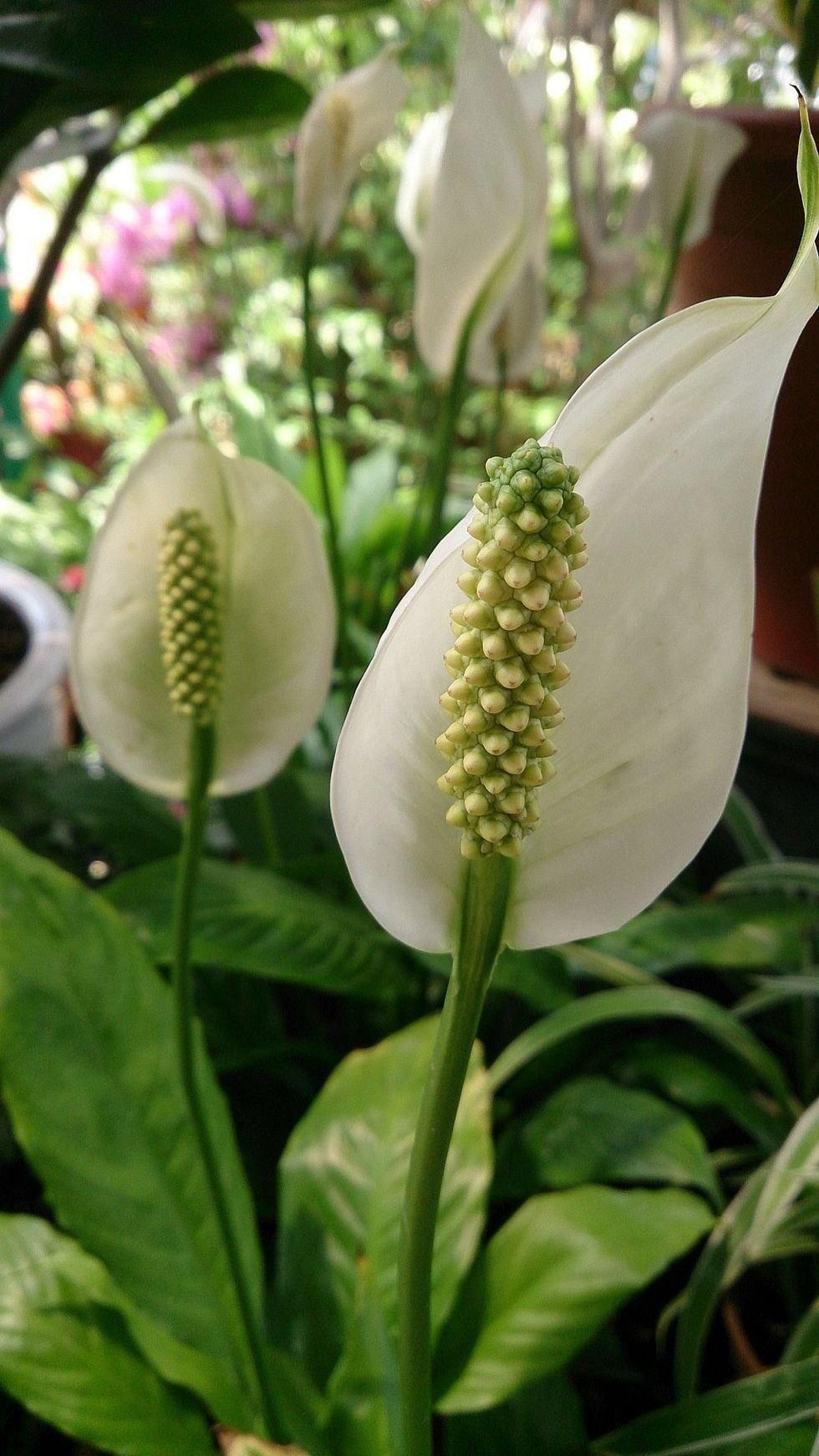
17. Peace Lily
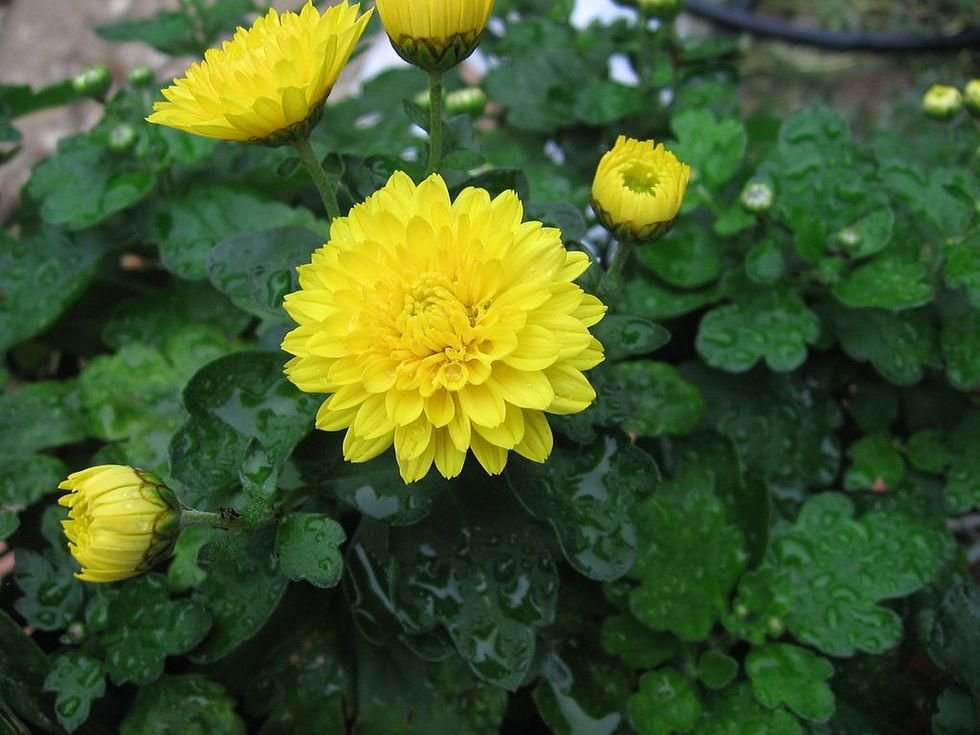
18. Florist’s Chrysanthemum
What’s in our air?
Trichloroethylene – Found in printing inks, paints, lacquers, varnishes, adhesives, and paint removers. Symptoms associated with short-term exposure include: excitement, dizziness, headache, nausea, and vomiting followed by drowsiness and coma.
Formaldehyde – Found in paper bags, waxed papers, facial tissues, paper towels, plywood paneling, and synthetic fabrics. Symptoms associated with short-term exposure include: irritation to nose, mouth and throat, and in severe cases, swelling of the larynx and lungs.
Benzene – Used to make plastics, resins, lubricants, detergents, and drugs. Also found in tobacco smoke, glue, and furniture wax. Symptoms associated with short-term exposure include: irritation to eyes, drowsiness, dizziness, headache, increase in heart rate, headaches, confusion and in some cases can result in unconsciousness.
Xylene – Found in rubber, leather, tobacco smoke, and vehicle exhaust. Symptoms associated with short-term exposure include: irritation to mouth and throat, dizziness, headache, confusion, heart problems, liver and kidney damage and coma.
Ammonia – Found in window cleaners, floor waxes, smelling salts, and fertilizers. Symptoms associated with short-term exposure include: eye irritation, coughing, sore throat.
Please note: Some of these plants may be toxic for your pets, so please do your research to ensure your furry friends stay safe.
In March 2023, after months of preparation and paperwork, Anita Omary arrived in the United States from her native Afghanistan to build a better life. Once she arrived in Connecticut, however, the experience was anything but easy.
“When I first arrived, everything felt so strange—the weather, the environment, the people,” Omary recalled. Omary had not only left behind her extended family and friends in Afghanistan, she left her career managing child protective cases and supporting refugee communities behind as well. Even more challenging, Anita was five months pregnant at the time, and because her husband was unable to obtain a travel visa, she found herself having to navigate a new language, a different culture, and an unfamiliar country entirely on her own.
“I went through a period of deep disappointment and depression, where I wasn’t able to do much for myself,” Omary said.
Then something incredible happened: Omary met a woman who would become her close friend, offering support that would change her experience as a refugee—and ultimately the trajectory of her entire life.
Understanding the journey
Like Anita Omary, tens of thousands of people come to the United States each year seeking safety from war, political violence, religious persecution, and other threats. Yet escaping danger, unfortunately, is only the first challenge. Once here, immigrant and refugee families must deal with the loss of displacement, while at the same time facing language barriers, adapting to a new culture, and sometimes even facing social stigma and anti-immigrant biases.
Welcoming immigrant and refugee neighbors strengthens the nation and benefits everyone—and according to Anita Omary, small, simple acts of human kindness can make the greatest difference in helping them feel safe, valued, and truly at home.
A warm welcome
Dee and Omary's son, Osman
Anita Omary was receiving prenatal checkups at a woman’s health center in West Haven when she met Dee, a nurse.
“She immediately recognized that I was new, and that I was struggling,” Omary said. “From that moment on, she became my support system.”
Dee started checking in on Omary throughout her pregnancy, both inside the clinic and out.
“She would call me and ask am I okay, am I eating, am I healthy,” Omary said. “She helped me with things I didn’t even realize I needed, like getting an air conditioner for my small, hot room.”
Soon, Dee was helping Omary apply for jobs and taking her on driving lessons every weekend. With her help, Omary landed a job, passed her road test on the first attempt, and even enrolled at the University of New Haven to pursue her master’s degree. Dee and Omary became like family. After Omary’s son, Osman, was born, Dee spent five days in the hospital at her side, bringing her halal food and brushing her hair in the same way Omary’s mother used to. When Omary’s postpartum pain became too great for her to lift Osman’s car seat, Dee accompanied her to his doctor’s appointments and carried the baby for her.
“Her support truly changed my life,” Omary said. “Her motivation, compassion, and support gave me hope. It gave me a sense of stability and confidence. I didn’t feel alone, because of her.”
More than that, the experience gave Omary a new resolve to help other people.
“That experience has deeply shaped the way I give back,” she said. “I want to be that source of encouragement and support for others that my friend was for me.”
Extending the welcome
Omary and Dee at the Martin Luther King, Jr. Vision Awards ceremony at the University of New Haven.
Omary is now flourishing. She currently works as a career development specialist as she continues her Master’s degree. She also, as a member of the Refugee Storytellers Collective, helps advocate for refugee and immigrant families by connecting them with resources—and teaches local communities how to best welcome newcomers.
“Welcoming new families today has many challenges,” Omary said. “One major barrier is access to English classes. Many newcomers, especially those who have just arrived, often put their names on long wait lists and for months there are no available spots.” For women with children, the lack of available childcare makes attending English classes, or working outside the home, especially difficult.
Omary stresses that sometimes small, everyday acts of kindness can make the biggest difference to immigrant and refugee families.
“Welcome is not about big gestures, but about small, consistent acts of care that remind you that you belong,” Omary said. Receiving a compliment on her dress or her son from a stranger in the grocery store was incredibly uplifting during her early days as a newcomer, and Omary remembers how even the smallest gestures of kindness gave her hope that she could thrive and build a new life here.
“I built my new life, but I didn’t do it alone,” Omary said. “Community and kindness were my greatest strengths.”
Are you in? Click here to join the Refugee Advocacy Lab and sign the #WeWillWelcome pledge and complete one small act of welcome in your community. Together, with small, meaningful steps, we can build communities where everyone feels safe.
This article is part of Upworthy’s “The Threads Between U.S.” series that highlights what we have in common thanks to the generous support from the Levi Strauss Foundation, whose grantmaking is committed to creating a culture of belonging.
For decades, river restoration in the Northwestern United States followed a simple rule: if you saw logs in the water, take them out. Clean streams were seen as healthy streams, fast-moving water was seen as optimal, and wood was treated like a “barrier” to natural processes, particularly those of the local fish.
Now, helicopters are flying thousands of tree trunks back into rivers to undo that thinking.
In central Washington, one of the largest river restoration efforts ever attempted in the region is underway. More than 6,000 logs are being placed along roughly 38 kilometers, or 24 miles, of rivers and streams across the Yakama Reservation and surrounding ceded lands.
Nearly 40 years ago, Scott Nicolai was doing the opposite kind of work, all in the name of restoration.
“(Back then) the fish heads — what I call the fisheries folks — we stood on the banks, and we looked at the stream,” Nicolai, a Yakama Nation habitat biologist, told Oregon Public Broadcasting. “If we saw a big log jam, we thought, ‘Oh, that’s a barrier to fish. We want the stream to flow.’”
Fish find shelter for spawning in the nooks and crannies of wood. Photo credit: Canva
At the time, logs were removed in an effort to simplify the habitat. However, it soon became clear that wood provided vital “complexity,” creating sheltered pockets for salmon and bull trout to spawn and supporting algae that feed aquatic insects. Logs also slow water, spread it across floodplains, and allow it to soak into the groundwater. That water is then slowly released back into streams, helping keep them flowing and cooler during hot, dry periods.
The consequences of removing this “critical part of the system” (in addition to overgrazing, railroad construction, and splash dam logging) were made all too clear over the years as the rivers dried up and wildlife populations declined.
“We’re trying to learn from our mistakes and find a better way to manage,” said Phil Rigdon, director of the Yakama Nation Department of Natural Resources.
That’s why Nicolai is now helping lead a project for the Yakama Nation aimed at rebuilding river complexity by returning logs to their rightful place. Many of these streams are now unreachable by road, which is why helicopters are used. Logs are flown from staging areas and carefully placed at precise drop locations marked with pink and blue flagging tape.
Many of these streams are now unreachable by road, which is why helicopters are used. Photo credit: Canva
The wood comes from forest-thinning projects led by The Nature Conservancy and includes species such as Douglas fir, grand fir, and cedar. Although some of the timber could have been sold, it is instead being used as river infrastructure.
For tribal leaders, the work carries even deeper meaning. During the helicopter flights, they gathered along the Little Naches River for a ceremony and prayer.
“It was very simple: to bring what was rightfully part of this land back to us,” said former tribal chairman Jerry Meninick.
The aftermath of the original restoration project illustrates how human concepts, such as the belief in the superiority of “cleanliness,” can be limited and sometimes cause more harm than good. The miracle of nature, however, is that when left to her own devices, she can heal herself.
142 years ago, botanist James Beal had a unique idea for how we could learn more about seeds.
Beal wanted to know just how long seeds of different kinds would remain viable in soil. Now, that might not sound like the most exciting research topic of all time, but understanding seed longevity actually plays a crucial role in agriculture, our food supply, and the preservation of biodiversity.
in 1879, Beal decided to bury 20 bottles filled with seeds in the ground. The bottles were open to allow soil and some moisture to reach the seeds, but positioned in such a way that they would not fill with water. That would allow just enough moisture for the seeds to theoretically survive without sprouting.
According to Popular Science, each bottle held 50 seeds form 21 different plant species, all mixed into sand. That’s over 1,000 seeds per bottle. Beal’s plan was to dig up a new bottle every five years and test to see if the seeds could still be successfully planted.
After running the experiment himself for several years, it was time for Beal to retire. The work was handed off in 1910 to a fellow professor, and in a few years the timeline was shifted: A new bottle would be dug up every 10 years instead of 5. Shortly after, it was extended to 20 years.
The Beal Seed Experiment is still ongoing, with the final bottle scheduled to be dug up sometime around the year 2100. The project has been handed off multiple times and, at 142 years old, is now one of the longest running active experiments of all time.
The Beal Seed Experiment is currently in the capable hands of a team of scientists at Michigan State University.
The research team most recently dug up a new bottle in 2021, a year delayed after the COVID-19 pandemic. The scientists ventured out in the dead of night so as not to expose the dug up seeds to any sunlight that may alter the experiment.
Once they’ve collected the seeds, they plant them in fresh soil and see if they will sprout. Unsurprisingly, the most resilient of seeds typically belong to weeds. Others are more fragile.
When seeds don’t sprout, the scientists don’t give up. After all, they need something to do for the next 20 years. They try a variety of groundbreaking techniques to try to revive the seeds and bring them back to life, including simulating winter with a shock of extreme cold, simulating exposure to fire smoke, and other experimental treatments they’re ready to test.
If seeds can not be revived, they are studied heavily. The scientists need to know what factors contribute to seeds that are better able to survive long periods of time dormant in the soil.
After all, the Beal Botanical Garden writes, “We may yet see that ungerminated seeds remaining from this latest germination experiment are in fact viable, and simply haven’t been exposed to the right conditions.”
Why does this unique experiment still matter, nearly 150 years later?
An article published in the Portland Press states, “Understanding the molecular basis of seed longevity provides important new genetic targets for the production of crops with enhanced resilience to changing climates.”
In other words, our food supply could, in the future, be dependent on our ability to bioengineer seeds and crops that can survive as temperatures rise and weather conditions change.
The findings from Beal’s study are also critical for maintaining healthy seed banks, which protect against catastrophic crop failures and global food crises. Knowing what factors allow a seed to be more resilient, how to make it last longer, and how to “bring it back to life” could be a matter of life or death.
What an exciting line of work and an incredible honor to be a part of the team that gets to unearth the next bottle sometime around the year 2040. There are only a few left in the ground, making the collection most likely a once-in-a-lifetime scientific opportunity.
It’s not easy being a river in the desert under the best of circumstances. The ecosystem exists in a very delicate balance, allowing water sources to thrive in the harsh conditions. These water sources in otherwise extremely dry areas are vital to the survival of unique wildlife, agriculture, and even tourism as they provide fresh drinking water for the people who live nearby.
But man-made problems like climate change, over-farming, and pollution have made a tough job even tougher in some areas. Rivers in Utah and Colorado part of the Colorado River Basin have been barely surviving the extremely harsh drought season. When the riverbeds get too dry, fish and other aquatic creatures die off and the wildfire risk increases dramatically.
About six years ago, one team of researchers had a fascinating idea to restore the health of some of Utah’s most vulnerable rivers: Bring in the beavers.
In 2019, master’s student Emma Doden and a team of researchers from Utah State University began a “translocation” project to bring displaced beavers to areas like Utah’s Price River, in the hopes of bringing it back to life.
Why beavers? Well, it just makes dam sense! (Sorry.)
In all seriousness, beaver dams restrict the flow of water in some areas of a river, creating ponds and wetlands. In drought-stricken areas, fish and other wildlife can take refuge in the ponds while the rest of the river runs dry, thus riding out the danger until it rains again.
When beavers are present in a watershed, the benefits are unbelievable: Better water quality, healthier fish populations, better nutrient availability, and fewer or less severe wildfires.
It’s why beavers have earned the title of “keystone species,” or any animal that has a disproportionate impact on the ecosystem around them.
Doden and her team took beavers who were captured or removed from their original homes due to their being a “nuisance,” interfering with infrastructure, or being endangered, and—after a short period of quarantine—were brought to the Price River.
Despite the research team’s best efforts, not all the translocated beavers have survived or stayed put over the years. Some have trouble adapting to their new home and die off or are killed by predators, while others leave of their own accord.
But sine 2019, enough have stayed and built dams that the team is starting to see the results of the effort. In fact, beaver projects just like this one have been going on all over the state in recent years.
The water levels in the river are now the healthiest they’ve been in years. The fish are thriving and Utah residents are overjoyed with the experiment’s results.
According to an early 2025 column in The Salt Lake Tribune (i.e. six years after the beaver translocation began) the revitalization of the Price River has “helped save [our] Utah town.”
“A tributary of the Colorado River, the Price River runs through downtown Helper,” wrote column authors Lenise Peterman and Jordan Nielson. “On a warm day, you’re likely to find the river filled with tourists and locals kayaking, tubing and fishing along its shore. A decade ago, it was hard to imagine this scene—and the thriving recreation economy that comes with it—was possible.”
Of course, it wasn’t JUST the beavers. Other federal water cleanup investments helped remove debris, break down old and malfunctioning dams, and place tighter regulations on agriculture grazing in the area that depleted vital plant life.
But the experts know that the beavers, and their incredible engineering work, are the real MVPs.
An actual beaver dam on the now-thriving Price River Public Domain
In other drying, struggling rivers in the area, researchers are bringing in beavers and even creating manmade beaver dams. They’re hoping that the critters will take over the job as the rivers get healthier.
Utah’s San Rafael River, which is in bleak condition, is a prime candidate. In one area of the river, a natural flood inspired a host of beavers to return to the area and “riparian habitat along that stretch had increased by 230%, and it had the most diverse flow patterns of anywhere on the river,” according to KUER.
It’s hard to believe that beavers nearly went extinct during the heyday of the fur trapping industry, and continued to struggle as they were considered nuisances and pests. Now, they’re getting the respect they deserve as engineer marvels, and their populations have rebounded due to better PR and conservation programs.
Once upon a time, a young Fiji water brand had what they thought was a brilliant idea for an ad campaign. They targeted a specific city — Cleveland, Ohio, to be exact — and put up billboards poking fun of the city’s water quality: “The label says Fiji because it’s not bottled in Cleveland,” they read.
Clevelanders didn’t find it funny. According to the Washington Post, public utilities director at the time Julius Ciaccia decided to test the quality of Fiji water against the city’s tap water.
“The results: 6.31 micrograms of arsenic per liter in the Fiji bottle, said Cleveland water quality manager Maggie Rodgers. Cleveland tap water as well as bottled brands Aquafina, Dasani and Evian had no measurable arsenic.
“Before you take a cheap shot at somebody, know what you’re talking about,” said Cleveland water commissioner J. Christopher Nielson.
It should be noted, of course, that the 6.3 micrograms of arsenic are well within the defined limits set forth by the FDA. But it goes to show — what do we really know about the bottled we’re drinking? It may claim to come from “fresh mountain springs” or “rainforest aquifers,” but there’s a lot going on inside those bottles that most consumers aren’t aware of.
The Story of Stuff Project brilliantly tells the story, and explains how bottled water became America’s biggest craze — and why it might be time to “take back the tap.”
Here are 6 powerful takeaways.
1. Bottled water is more expensive than tap water (and not just a little).
A Business Insider column noted that two-thirds of the bottled water sold in the United States is in individual 16.9-ounce bottles, which comes out to roughly $7.50 per gallon. That’s about 2,000 times higher than the cost of a gallon of tap water.
And in an article in 20 Something Finance, G.E. Miller investigated the cost of bottled versus tap water for himself. He found that he could fill 4,787 20-ounce bottles with tap water for only $2.10! So if he paid $1 for a bottled water, he’d be paying 2,279 times the cost of tap.
2. Bottled water could potentially be of lower quality than tap water.
Fiji’s marketing campaign not only backfired, it raised all kinds of questions about what’s really inside our bottled water.
” Bottled water manufacturers are not required to disclose as much information as municipal water utilities because of gaps in federal oversight authority. Bottom line: The Food and Drug Administration oversees bottled water, and U.S. EPA is in charge of tap water. FDA lacks the regulatory authority of EPA.”
Many independent watchdogs and organizations regularly test popular bottled water brands, and continue to find high-levels of contaminants and microplastics in them.
3. The amount of bottled water we buy every week in the U.S. alone could circle the globe five times!
That sounded like it just had to be impossible, so we looked into it. Here’s what our fact-checkers found:
“According to the video, ‘ People in the U.S. buy more than half a billion bottles of water every week.’ National Geographic says for 2011, bottled water sales hit 9.1 billion gallons (roughly 34 billion liters).
A ‘typical’ water bottle is a half-liter, so that’s about 68 billion bottles per year. Divided by 52 weeks would be a little over 1 billion bottles of water sold per week in the U.S. Because that’s based on a smaller ‘typical’ bottle size, it seems reasonable that a half billion bottles a week could be accurate.
The Earth is about 131.5 million feet around, so yep, half a billion bottles of varying sizes strung end-to-end could circle the Earth five times.”
Beverage companies have turned bottled water into a multibillion-dollar industry through a concept known as manufactured demand. Bottled water advertisements used a combination of scare tactics (Tap water bad!) and seduction (From the purest mountain streams EVER!) to reel us in.
Well, we now know their claims about the superior quality of bottled water are mostly bogus. And research shows that anywhere from a quarter to 45% of all bottled water comes from the exact same place as your tap water (which, to reiterate, is so cheap it’s almost free).
5. Bottled water is FILTHY.
It takes oil — lots of it — to make plastic bottles. According to the video, the energy in the amount of oil it takes to make the plastic water bottles sold in the U.S. in one year could fuel a million cars. That’s not even counting the oil it takes to ship bottled water around the world.
On top of all that, the process of manufacturing plastic bottles is polluting public water supplies, which makes it easier for bottled water companies to sell us their expensive product.
6. There are 750 million people around the world who don’t have access to clean water.
A child dies every minute from a waterborne disease. And for me, that’s the core of what makes bottled water so evil.
The video wraps by comparing buying bottled water to smoking while pregnant. That may sound extreme, but after learning everything I just did about the bottled water industry, I can’t disagree.
If you’re properly disgusted, here are a few ways you can help destroy the bottled water industry:
Don’t buy bottled water. Get a reusable water bottle. The savings will add up.
Rally your schools, workplaces, and communities to ban bottled water.
Demand that your city, state, and federal governments invest in better water infrastructure.
This article originally appeared 10 years ago. It has been updated.
Signs of climate change are all around us, from rising sea levels, to more frequent wildfires, to something as subtle as the warm breeze that seems to last longer and longer into winter every year.
But scientists have been keeping an especially close eye on Earth’s glaciers, giant mountains of ice that have been observed steadily melting since the 1970s. Tracking the size and movement of glaciers gives us a good idea as to how rising temperatures may be affecting the global habitat, and of course, the more they melt, the more sea levels rise all over the world.
Recently, though, researchers have become alarmed that a slow, steady melt may be the least of our problems.
A glacier the size of Philadelphia recently “retreated”—or shrank—by about half its size in just two months. That’s the fastest pace on record.
Hektoria is a glacier in Antarctica that was, not too long ago, about 115 square miles in size. That makes it about the size of a city like Philadelphia or Baltimore. That is, until 2022, when the front face of the glacier retreated about five miles in just two months. By March of 2023, the glacier had retreated a total of 16 miles.
Not only was this the fastest glacier collapse scientists have ever seen, but it wasn’t even a close competition. What happened to Hektoria is estimated to be about 10 times faster than any other glacier retreat we’ve witnessed.
A new study claims to have figured out why Hektoria retreated so fast. Essentially, upward forces from ocean water caused huge chunks of ice to break off and float away after the glacier lost its grip on the bedrock below. This sounds like something that would happen all the time, but it’s never been recorded at this scale before.
And it definitely has scientists more than a little alarmed.
“What we see at Hektoria is a small glacier, but if something like that were to happen in other areas of Antarctica, it could play a much larger role in the rate of sea-level rise,” said Dr. Naomi Ochwat, research affiliate at the University of Colorado Boulder and post-doctoral researcher at the University of Innsbruck—and also one of the lead authors of the study.
“Hektoria’s retreatwas heavily influenced by climate change,” according to CNN. “The loss of sea ice in the ocean next to Hektoria, believed to have been driven by ocean warmth,allowed wave swells to reach the fast ice and break it up, leaving the glacier exposed to ocean forces.”
The animation below explains what happened to Hektoria:
Though Hektoria was a unique and record-setting event, it’s not the first instance we’ve seen of massive ice loss.
Over a decade ago, filmmakers captured the largest glacier calving ever recorded when the Ilulissat Glacier broke apart. A three-mile by one-mile chunk broke off right in front of their eyes.
That’s a segment the size of Lower Manhattan. But the walls of ice were up to three times as tall as New York’s tallest skyscraper.
It was truly a monumental and frightening sight to behold.
As harrowing as it all seems, scientists and engineers are cooking up some pretty bold ideas to save the glaciers.
For decades, some of the world’s brightest minds have been brainstorming ways to slow down glacial melt and calving. One wild idea involves building a barrier across the Bering Strait that would reduce powerful ocean currents that might break apart glaciers.
Another idea proposed in the 1980s suggests pumping seawater onto the floating front ends of glaciers, where it would freeze and thicken the glacier’s protective outer shelf.
A more recent concept would drill holes in glaciers so that engineers could pump out the layer of water that rests beneath them, creating room for the ice to freeze and settle directly on the bedrock, anchoring the glaciers in place.
These ideas, for the most part, are ambitious, complex, and a bit of a Hail Mary. They also don’t solve the root causes of climate change or address any symptoms other than rising sea levels.
But there’s good news on that front, too. In recent years, through an unprecedented campaign of international cooperation, we’ve all but healed the ozone layer. Clean, renewable energy sources like wind and solar are rapidly overtaking fossil fuels, and the Paris Agreement and Green Deal have made incredible strides in reducing greenhouse gas emissions in Europe.
There is plenty of good news to be found, but maintaining a sense of urgency is key, and our efforts need to speed up, ASAP. Hektoria was a fascinating warning sign of what might happen to much larger glaciers if we can’t get rising ocean temperatures under control, and fast.
People often pay to go on whale watching tours in hopes of mayyyyybe catching a single glimpse of a tail splashing the water—if they’re lucky. Sometimes, even that’s enough excitement. Just the smallest glimpse of one of the world’s largest species. There’s something powerful about feeling that small and insignificant.
On August 13, 2022 however, folks in New York City got the whale watching cruise of a lifetime as they were able to witness not one, not two, but NINE whales swimming in the harbor. An incredibly rare sight, at the time.
While onboard a tour with American Princess Cruises, Celia Ackerman, who works as a naturalist for the company, captured multiple breathtaking photos of the creatures with a view of New York’s skyline as the backdrop.
Here’s just one of the beauties:
Gorgeous all images taken by Cecilia Ackerman, used with permission from Gotham Whales
Ackerman is also a research associate for Gotham Whale, a marine mammal research, education and advocacy organization. Gotham Whale tweeted the images not only to let others join in on nature’s spectacle, but also to raise awareness and avoid potential collisions.
“Amazing day to say the least,” Gotham Whale’s caption read.
This once-in-a-lifetime sighting might be less of a miracle and more a result of concerted efforts to clean New York’s waters. Back in 2019, the New York Post cited a study that showed New York’s harbors were the purest they’ve been in nearly 110 years, not since “Albert Einstein had just published his theory of relativity,” according to the Post article. This was largely due to the Clean Water Act of 1972, in addition to volunteer environmental groups, according to the article.
Cleaner water means more fish, and more fish means a whale buffet. Not to mention some amazing photos:
Breach incoming! Celia Ackerman
“Something else to make your heart happy!” someone commented alongside a blue whale emoji.
Humpback whales, in particular, are an amazing conservation success story. In the 1940s, when whaling oversight first began, humpbacks were nearly extinct. Now they’re thriving.
What's not to love about this photo? Celia Ackerman
This is the stuff fairy tales are made of y’all.
Whales used to pass through New York harbor on their way to more fertile feeding grounds, but the water cleanup efforts have motivated them to stick around and feed. That’s how you get incredible sights like this.
Over-whale-mingly cool. Celia Ackerman
Hands down, most successful whale watching cruise ever. No question.
One fish, two fishu2026 Celia Ackerman
These whales gave a water show and everything (see below):
We're in the splash zone. Celia Ackerman
There’s even a video of three breaching whales from the same day, shared by science and health reporter Aaron Tremper.
“I would’ve been screaming. This is so magical!” wrote one person.
Of course, the new-and-improved coastline (and all the fish that comes with it) is not only attracting whales. On August 8, 2022, two sharks were spotted off a beach in Queens, New York. And there were 15 shark sightings in one day the previous week, according to ABC7 New York. However, shark attacks are still quite rare.
I know what you’re thinking—where are the dolphins?! Don’t worry, Ackerman found some of those, too.
These images come as a respite after the news that Freya, a walrus in Norway who captured hearts by sunbathing in various boats, was euthanized by authorities after being declared a “threat to human safety.” Her death was considered by many to be an avoidable act of cruelty, brought on by human negligence. However, the walrus named after a Norse goddess of love aptly still commands reverence by her followers, who have started a fundraiser to erect a statue in her honor.
Since these photos surfaced in 2022, the whale population in New York has continued to grow. Now, it’s so big that officials are growing worried over whale-ship collisions. The next step, after cleaning up the waters, may be to implement lower speed limits on passing vessels. One step at a time. But we’re making progress.
We don’t always do right by our animal friends. But when we do, it shows. New York’s impromptu whale party is literal living proof of that. Finally, some good news about growing traffic!
This article first appeared three years ago. It has been updated.
It’s not easy being a river in the desert under the best of circumstances. The ecosystem exists in a very delicate balance, allowing water sources to thrive in the harsh conditions. These water sources in otherwise extremely dry areas are vital to the survival of unique wildlife, agriculture, and even tourism as they provide fresh drinking water for the people who live nearby.
But man-made problems like climate change, over-farming, and pollution have made a tough job even tougher in some areas. Rivers in Utah and Colorado that are part of the Colorado River Basin have been barely surviving the extremely harsh drought season. When the riverbeds get too dry, fish and other aquatic creatures die off and the wildfire risk increases dramatically.
About six years ago, one team of researchers had a fascinating idea to restore the health of some of Utah’s most vulnerable rivers: Bring in the beavers.
In 2019, master’s student Emma Doden and a team of researchers from Utah State University began a “translocation” project to bring displaced beavers to areas like Utah’s Price River, in the hopes of bringing it back to life.
Why beavers? It just makes dam sense! (Sorry.)
Beaver dams restrict the flow of water in some areas of a river, creating ponds and wetlands. In drought-stricken areas, fish and other wildlife can take refuge in the ponds while the rest of the river runs dry, thus riding out the danger until it rains again.
When beavers are present in a watershed, the benefits are unbelievable: Better water quality, healthier fish populations, better nutrient availability, and fewer or less severe wildfires.
It’s why beavers have earned the title of “keystone species,” or any animal that has a disproportionate impact on the ecosystem around them.
Doden and her team took beavers who were captured or removed from their original homes due to being a “nuisance,” interfering with infrastructure, or being in danger, and—after a short period of quarantine—were brought to the Price River.
Despite the research team’s best efforts, not all the translocated beavers have survived or stayed put over the years. Some have trouble adapting to their new home and die off or are killed by predators, while others leave of their own accord.
But enough have stayed and built dams since 2019 that the team is starting to see the results of the effort. In fact, beaver projects just like this one have been going on all over the state in recent years.
The water levels in the river are now the healthiest they’ve been in years. The fish are thriving. Residents of Utah are overjoyed at the results of the experiment.
A column in The Salt Lake Tribune from 2025 (six years after the beaver translocation began) writes that the revitalization of the Price River “helped save our Utah town.”
“A tributary of the Colorado River, the Price River runs through downtown Helper. On a warm day, you’re likely to find the river filled with tourists and locals kayaking, tubing and fishing along its shore. A decade ago, it was hard to imagine this scene—and the thriving recreation economy that comes with it—was possible.”
Of course, it wasn’t JUST the beavers. Other federal water cleanup investments helped remove debris, break down old and malfunctioning dams, and place tighter regulations on agriculture grazing in the area that depleted vital plant life.
But the experts know that the beavers, and their incredible engineering work, are the real MVPs.
An actual beaver dam on the now-thriving Price River Public Domain
In other drying, struggling rivers in the area, researchers are bringing in beavers and even creating manmade beaver dams. They’re hoping that the critters will take over the job as the rivers get healthier.
Utah’s San Rafael river, which is in bleak condition, is a prime candidate. In on area of the river, a natural flood inspired a host of beavers to return to the area and “riparian habitat along that stretch had increased by 230%, and it had the most diverse flow patterns of anywhere on the river,” according to KUER.
It’s hard to believe that beavers nearly went extinct during the heyday of the fur trapping industry, and continued to struggle as they were considered nuisances and pests. Now, they’re getting the respect they deserve as engineer marvels, and their populations have rebounded due to better PR and conservation programs.
In 1997, ecologists Daniel Janzen and Winnie Hallwachs approached an orange juice company in Costa Rica with an off-the-wall idea. In exchange for donating a portion of unspoiled, forested land to the Área de Conservación Guanacaste — a nature preserve in the country’s northwest — the park would allow the company to dump its discarded orange peels and pulp, free of charge, in a heavily grazed, largely deforested area nearby.
One year later, one thousand trucks poured into the national park, offloading over 12,000 metric tons of sticky, mealy, orange compost onto the worn-out plot. The site was left untouched and largely unexamined for over a decade. A sign was placed to ensure future researchers could locate and study it.
16 years later, Janzen dispatched graduate student Timothy Treuer to look for the site where the food waste was dumped.
Treuer initially set out to locate the large placard that marked the plot — and failed.
“It’s a huge sign, bright yellow lettering. We should have been able to see it,” Treuer says. After wandering around for half an hour with no luck, he consulted Janzen, who gave him more detailed instructions on how to find the plot.
When he returned a week later and confirmed he was in the right place, Treuer was floored. Compared to the adjacent barren former pastureland, the site of the food waste deposit was “like night and day.”
The site of the orange peel deposit (L) and adjacent pastureland (R). Photo by Leland Werden.
“It was just hard to believe that the only difference between the two areas was a bunch of orange peels. They look like completely different ecosystems,” he explains.
The area was so thick with vegetation he still could not find the sign.
Treuer and a team of researchers from Princeton University studied the site over the course of the following three years.
According to the Princeton School of International Public Affairs, the experiment resulted in a “176 percent increase in aboveground biomass — or the wood in the trees — within the 3-hectare area (7 acres) studied.”
The ecologists measured various qualities of the site against an area of former pastureland immediately across the access road used to dump the orange peels two decades prior. Compared to the adjacent plot, which was dominated by a single species of tree, the site of the orange peel deposit featured two dozen species of vegetation, most thriving.
Lab technician Erik Schilling explores the newly overgrown orange peel plot. Photo by Tim Treuer.
In addition to greater biodiversity, richer soil, and a better-developed canopy, researchers discovered a tayra (a dog-sized weasel) and a giant fig tree three feet in diameter, on the plot.
“You could have had 20 people climbing in that tree at once and it would have supported the weight no problem,” says Jon Choi, co-author of the paper, who conducted much of the soil analysis. “That thing was massive.”
Recent evidence suggests that secondary tropical forests — those that grow after the original inhabitants are torn down — are essential to helping slow climate change.
Meanwhile, much of the world is awash in nutrient-rich food waste. In the United States, up to half of all produce in the United States is discarded. Most currently ends up in landfills.
“We don’t want companies to go out there will-nilly just dumping their waste all over the place, but if it’s scientifically driven and restorationists are involved in addition to companies, this is something I think has really high potential,” Treuer says.
The next step, he believes, is to examine whether other ecosystems — dry forests, cloud forests, tropical savannas — react the same way to similar deposits.
Two years after his initial survey, Treuer returned to once again try to locate the sign marking the site.
Since his first scouting mission in 2013, Treuer had visited the plot more than 15 times. Choi had visited more than 50. Neither had spotted the original sign.
In 2015, when Treuer, with the help of the paper’s senior author, David Wilcove, and Princeton Professor Rob Pringle, finally found it under a thicket of vines, the scope of the area’s transformation became truly clear.