To be a great fiction writer requires understanding basic story structures and being clever enough to disguise them so your audience doesn’t know they’re watching or reading something they’ve seen before. Academics suggest that there are only a finite number of plots and structures, but that number varies based on who’s doing the talking.
Writer Kurt Vonnegut, best known for his satirical works on American politics and culture, including “Slaughterhouse-Five,” “Cat’s Cradle” and “Sirens of Titan,” was obsessed with the shapes of stories and summed up his views in one powerful sentence: “The fundamental idea is that stories have shapes which can be drawn on graph paper and that the shape of a given society’s stories is at least as interesting as the shape of its pots or spearheads.”
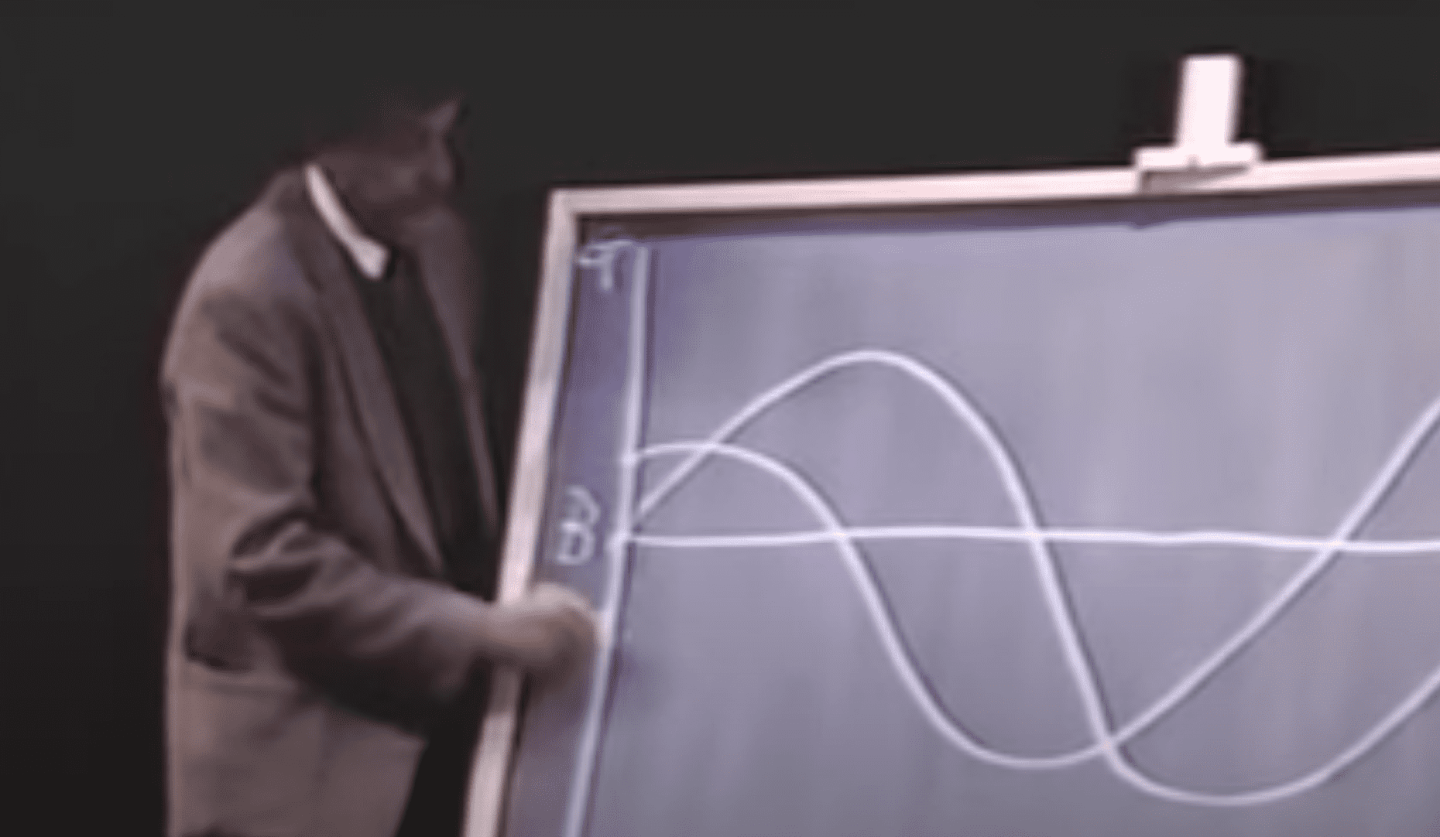
In the video below, Vonnegut explains why the shapes of three different types of stories, from “person gets into trouble” to “boy meets girl” to “Cinderella,” can all be summed up on two axes: the Y represents good and bad fortune, the X represents the beginning and end of a story.
The first question is where the main character or protagonist starts their journey. Are they in a state of good or bad fortune, and how does that change from beginning to end?
“Somebody gets into trouble, then gets out of it again. People love that story. They never get tired of it,” Vonnegut says with a smirk.
The video is an intriguing look into the mind of a highly original writer and gives excellent insights into the basics of storytelling.
This article originally appeared two years ago.