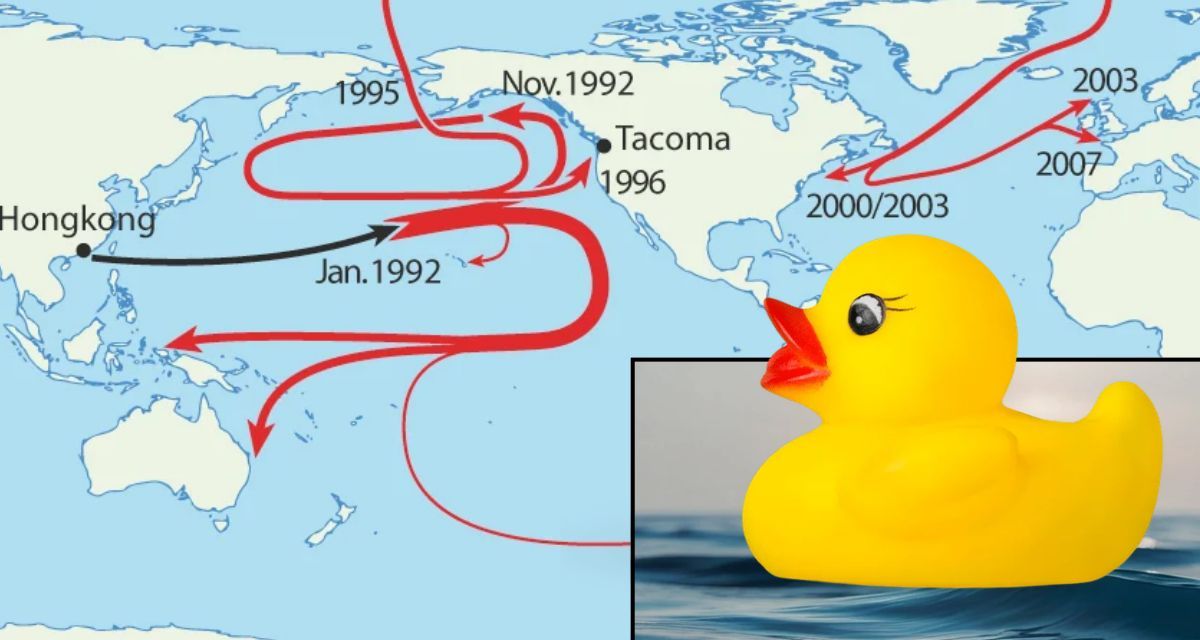
In 1992, a storm caused a cargo ship containing 28,800 rubber ducks and other children’s bath toys heading from China to the U.S. to tumble into the North Pacific. Their unexpected odyssey became one of history’s most unusual and large-scale ocean studies ever recorded.
As the story goes, the cardboard, plastic-wrapped containers on the deck of the Ever Laurel ship had already degraded from saltwater exposure. When the storm violently tossed the ship around, at least one container broke open, spilling a colorful menagerie of yellow ducks, red beavers, green frogs, and blue turtles, collectively known as Friendly Floatees, into the ocean.
Toys turned trackers
These toys were designed without holes, letting them float on the currents until they reached dry land. Within ten months, beachcombers in Alaska spotted the first wave of duckies.
When Seattle-based oceanographers Curtis Ebbesmeyer and Jim Ingraham, who specialize in sea currents, began hearing reports about the sightings, they knew the toys had presented a unique opportunity. Ocean currents aren’t easy to track. At the time, one common method was to release up to a thousand message-containing bottles and hope some would eventually be recovered. Only about 2% typically were.
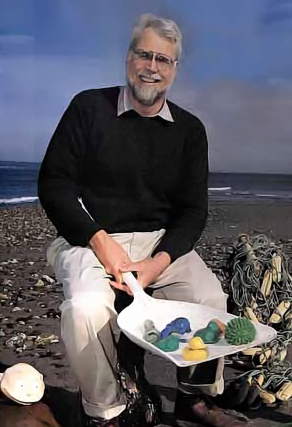
No scientist could ethically drop upwards of 29K plastic vessels into the ocean. But since the accident had already happened, Ebbesmeyer and Ingraham decided to make the most of the data it provided.
They began using the wayward Floatees as moving data points to track the accuracy of their current computer model. They even offered $100 to anyone who reported a rubber ducky sighting.
The sightings soon revealed just how far ocean currents could carry something floating on the surface
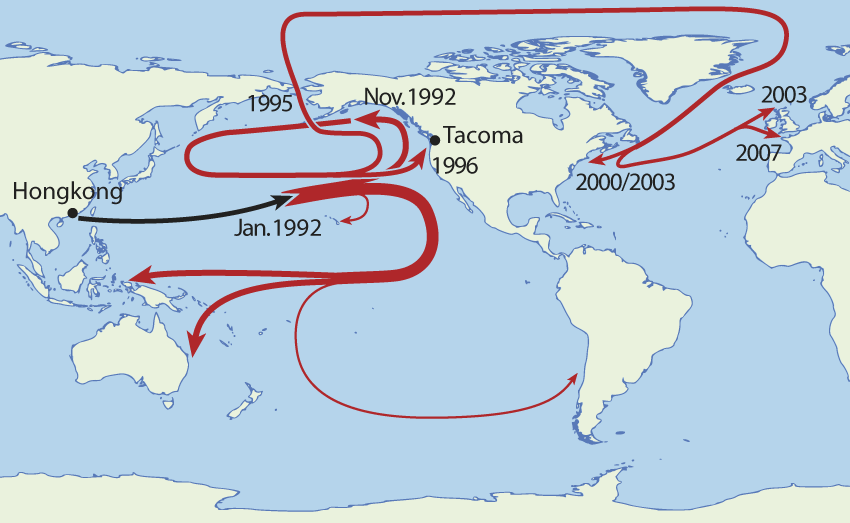
By 1996, duckies had washed up along shores in parts of Indonesia, Australia, New Zealand, and South America. Others drifted north through the Bering Strait. They eventually became trapped in Arctic sea ice, moving roughly a mile per day across the polar cap. Years later, some of those frozen toys thawed and continued their journey into the North Atlantic. Some even floated past the site of the Titanic wreck.
Although sightings have become increasingly rare, Floatees still occasionally turn up on beaches…and sell online for $1000.
But these Floatees didn’t just give scientists a clearer picture of how the ocean currents move. They offered a real-world glimpse into what happens to non-biodegradable waste once it enters the marine environment.
A strange lesson about plastic pollution
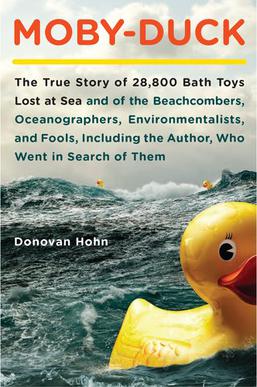
In his book Moby-Duck: The True Story of 28,800 Bath Toys Lost at Sea and of the Beachcombers, Oceanographers, Environmentalists and Fools, Including the Author, Who Went in Search of Them, Donovan Hohn further detailed the ducks’ “incredible journey.”
Along the way, he learned more about the places plastic waste can accumulate and how widely it can spread.
“When I first heard the phrase ‘garbage patch,’ I imagined something dense,” he told NPR. “I initially imagined it as a floating junkyard, and you’d have to poke your way through it with a paddle if you’re in a kayak. But it’s not like that. You can’t take a picture of it because that doesn’t exist. What does exist is a whole lot of plastic out there, but it’s spread out over millions of miles of ocean. And some of it floats on the surface where you can find it. And some of it floats just below the surface. And eventually all of it will photodegrade, so much of it is so small you’re not going to be able to see it with the naked eye.”
In the end, an epic environmental disaster became an unexpected tool for better understanding the environment. Not bad for a toy whose greatest previous ambition was to provide entertainment during bubble baths.