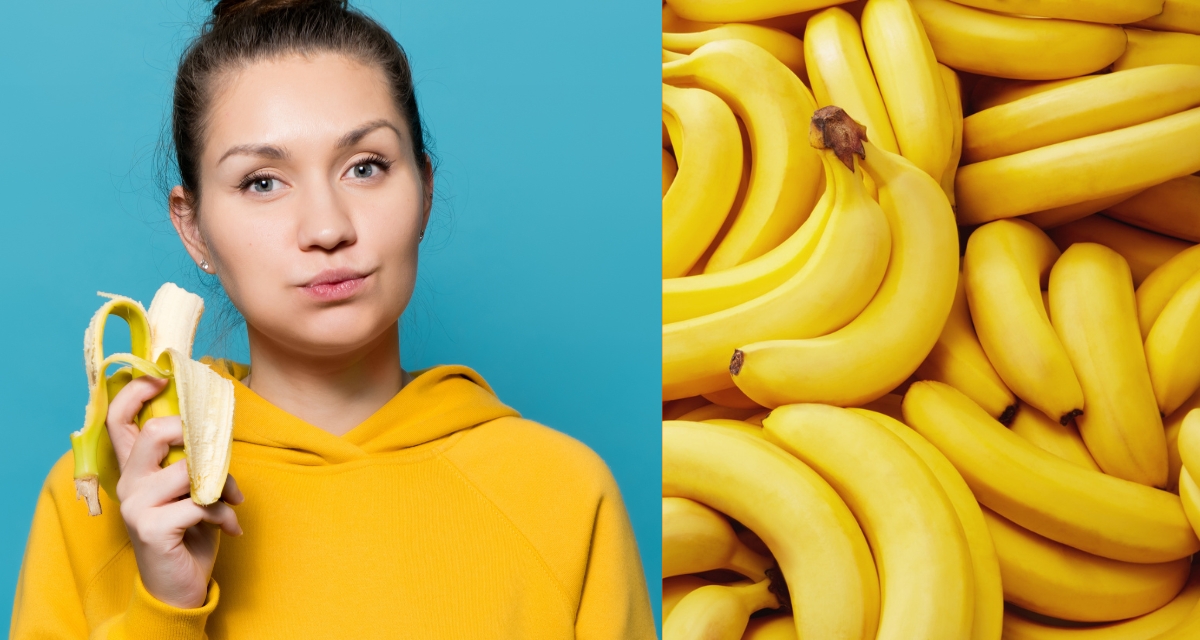
There are some solutions for problems we weren’t even aware of. For example: many of us who buy bananas in bunches don’t eat them in time and, suddenly, we’re stuck with a lot of food waste. Perhaps some of us just figured that’s the way it is. Well, a grocery chain in South Korea thought otherwise.
E-Mart, a grocery chain that was founded in the early 1990s in South Korea, came up with a genius idea: selling bananas in packs of seven, arranged from the most green to the most yellow/ripe. The idea is that if one eats the bananas daily in the correct order, the unripe ones will be “ready” once their turn comes up.
Haru Hana Banana
The Things You Don’t Know (@thingsyoudontknow1) Instagram page discuss the convenience of being able to choose the perfect banana. They explain, “In 2018, the South Korean grocery chain E-Mart introduced ‘Haru Hana Banana’ — which translates to ‘One-a-Day Banana.’ Each pack contains five to seven bananas at staggered ripeness levels, ranging from fully yellow and ready to eat to bright green and several days from being ripe.”
They also note that the brilliant idea has taken off with other Korean grocery stores. “Since 2018, the concept has been adopted by other Korean grocery chains and brands. The innovation is often cited as a packaging-design solution to waste—bananas frequently end up discarded because an entire bunch ripens at the same time. E-Mart has also experimented with coconuts that include built-in straws and watermelons packaged with carrying handles.”
Some love the idea, with one Instagrammer exclaiming, “Genius! I try to do that when I buy bananas…green/partly ripe/ripe. With the price of food, this ensures I always have a perfect yellow banana and never throw any out. There are only so many bananas I can freeze for banana bread or smoothies!”
A tiny snag
That said, a few are put off by the plastic containers in which the fruit is sold. One even commented that sealing them together defeats the purpose. “The ripe fruit releases enzymes that accelerate the less ripe fruit. No doubt accelerated by sealed excessive packaging.”
Turns out that’s true. In a 2017 BBC News article, the science is explained. Dr. Dan Bebber, of the University of Exeter, shares, “Bananas make other fruit ripen because they release a gas called ethene (formerly ethylene). This gas causes ripening, or softening of fruit, by the breakdown of cell walls, conversion of starches to sugars, and the disappearance of acids.”
How the U.S. could benefit
In an article for food aficionado site Chowhound titled “Why US Grocery Stores Should Take Notes From South Korea’s Brilliant Banana Strategy,” food writer Jennifer M. McNeill explains the idea and how the U.S. could take notes. First, she addresses the plastic conundrum. “One of the biggest downsides overall is the packaging, as these one-a-day banana bunches come wrapped together in plastic. In terms of environmental friendliness, a plastic-wrapped bunch of bananas (a fruit that comes in its own natural ‘packaging’) is not the best.
Some American grocery stores also wrap banana stems in plastic in an attempt to slow the release of ethylene gas and extend shelf life, but it does introduce unnecessary non-biodegradable materials into the produce section.”
Instead of plastic pre-packaging, she suggests a unique idea: “The concept itself is undeniably brilliant and probably wouldn’t take a lot for U.S. stores to replicate in some way. Rather than pre-packaging mixed bundles, grocers could display individually sold loose bananas in clearly labeled sections based on ripeness. For example: one section could be ‘ready today,’ one could be ‘two to three days,’ and one ‘later in the week,’ which would allow shoppers to build their own bunch without any packaging at all.”
This way, the store is honoring the South Korean idea, but elevating it to create less waste. it’s a win-win. And if worse comes to worst, one can freeze the overripe bananas and turn them into delicious pudding or smoothies.