Out of the mouths of babes come raw and honest opinions. So artists shouldn’t ask children what they think of their work if they can’t stand the critique. Luckily, the musicians/composers recently presented to a group of young kids aren’t around anymore to take offense.
Folks at the CRB Classical music station (99.5 in Boston) started a multi-part series which they posted on social media. In the series, partnered with the Boston Children’s Museum, they ask young kids to listen to various classical music pieces. The kids’ responses are both adorable, and some…quite astute.
‘How does music make you feel?’
On their first clip, the CRB Classical Instagram page shared the mission. “We went to the Boston Children’s Museum to ask the experts: ‘How does music make you feel?’ Over the next five days, we’re sharing kids’ honest, in-the-moment reactions to some of the most iconic classical music ever written: Flight of the Bumblebee, The Four Seasons, William Tell, and more.”
They then thank the museum. “Thank you to the Children’s Museum for collaborating with us on this project, and to all of the families (and children) who participated!”
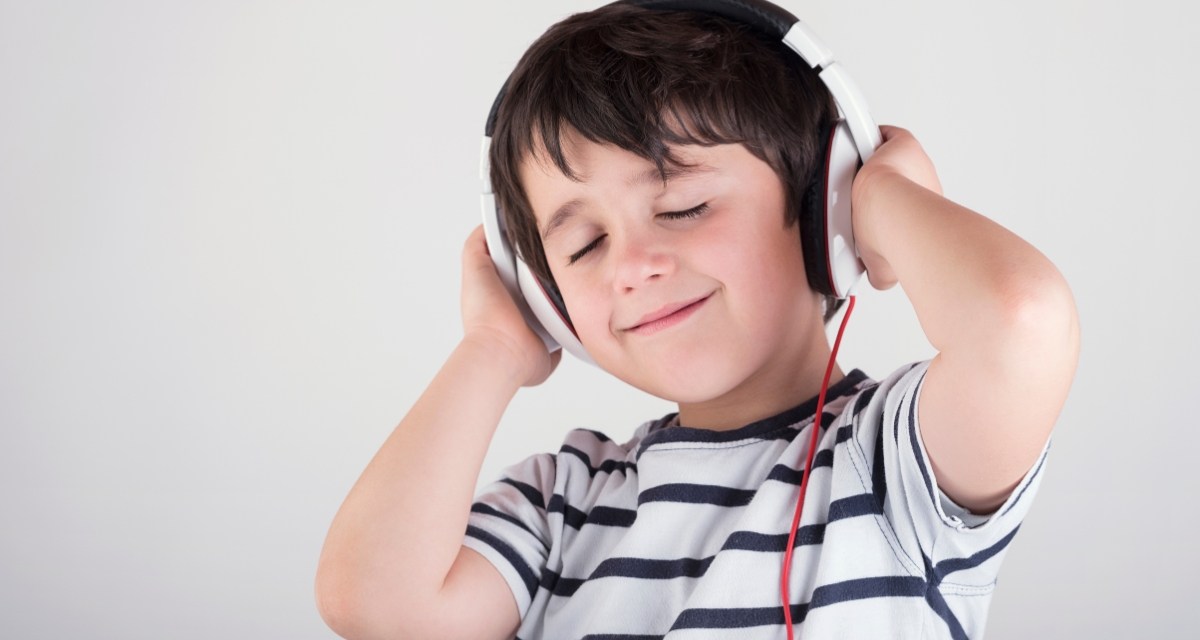
We’re treated to young kids bopping their heads as they first listen to Rimsky-Korsakov’s Flight of the Bumblebee. At first, they all look perplexed, like music critics perhaps hearing Bob Dylan for the first time. They let the frenetic notes sink in and one young boy says, “It kind of sounds like a bee.” Indeed! But wait, the same boy changes his mind quickly. “No, it doesn’t sound like a bee! It just sounds like horns!”
‘Pandemonium going on’
Some of the children are literal. “Sounds like a trumpet.” “Sounds like drums.” Others get more metaphorical. “Sounds like people running,” one says with a slight question mark attached. Another gets very profound. “It feels like I’m in a war.” Another young girl adds, “There’s like a pandemonium going on,” she states as she dances around.
A young boy looks right at the interviewer and says matter-of-factly, “Roadrunner,” referencing the WB Looney Tunes character. And yet another gently listens and says, “A butterfly.”
‘It sounds…happy’
In another clip from the series, children are asked to listen to Rossini’s William Tell Overture, which many adults relate to the film The Lone Ranger. One child shouts, “It sounds like a stampede!” Another boy in a brightly yellow striped shirt announces, “Uh…horses!” And yet another describes the feeling it gives him. “It sounds…happy.”
Kids also respond to Paul Dukas’s The Sorcerer’s Apprentice, to which one child relates to Peppa Pig. Another, who is dedicated to the original question of “how does this music make you feel?” answers, “This one makes me feel like sneaking up on something.” Some of the children merely blink or roll their eyes around as they try to grasp the chords. Another young girl astutely says, ‘It’s like it’s a play. But you’re not watching one. You’re listening to one.”
But then they get to Bach, sharing Toccata and Fugue with the kids, who can barely contain their emotions. Many look frightened to their core. Some laugh uncontrollably. “Spooky,” one announces sheepishly. And one child answers poetically, by sticking his tongue out and making an “Ehhhh” sound repeatedly. Another answers, “It’s like Santa, but scary. But actually, no just Santa. Like Christmas.”
On a softer note, the children are played Vivaldi’s “Spring” from The Four Seasons concertos. One young girl shares, “It sounds like playing outside.” Another boy is less poetic, when he shares, “It sounds like…music.” Onr boy thinks for a second and says, “It sounds like a little song in a castle”, while another girl agrees with the whimsy. “Yes, it sounds like flowers blooming.”
The comments under the clips, and there are many, are impressed with the experiment. “‘Sounds like flowers blooming, playing outside, birds, bees.’ Mission accomplished, Vivaldi!”
One Instagrammer notes that their experience as a music teacher has shown them how important this type of music is to play for children. “Longtime early childhood music teacher here – I love using this piece in a lesson on naming emotions or images in music, kids’ responses to this lesson are among my favorite over twenty-five years!”
Classical music can help kids
In a piece written for Triangle Learning Center, they share, “Studies in nurseries and daycare have shown that classical music can improve social interactions between kids. It can also improve performance on spatial tasks like solving puzzles. Lively pieces like Mozart’s Horn Concerto No. 4 are best suited for such environments and should be played quietly as background music. Children who grow up enjoying classical music in this form tend to be more creative and can better regulate their emotions.”
The ‘Mozart Effect’
An article on Cure Science backs this up and gives more specific data. “Research has long suggested a positive correlation between classical music and spatial reasoning, particularly in young children. Spatial reasoning, a cognitive skill critical for understanding and solving problems in mathematics and science, is enhanced when children are exposed to classical music. Studies involving the ‘Mozart Effect’ found that children who listen to Mozart and other classical composers show improved performance in tasks that require spatial-temporal reasoning.
The complex structure of classical music, characterized by harmonic and melodic elements, activates neural pathways related to spatial processing in the brain (Rauscher et al., 1993). These findings indicate that even short-term exposure to classical music can have measurable effects on children’s spatial reasoning abilities.”
Listening to music through the ears of children is a wonderful way to appreciate the composer’s intention and strip it raw. It’s also really, really cute.