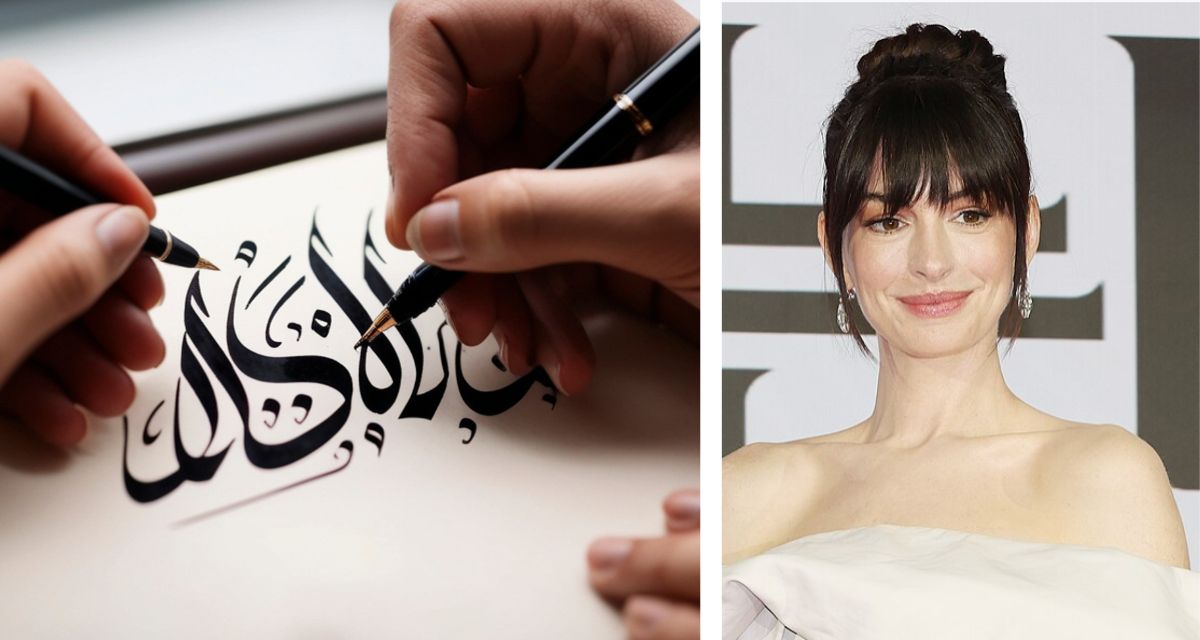
During an interview with People promoting the upcoming The Devil Wears Prada 2, Anne Hathaway was asked how she navigates growing older. She noted the importance of taking self-care seriously, remaining curious, and appreciating being in a place where you can assess decisions made earlier in life.
But it was what she said next, almost as an afterthought, that really got folks talking.
“I wanna have a long, healthy life. Inshallah, I hope so,” she casually but sincerely told her interviewer. The phrase, also spelled “insh’Allah,” translates to “if God wills” or “God willing,” and is deeply rooted in Islam.
However, it is also part of Arab culture in general. Religious or otherwise, people use it to convey resolute hope for the future while acknowledging that life follows its own plan.
Bridge-building moment
This ignited a positive frenzy online among Muslim and Arabic viewers, who were not only thrilled to hear the term used, but to hear it used correctly.
Rather than being seen as performative, the overall consensus was that this was a refreshing, bridge-building moment across cultures.
“Use it the way Anne Hathaway used it—honestly, humbly, in a moment when you genuinely want something good and know that wanting is only the beginning,” praised author Qasim Rashid.
Perhaps the timing of this interview has also contributed to its virality. Just weeks ago at Coachella, Sabrina Carpenter received backlash for her “this is weird” reaction when fans began engaging in the Zaghrouta, a celebratory, high-pitched ululation traditionally used in Arab cultures.
So, for someone equally high-profile to actually promote rather than seemingly reject a piece of Arab culture has been viewed as a kind of karmic recompense.
As HuffPost contributor Syeda Khaula Saad put it, “It just feels nice to be represented in mainstream media in an accepting, inclusive light. I hope that we get to see much more, insha’Allah.”
And as she pointed out, recently another Arabic word was brought into the mainstream when Muslim Egyptian American actor Ramy Youssef taught Elmo to say “habibi” (meaning “my love” or “my friend”) on an episode of Sesame Street.
This seemed to have a similarly profound impact.
“We have been dehumanized, portrayed in the worst way by the media for years.. I swear to GOD elmo saying ‘habibi’ made me teary and somehow healed the inner child that has been called the worst things for being different growing up,” one viewer wrote on Instagram.
It goes to show that when it comes to respecting other cultures, it doesn’t take a grand gesture. Even a word, when said correctly and with genuine intent, can extend an olive branch.
Perhaps this wisdom can be especially applied to mainstream media, where negative stereotypes run rampant alongside baffling overcorrections. Sometimes, it really is as simple as making space for what exists beyond your own lived experience and engaging with it.
Whether or not you agree that Hathaway executed this perfectly, may we all agree that the world could use more people looking to build bridges rather than reject what’s unfamiliar.