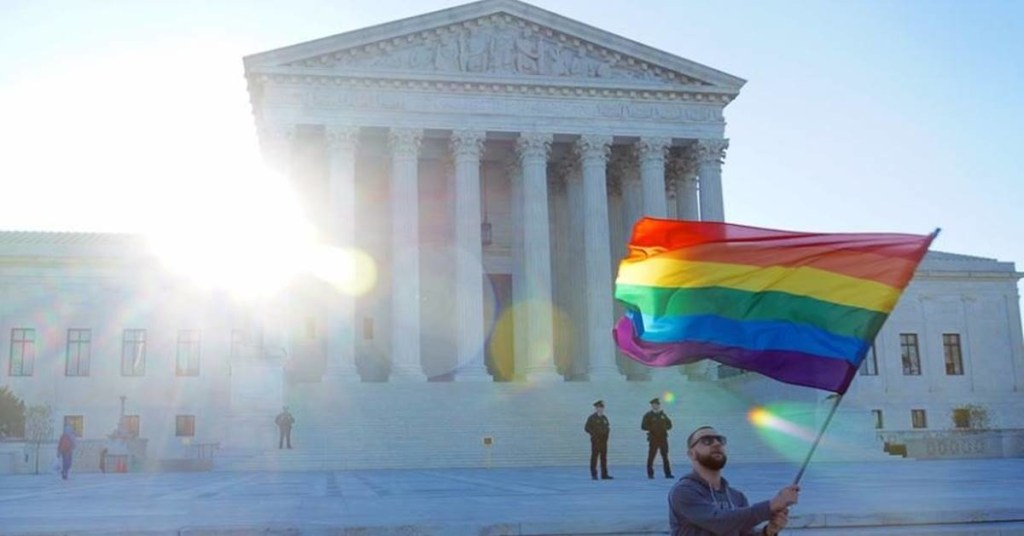
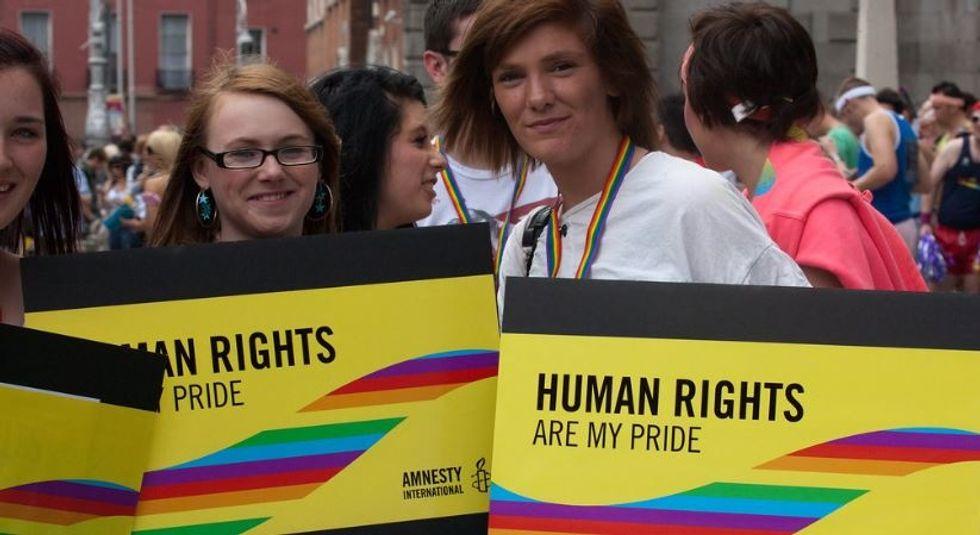
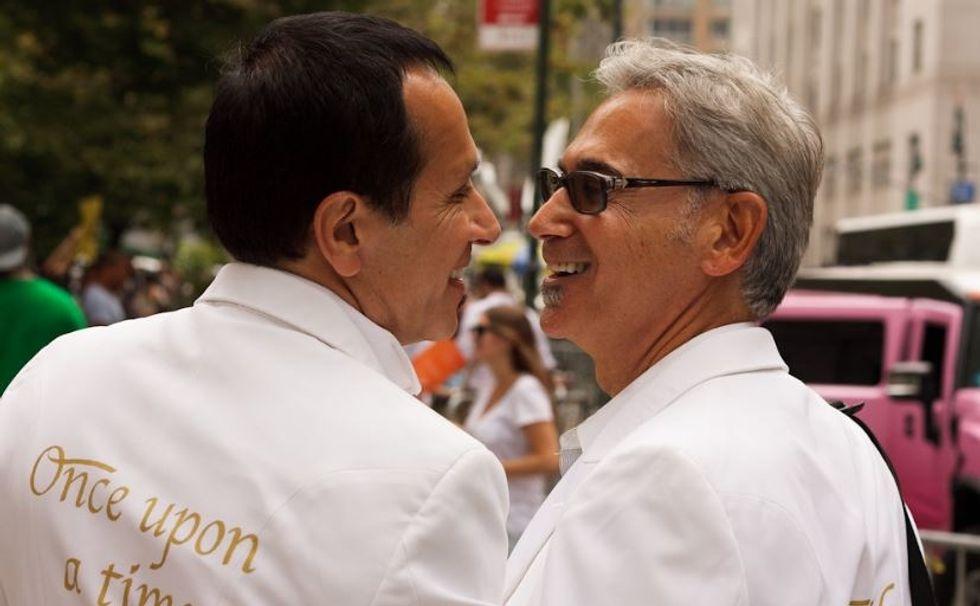
In June 2015 The Supreme Court of the United States declared same-sex marriage legal in all 50 states.
The legalization of gay marriage granted over 1100 statutory provisions to same-sex couples, many of them granting rights and privileges previously only afforded to heterosexual couples.
After the decision, President Barack Obama said the ruling will “strengthen all of our communities” by offering dignity and equal status to all same-sex couples and their families.
He called it a “victory for America.”
However, the law didn’t just benefit same-sex couples who want to get married, it also had a dramatic affect on LGBT youth. Two years after the legalization of gay marriage, the suicide attempt rate among LGBT youth declined significantly according to the Associated Press.
Suicide is the second-leading cause of death for U.S. teens. LGBT teens are five times more likely to make an attempt than their straight peers.
The study was conducted with over 26,000 LGBT youth participants in the 32 states where gay marriage was legalized up through the 2015 Supreme Court decision. The study found that suicide attempt rates dropped 7% among all students and 14% among gay kids after same-sex marriage was legalized in each state.
Part of the drop in suicide attempts by kids who didn’t publicly identify that they were gay could be because they were closeted or questioning.
There was no change in states where same-sex marriage wasn’t legalized.
While the change in suicide attempts doesn’t prove there’s a direct connection, researchers believe that the law made LGBT kids feel “more hopeful for the future.” They also believe the measures increased tolerance among their straight peers while reducing the stigmatization felt by gay kids.
Same-sex marriage was made legal in 2009 in Sweden and 2012 in Denmark.
The study found that couples in same-sex unions saw a 46% decline in suicide suicide, compared to 28% of those in heterosexual unions.
“Although suicide rates in the general populations of Denmark and Sweden have been decreasing in recent decades, the rate for those living in same-sex marriage declined at a steeper pace, which has not been noted previously,” researchers noted.
These studies show the power that societal recognition can have on stigmatized minority groups. When one is protected by the “law of the land” it means a lot more than what happens in a courtroom or at city hall.
It shows that you are accepted by the community and protected by those in power. For to love flourish — whether it’s loving oneself or sharing it with a partner — first it must first be protected.
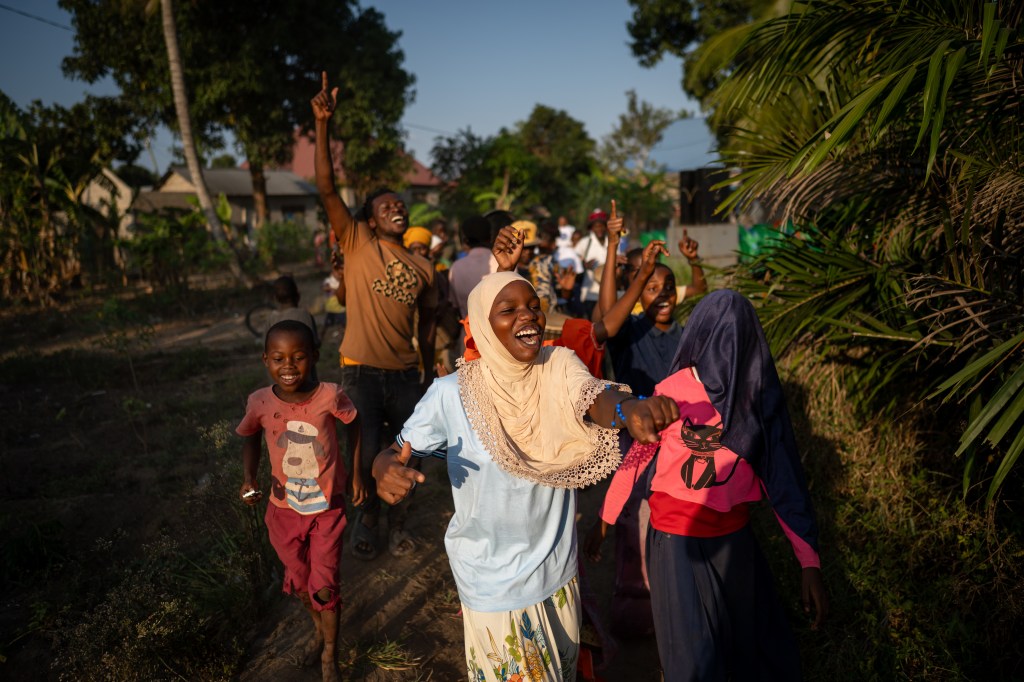
In a small village in Pwani, a district on Tanzania’s coast, a massive dance party is coming to a close. For the past two hours, locals have paraded through the village streets, singing and beating ngombe drums; now, in a large clearing, a woman named Sheilla motions for everyone to sit facing a large projector screen. A film premiere is about to begin.
It’s an unusual way to kick off a film about gender bias, inequality, early marriage, and other barriers that prevent girls from accessing education in Tanzania. But in Pwani and beyond, local organizations supported by Malala Fund and funded by Pura are finding creative, culturally relevant ways like this one to capture people’s interest.
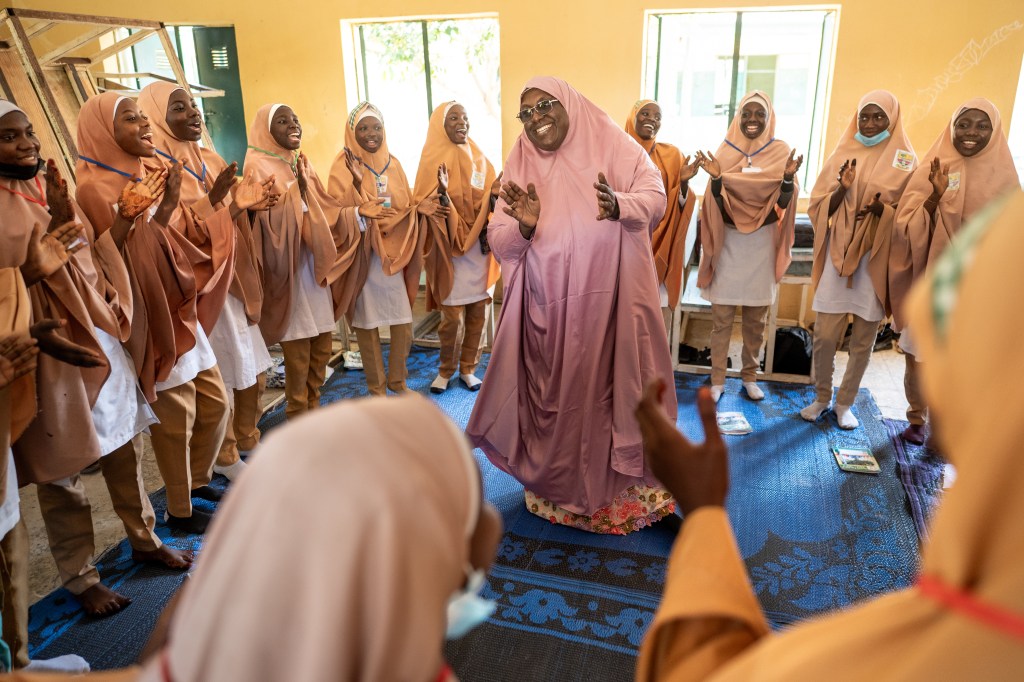
The film ends and Sheilla, the Communications and Partnership Lead for Media for Development and Advocacy (MEDEA), stands in front of the crowd once again, asking the audience to reflect: What did you think about the film? How did it relate to your own experience? What can we learn?
Sheilla explains that, once the community sees the film, “It brings out conversations within themselves, reflective conversations.” The resonance and immediate action create a ripple effect of change.
MEDEA Screening Audience in Tanzania. Captured by James Roh for Pura
Across Tanzania, gender-based violence often forces adolescent girls out of the classroom. This and other barriers — including child marriage, poverty, conflict, and discrimination — prevent girls from completing their education around the world.
Sheilla and her team are using film and radio programs to address the challenges girls face in their communities. MEDEA’s ultimate goal is to affirm education as a fundamental right for everyone, and to ensure that every member of a community understands how girls’ education contributes to a stronger whole and how to be an ally for their sisters, daughters, granddaughters, friends, nieces, and girlfriends.
Sheilla’s story is one of many that inspired Heart on Fire, a new fragrance from the Pura x Malala Fund Collection that blends the warm, earthy spices of Tanzania with a playful, joyful twist. Here’s how Pura is using scent as a tool to connect the world and inspire action.
A partnership focused on local impact, on a global mission
Pura, a fragrance company that recognizes education as both freedom and a human right, has partnered with Malala Fund since 2022. In order to defend every girl’s right to access and complete 12 years of education, Malala Fund partners with local organizations in countries where the educational barriers are the greatest. They invest in locally-led solutions because they know that those who are closest to the problems are best equipped to solve and build durable solutions, like MEDEA, which works with communities to challenge discrimination against girls and change beliefs about their education.
But local initiatives can thrive and scale more powerfully with global support, which is why Pura is using their own superpower, the power of scent, to connect people around the world with the women and girls in these local communities.
The Pura x Malala Fund Collection incorporates ingredients naturally found in Tanzania, Nigeria, Pakistan, and Brazil: countries where Malala Fund operates to address systemic education barriers. Eight percent of net revenue from the Pura x Malala Fund Collection will be donated to Malala Fund directly, but beyond financial support, the Collection is also a love letter to each unique community, blending notes like lemon, jasmine, cedarwood, and clove to transport people, ignite their senses, and help them draw inspiration and hope from the global movement for girls’ education. Through scent, people can connect to the courage, joy, and tenacity of girls and local leaders, all while uniting in a shared commitment to education: the belief that supporting girls’ rights in one community benefits all of us, everywhere.
You’ve already met Sheilla. Now see how Naiara and Mama Habiba are building unique solutions to ensure every girl can learn freely and dare to dream.
Naiara Leite is reimagining what’s possible in Brazil
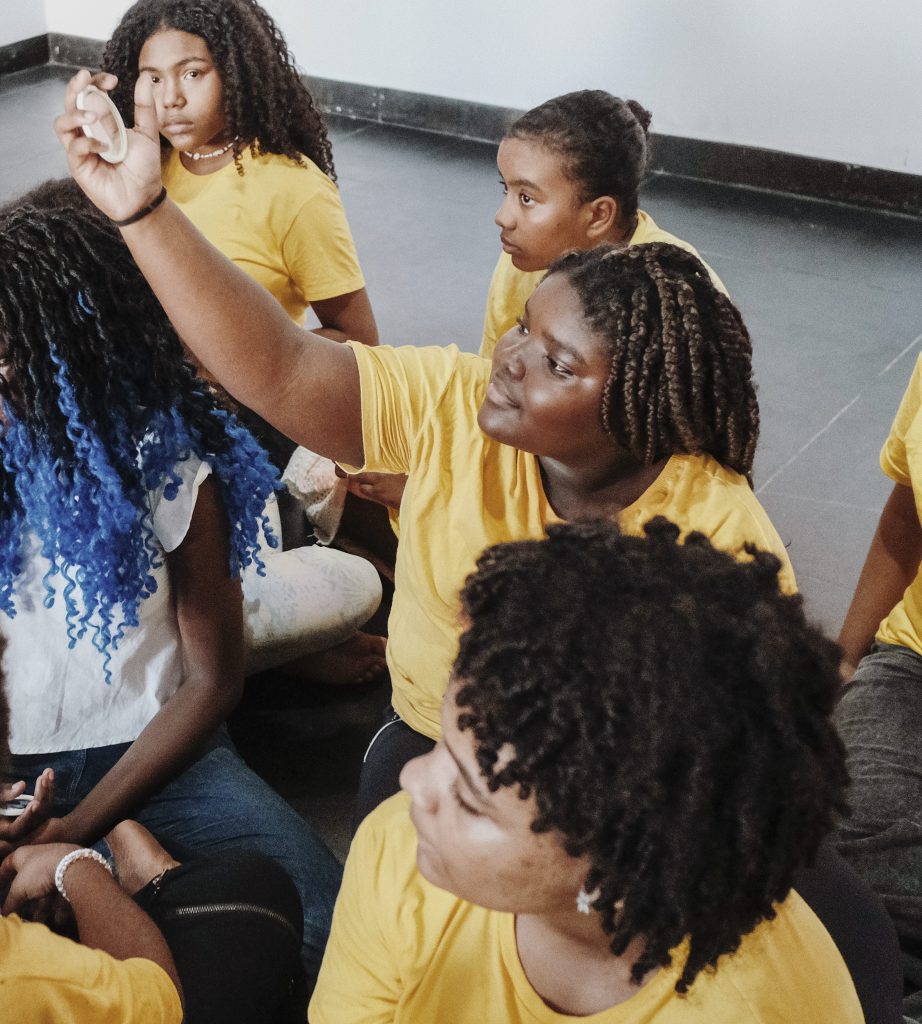
Julia with Odara in Brazil. Captured by Luisa Dorr for Pura
In Brazil, where pear trees and coconut plantations cover the Northeastern Coast, girls like ten-year-old Julia experience a different kind of educational barrier than girls in Tanzania. Too often, racial discrimination contributes to high dropout rates among Black, quilombola and Indigenous girls in the country.
“In the logic of Brazilian society, Black people don’t need to study,” says Naiara Leite, Executive Coordinator of Odara, a women-led organization and Malala Fund partner. Bahia, the state where Odara is based, was once one of the largest slave-receiving territories in the Americas, and because of that history, deeply-ingrained, anti-Black prejudice is still widespread. “Our role and the image constructed around us is one of manual labor,” Naiara says.
But education can change that. In 2020, with assistance from a Malala Fund grant, Odara launched its first initiative for improving school completion rates among Black, quilombola, and Indigenous girls: “Ayomidê Odara”. The young girls mentored under the program, including Julia, are known as the Ayomidês. And like the Pura x Malala Fund Collection’s Brazil: Breath of Courage scent, the Ayomidês are fierce, determined, and bursting with energy.
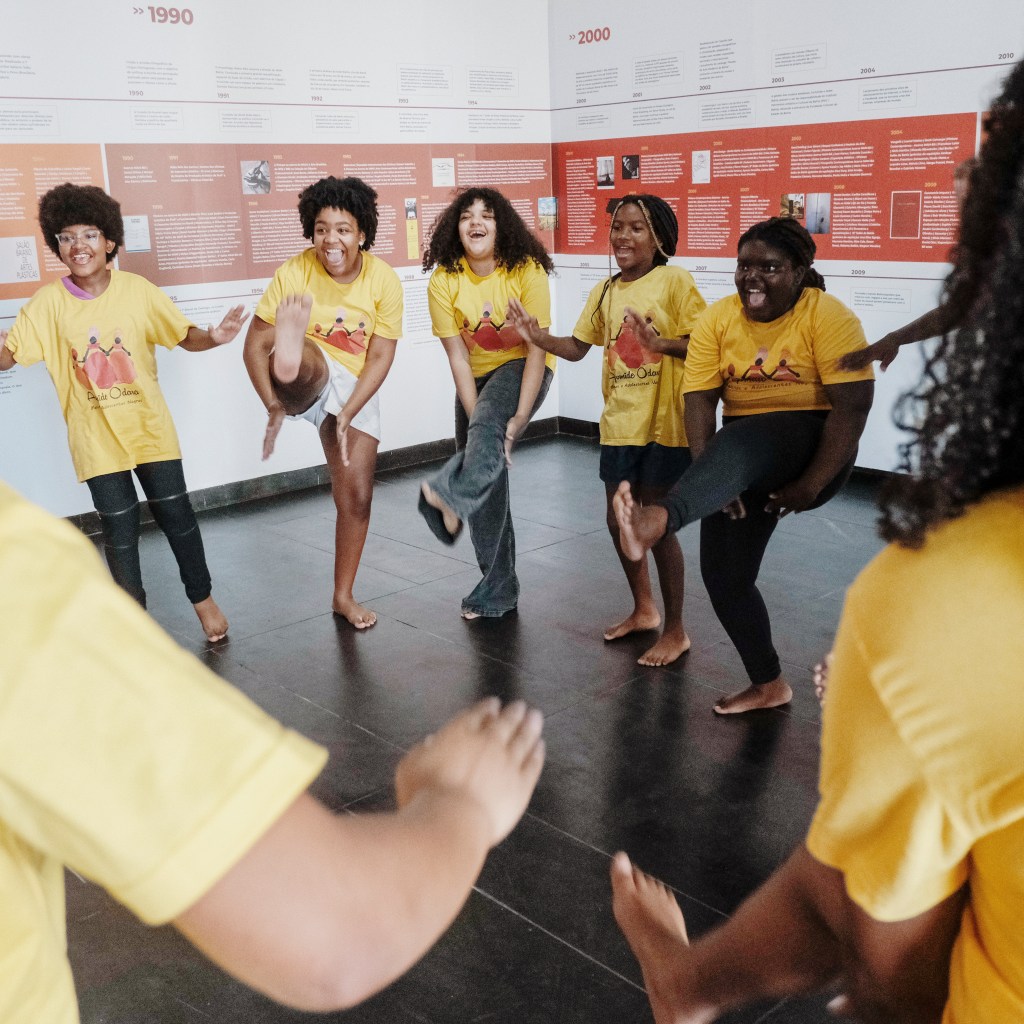
Ayomidês with Odara in Brazil. Captured by Luisa Dorr for Pura
Ayomidês take part in weekly educational sessions where they explore subjects like education and ethnic-racial relations. The girls are encouraged to find their own voices by producing Instagram lives, social media videos, and by participating in public panels. Already, the Ayomidês are rewriting the narrative on what’s possible for Afro-Brazilian girls to achieve. One of the earliest Ayomidês, a young woman named Debora, is now a communications intern. Another former Ayomidê, Francine, works at UNICEF, helping train the next generation of adolescent leaders. And Julia has already set her sights on becoming a math teacher or a model.
“These are generations of Black women who did not have access to a school,” Naiara says. “These are generations of Black women robbed daily of their dreams. And we’re telling them that they could be the generation in their family to write a new story.”
Mama Habiba is reframing the conversation in Nigeria
Centre for Girls' Education, Nigeria. Captured by James Roh for Pura
In Mama Habiba’s home country of Nigeria, the scents of starfruit, ylang ylang and pineapple, all incorporated into the Pura x Malala Collection’s “Nigeria: Hope for Tomorrow,” can be found throughout the vibrant markets. Like these native scents, Mama Habiba says that the Nigerian girls are also bright and passionate, but too often they are forced to leave school long before their potential fully blooms.
“Some of these schools are very far, and there is an issue of quality, too,” Mama Habiba says. “Most parents find out when their children are in school, the girls are not learning. So why allow them to continue?”
When girls drop out of secondary school, marriage is often the alternative. In Nigeria, one in three girls is married before the age of 18. When this happens, girls are unable to fulfill their potential, and their families and communities lose out on the social, health and economic benefits.
Completing secondary school delays marriage, and according to UNESCO, educated girls become women who raise healthier children, lift their families out of poverty and contribute to more peaceful, resilient communities.
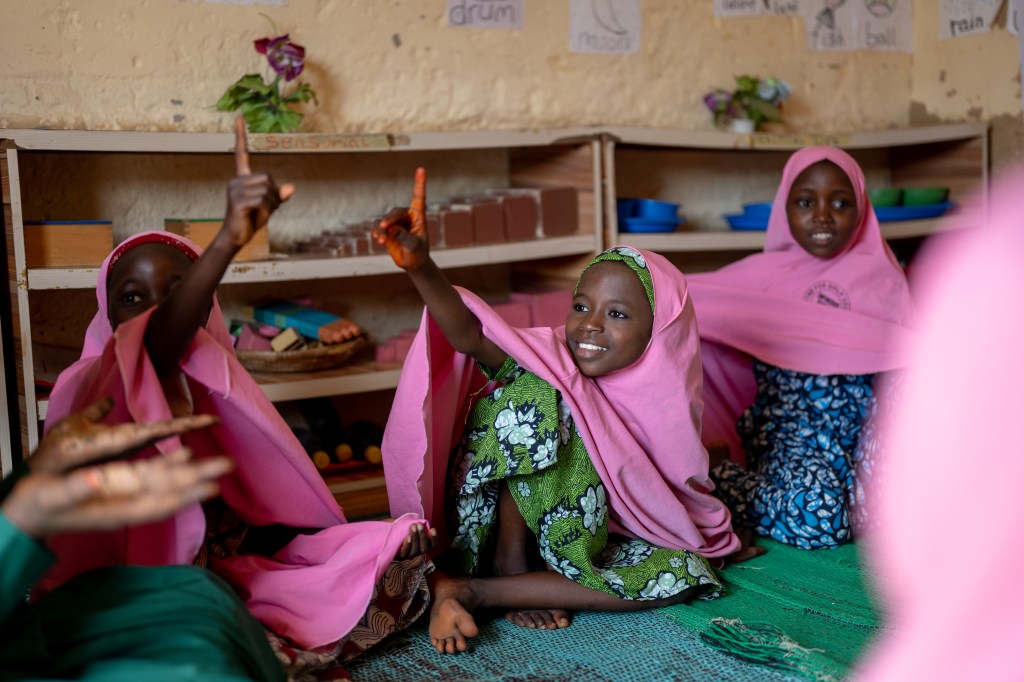
Centre for Girls’ Education, Nigeria. Captured by James Roh for Pura
To encourage young girls to stay in school, the Centre for Girls’ Education, a nonprofit in Nigeria founded by Mama Habiba and supported by Malala Fund and Pura, has pioneered an initiative that’s similar to the Ayomidê workshops in Brazil: safe spaces. Here, girls meet regularly to learn literacy, numeracy, and other issues like reproductive health. These safe spaces also provide an opportunity for the girls to role-play and learn to advocate for themselves, develop their self-image, and practice conversations with others about their values, education being one of them. In safe spaces, Mama Habiba says, girls start to understand “who she is, and that she is a girl who has value. She has the right to negotiate with her parents on what she really feels or wants.”
“When girls are educated, they can unlock so many opportunities,” Mama Habiba says. “It will help the economy of the country. It will boost so many opportunities for the country. If they are given the opportunity, I think the sky is not the limit. It is the starting point for every girl.”
From parades, film screenings to safe spaces and educational programs, girls and local leaders are working hard to strengthen the quality, safety and accessibility of education and overcome systemic challenges. They are encouraging courageous behavior and reminding us all that education is freedom.
Experience the Pura x Malala Fund Collection here, and connect with the stories of real girls leading change across the globe.
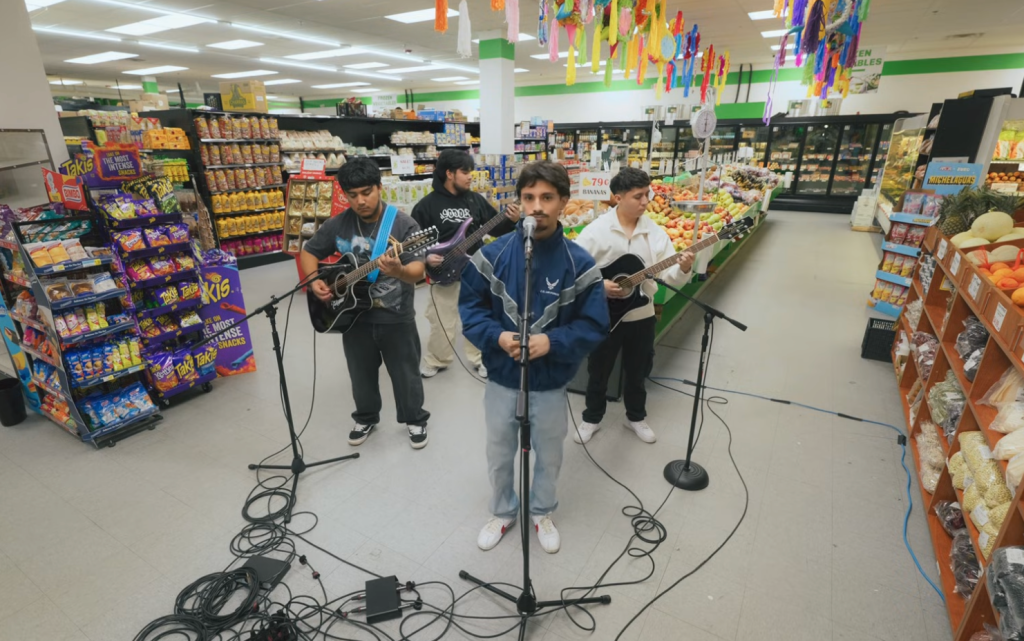
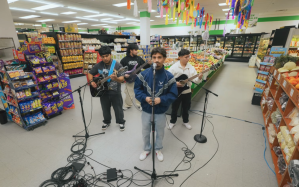
On the outside, Fiesta Fresh Market looks like just another neighborhood grocery store in New Castle, Delaware. Inside the produce section, however, customers can listen to local bands perform their latest songs live and in person. These “Mercadito Sessions” have since evolved from a simple community offering into a full-fledged live music event.
While grocery stores and live music don’t typically mix, at Fiesta Fresh Market, it’s part of the family. The Aguilar Garcia family, who run the store, have music in their roots—especially co-owner José Luis Aguilar Garcia, who works in the music industry.
In the hope of helping Mexican American bands gain more exposure, José and his family offered their produce section as a space for Latin musicians to perform for customers. They were inspired by National Public Radio’s “Tiny Desk Concerts,” which feature artists performing live in a confined space.
These produce section mini-concerts, dubbed “The Mercadito Sessions,” initially puzzled customers. Over time, however, shoppers came to welcome and enjoy the live music, with some even visiting just for the performances. Then, posts on the store’s social media featuring the bands began to go viral.
“The idea is to highlight independent artists from the area,” José told CBS Philadelphia. “Because it’s getting more attention online, people are excited. They’ll ask when we’re doing the next one.”
Commenters on the store’s Instagram celebrated the market’s concert concept:
“This is so cool. Not everyone wants to go to bars and/or have to stay up late to hear live music. I love this so much.”
“Honestly this is the absolute coolest thing ever.”
“Amazing music scenes going on everywhere, love the magic being shared.”
“We need this right now in the world…Real humans doing real human things.”
While the Mercadito Sessions showcase Mexican regional music, they are open to any genre. As the series gained attention online, many bands reached out to Fiesta Fresh Market to get booked. Several acts have come to perform and record as customers pick out fresh fruits and vegetables.
Concerts for the community, by the community
Musicians and customers alike say these concerts provide a sense of community among Latin Americans living in Delaware. They not only celebrate their culture, but also showcase it to others in New Castle.
“It gives us a platform to portray who we really are,” musician Jesús Beltran Méndez told CBS Philadelphia. “There’s a lot of misconceptions about who we are. There are bad people. There are good people. We are just human.”
Demand for the music has grown so much that the grocery store is now hosting and promoting a full-fledged concert event. What was once a place to buy groceries has become a spotlight for the community—all by offering a small space in an aisle.
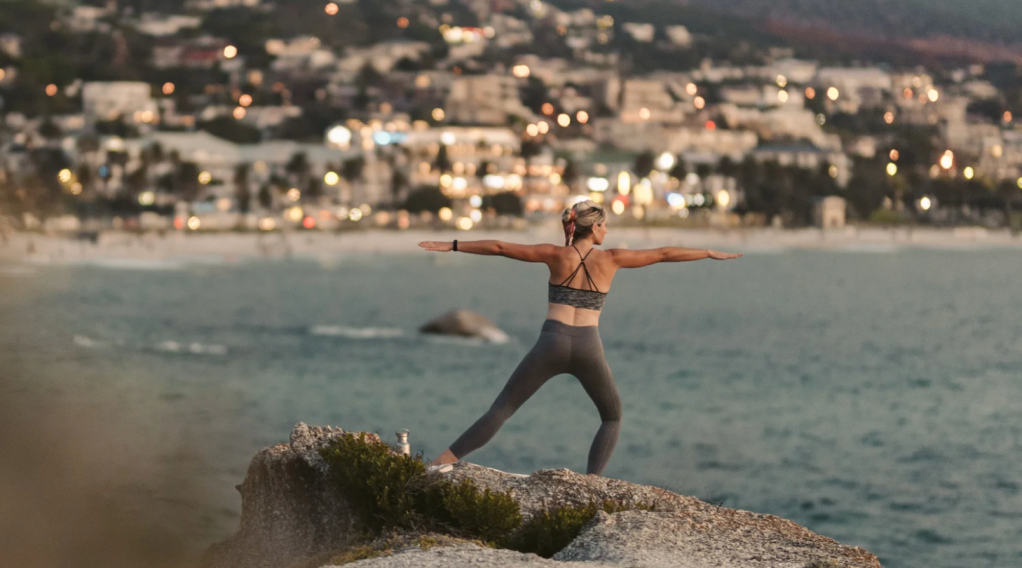
The notice informed her that a neighbor had filed a complaint about her “inappropriate public displays” and “disturbance of community aesthetics.” She was baffled. She practiced at 6 AM when almost no one else was awake, wore standard workout clothes, and made no noise.
Then it got stranger. When she followed up with the HOA manager for specifics, she learned the neighbor had gone further than a written complaint. They had been photographing her in various poses and submitted the photos as evidence, arguing they were “inappropriate for children to potentially see” and were “promoting Eastern religious practices in a family community.”
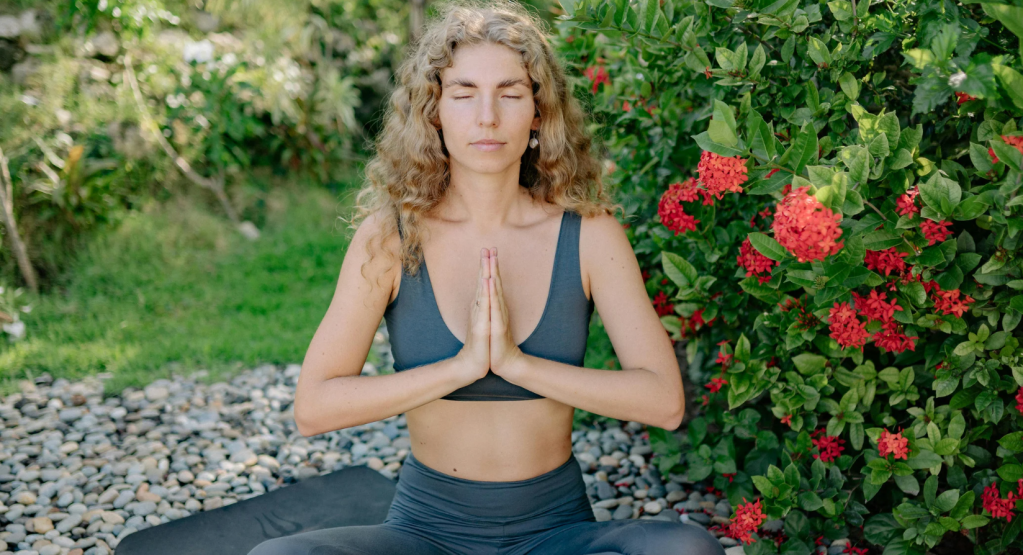
A woman meditates while doing yoga. Photo credit: Canva
“I’m literally just doing basic vinyasa flow!” she wrote.
The detail about Eastern religious practices caught significant attention when the post went viral on Reddit, and for good reason. Legal experts and housing advocates are clear on this point: the Fair Housing Act prohibits HOAs from restricting a homeowner’s use of their property based on religion. As one legal resource explains it plainly, an HOA can ban exercise broadly, but it cannot single out yoga specifically because of its perceived religious associations. The same logic applies to holiday decorations — an HOA that bans string lights for Diwali but allows Christmas lights is on legally shaky ground.
Commenters on the post were quick to flag this. “If that whole promoting Eastern religion thing is an exact quote, I feel like that right there is your ticket to fight,” wrote u/cheybananas. “They can’t just outlaw religious practices.”
Others were more focused on the neighbor’s surveillance. Several urged her to file a counter-complaint about someone photographing her on her own private terrace at dawn. “Taking photos of someone on their private residence without their knowledge or consent?” u/ok-pomegranate-6479 wrote. “Involve authorities if you have to, that’s creepy.”
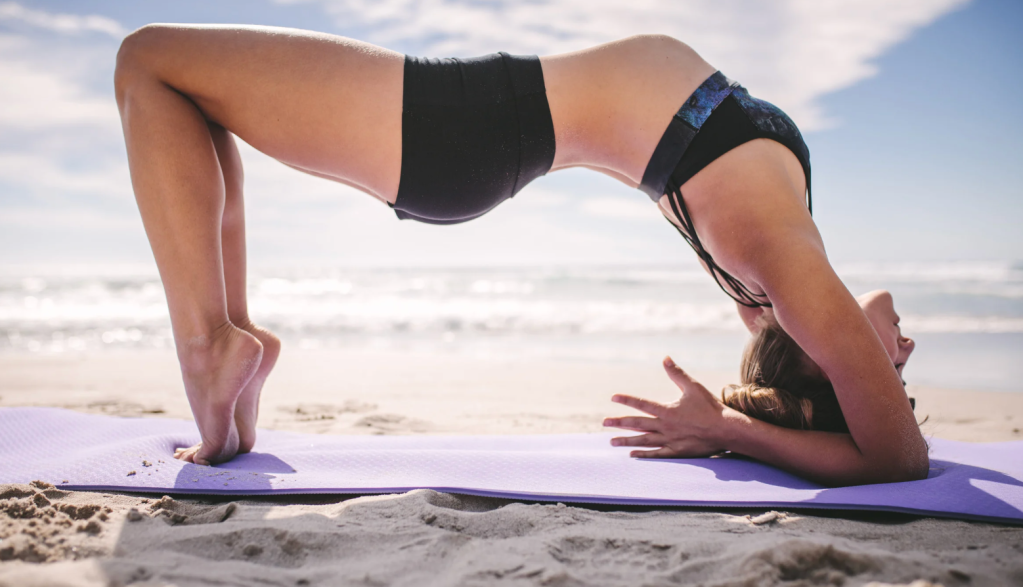
A woman executes an advanced yoga pose on the beach. Photo credit: Canva
The homeowner had already come to the same conclusion on her own. After reviewing her HOA’s bylaws, she found nothing prohibiting yoga or exercise on private terraces, only a vague clause about maintaining community standards. She drafted a formal email to the HOA board requesting the specific bylaw citation they were relying on, along with copies of all photos collected of her. She also made clear she was considering a counter-complaint about the neighbor’s behavior.
“The irony is that yoga is supposed to reduce stress,” she wrote, “but this whole situation is doing the opposite.”
Her experience isn’t unusual. A Rocket Mortgage survey of more than 1,000 HOA homeowners found that more than 3 in 10 feel their HOA has too much power, and 10% have considered selling their home because of it.
This article originally appeared earlier this year.
It’s hard to say what makes every woman happy or what every woman wants, and as a woman myself, I’m not a fan of sweeping generalizations based on gender. However, there are certain elements of walking through the world as a woman that are fairly universal, which makes me feel confident in saying this:
If you ever want to see pure, spontaneous joy, watch a woman put on a dress and suddenly realize it has pockets!
Women’s clothes are notorious for having either no pockets (most dresses) or pockets that are barely usable (most jeans and dress pants). And this isn’t just a perception—a 2018 study by The Pudding found that, on average, the front pockets on women’s jeans are 48% shorter and 6.5% narrower than they are on men’s jeans. I have pants in my wardrobe that look like they have both front and back pockets, but they don’t; where the pocket opening would be is sewn shut. Faux pockets may sound dumb—because they are—but they’re not uncommon. And some pockets are so small you can’t even fit a ChapStick into them.
To test whether women’s pockets really are as bad as they (we) say they are, popular vlogger Nick Wilkins tried on a pair of women’s jeans. The fit was great and they looked fine. But the moment he held up the items he usually puts in his own pockets, women collectively let out a loud “HA!” Sure enough, when he tried to put his phone and wallet in the pockets, his reaction reflected what women have said countless times ourselves: “Are you serious? That’s all it does?”
As it turns out, the history of women’s clothing and pockets goes way back, and, of course, there have been various trends and shifts over time. Some people have posited that companies don’t put usable pockets into women’s clothing so that they can sell more purses and handbags. However, according to a deep dive in FASHION Magazine, that’s not quite the whole story. Believe it or not, we’re still living with leftover, outdated notions of men being active and women being passive, with men’s clothing needing to be functional and women’s clothing desiring form over function.
“Essentially: Men are required to act and therefore need practical clothing,” writes Annika Lautens. Women are expected to simply appear and be watched—their beauty prioritized above all else. And these outdated gender ideals are still being sewn directly into our clothing.”
The irony, of course, is that women tend to carry more things than men. Sure, sometimes that necessitates a purse, but sometimes you don’t want to carry something extra. Pockets are nice. They’re convenient, helpful, and functional. We want them. We need them. What in the name of patriarchy is the problem here?
It can’t be that hard to make normal pants for women with decent pockets. Jeans with decent pockets. Dress pants with decent pockets. And yes, dresses with pockets, too. We are seeing more independent and female-led clothing makers providing pockets, and clearly the awareness about it is finally kicking in pretty universally. But as most women can attest, it remains an issue.
Maybe women would simply be too powerful if we all had pockets. Maybe this will be our ultimate last stand. Pockets or bust, ladies. Pockets or bust.
This article originally appeared [time-difference] ago. It has been updated.
Gen X stylist Jennine Jacob posts a lot of content encouraging women not to fall victim to ageism and instead find confidence in their self-expression. But in a recent video, she got candid about how freeing it’s been to reject society’s norms in her own life.
In the clip, Jacob referenced a woman on Instagram who shared that “no one prepares you for mid-forties ugly.” The video appears to come from content creator Susie Trigg Tucker, who got candid about the natural “grieving process” that comes with “your physical beauty changing.”
Addressing her own gray hair and textured skin, Tucker urged other women to “lean into acceptance” and “work on redefining what makes us beautiful.”
But for Jacob, the experience hasn’t been quite so painful. In fact, it’s been rather liberating.
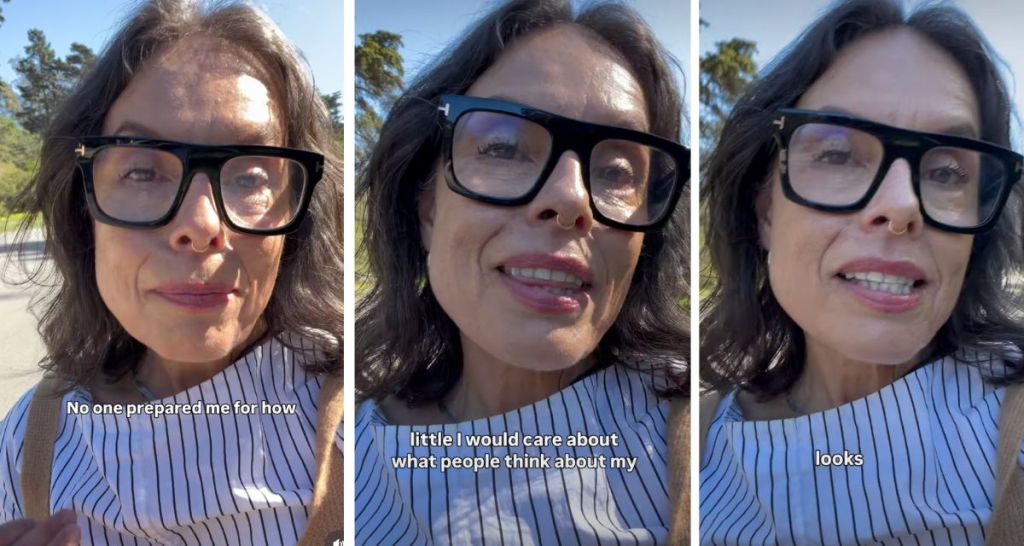
“No one prepared me for how little I would care about what people think about my looks,” she said. “Nobody prepared me for how comfortable I would feel about my looks at this age.”
“And yes, I have wrinkles, I have thinning hair, I have gray hair…I have all of the things that are like conventionally bad, but I literally could not care less,” she added.
Her reason for this laissez-faire attitude is simple. “I did my time in the patriarchy, and my time is done,” she shared.
“I have never felt more free being so ‘ugly’…I am so grateful for it,” Jacob concluded.
Judging by the comments, she’s not the only one who has felt this way.
“100000000000%!!!! I feel the best ever!!!!❤️”
“I couldn’t agree more! Aging out of the male gaze is the best part! Now there’s an inner peace like I have never known. I wish this gift for all women.”
Granted, it seems that Jacob did spend some time, as Tucker put it, “redefining what beauty looks like.” In previous videos, she shared that when she first turned 40, she used Botox, face tape, and filters in hopes of looking younger. Now she doesn’t use any of those things and says she feels “1,000x better.”
Really, these two women aren’t arguing two different points of view. It’s perfectly natural for women (or anyone, really) to grieve a physical way of being that no longer exists one moment, and the next appreciate the wisdom and confidence that come with growing older. That’s pretty much adult life in a nutshell.
Their conversation arrives at a moment when aging, beauty standards, and cosmetic procedures are being talked about more openly than ever. Social media feeds are filled with discussions about Botox, fillers, preventative treatments, and whether embracing natural aging is empowering or simply another unrealistic expectation placed on women.
For some people, cosmetic procedures feel like a form of self-expression and autonomy. For others, rejecting those options can feel equally empowering. Increasingly, women are speaking honestly about the complicated emotions that come with getting older in a culture that has long prioritized youth.
What voices like Tucker’s and Jacob’s show is that there isn’t just one correct way to navigate that experience. Some people grieve the changes that come with age. Others feel an unexpected sense of freedom when they realize they no longer feel pressured to perform beauty for anyone else.
And, sometimes, those two feelings can exist at the very same time.
What matters most, as both women suggest in their own ways, is giving people the space to define beauty and self-worth on their own terms. For many women entering their 40s and beyond, that definition is finally becoming something they get to write themselves.
Throughout human history, we have had a lot of gods, at least 18,000, to be specific. Most people believe in just one and forget about the other 17,999 that have fallen in and out of favor over the millennia. If we focus on the major god of the Abrahamic religions—Christianity, Judaism, and Islam—we, as mortal…
Throughout human history, we have had a lot of gods, at least 18,000, to be specific. Most people believe in just one and forget about the other 17,999 that have fallen in and out of favor over the millennia. If we focus on the major god of the Abrahamic religions—Christianity, Judaism, and Islam—we, as mortal humans, still have many questions that remain unanswered in their holy books.
The problem is that humans can ask all the questions we like, and the big answer we usually get is: “God works in mysterious ways.”
Well, a group of folks on Reddit wouldn’t accept that as an answer, so they got together and listed all the questions they would ask God if they had the chance. Many people questioned whether we truly have free will, while others wondered where God is when tragedies happen. It’s great food for thought, and just maybe God will one day pop into the comments section and sort things out.
1. The question of evil
“Are you willing to stop evil, but unable? Or are you able to stop evil, but unwilling?”
2. Can I have a do-over?
“Can I start all over again and retain my memories, please?”
3. Where did you come from?
“How were you created if you’re the creator?”
This is a big question, and for many religious people the answer is simple: God is eternal and the “uncaused cause” of everything else. This rubs determinists the wrong way because they believe that everything must have a prior cause.
4. The Fieri conundrum
“Why did you allow Guy Fieri to create Donkey Sauce?”
For the uninitiated, Donkey Sauce was popularized by Guy Fieri on his TV show Diners, Drive-Ins and Dives. Although it may have a bizarre name, it’s basically a mayo-and-garlic sauce that often features Dijon mustard, lemon juice, and Worcestershire sauce.
5. The big three
“I have no singular question, I have three that are combined…
How can we have free will if you’re omniscient (all-knowing). You knew what colour my pajama pants were before I put them on tonight, yet I’m supposed to have made that decision myself with my own free will? That doesn’t make sense if you already knew.
If you’re omnipotent (all powerful) then how could you make a stone so powerful that you couldn’t lift it… if you couldn’t, you’re not all powerful, if you can… then you’re not all powerful.
If you’re all-loving then why is there so much pointless suffering?”
6. Why such a poor communicator?
“Why do you make yourself in a way that makes it so humanity has to follow a thousand-year-old book. Why can’t you just give us monthly updates or some sh*t via our phones. Seems a lot more effective.”
7. The pizza predicament
“Why is pizza such an unhealthy food? It should be something you consume all the time to stay in shape and fight cancer.”
“Why don’t you just give us a clear evidence, before blaming us for not believing in you?”
“If you have a plan for us and know everything that will ever happen, why do you blame us and condemn people to suffer forever for the crime of not doing what you wanted us to do when you already knew everyone who was going to was going to do that and counted on it?”
10. A corgi question
“Did you just put all the creation points in cuteness and herding skills when you made the corgi, or was there another plan for this dog?”
“Could you microwave a burrito so hot that you yourself could not eat it?”
It seems that God would probably be able to eat a burrito cooked as hot as it can get, because that would only reach 212°F, the boiling point of water. Microwaves cook food by making water molecules vibrate, so once the temperature reaches the boiling point, the water turns into steam rather than getting any hotter.
13. Why are we here?
“It’s one of life’s great mysteries isn’t it? Why are we here? I mean, are we the product of some cosmic coincidence, or is there really a God watching everything? You know, with a plan for us and stuff. I don’t know, man, but it keeps me up at night.”
14. Is it all about suffering?
“The weird thing about this for me is wondering what I’d do next. like if god really answers ‘to suffer, it’s fun for me to watch you all be miserable’ do you just … go to work the next day”
15. Reincarnation
“What’s my soul’s goal so I can stop reincarnating already?”
There are only a few things in this life we can’t evade. One of them is aging. Sure, there’s Botox and facelifts and all that jazz to help us look younger. But in the end, our cells simply insist on keeping score, and no matter how hard some might fight it, our DNA is bombarded…
There are only a few things in this life we can’t evade. One of them is aging. Sure, there’s Botox and facelifts and all that jazz to help us look younger. But in the end, our cells simply insist on keeping score, and no matter how hard some might fight it, our DNA is bombarded with hits that will eventually take us down.
The good news is that with years often comes wisdom. I like to think of our minds as though they were hiking trails. Each trail has a sign, but instead of telling us which way to go, the signs remind us who we are. This past week, I was honored to read some of those signs at the senior home where my mom resides. Nearly every conversation, at least for me, yielded little sage sachets of advice that are truly invaluable.
Know someone before you marry them.
A woman in her early 80s shared that it takes about a year for someone’s “true nature” to be revealed, even in the most intimate of relationships. (This, at least according to a professor she had in graduate school.) In other words, she says, “A person can hide their psychological pathologies, on average, for about a year.”
So, she wishes younger people would wait at least that long before moving in or getting married. “Slow down,” she said. “Really take your time before you take the leap. Everyone puts their best foot forward at first and then sometimes that mask can slip. Don’t get stuck.”
Some research shows that the “honeymoon phase” can, of course, vary in length. Brides.com shares, “The honeymoon phase is an early part of a couple’s relationship where everything seems carefree and happy. It usually lasts from six months to two years and can be marked with lots of laughs, intimacy, and fun dates.”
No matter how long that phase lasts, her advice to slow down and really get to know someone before fully committing seems like (mostly) a good idea.
I met a woman who was a retired OBGYN. We talked at length about perimenopause, hormones, and life after 50. She urges, “Do the research, but also (for the most part) listen to your doctors. Most of them know what they’re doing.”
We both kind of laughed, and then she leaned in and said, “No. Really.” She added, “Nothing wrong with getting a second, or even third opinion. But listen and read all you can before it’s too late.”
One thing my mom rather casually mentioned really stuck with me. This was how difficult it is to make new friends—and not for reasons one might think. Sure, senior living facilities can be just as cliquey as groups were in middle school. But for my mother, it was less about fitting in and more about fearing she would lose people as she grew to love them.
“No one warns you how many of your new friends will pass on. When I first moved here, I befriended a brilliantly funny woman and within six months she was gone. This happens more and more and you never get used to it. You’re never prepared.”
If you don’t want to eat dinner at 4:30, you don’t have to.
On a simpler note, this one might be obvious to some, but it was certainly a common topic among the people with whom I spoke. Even though they serve dinner at 5:00 in many senior homes, it doesn’t mean you can’t put it in Tupperware and save it for later. To that point, just because people age, doesn’t mean they have to go to bed at 8:00 p.m. (Though for many, that timeline is just perfect.)
One man noted, “Just because we all live in one place doesn’t mean we all become one person. We’ve got night owls and early birds and every other kind of bird you could imagine. Eat and sleep when you want to. It’s still your life.”
His friend added, “If you want to play Mahjong at midnight, do it!”
This article originally appeared last year. It has been updated.
The English language is full of idiosyncrasies and inconsistencies that can drive English learners batty. But even for native English speakers, some words and phrases can cause confusion in ways they may not expect. For instance, not only are there English words that mean opposite things depending on how they are used (called contronyms), but…
The English language is full of idiosyncrasies and inconsistencies that can drive English learners batty. But even for native English speakers, some words and phrases can cause confusion in ways they may not expect.
For instance, not only are there English words that mean opposite things depending on how they are used (called contronyms), but there are also words and phrases that have opposite meanings depending on where they are used.
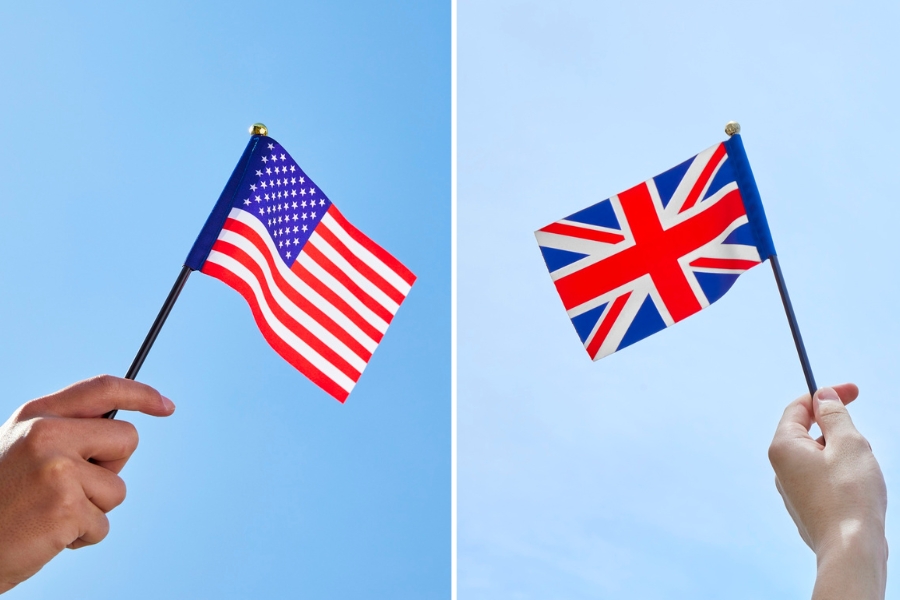
A person holding an American flag and a person holding a British flag. Photo credit: Canva.
Evan Edinger moved to the United Kingdom 13 years ago. He shares videos on YouTube about his experience as an American living in the U.K., including linguistic differences. For instance, saying the food in London is “quite good” may sound like a compliment, but it would likely be received as a bit of an insult by Londoners.
“English is full of words that quietly flip meaning when you cross the Atlantic,” he says. “Words that you think sound polite or a compliment, like this one, can really land you in hot water if you use them across the pond.”
“Quite”
That’s because Americans generally use “quite” as an intensifier. If something is “quite good,” we see it as better than just “good.” For Brits, “quite” is often used as a dampener, so “quite good” can mean less good than simply “good.”
“With all due respect…”
Other opposite meanings are less subtle, like the phrase “with all due respect.”
“I’ve lived in this country for over 13 years, and I’ve only found out this year, Brits do not mean this when they say it,” shares Edinger. “When an American says, ‘With all due respect,’ it’s usually just a polite way to pad out some criticism. ‘With all due respect, I think we should do it this way instead.’ Basically, ‘I respect you. I do. But I do disagree with you in this instance.’ In Britain, they say the same words, ‘with all due respect,’ but the implication is that they actually don’t respect you or your opinion at all. The amount of respect that you’re due? That’s in question. ‘With the respect you’re due,’ which, of course, is nothing.”
Can we just all admit that when someone says "With all due respect" they don't respect them at all?
It’s a bit similar with “I’ll bear that in mind.” In the U.S., that usually means you’ll consider it and might actually do it. In the U.K., it more often means you have no intention of doing it and have probably already forgotten it.
“Though diving deeper into the data, it would appear that Americans in the Northeast are significantly more likely to share the British stance,” Edinger adds. “I think that makes sense, actually. But overall, American culture prioritizes direct communication. If they like your idea, an American will probably tell you. Same as if they dislike it, you’ll know. As a lot of British culture emphasizes indirectness and not causing offense, expressions like, ‘I’ll bear that in mind,’ act as a polite way of refusing an idea without outright saying it to soften the blow.”
To “table” something
If you’re an American and you hear “let’s table that discussion,” it means, “Let’s not talk about this now. We’ll come back to it later, if we have time.” For Brits, it means, “Let’s talk about this right now.”
“This is one expression that causes a lot of confusion in international meetings,” says Edinger. “In British English, to table a motion or an issue means to bring it forward for discussion. For instance, if an item is tabled in parliament, well, it has been figuratively put on the table to be addressed immediately.”
In the U.S., it’s the opposite.
“In both houses of the United States Congress, the motion to table is used to kill a motion without debate or further discussion,” he says. “Quite interesting that both countries’ political bodies have the same word that means quite literally the very opposite. It’s quite literally the difference between, ‘Well let’s talk about this immediately. It’s really important,’ and ‘Let’s never speak of this again.’”
A “moot point”
For Brits, a “moot point” is a point that’s debatable—something that can be argued either way, which aligns with its original meaning. A moot was an Anglo-Saxon assembly or court, so a moot point is one that would be argued there.
For Americans, a moot point isn’t debatable—it’s irrelevant. It doesn’t matter. There’s no point in debating it at all anymore. (Or, as Joey on Friends would say, “Like a cow’s opinion.”)
How did we end up with such an opposite meaning? Edinger explains:
“Often, an important part of law school is arguing hypothetical cases in a moot court for practice. It’s similar to a mock trial. So, a moot point would be a point brought up in a moot court. During the 19th century in America specifically, this evolved more to focus on the hypothetical nature of the moot point.”
Edinger points out that even the Supreme Court of the United States uses the term “moot question” to refer to a question that has no bearing on an issue.
Solicitor
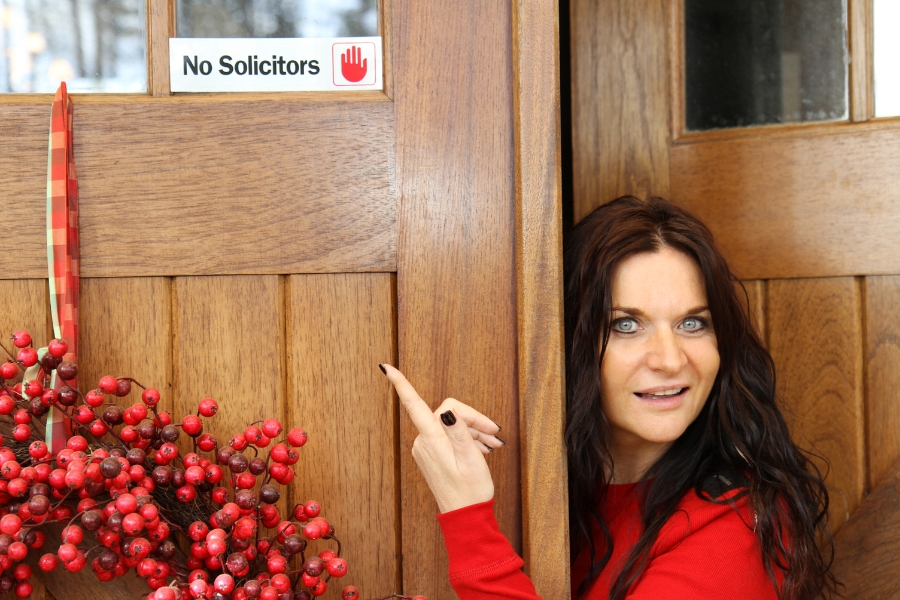
In the U.S., when we hear the word “solicitor,” we usually think of a door-to-door salesperson or someone who knocks on the door trying to persuade us to buy something or believe something. People often hang “No Solicitors” signs on their front porches to deter them.
A “No Solicitors” sign in the U.K. might be confusing, as a solicitor is not a salesperson but “a qualified legal professional who provides specialist legal advice on different areas of law and is responsible for representing a client’s legal interests.” Americans would call them lawyers, but in the U.K., a lawyer could be anyone working in a law-related role.
Public school
A solicitor in the U.S. probably went to public school, and a highly regarded solicitor in the U.K. also probably went to public school, but the term means something completely different in each country.
In the U.S., a public school is a free school funded by the government that anyone has the right to attend. In the U.K., a public school is one of the prestigious, selective, and expensive private boarding schools attended by the children of wealthy families. The famous Eton College is a public school in the British sense, but not at all in the American sense.
In Britain, the secondary school you attended is often considered a lot more important than the university you attended.
For instance, attending prestigious "public schools" like Harrow, Winchester and Eton signals you are of a "higher class".
To make matters even more confusing, what Americans call public schools, Brits call state schools. In the U.S., we usually use “state school” to refer to public universities.
Momentarily
If a pilot announces, “We’ll be landing momentarily,” Americans understand that to mean “very soon.” But for Brits, that sentence might be confusing, since “momentarily” means “just for a moment.” As in, maybe the plane will touch down and then immediately take off again.
It’s the difference between “in a moment” and “for a moment,” which may not seem huge but could lead to big misunderstandings.
It just goes to show that even when we speak the same language, there’s plenty of room for miscommunication.
Actress and author Mariel Hemingway has quite the legacy. Her grandfather was the famed Pulitzer Prize– and Nobel Prize–winning author Ernest Hemingway. In fact, her family is full of writers, actors, painters, and opera singers. Like her grandfather, she came by her own talents at a cost. Many of those gifts in acting and writing…
Actress and author Mariel Hemingway has quite the legacy. Her grandfather was the famed Pulitzer Prize– and Nobel Prize–winning author Ernest Hemingway. In fact, her family is full of writers, actors, painters, and opera singers. Like her grandfather, she came by her own talents at a cost. Many of those gifts in acting and writing came with deep mental anguish.
While Hemingway continues a successful career onscreen—she was nominated for a Best Supporting Actress Oscar as a teen for her role in Manhattan—she is also a writer. In exploring her complicated family struggles, she never seems to shy away from stripping away any semblance of ego. This is reflected in her work, where she bares vulnerable parts of life: mental health, depression, and most recently, aging.
In a recent Instagram post, she shared a close-up photo of her face—no smile and perhaps just a dash of makeup. With Sheryl Crow’s “If It Makes You Happy” underscoring the photo, she wrote:
“I have been talking about aging lately.
But today it is not aging.
It is wrinkles.
The lines around my mouth I swore I would never have. The soft crepe skin at my neck that seems to appear overnight. The mirror catching me in light I did not ask for.
Some days I do not care.
Other days it feels like a punishment.
I eat well. I move my body. I take care of myself. I do the things we are told will protect us.
And still… time touches my face.
There is a voice that whispers, Why this? Why me? Why now?
I know it is fashionable to say we earned our wrinkles. That this is graceful. That this is beautiful.
And yes… part of me knows that is true.
But another part feels something deeper.
What I realized is this.
The ache is not about the wrinkles.
It is about identity.
Somewhere along the way we start to believe the mirror is telling us who we are.
That youth equals value. That smooth skin equals worth. That beauty equals belonging.
And that is the lie.
Because there is a woman inside of me who has not aged one day.
She is calm. She is radiant. She is grounded. She is sovereign.
She does not disappear because my skin changes.
She was never my skin.
She is my rhythm. My breath. My voice when I stop performing.
Time changes the body.
But it does not touch the throne.
When I remember that, something softens.
I stop fighting the season. I stop punishing myself for nature. I stop confusing appearance with identity.
This is not about pretending you love every wrinkle.
It is about remembering you are not the wrinkle.
It is not what you add.
It is what you remove.
Remove the belief that beauty is youth. Remove the fear that aging equals invisibility. Remove the story that your value lives in your face.
When there is nothing left to remove, the Queen remains.”
Fans respond
Her prose has clearly resonated with fans. More than 92,000 people liked the post, and over 5,000 have commented so far. Famous and non-famous Instagrammers alike chimed in to share how touched they were.
Go-Go’s guitarist Jane Wiedlin exclaimed, “Yes! Exactly what you said. We are not allowed to age, at the same time men are elevated as they age, for their sage wisdom.”
Comedian Chelsea Handler simply wrote, “Beautifully said.”
Another woman shared a personal anecdote: “Last Sunday was my 70th birthday. I looked into the mirror and cried tears of joy. Lines and dark spots? No! They were tears of joy, gratitude, and for my life. If you make it this far, it’s for a reason. Life is so worth living. Who cares what I look like? I’m covered in paint every day anyway!”
Hemingway is far from the first woman to openly discuss the beauty standards seemingly placed on women in society.
In a recent appearance on the podcastHow to Fail with Elizabeth Day, actress Kate Winslet didn’t hold back. “We’re so conditioned, women in our 40s, to think, ‘Okay, well, I’m creeping closer to the end,’” she said. “You know, you think you go into menopause and you’re going to stop having sex, and your boobs are going to sag, and your skin’s going to go crepey, and all these things.”
She continued, “First of all, so what? And secondly, it’s just conditioning. You know, I think women, as they get older, become juicier and sexier and more embedded in their truth and who they are. More powerful and more able to walk through the world and care less.”
It can seem easier said than felt. Luckily, many women are feeling more empowered to get raw thanks to celebrities using their voices.