Alt Subhed: Mike Nesmith was told no one would watch music on TV. He proved them wrong.
Alt Subhed: Music fans never saw Mike Nesmith’s second act coming, let alone his third.
Between the British Invasion and the birth of Flower Power, pop music was constantly transforming during the Swinging Sixties. From Detroit’s Motown empire to the folk-rock evolution, new sounds could pop up anywhere. Even television.
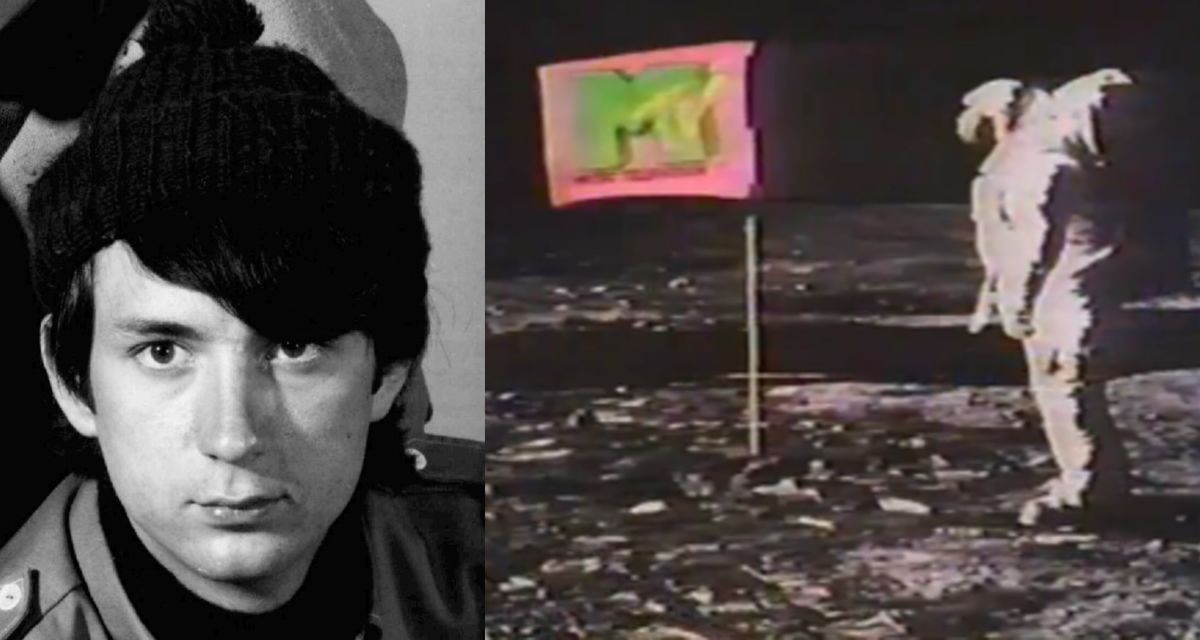
In the late 1960s, Michael Nesmith became a household name. He was the sarcastic, wool-hat-wearing member of The Monkees. Together with his bandmates, he starred in the band’s popular NBC television sitcom of the same name. For many artists, being in the “Prefab Four” might be the absolute peak of their career. But for Nesmith, being a Monkee was just the first chapter of a much larger story.
Beneath Nesmith’s laconic, twang-infused persona lived a relentless visionary. Turns out it runs in the family. In his autobiography, Infinite Tuesdays, he attributed his inquisitive mind to his mother. Bette Nesmith Graham, you see, invented Liquid Paper. And while Michael grew up comfortable, he yearned more than anything to make music.
NBC cancelled The Monkees sitcom after 58 episodes, but Nesmith’s artistic journey was just beginning. He co-wrote the script for The Monkees cult-classic film, “Head.” His collaborator on the story was none other than actor Jack Nicholson. And after the band’s breakup, Nesmith started a journey that fundamentally changed how people consume music and media.
The accidental birth of the modern music video
In the late 1970s, Nesmith recorded a catchy, breezy solo track titled “Rio.” His record label approached him with a specific request. They needed a promotional clip they could easily ship overseas to broadcast on European television shows.
These pre-recorded films were typically cheaper to produce than flying someone across the Atlantic. But in 1977, music videos simply did not exist in the way we know them today. The promo clips tended to be static and unimaginative. So Nesmith took the label’s modest budget and decided to experiment. He hired a small crew and shot a series of whimsical, edited visual vignettes to accompany the song.
The concept of pairing popular music with cinematic imagery felt familiar to Nesmith, since songs were performed this way on every episode of The Monkees. His resulting short film for ‘Rio’ felt new and exciting. He didn’t want to just send it overseas for a one-off promo; he wanted to create a new form of music television.
Nesmith originally pitched his concept to local TV station executives. He was hoping to start local, then build to national syndication. The television establishment’s reaction was dismissive. In his autobiography, he states their response amounted to, “No one will ever watch music on television.”
PopClips goes the world
That same year, Nesmith travelled to Australia to promote “Rio.” Local fans couldn’t stop praising what they referred to as his “Pop clip.” That was the colloquial term for music promotional clips Down Under. Michael felt it was the perfect moniker to sell the idea to music and TV execs alike.
In 1980, Nesmith produced eight episodes of the show PopClips. The shows were hosted by a “video jockey,”and began airing on a fledgling cable network. You know it now as Nickelodeon. Viewers tuned in by the thousands, proving the cynical executives wrong.
PopClips became an instant cultural sensation. New videos were swapped in, especially from artists from the UK. The format of PopClips laid the groundwork for the next stage in music video evolution: a channel of its own.
Nesmith was asked to join the core team that would head up the launch of MTV. He ultimately declined the offer. What had intrigued him most was the filmmaking aspect of music videos. He also feared that a corporate TV gig would keep him from making music.
His pioneering work in visual media was far from finished, however. His studio, Pacific Arts Corporation, became a leader in independent video distribution and production. Nesmith produced the cult classic Repo Man and directed the comedy title Tapeheads. Set in the early era of music videos, the film stars 80s icons John Cusack and Tim Robbins.
A third act that changed technology forever
Decades after helping launch the music video revolution, Nesmith secured a completely unexpected third act in the tech world. In 2012, the former Monkee earned an official United States patent for inventing a groundbreaking method to embed live-streaming video directly into a website or virtual environment.
Long before streaming video became the backbone of the internet, Nesmith was already sketching out the future. From his first bubblegum pop records to the birth of MTV and early web video architecture, Mike Nesmith proved he was never just a prefabricated television star. He was a genuine technological pioneer who spent his entire life looking over the horizon.