upworthy
Add Upworthy to your Google News feed.
Google News Button
More

A letter to my grandpa and other fathers of the fatherless.

Know that you simply cannot ever know how much you’re doing just by being around.

fathers, friends, family, mentors, role models, community

Being a mentor has incredible value to the mentee.

True
Fathers Everywhere

We almost bit it, right there on a Minnesota gravel road.

My grandpa had taken me out for a summer afternoon ride on his motorcycle, a Honda, and it had been a wonderful excursion of warm, sunny freedom. I enjoyed the wind rushing past me, how strangely heavy my head felt on top of my neck with the helmet around it, and feeling like one mass moving in unison: me, my grandpa, and the motorcycle.

I was 12, and I’d been going for motorcycle rides with him since I was little, at first in sidecars, and later on (I don’t remember the exact age), on the actual bike. It was always a little scary, but I’d beaten back thoughts of trepidation many times, and nothing bad had ever come of those rides.


I don’t think we were headed anywhere in particular that day. We were just enjoying being alive.

But something happened on the gravel road. I still don’t know what it was. It wasn’t a curve in the road or anything jumping out in front of us, but something just gave way in the dusty gravel beneath the tires and the bike got all swervy. It tilted for just a second or two, and then grandpa got it under control again. We were fine. We were alive.

But I think it scared him more than he let on. We took the truck everywhere for the next couple of weeks.

We were spending the summer together in Backus, Minnesota, that year.

We lived in southeastern Wisconsin — he and my grandmother, a few of my youngest aunts, and my little cousin — in the house he built while he worked at American Motors. But he was retired by that summer, and he liked to go up to his little plot of land in Minnesota from time to time to get away.

My grandpa.

During this particular summer, my grandma put my aunt in the driver’s seat of her trusty car, packed me and my little cousin and my two other aunts in with her, and sent us off to surprise my grandpa in Minnesota during his alone time. Truth be told, I’m pretty sure she thought he had a woman on the side and wanted us to either catch him at something and report back or just throw a wrench in his enjoyment.

We didn’t catch him at anything. We got there, and he was surprised but happy to see us. We all stayed in the trailer he had on the little plot of land. We tucked away in various bedrooms and sleeper sofas, and we spent a week there with him.

I was having so much fun that when the week was up, I didn’t want to go home with my aunts and cousin. If we’d cramped his style at all, he certainly set it aside because he had no qualms about me staying there with him for the rest of the summer.

It’s an amazing feeling, to be welcomed as part of someone’s “alone” time.

For someone you really like being around to basically say, “I can have you around and still be alone.”

To this day, I still feel like that’s the best kind of companionship (and it’s the same kind I enjoy with my kids, too).

We played cribbage and war at a round maple table in the trailer kitchen that summer, a table sometimes covered with crumbs from saltines or ashes from his cigarettes.

I’d pull ticks out of the dog and we’d snuff them out in the ashtray. We went fishing at 5 a.m. on Pine Mountain Lake, with a thermos of black coffee that we shared and canned meat spread that we’d eat on crackers.

We’d bring home what we caught, clean it, fillet it, and pan-fry it for dinner. We’d visit his relatives on a farm and do farm work. I shingled the farmhouse roof with a new cousin I’d met that summer. I learned to shoot a rifle.

We visited his friend who ran an oat-processing facility, and I got to see how whole oats were delivered, and the process they went through to be turned into rolled oats.

He took me, on his motorcycle, to a Chippewa powwow in Hackensack, where I was welcomed to dance. We went to tiny diners in little towns where he knew the locals, and I’d eat delicious, greasy bacon cheeseburgers. Sometimes we’d just sit around and do our own things and not talk much at all. I liked to read, and my grandpa liked to think.

I didn’t have a dad growing up. In some ways, I didn’t have a mom, either.

Lucky for me, my grandparents really stepped in, and my grandpa was the closest thing to a dad I ever had. He was a farm boy from Minnesota who fought in the Korean War, survived, and settled in Wisconsin to work for American Motors, marry my grandma, and have seven kids.

He wasn’t highfalutin, but like I said, he liked to think. He liked to enjoy the quiet and be alone with his thoughts, and that’s something I picked up from him. He was, at his core, a planner and a philosopher. If he was a feminist, he never expressed it, but the manner in which he treated me implied the utmost faith in my versatility and competence as a human being, and I was never coddled, condescended to, or counted out.

I lost my little brother that summer to cancer. That might be the real reason I was sent to Minnesota to stay with grandpa: to keep me even further from the last weeks of the illness.

A couple of years later, I lost my grandma, too. I would have my grandpa for another decade after grandma died, until I was 25.

He’d been sick with emphysema and a broken hip during his last few years, and the doctors didn’t think he would make it out of the hospital alive that time. But he did, and I knew I’d been granted a chance to spend as much time as I could with him.

I’d been so busy before that with two small children, college, and work. But I resolved to find or make time however I could. I visited him on my lunch breaks nearly every day. I brought him his favorite catfish on Fridays. He wanted to quit smoking, something he’d done since he was 10 years old on his farm, and everyone in our family thought he was nuts. “What is the point?” “It won’t help your emphysema at this stage.” “That just seems like a lot of agony for nothing.”

But I understood. Sometimes I felt like I understood my grandpa better than anyone because of all the time we’d spent together. I understood that he knew it wouldn’t help, but he just needed to know that he wasn’t beholden to anything, that he was going out of this world his own man, addicted to nothing.

When I lost my grandpa, it was different than when I’d lost my brother and grandma.

I was so young when those deaths happened. But with my grandpa, I was old enough to know exactly what he’d meant to me and exactly what I was losing. I knew exactly how shaped I’d been by my time with him, and the grief was overwhelming and consuming.

I know now, 10 years after he died, that I was lucky to get to experience that agony and loss, because the alternative would have been having no one to lose.

I may not have had a father, but I had this man — my scrappy, minimalist, freewheeling-yet-planning-ahead grandfather who wanted me around and had confidence in me as a person.

I’m not sure I got a raw deal without a father at all. In fact, I think for me, it went the very best way it could have.

I’m a strong, accomplished woman, a wise mother, a person who thinks she can do lofty things just because she has decided to, and a thinker, a planner. I have never let anyone or anything entrap me or keep me stuck in a phase I don’t want to be in. I stand on my own two feet, and I’ve made a life for myself with these two hands.

Grandpa Loran: Without all the cues about who I am that I got from you, I don’t know that these things would be true today.

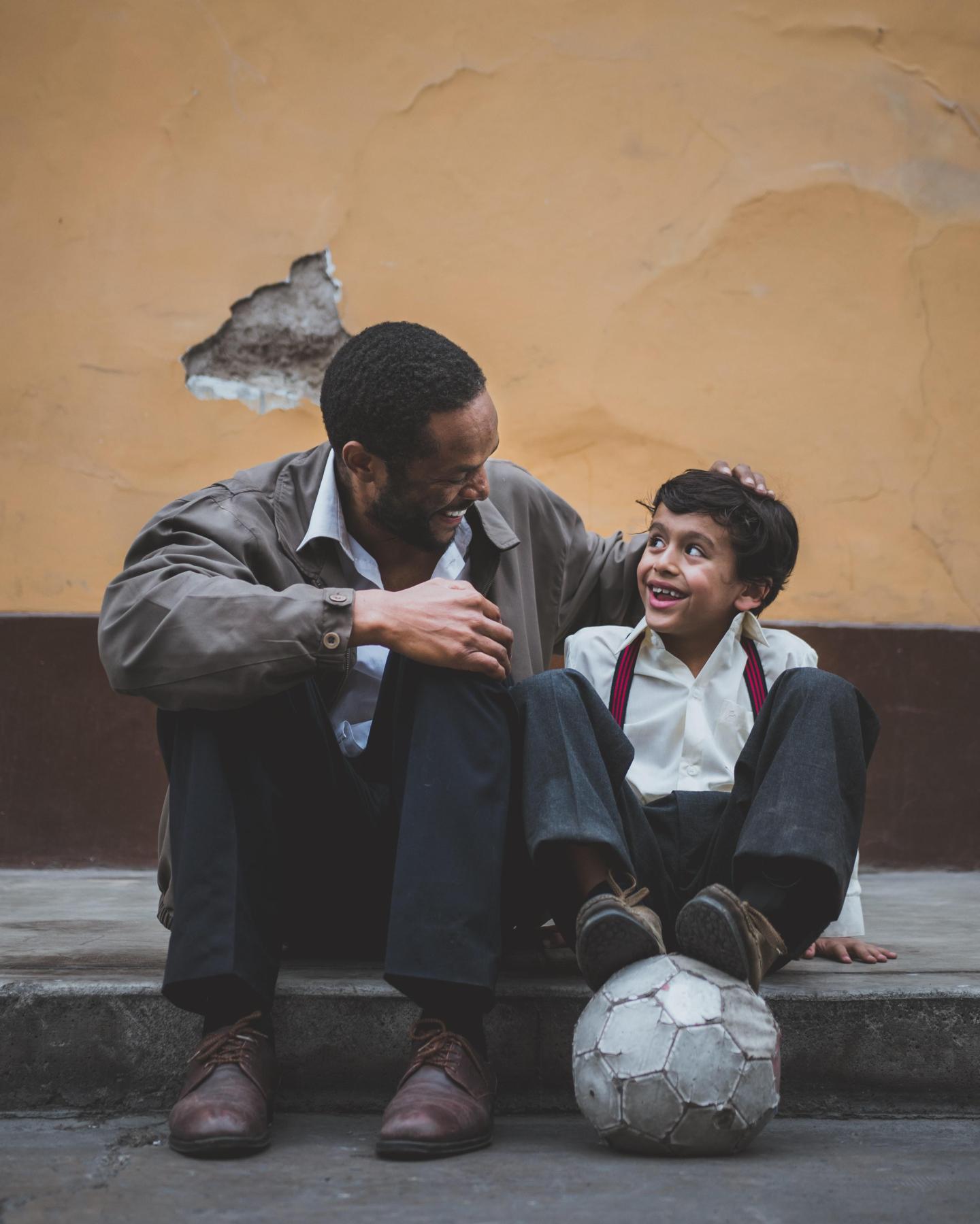
For those who are fathers to a person who doesn’t have one — whether you’re a stepdad, an uncle, a grandpa, an older brother, or a family friend — know that you simply cannot ever know how much you’re doing just by being around.

By saying: “I like having you around. You’re good company, and I much prefer having your help to doing these tasks on my own,” you're making a world of difference. It doesn’t take anything fancy, but it really does mean the world to the kid you’re sharing your time with.



Gen Z; Millennials; technology; cell phones; social media; teens and technology; teens social media

Gen Z is the first generation less cognitively capable than their parents. Denmark has the solution.

Nearly every parent hopes their child will be better off than they are: smarter, more secure, and more well-adjusted. Many parents see this as a stamp of successful parenting, but something has changed for children growing up today. While younger generations are known for their empathy, their cognitive capabilities seem to be lagging behind those of previous generations for the first time in history.

Dr. Jared Cooney Horvath, a teacher turned cognitive neuroscientist who focuses on human learning, appeared before Congress to discuss concerns about cognitive development in children. In his address to the members of Congress, he says, "A sad fact that our generation has to face is this: our kids are less cognitively capable than we were at their age. Since we've been standardizing and measuring cognitive development since the late 1800s, every generation has outperformed their parents, and that's exactly what we want. We want sharper kids."


kids, intelligence, sharp kids, generations, education, cognitive abilities Student smiling in a classroom, working on a laptop.Photo credit: Canva

Horvath explains that the reason this happens is that each generation has gone to school longer than the previous generation. Gen Z is no exception to the longer duration of time spent in school, but they're the first ones who aren't meeting this normal increase in cognitive development. According to the cognitive neuroscientist, the decline is due to the introduction of screens in the classroom, which started around 2010.

"Across 80 countries, as Jean was just saying, if you look at the data, once countries adopt digital technology widely in schools, performance goes down significantly. To the point where kids who use computers about five hours per day in school for learning purposes will score over two-thirds of a standard deviation less than kids who rarely or never touch tech at school," Horvath reveals.

In most cases, the decline in performance doesn't result in better strategies. The neuroscientist shares that the standardized testing has been adjusted to accommodate lower expectations and shorter attention spans. This is an approach that educators, scientists, and researchers went to Capitol Hill to express wasn't working. But not every country is taking the approach of lowering standards to meet lowered cognitive ability. Denmark went in the opposite direction when it realized their students were slipping behind.

France24 recently interviewed educators in Denmark following their seemingly novel approach to students struggling with cognitive development. Since the beginning of the 2025/2026 school year, Denmark has not only been having students turn in their cellphones, but they've also taken tablets, laptops, and computers out of the classroom. No more digital learning for the majority of the school day. Danes went old school by bringing back physical textbooks, workbooks, and writing assignments. The results have been undeniable. Even the students can't seem to deny the success of the countrywide shift in educational approach.

"I think the biggest issue has been that, because we kind of got rid of the books and started using screens instead, that we've noticed that a lot of the kids have trouble concentrating, so it's pretty easy to swipe with three fingers over to a different screen and have a video game going, for example, in class," Copenhagen English teacher, Islam Dijab tells France24.

Now, instead of computers being part of every lesson, Denmark uses computers very sparingly and with strict supervision. One student says that it has been nice not having screen time at school because she loves to read and write. But it wasn't just the lack of attention span children were developing, they were also developing low self-esteem and poor mental health due to the amount of time spent on devices.

kids, intelligence, sharp kids, generations, education, cognitive abilities Students focused and ready to learn in the classroom.Photo credit: Canva

The data showing the negative impact of screens on teens' brains has prompted a nationwide change in Denmark that extends outside of the classroom. Afterschool activities are eliminating or extremely limiting electronic use. There is also a national No Phone Day that encourages everyone to put away their devices for the day, and Imran Rashid, a physician and digital health expert, is petitioning parliament to ban social media use for children under the age of 15. The no phone movement in Denmark is a nationwide effort that hopes to right the ship before another generation feels the effects.

food, food storage, refrigerator, peanut butter, fridge
Photo Credit: Canva

A woman is surprised as she peers into a refrigerator. A jar of peanut butter.

Imagine scrolling through Instagram Reels when a meme pops up featuring a cartoon jar of mustard. The caption reads, "Whatever you do, don't refrigerate me!" After getting past the idea that a jar of mustard could communicate, it left a few people wondering, "Does mustard not belong in the fridge?"

Of course, this wouldn't be the first time experts decided where condiments or other food items should go. In an article by Upworthy colleague Jacalyn Wetzel titled "Heinz triggers all of the internet with a single tweet: 'Ketchup. goes. in. the. fridge!!!'" the stance seems pretty clear. She shares photos from an X user showing the back of the bottle, which clearly reads, "Refrigerate after opening." A few users continue to argue, asking questions like, "So why is it on shelves in supermarkets and shops, then?" Heinz actually replied, "Where do you keep your soft drinks, Dave?"


Now, newer lists have begun circulating that identify certain food items that shouldn't be kept in the fridge. Some of these may come as a surprise, especially to non-chefs or people without food expertise:

TOMATOES

In a Southern Living article titled "12 Foods You Should Never Keep in the Fridge," writer Kaitlyn Yarborough is clear that tomatoes belong on the counter. Yarborough explains, "The cold, humid atmosphere inside the fridge can affect the texture of your tomatoes before you have a chance to use them. Just make sure to keep them out of direct sunlight."

POTATOES

Again, this is largely a texture issue. On KitchenAid's website, they suggest storing potatoes "in a paper bag at room temperature" to avoid making them "gritty and overly sweet due to the moisture."

PEANUT BUTTER

peanut butter, food, food storage, peanuts, refrigeration  Peanut butter with a black spoon. Photo by Corleto Peanut butter on Unsplash

In another surprising twist, experts at KitchenAid say peanut butter doesn't need to be refrigerated for up to three months: "Peanut butter maintains its spreadable consistency at room temperature for three months, after which refrigeration is recommended."

AVOCADOS

This only applies to avocados that haven't been sliced yet. If you're ready to use them and don't want to "slow down the ripening process," Yarborough suggests storing them at room temperature: "Once cut open, store any halves in a Ziploc plastic bag or container in the fridge."

PEACHES (AND OTHER STONE FRUITS)

Perhaps more surprising on the list were certain types of fruit that many might have assumed should be refrigerated. Yarborough urges people to leave peaches and other "stone fruits," such as plums and nectarines, at room temperature until they ripen. "You can stick stone fruits in the refrigerator once they're ripe, but keep in mind that the dry air will eventually dehydrate and wrinkle the fruit," she writes.

BANANAS

A quick tutorial on how to store bananas. www.youtube.com, Cooking at Pam's Place

KitchenAid also offers advice on keeping bananas from browning too quickly, even suggesting storage options beyond the counter: "Your best options include an open countertop, a pantry or a dedicated banana hook."

FRENCH FRIES

To mix things up a bit, in a Reddit thread titled "What food item should never be refrigerated?" one foodie offers this advice: "Leftover French fries. It's like a mouthful of abomination no matter what you do to reheat them after their trip to the cold tomb."

HOT SAUCE

This one made quite a few lists, with some pointing out that, by name alone, it seems obvious it shouldn't be cooled. One Reddit user writes, "Hot sauce. Having it chilled just seems fundamentally wrong."

The food experts at KitchenAid agree: "To preserve the rich flavor and intense heat of your hot sauce, it is recommended to store it in the pantry unless otherwise specified on the label."

@firstwefeast

do you refrigerate your hot sauce? #spiceschool @Heatonist - Stay Spicy

Science

Helicopters dump 6,000 logs into rivers in the Pacific Northwest, fixing a decades-old mistake

Forty years ago, restoration workers thought logs were the problem. They were wrong.

river restoration, washington, river fish, restoration, Yakama Nation, indigenous land, indigenoues tribes, salmon, trout, pacific northwest

Restoration workers now see how "critical" wood is to the natural habitat.

For decades, river restoration in the Northwestern United States followed a simple rule: if you saw logs in the water, take them out. Clean streams were seen as healthy streams, fast-moving water was seen as optimal, and wood was treated like a "barrier" to natural processes, particularly those of the local fish.

Now, helicopters are flying thousands of tree trunks back into rivers to undo that thinking.


In central Washington, one of the largest river restoration efforts ever attempted in the region is underway. More than 6,000 logs are being placed along roughly 38 kilometers, or 24 miles, of rivers and streams across the Yakama Reservation and surrounding ceded lands.

Nearly 40 years ago, Scott Nicolai was doing the opposite kind of work, all in the name of restoration.

"(Back then) the fish heads — what I call the fisheries folks — we stood on the banks, and we looked at the stream," Nicolai, a Yakama Nation habitat biologist, told Oregon Public Broadcasting. "If we saw a big log jam, we thought, 'Oh, that's a barrier to fish. We want the stream to flow.'"

river restoration, washington, river fish, restoration, Yakama Nation, indigenous land, indigenoues tribes, salmon, trout, pacific northwest Fish find shelter for spawning in the nooks and crannies of wood. Photo credit: Canva

At the time, logs were removed in an effort to simplify the habitat. However, it soon became clear that wood provided vital "complexity," creating sheltered pockets for salmon and bull trout to spawn and supporting algae that feed aquatic insects. Logs also slow water, spread it across floodplains, and allow it to soak into the groundwater. That water is then slowly released back into streams, helping keep them flowing and cooler during hot, dry periods.

The consequences of removing this "critical part of the system" (in addition to overgrazing, railroad construction, and splash dam logging) were made all too clear over the years as the rivers dried up and wildlife populations declined.

"We're trying to learn from our mistakes and find a better way to manage," said Phil Rigdon, director of the Yakama Nation Department of Natural Resources.

That's why Nicolai is now helping lead a project for the Yakama Nation aimed at rebuilding river complexity by returning logs to their rightful place. Many of these streams are now unreachable by road, which is why helicopters are used. Logs are flown from staging areas and carefully placed at precise drop locations marked with pink and blue flagging tape.

river restoration, washington, river fish, restoration, Yakama Nation, indigenous land, indigenoues tribes, salmon, trout, pacific northwest Many of these streams are now unreachable by road, which is why helicopters are used.Photo credit: Canva

The wood comes from forest-thinning projects led by The Nature Conservancy and includes species such as Douglas fir, grand fir, and cedar. Although some of the timber could have been sold, it is instead being used as river infrastructure.

For tribal leaders, the work carries even deeper meaning. During the helicopter flights, they gathered along the Little Naches River for a ceremony and prayer.

river restoration, washington, river fish, restoration, Yakama Nation, indigenous land, indigenoues tribes, salmon, trout, pacific northwest Tribal leaders gathered by the Little Naches River for a ceremony and prayer.Photo credit: Canva

"It was very simple: to bring what was rightfully part of this land back to us," said former tribal chairman Jerry Meninick.

The aftermath of the original restoration project illustrates how human concepts, such as the belief in the superiority of "cleanliness," can be limited and sometimes cause more harm than good. The miracle of nature, however, is that when left to her own devices, she can heal herself.

Education

Stop forgetting people's names by using the simple 'SUAVE method'

We're all bad with names. Here's the easy way to get better.

names, meeting people, introduction, handshake, hello

A man and a woman shaking hands.

Do you think you're bad at remembering names? If so, you’re not alone. In a 2022 poll, 58% of Americans say they struggle to remember the names of people they’ve recently met at least half of the time. Only 7% said they “never” forget the names of someone they recently met.

In a world where most people are bad at remembering names, those who are good at it are going to make quite the impression at their next neighborhood party or professional networking event.


poll, yougov poll, today poll, american poll, meeting people A poll on how well Americans remember names.via YouGov

How to get better at remembering names

According to Jim Kwik, the key to remembering people’s names is as easy as recalling the acronym SUAVE. Just think of it this way: everyone will think you’re SUAVE if you remember their name smoothly. Kwik is the world's number one brain coach and the author of Limitless: Upgrade your brain, learn anything faster, and unlock your exceptional life. He says the key is to focus on the person you just met. “A lot of people aren't forgetting the name, they're just not paying attention. The art of memory is the art of attention,” Kwik told podcaster Mel Robbins.

He shared the SUAVE method on a recent episode of the Mel Robbins Podcast.

@melrobbins

"When someone introduces themselves to you, do you usually forget their name 5 seconds later? It happens to me ALL the time. But not anymore after sitting down with @Jim Kwik, renowned brain coach, on tonight’s episode of the #melrobbinspodcast 👇 🎧 “Super Brain: 10 Things to Eat, Think, & Do to Improve Your Memory and Learn Faster” 🔗 in bio The #MelRobbinsPodcast is available in 194 countries, wherever you listen to podcasts. Search “mel robbins podcast” on YouTube to find all episodes. #melrobbins #changeyourlife #mindset #createabetterlife #takecontrol #motivation #brainpower #learnfaster #learnmore #improveyourmemory #brainhealth #podcast #podcastepisode"

Say

“Say the name right away when somebody gives you their name, greet them back using their name cause it means you get through it twice.” Kwik sid.

THEM: “Hello, my name is Sheryl.”

YOU: “Nice to meet you, Sheryl.”

Use

“You use the name, but you don't abuse the name,” Kwik continues. There is a fine line between repeating someone’s name so that it sounds natural and using it over and over so that you sound inauthentic and, perhaps, manipulative. Some suggest that in an interaction, such as a sales call, you use their name around three times to strike the right balance.

names, meeting people, introduction, handshake, hello A man and a woman shaking hands.via Canva/Photos

Ask

“This works really well for people who have unusual names or names you haven't heard of before,” Kwik said.

THEM: “Hello, my name is Khadesia.”

YOU: “Beautiful name. Just to get it right, did you say, Khadesia?”

Then, bonus points:

YOU: “Does Khadesia have a special meaning?”

Visualize

“You meet someone for the first time, and their name is Mary. Imagine, for a split second, that she's carrying two lambs under her arms. Mary had a little lamb,” Kwik said.

To further explain the concept:

Lara: Think of Lara Croft, Tomb Raider.

Tom: Think of a turkey, as in Tom Turkey.

Malcolm: Think of the TV show Malcolm in the Middle.

By making an extra connection between the person and another concept that you’re familiar with, it’ll make you more likely to remember the name. Think of it as a mental picture that connects the person and concept.

End

“End the conversation saying goodbye, using their name,” Kwik said.

YOU: "It was a pleasure speaking with you, Lara."

Ultimately, in a world where most people aren’t very good with names, remembering someone's at a party or networking event will make you stand above the crowd. Even more importantly, it shows the other person that you genuinely care, and that’s the best type of first impression you can hope to make on anyone.

corduroy, clothing, style, fashion, textiles

Corduroy has a surprisingly interesting story.

Considering how popular it was in the 1970s, one might assume that corduroy was invented in the mid-20th century. But that's not even close to true. In fact, the roots of corduroy go all the way back to Ancient Egypt, and the fascinating history of the famously ribbed fabric is surprisingly interesting.

Dry cleaner and stain-removal guru Zachary Pozniak shared some fun facts about corduroy in a video that has over a million views. (Who knew corduroy would pique so many people's interests?) What is corduroy? Where, when, and by whom was it created? Where does the word "corduroy" come from?


- YouTube www.youtube.com

Pozniak says that corduroy was popularized in the 18th century, but dates back to Ancient Egyptian times. According to The Rake, the fabric originated in the Ancient Egyptian city of Al-Fustan in the form of fustian, a heavy cloth woven out of linen and cotton. Outer vestments worn by Catholic priests were made of fustian for a time, and Italian and Spanish merchants brought it to Europe in medieval times. While Henry VIII owned many fustian garments, it was worn by working men as well.

That brings us to the 18th century, when modern-day corduroy became what Pozniak calls, "the working man's armor."

"Miners, factory workers, and builders wore it because it was durable, warm, and could really take a beating," Pozniak says. The reason corduroy is so durable is that there are extra sets of fiber woven into the base fabric, forming its signature vertical ridges called wales. "These wales are similar to velvet in that the fibers stick straight up and create that super luscious effect," Pozniask says. No wonder corduroy feels kind of velvety when you run your fingers across it.

corduroy, clothing, style, fashion, textiles Corduroy isn't always brown, but it often is. Photo credit: Canva

As far as where the word "corduroy" comes from, Pozniak says a lot of people think it comes from the French corde du roi, meaning "cloth of kings," but it doesn't. It comes from a combination of "cord" meaning rope, and "duroy," a thick fabric made in England.

Judging by the comments on Pozniak's video, people love their corduroy and appreciate learning more about it:

"I am delighted. I am wearing my corduroy pants right now because it’s a chilly day in December. Thank you so much for celebrating this simple workmen clothing!"

"I love corduroy too. Corduroy trousers feel fantastic, it's weighted and soft. And keep you warm."

"It's one of my faves too! I always viewed it as a type of velvet, because it's called a 'corded velvet' in my language."

corduroy, clothing, style, fashion, textiles Corduroy pants are a classic.Photo credit: Canva

"I love corduroy to add texture and interest to a monochrome outfit. It looks so stylish when mixed with other textures in the same color!

"I love corduroy especially as pants and tote bags, really effortless chic."

"I looooove corduroy and hadn’t been able to find good ones since I was a kid since it went out of the cycle. It’s fun that it’s back in the fashion rotation! And hopefully made well and to last!"

According to Vogue, corduroy made a comeback in the fall of 2025. "Beloved for its heavyweight, durable fabric, the style staple promises to fight the chill on even the coldest of days. And lately, we’ve seen corduroy make the switch from country to cool…" the fashion magazine wrote. The fabric has been seen on celebrities and runways, and Vogue called corduroy pants "the ultimate staple to sport this season."

So if you miss the swish-swish of your childhood corduroys, you can relive it in style as a full-fledged grown-up. Glamour Magazine suggests styling corduroy with baggy or preppy outfits, by layering textures, by choosing "rainbow bright" colors, and by wearing corduroy pieces in a set or corduroy pants with a classic striped sweater to keep it modern and chic.

Or, you know, just do your own thing. Corduroy has proven itself a classic, so wear it however it makes you happy.