For many decades, Americans have debated Thanksgiving and the “first Thanksgiving” story, digging into the history versus the mythology of the Pilgrims and Native Americans breaking bread together. Some even shun the holiday to protest how the Thanksgiving origin story has been sanitized to obscure painful historical realities.
The problem is that that hotly debated history is a myth within another myth, as the federal Thanksgiving holiday wasn’t originally tied to the Pilgrims, Native Americans, or Plymouth at all.
Let’s unpack it.
The first presidential Thanksgiving proclamation had zero mention of the Pilgrims
Local Thanksgiving festivals had been observed in the U.S. long before it became a national holiday, often to give thanks for a successful harvest. But the official holiday is an entirely different thing.
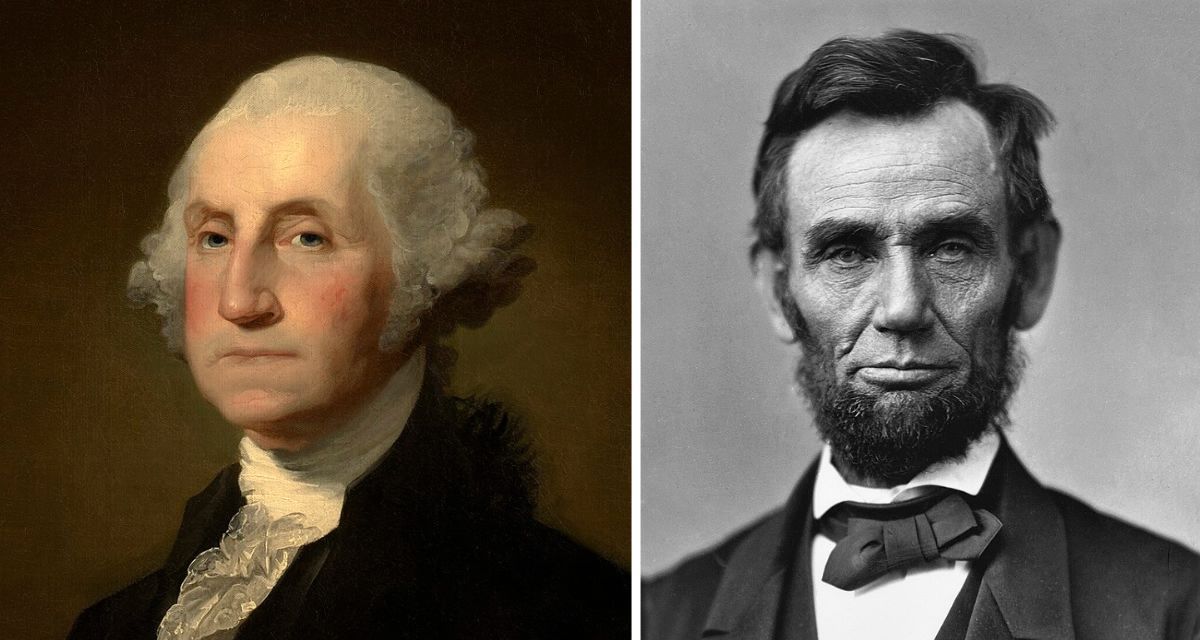
The first federal U.S. Thanksgiving holiday was proclaimed by George Washington in October of 1789 (which you can read here). None of its over 450 words mention, or even allude to, the Pilgrims sitting down to feast with the Wampanoag people.
Instead, Washington declared Thursday, November 26th, a holiday to give “sincere and humble thanks” to “that great and glorious Being, who is the beneficent Author of all the good that was, that is, or that will be” for bounties including the outcome of the Revolutionary War, the establishment of a constitutional government, the “civil and religious liberty with which we are blessed,” the ability to acquire knowledge, and the general blessings and favors of God. He also called for prayers asking God to pardon transgressions and bless the nation and all mankind.
Nothing about the “first Thanksgiving” or anything related to that story.
Lincoln made Thanksgiving an annual holiday. He also made no mention of the Pilgrims.
Thanksgiving became an annual federal holiday with Lincoln’s 1863 proclamation naming the last Thursday in November an official day of Thanksgiving. The nation was in the middle of the Civil War, and Lincoln’s Thanksgiving proclamation spoke of the many things that were going well in the United States despite the ongoing military conflict.
“No human counsel hath devised nor hath any mortal hand worked out these great things,” the proclamation read. “They are the gracious gifts of the Most High God, who, while dealing with us in anger for our sins, hath nevertheless remembered mercy. It has seemed to me fit and proper that they should be solemnly, reverently and gratefully acknowledged as with one heart and one voice by the whole American People.”
Lincoln also called for Americans to pray for the loved ones of those lost in the war, and to implore the Almighty “to heal the wounds of the nation and to restore it as soon as may be consistent with the Divine purposes to the full enjoyment of peace, harmony, tranquillity and Union.”
But again, nothing about Pilgrims or Native Americans or Plymouth. Lincoln created Thanksgiving to unite the U.S. during its bloodiest war. (In fact, Southerners resisted the Thanksgiving holiday, seeing it as Yankee abolitionist propaganda.)
No president associated the Pilgrims with Thanksgiving until 1939—and that was just a brief mention
Franklin Roosevelt moved Thanksgiving to the fourth Thursday of November instead of the last in 1939, when the last Thursday of November fell on the 30th, which created a late start to the holiday shopping season. Congress took the president’s lead and issued a resolution in 1941, establishing the holiday as we know it today, on the fourth Thursday.
FDR’s 1939 Thanksgiving proclamation was the first to mention the Pilgrims, but even then, it wasn’t tied to any Pilgrim-Native “first Thanksgiving” meal.
“More than three centuries ago at the season of the gathering in of the harvest, the Pilgrims humbly paused in their work and gave thanks to God for the preservation of their community and for the abundant yield of the soil,” FDR said. That’s it. That was the first official Pilgrim connection to the federal Thanksgiving holiday, and it came nearly six decades after it was established.
So how did we end up with the ‘first Thanksgiving’ story and subsequent myth-busting?
The tying of Thanksgiving to the image of a friendly feast between the Pilgrims and the Wampanoag (ignoring the complicated reality and history that followed) evolved primarily after the federal holiday was established.
Sarah Josepha Hale, editor of the popular women’s periodical Godey Lady’s Book from 1837 until 1877, had made a relentless push for a national Thanksgiving holiday, petitioning five presidents before Lincoln finally made it happen. She called it a “good old puritan custom” in her pitch to make it a holiday, but she envisioned more of a Christian day of prayer rather than a big celebratory food feast. She did offer recipes for seasonal foods such as turkey and cranberry sauce, however, and her connecting the holiday to New England history and traditions planted the seed for modern Thanksgiving mythology.
The widespread tie-in to the “first Thanksgiving” between the Pilgrims and Native Americans was driven largely by panic over immigration in the late 19th and early 20th centuries. People were worried about assimilation as a wave of immigrants arrived in the U.S., and a narrative of American identity emerged through a revised origin of the Thanksgiving holiday.
As the Gilder Lehrman Institute of American History writes, “The holiday was secularized during the last decades of the [19th] century, and by the twentieth century, costumed festivals honoring the Pilgrims became themes of elaborate grade-school pageants—an effective way to ‘Americanize’ immigrants. These annual activities showcased Puritan values and Yankee customs, promoting civic folk rituals.”
Since then, it’s stuck.
The history of colonists and indigenous peoples is important—it’s just not what Thanksgiving was about
The way the story of Thanksgiving has played out has led to woeful inaccuracies and painful erasures of indigenous people’s experiences in American history. Because of that, the fact that the national Thanksgiving holiday wasn’t even based on that story adds yet another layer of complexity to conversations around celebrating it.
On one hand, it means we can honestly make the holiday broadly about gratitude, as the original federal proclamations did. On the other hand, discussions of the historical inaccuracies surrounding the “first Thanksgiving” have been, and continue to be, important. Nothing about correcting the record on the official federal holiday origin erases the need for those conversations. In fact, it’s a good reminder that they need to be had regularly, not just once a year on a holiday whose origin has been muddled in so many ways.