Standing on stage in front of a crowd is already terrifying for many people. But being in the spotlight, with all eyes on you, and making a big mistake? Total nightmare fuel.
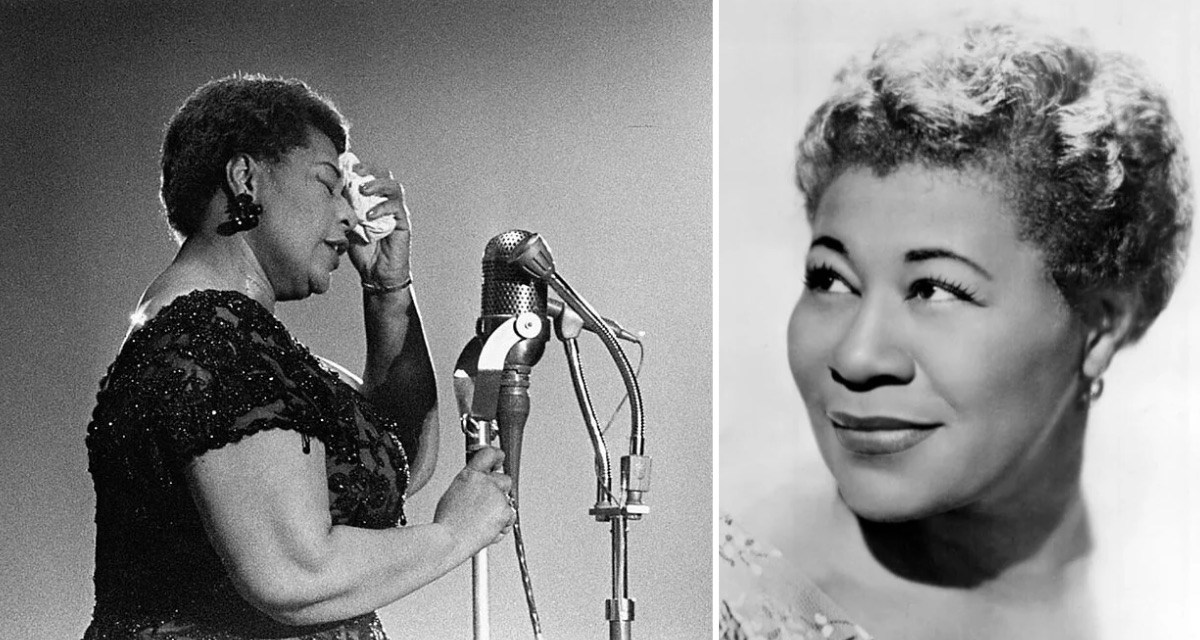
Unless you’re Ella Fitzgerald, who turned an on-stage oopsies into an award-winning triumph.
The iconic jazz singer took the stage in Berlin, Germany, on February 13, 1960, to sing “Mack the Knife.” But partway through the song, she completely blanked on the lyrics.
She didn’t miss a beat
Did Ella panic? Nope. She just kept right on singing the tune with the first words that came to her head:
Oh, what’s the next chorus to this song now?
This is the one now, I don’t know
But it was a swingin’ tune and it’s a hit soon
So we tried to do Mack the Knife
She kept going in this improvised fashion for nearly two minutes, conjuring lyrics out of thin air. The most impressive part was that the words not only matched the tune and rhythm of the song, but many of them even fit the rhyme scheme.
She even joked about her own flub-up within the impromptu lyrics, referencing Bobby Darin and Louis Armstrong, who originally made the song popular:
Oh, Bobby Darin and Louis Armstrong
They made a record, oh, but they did
And now Ella, Ella and her fellas
We’re makin’ a wreck, what a wreck of Mack the Knife
That live flub-up won her a Grammy
Ella Fitzgerald was a global sensation at this point in her career, so maybe audiences would have forgiven the hiccup even if she’d stopped and restarted the song. But the fact that she didn’t skip a beat simply solidified her status as a musical icon.
Of course, it also helps that she was a jazz singer. In addition to the freestyle lyrics, she also filled the parts of the song where she had no words with nonsense syllables, a jazz technique known as scatting. Ella was famous for that kind of improvisation.
The audience got a kick out of the performance, and the live recording of the song ended up earning her a Grammy for Best Female Vocal Performance (Single) in 1961. She also won Best Vocal Performance Album (Female) for the Mack the Knife—Ella in Berlin album.
What made Ella Fitzgerald such a legend
Ella Fitzgerald’s voice was nothing if not unique. But her voice didn’t just stand out for its unique sound. She could sing three full octaves (well above average, even for trained singers), and her voice has been described as “flexible, wide-ranging, accurate and ageless.” She could imitate every instrument in the orchestra, and she sang alongside the world’s greatest jazz musicians.
Her audience was equally wide-ranging. She sang everywhere from small venues early in her career to world-renowned opera houses as she rose to global fame. People of all ages, races, and nationalities, rich or poor, loved to hear her sing. While she was somewhat self-conscious and reserved in her private life, she was fearless when she took the stage.
“Once up there, I felt the acceptance and love from my audience,” Ella said. “I knew I wanted to sing before people the rest of my life.”
And that she did. In her lifetime, Ella Fitzgerald won 13 Grammy awards, sold over 40 million albums, and was dubbed “The First Lady of Song.” No wonder she could recover from a forgotten lyric so quickly and turn it into an award-winning performance.