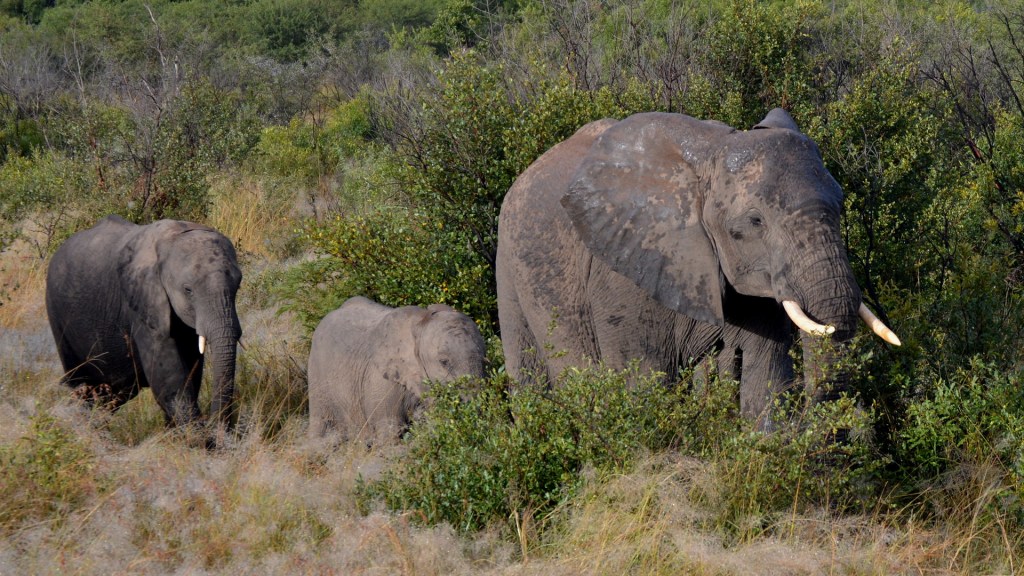
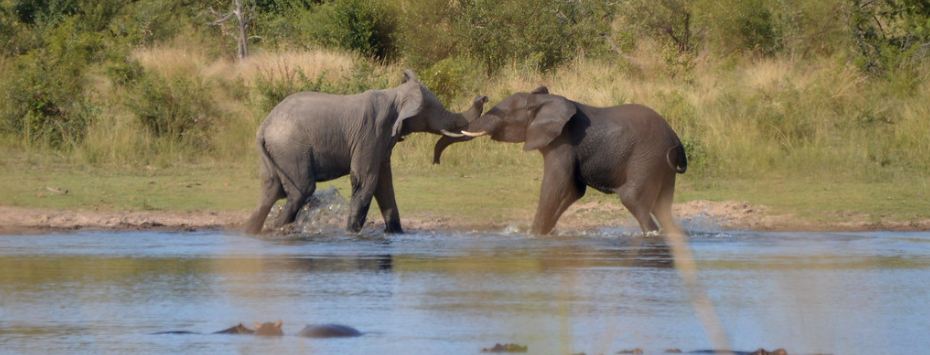
Elephants have a huge impact on the physical landscape wherever they roam free. They tear down trees, turn forests into grasslands, dig watering holes for themselves and other species, and replant areas with their dung.
Elephants’ environmental impact during their lifespans is well-documented, but historically, people didn’t understand the impacts of their deaths. This changed in 2009, when Dave Thompson, a scientist at the South African Environmental Observation Network, saw the carcass of Alexander, a massive bull male who died of natural causes, and it piqued his curiosity. “Watching the decomposition of that carcass over just a couple of months got me curious,” Thompson recalled.
The researchers examined the effects elephant corpses have on the environment
This led Thompson, along with his colleague Deron Burkepile and a team of rangers at Kruger National Park, to study the impact of deceased elephants on the environment. Kruger was an ideal place to observe the phenomenon because it is home to nearly 30,000 elephants, with about 600 dying each year. Kruger is South Africa’s largest national park, spans nearly 7,700 square miles, and is home to 140 mammal species, more than 500 bird species, and hundreds of tree and plant varieties.
“When we got started, we didn’t know how the carcass of a 4-tonne elephant would impact its environment,” Thompson said. “Nothing of that magnitude had been studied in a terrestrial system.”
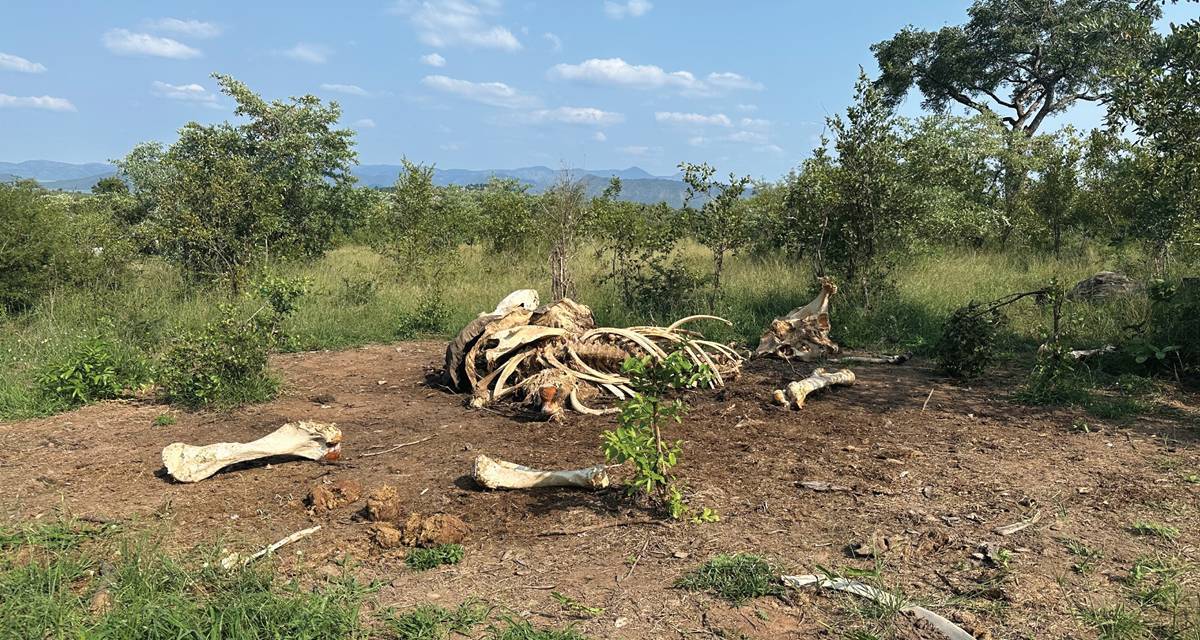
An elephant’s body decomposes relatively quickly; within a week to a month, environmental forces and scavengers break down most of its internal tissue and muscle. The bones can last up to 15 years, depending on exposure and the environment. But as researchers learned, that’s far from the extent of its impact.
A study published in Proceedings of the National Academy of Sciences, co-authored by Burkepile, found that soil at elephant carcass sites contained seven times more nitrate, three times more phosphorus, and 31 times more ammonium than in unaffected areas.
“At really fresh carcass sites, soil nitrogen concentrations can be up to 3,000 times higher,” Courtney Reed, the study’s lead author, said. “That’s just insane.”
An elephant’s impact on the environment lasts years after it has passed away
Initially, a decomposing elephant corpse has the opposite effect because nutrient concentrations are so high that they become toxic. But as concentrations level out, nutrient-rich grasses begin to emerge, attracting grazing animals such as impalas and buffalo. “It turns these grasses from watery iceberg lettuce into a juicy romaine,” Burkepile said. “Those plants are probably growing faster, but the herbivores are just mowing them down because they want to get at that nutrient-rich forage.”
Researchers found that grazing activity at carcass sites was three times higher up to seven years after the elephant’s death. Overall, the elephant’s corpse affected the area for up to eight years.
This study of the impact elephants like Alexander have in the years after their death shows why they matter so much to their local ecosystems. Even in death, an elephant plays a critical role in the circle of life, helping plants grow, nourishing animals, and enriching the soil.