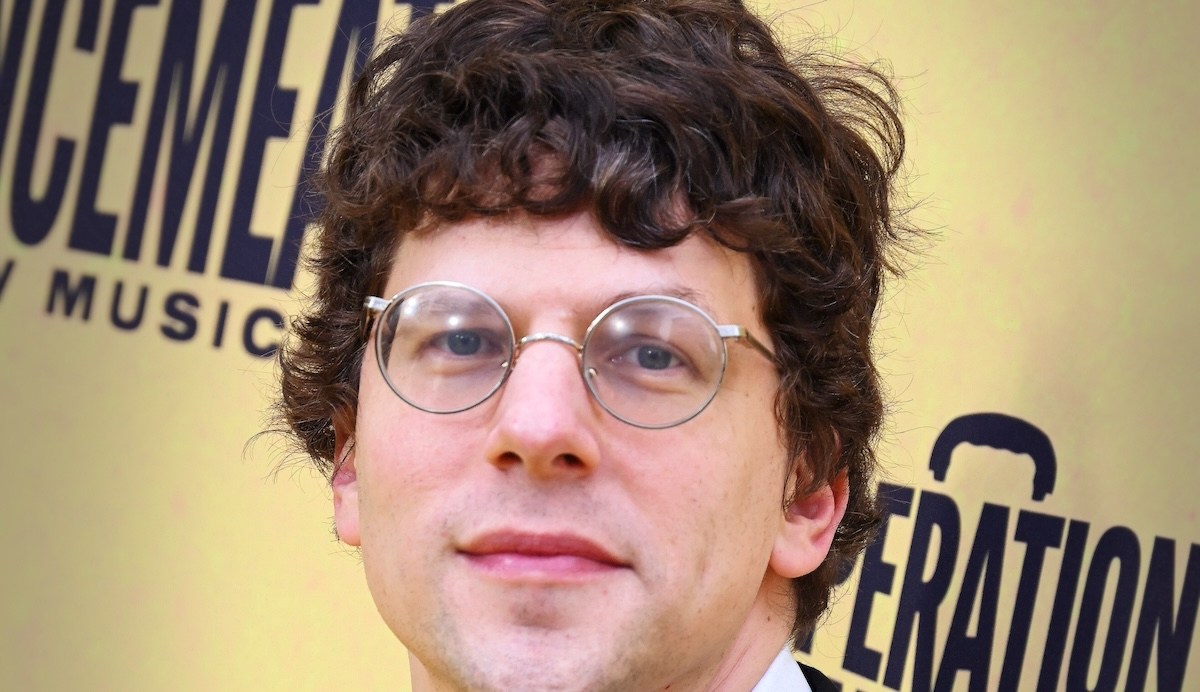
About ten years ago, actor Jesse Eisenberg decided he wanted to give a kidney to a stranger. He contacted an organization to ask how, and nobody ever wrote back. That was the end of it until recently, when he mentioned the idea to a friend who works in medicine. She pointed him in the direction of NYU Langone Health in Manhattan.
He was in the hospital the next day going through the workup.
On October 30, 2025, he announced the news on the Today Show more or less by accident in the middle of a conversation about his blood donation habit. “I’m actually donating my kidney in six weeks,” he said. “I really am.”
He donated on December 30th. The technical term is “non-directed donation,” sometimes called “altruistic donation” (though transplant centers prefer the former on the grounds that all living donation is altruistic). The kidney goes to the best match on the list and the donor never finds out the recipient’s identity.
Preparing for donation
Eisenberg points out how strange it is that more people don’t do it. “When I heard about kidney donations, my first thought was, why is there not a line down the block of the hospital?” he told Dr. Mike Varshavski while on The Checkup with Doctor Mike podcast.
Months out from surgery, he told NYU Langone he’d had no lifestyle changes, no limitations, and no regrets. “I wish I had more kidneys to give,” he said.
NYU Langone puts the transplant waiting list at more than 107,000 people. Close to 95,000 of them are specifically waiting on a kidney, and roughly 13 die every day. Living donors made a bit more than 7,200 transplants possible in 2025, and their kidneys tend to last longer in the recipient than kidneys from deceased donors.
Starting a donation chain
A single, non-directed donation is usually worth more than one transplant because it can start a chain. Most people who want to give a kidney to someone specific can’t because they often aren’t a match. A stranger’s kidney breaks that logjam. Eisenberg walked Today through the hypothetical:
Someone in Kansas City needs a kidney. Their child wants to donate and isn’t a match, but Eisenberg is. His kidney goes to that person, and the child then donates to someone else who was stuck the same way. The sequence keeps unspooling as long as there are pairs waiting. None of it starts without somebody at the front of the line willing to give without getting anything back.
He also has an answer for what happens if his own mother needs a kidney next year. Through the National Kidney Foundation’s family voucher program, a donor can name specific people who then get prioritized for a living donation if they ever need one, and Eisenberg put his family on that list. He calls the whole arrangement risk-free for them as well as for himself, which is a slight oversell.
The reality is that it’s major abdominal surgery, and donors are screened hard for a reason. For most of them, however, the fifteen-year risk of kidney failure comes in under 1%, and large studies have found no increase in death or heart disease compared with people who keep both kidneys.
The momentum starts with you
His pitch is that the procedure is “essentially risk-free and so needed” and that people would come around to seeing it as obvious “if you have the time and the inclination.” Incidentally, time is what actually stops most people since donation means a few days in the hospital and several weeks of recovery, generally unpaid. That last part matters enormously to anyone without leave or savings. The other obstacle is that nothing about the system comes looking for you. Eisenberg wanted to do this for a decade, but what finally made it happen was a friend handing him a phone number.