The 2026 World Cup has given us countless encouraging stories about how different nations view each other’s cultures. In a time when some might feel uncertain about international relations, it has been a reminder that if we zoom out, we can see that most of us—regardless of country, culture, or political affiliation—want to live healthy and happy lives.
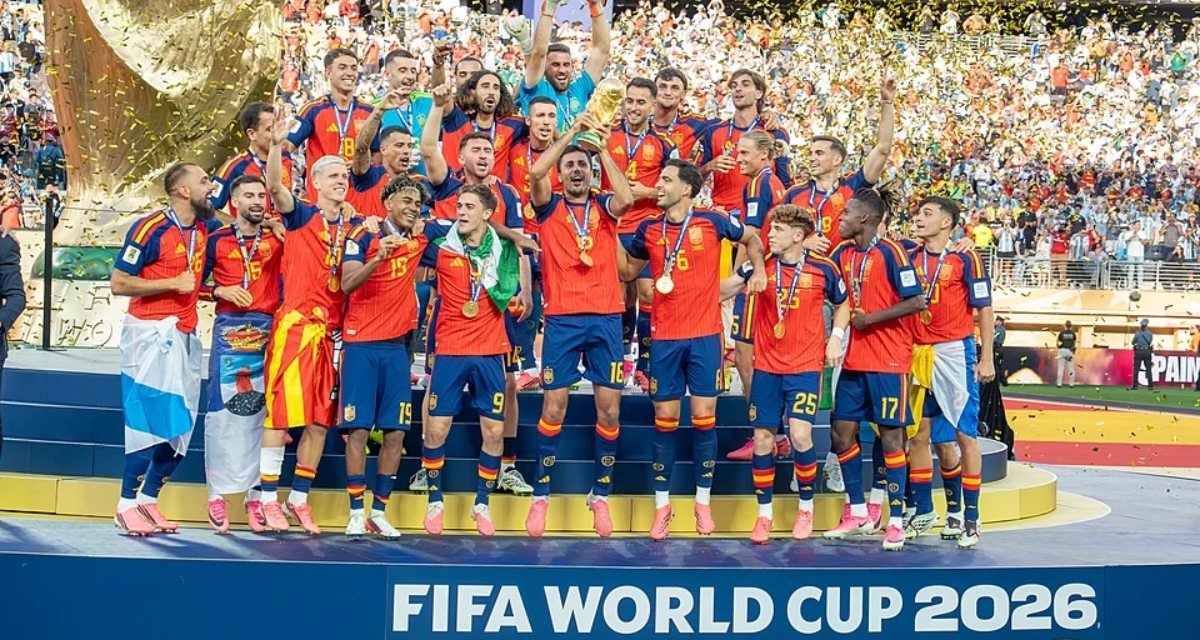
As the Cup came to an end with Spain clinching the final gold FIFA trophy, players could finally take a breath and reflect on how they have gotten so far. With that has come tremendous humility. This was perfectly exemplified when 18-year-old footballer Lamine Yamal, a winger for Spain’s national team, was asked how he handles the pressure at his age.
‘That’s real pressure’
Posted on Thought Catalogue‘s social media sites, they share Yamal’s beautiful answer to how he became such a star despite the pressure: “My mother had me when she was 16. That’s real pressure. My father picked things off the street to put food on the table. That’s pressure. All I have to do is play football.”
On Threads alone, the post has already received over 150,000 likes and many comments relishing the fact that Yamal had such an excellent perspective.
This reminded one person of an interview that demonstrated how relative words like “hardship” and “success” are. They wrote, “Reminds me of a TV interview where the interviewer said to Montreal Expos manager Felipe Alou that it must be terrible losing 5 games in a row, and Alou responded by saying, ‘I grew up in the Dominican Republic; there’s a lot worse things than losing 5 games in a row.’”
Many humble players
Another commenter pointed out that many players have also demonstrated great humility in the face of such huge accolades and fandom. One says, “I am so impressed with how humble, respectful, and honoring of their families some of these young players are. Lamine Yamal and Jude Bellingham are examples of what happens when you raise your children right.”
In reference to Bellingham, a midfielder for the England national team, video compilations showing his total respect for fans and reporters have been popping up all over social media. He is so beloved that, after England’s win over Mexico, the entire crowd (well, at least a lot of them) serenaded him with The Beatles’ hit song, “Hey Jude.”
Nico Williams gives medal to mom
Nico Williams, who also plays for Spain’s national team as a winger, lovingly gave his winning medal to his mother. Threader tata_vladii shared a video, writing, “Nico Williams gave his gold medal to his mother. She crossed the Sahara Desert barefoot… while PREGNANT. JUST TO ESCAPE Ghana for Spain in the early ’90s, the soccer star’s parents endured a grueling journey.” First, they were crammed into the back of a truck overflowing with refugees. Then, they walked barefoot through the desert for days without food or water, stepping on sand that burned at 104°F (40°C). To this day, his father’s feet have completely lost all feeling.”
This seemingly moved many in the comments to tears. “I’m not trying to cry this time of morning. Hard to imagine the vast pride they must feel,” one wrote.
One commenter compared Williams’s background to their own immigration story, writing, “At my naturalization ceremony, the most moving thing were the people who probably sacrificed everything to get here. I had it easy by comparison. These parents literally walked through fire to get to a better life for their family.”