In The Body, Stephen King famously wrote, “It happens sometimes. Friends come in and out of your life like busboys in a restaurant.” The novella was later adapted into the film Stand by Me, which follows a character reflecting on the friendships he had at age 12 and realizing that some friendships endure while others are fleeting.
The reality of this idea can be a tough pill to swallow. In an Instagram Reel making the rounds, Savanna Mckay posted a video of a beautifully raging fire with a chyron that reads: “I was sad about losing a friendship. Then I learned about the Campfire Theory.”
The theory is essentially the same idea as the King quote, and many people seem to find it comforting.
Campfire Theory
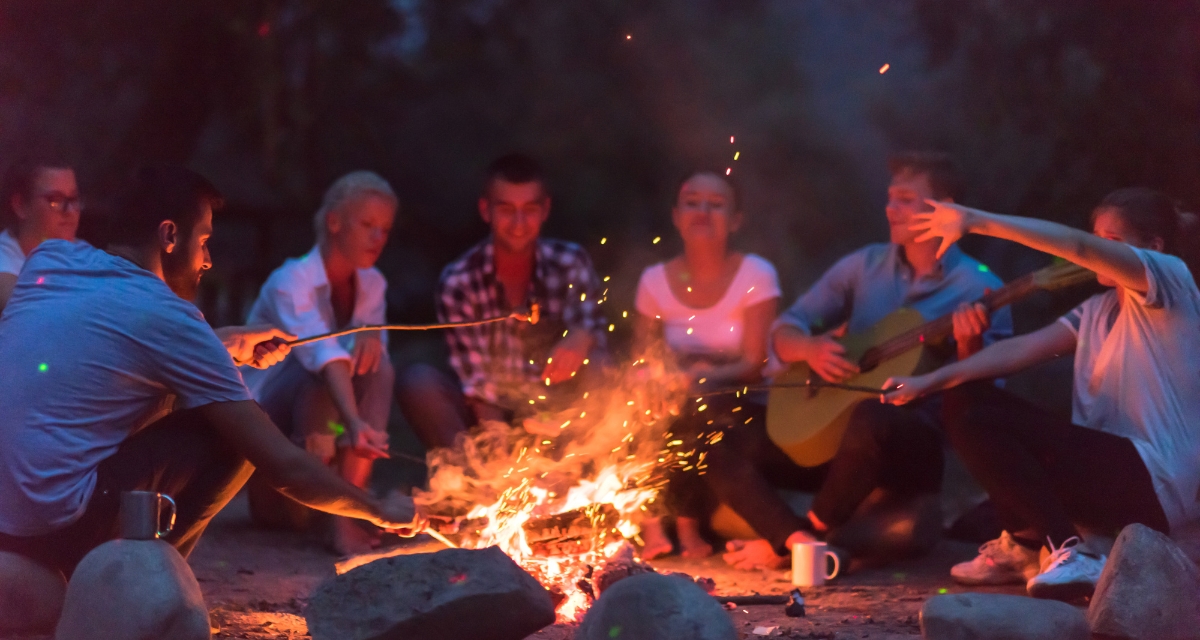
“Imagine you’re sitting around a campfire. Throughout the night, people come and go. Some pull up a chair for five minutes before heading home. Some stay for hours, laughing and telling stories. Some leave early because they have somewhere else to be. And a few are there until the very last embers burn,” McKay wrote.
McKay explains that this idea most likely wouldn’t conjure feelings of despair:
“You wouldn’t look around halfway through the night and think, ‘The fire must not be good enough becomes someone left.’ You’d understand that people have different seasons, different responsibilities, different paths.”
She compares the idea to friendship in general:
“Friendship is a lot like that. For a long time, I believed that if someone drifted away, it meant I had failed. That I wasn’t enough. That I’d done something wrong. Sometimes that’s true cause we all have room to grow. But often…people simply move into a different season. They get married, they have babies, they change jobs. They move. They start caring for aging parents. Their priorities shift.”
‘Keep inviting. Keep gathering.’
And she adds this comforting thought:
“It doesn’t erase what they meant to your story. And it doesn’t mean your village is falling apart. Your job isn’t to convince people to stay around your fire forever. Your job is to keep tending the fire. Keep inviting. Keep gathering. Keep making space. Keep adding another chair. Keep creating warmth. Because while one person may quietly step away, someone else is looking for a place to belong. The healthiest villages aren’t built by holding onto every person forever. They’re built by people who never stop tending the fire.”
This idea has resonated deeply, earning nearly 200,000 likes and more than 1,200 comments. Many people have added their own profound thoughts to the theory. One wrote, “The last couple people who stay late into the night having deep talks about life have always been my favorites.”
Another shared, “This hit a tender place in my heart…. Yikes. I’ve def hardened my heart to people… isolating myself surrounded by self sabotaging voices of ‘everyone leaves bc simply I was never enough.’ This campfire theory def hits….”
Another Instagrammer offered this lovely perspective as a reminder that we never know what the future holds: “And sometimes, 30 years later, someone comes back to the fire.”
150 is the magic number
For what it’s worth, British anthropologist Robin Dunbar held the belief that a person can only maintain 150 relationships at a time.
The BBC explores this idea, writing:
“According to the theory, the tightest circle has just five people – loved ones. That’s followed by successive layers of 15 (good friends), 50 (friends), 150 (meaningful contacts), 500 (acquaintances) and 1500 (people you can recognise). People migrate in and out of these layers, but the idea is that space has to be carved out for any new entrants.”
A therapist weighs in
Upworthy spoke with Cory Reid-Vanas, a therapist and founder of Rocky Mountain Counseling Collective, who shared:
“Although this is not a formal, psychological theory, it is a social media metaphor that I enjoy. It is an opportunity for people to reflect on the types of relationships that they have and the various ways people can show up.
At a campfire, it is giving off warmth and light. People are naturally drawn to that. However, that draw is not always invested in the same ways. Some come for the warmth. They enjoy your company, your energy, and your resources but are gone if the fire dies down or if they have to put in effort to keep it going. It’s not necessarily a bad thing, but presents a way to look at different types of friendships/relationships to gain an understanding of what they are.”
‘It’s more about noticing who people are’
According to Reid-Vanas, some tend to the campfire of friendship in other ways:
“There are others who come to the campfire and help tend it. They bring wood (so to speak), invest in the friendship, show up in hard moments, help keep things alive even when the fire is not blazing. Another person appears when the fire is roaring. These are fair-weather friends—showing up for the highlight reel moments but vanish during quieter, harder times.
For me, the value is noticing the difference and not necessarily resenting the people for how they show up—but reciprocating with the ones who keep the fire going. Those are more long-term friends. It doesn’t mean we discard the others or not let them come to the campfire…It’s more about noticing who people are and what they are not able to do.”