Picture the last hospital you sat in. The buzzing fluorescent lights, the beige walls, the faint smell of disinfectant. Nurses rush by with clipboards; there’s a shortage of chairs in the waiting room. It’s a scene we’ve witnessed play out before—on TV, in movies, and in our lives—a sterile, crowded hospital floor where only a trip to the vending machine can save us.
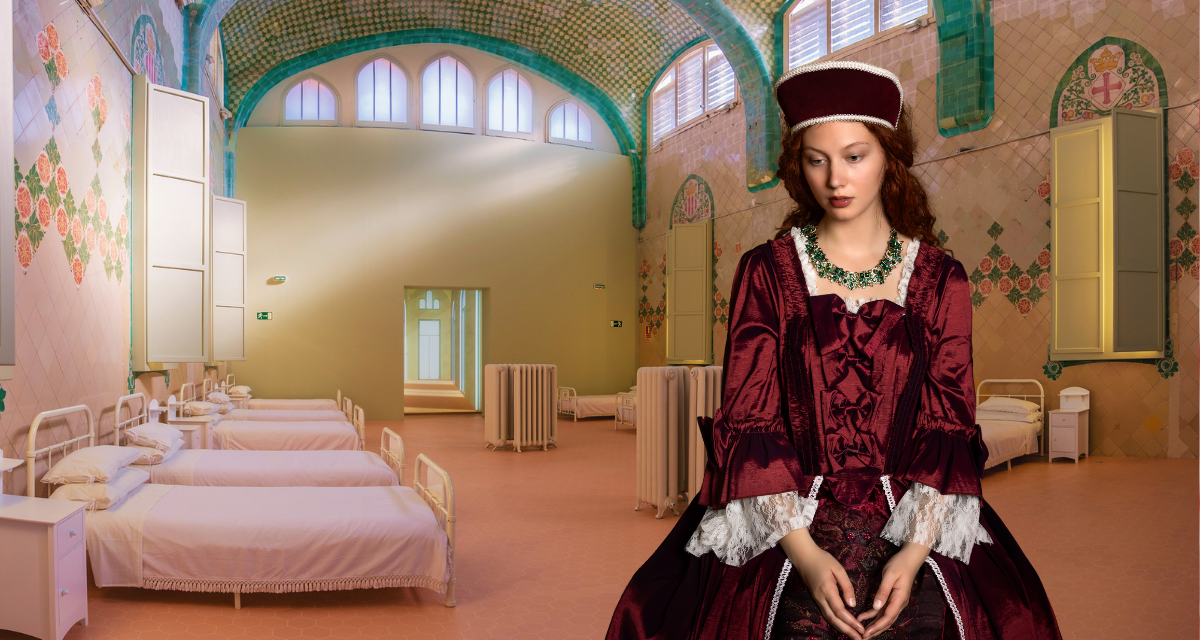
Now, imagine soaring ceilings covered in hand-painted mosaics, walls of glowing stained glass, and, just outside, lush gardens perfumed with the scent of orange trees and lavender hedges.
That’s the Hospital de Sant Pau in Barcelona. No, it’s not some idyllic daydream, but a real place. And while sculpted angels adorn nearly every surface, the reason it looks like that—like heaven—is because one architect, over 100 years ago, refused to abandon his belief that beauty isn’t a mere luxury. For the sick, it’s part of how they heal.
Beauty as medicine
The story begins in 1896.
A wealthy Catalan banker named Pau Gil i Serra dies, leaving behind a massive fortune to his birthplace, Barcelona. The gift came with a very specific directive: the city was to build a state-of-the-art hospital, and it should be dedicated to Saint Paul. (Hence, Sant Pau.)
Barcelona’s healthcare system needed this badly. By the late 19th century, there was only one hospital in the city. It was the Hospital de la Santa Creu—a medieval relic from 1401—and it had grown overcrowded, unsanitary, and impossible for many to reach.
Enter: Lluís Domènech i Montaner.
At the turn of the 20th century, the Catalan architect erected a new hospital. Only, he wasn’t just thinking about beds and operating rooms. Domènech stood at the center of Barcelona’s great cultural awakening, and is often referred to as the “father of Catalan Modernisme.”
He’s the one who defined its affinity for organic, asymmetrical forms—curved lines, rippling façades—and honest, “cheap” materials: brick, wrought iron, ceramics. And Domènech was unusually scholarly: he’d studied physics and natural sciences before becoming an architect, and brought that same intellectual rigor to his approach to buildings by seamlessly weaving historical references and practical sophistication into their designs.
Now, immersed in the psychology of how people heal, he was convinced that the space around a patient actually shaped their ability to recover. Light, color, fresh air, and a beautiful garden were all part of the cure.
What Domènech built
For Barcelona’s new hospital, Domènech drew up a “garden city of health,” an immense complex made of 16 separate pavilions, each surrounded by magnificent gardens and linked underground so supplies and stretchers could move without disturbing the calm above. At times, it resembled a small municipality. “The structure, construction and decoration of all the rooms of the Hospital are considered so linked that they form a single concept,” Domènech wrote in his notes.
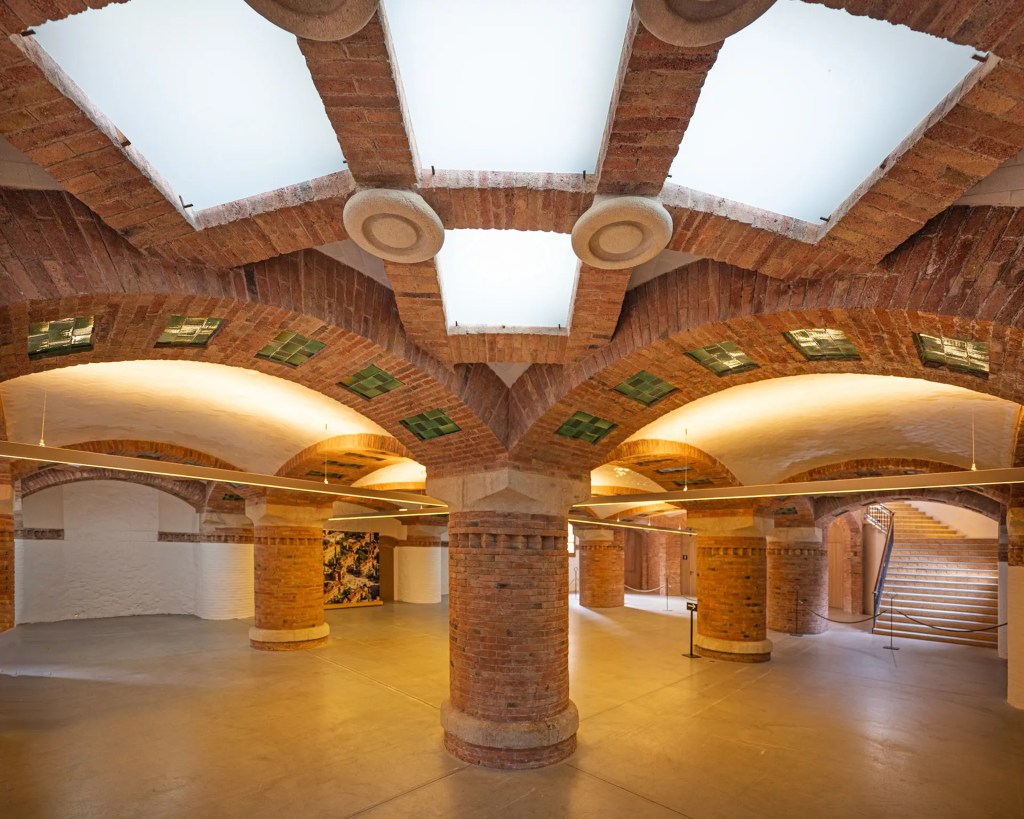
He’d studied some 240 hospitals around the world, obsessing over every last innovation in sanitation and delighting in fresh ways to make pragmatism feel beautiful. For him, even the gardens were clinical strategy: Domènech planted the grounds with more than 60 species of shrubs, trees, and plants, each chosen for its medicinal properties.
Horse chestnut and orange trees lined the promenade. Grassy patches teemed with bunches of lavender, sage, rosemary, and lemon verbena. The hospital’s buildings were set apart by precisely calculated distances to ensure maximum sunlight flooded its rooms and gardens throughout the entire day.
The goal was clear: plants purified the air, fought off bacteria, and formed lovely, leafy canopies for patients to stroll beneath. For a person whose body was wracked by illness, the gardens became another supplementary treatment.
Elegance in the details
Even the most practical choices were beautiful.
The luminous, deeply pigmented ceramic tiles that cover the hospital—climbing up its walls, snaking their way to the ceiling, and sunbathing on top of domes—were chosen for their curvy, round shape. When glazed, they gave bacteria nowhere to hide and were easy to scrub clean. Even the colors were chosen with care. In some rooms, ceramic tiles are arranged in a sky-to-sun gradient, with warm yellows and oranges at the base, which give way to blues and cool colors. This was a way to subconsciously soothe the eye and calm the senses.
Animals appear frequently in the mosaics, crafting symbolic meaning at every turn: a peacock for rebirth and renewal, a pelican for sacrifice and charity, an owl for wisdom. Saint George slays a dragon; the defeat of disease is made visible. Saint Martin shares his cloak with a beggar, the very picture of charity and care. Together, these images formed a visual theology of healing—one that spoke directly to patients who understood the language perfectly.
What makes Sant Pau so incredible to behold is how much love, care, and attention Domènech poured into its details. For him, beauty and healthcare were never separate, but two sides of the same coin.
Imagine being one of those patients
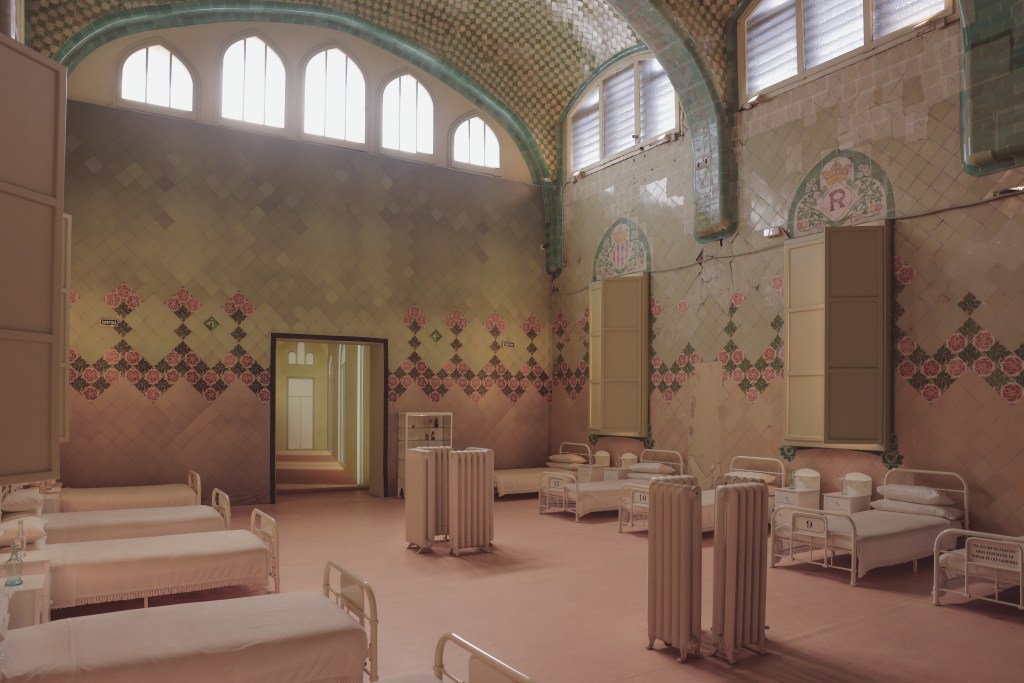
Visitors of the hospital have described patients taking in their new surroundings who “wondered if they were in a palace instead of a hospital.”
Try putting yourself into their place. You’re a working-class Spaniard in 1920—a factory worker, maybe, or a laundress—and you’ve spent your entire life in cramped, dark rooms. You’re sick. But now, you’re carried into a place where the sun pours in through stained glass, and flowers and leaves dance, painted, on the walls. The ceiling above your bed blooms in vibrant hues.
That’s the idea. In the face of illness and unknown, you can still hand a person wonder.
A gift finished by his son
Domènech never saw his masterpiece finished.
He died in 1923, and his son, Pere Domènech i Roura, carried Hospital de Sant Pau to its completion. And there it stood, caring for patients within its sunset-hued walls for nearly 80 years, until patient treatment was moved to a more modern facility next door in 2009. Then, in a massive restoration, the historic complex was returned to its former glory, and reopened its doors: this time, to visitors.
Hospital de San Pau’s second life
Today, the hospital is a UNESCO World Heritage Site, and is often called the largest Art Nouveau complex in the world. Where patients, eyes large with wonder at the pavilion’s beauty, once sat in hospital beds, there are now offices for enterprises like the World Health Organization.
Anyone can visit. It’s about a 15-minute walk from the Sagrada Família with a fraction of the crowds. “If the hospital were taken away, it’d change Barcelona’s soul,” wrote Dr. Josep Cornudella.
More than a hundred years ago, someone glanced at the grim, desolate conditions Barcelona’s sick and weak lived in, and instead decided to give them sunshine and flowers.
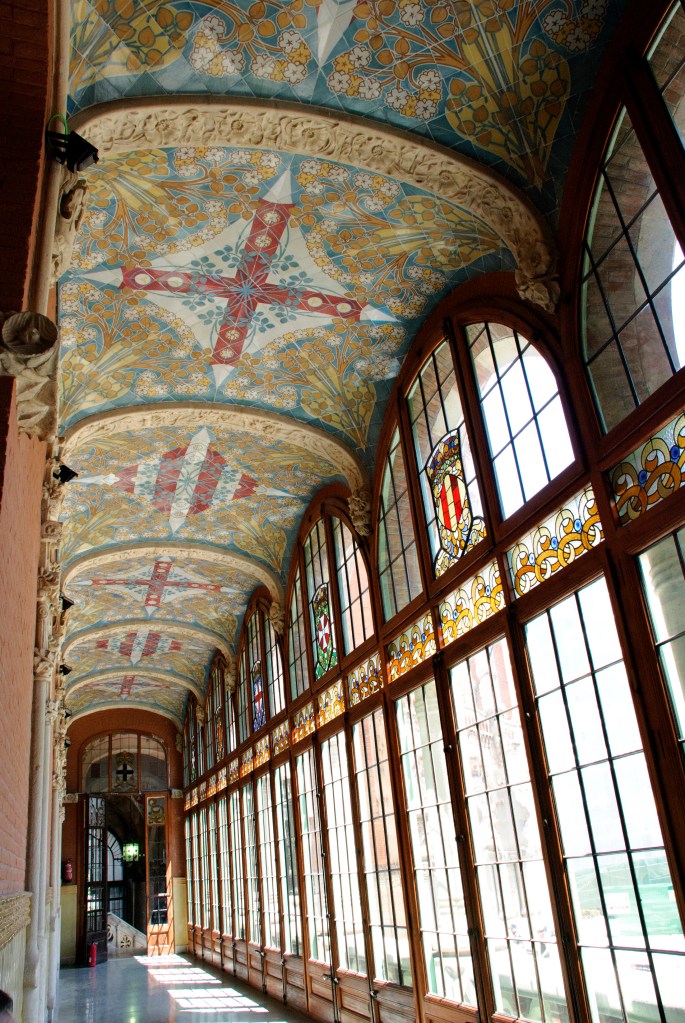
We tend to regard beauty as a reward, something you earn, buy, or travel far to see on vacation. Lluís Domènech i Montaner built a hospital with the exact opposite mindset: beauty is a form of care, something you give people precisely when they’re at their most frightened and least powerful, like a bowl of chicken noodle soup or a particularly fuzzy blanket.
Maybe that’s why Sant Pau tends to stop visitors in their tracks. It’s not just that the tile work is breathtaking or the gardens smell of lavender. It’s the argument that lies at the center of the place: that everyone deserves to look up from a sickbed and see something wonderful.