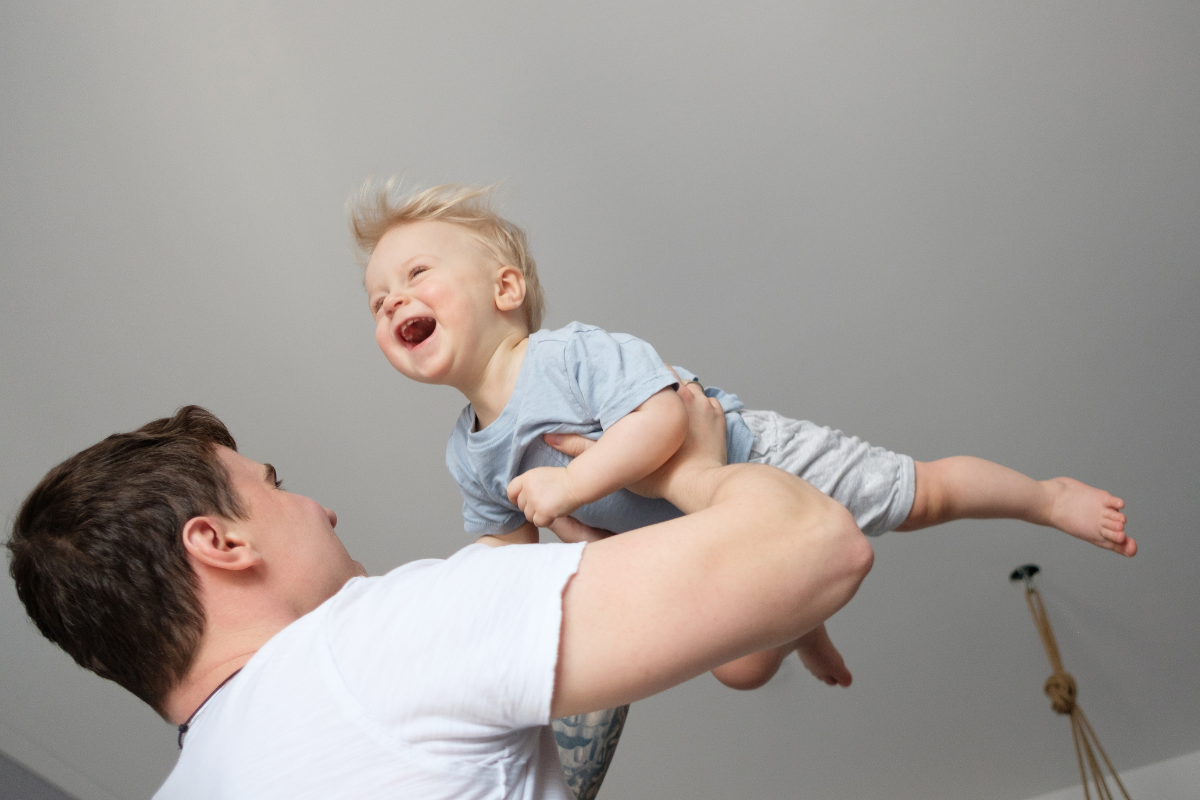
On average, dads are well-known to have a physical style of play with their kids. They throw, they wrestle, they tickle. It’s called rough-and-tumble, or roughhousing.
This rough and seemingly-dangerous style of play can put a lot of moms on edge. It looks scary, and there’s always a chance that something goes wrong. But there’s a right and a wrong way to roughhouse. Many parents intuitively understand how to keep things safe while pushing the limits to keep things fun and exciting. But a recent viral video is offering up a helpful, and hilarious, refresher.
A dad demonstrates safe rough-and-tumble on his own baby
Bailey Carlson, who goes by GetReelDad on social media, considers himself an expert on rough-and-tumble play:
“I’ve spent years and years refining my craft through wrestling, dancing, weightlifting and even studying anatomy,” he writes in the caption of a recent YouTube video. “This has given me more confidence in controlling mine and my baby’s body through more exciting maneuvers.”
Full disclosure: Carlson is not a doctor and is not offering medical advice.
But through his own experience, he says when it comes to babies and toddlers, it’s all about protecting the head and neck, especially when little ones are still gaining control of those muscles.
“When your baby gets neck control, you can do soft, easy ups and downs, pretend falls, maybe even some side to side,” he says, demonstrating some playful but extremely slow and gentle movements.
When they get a little bigger, he demonstrates how the moves can become a little bigger and more fun, but still with a firm hand supporting the head and neck at all times.
“When they get to a year and over and they start to get a lot more sturdy, then you can start throwing them. But not just willy-nilly. I can’t just chuck him up and hope for the best.”
He demonstrates, impressively, throwing the child up in the air—just a few inches or so—and cushioning the landing with his hands. “I always want head and body landing at the same time.”
He then spins the kid in the air, as if flipping pizza dough.
Brilliantly, each section of the video is intercut with Carlson launching his baby into the couch and bouncing him off the back cushions. Over and over and over.
“And make sure your baby is OK with what you’re doing,” he says, as he checks in with his own child who is laughing hysterically. You don’t have to be a medical expert to see that as a good sign things are alright.
It still looks dangerous, but rough play is actually crucially important
It’d be easy for cautious-minded parents to see the throwing, twirling, and flipping of a young kid like this and think: Why even bother with the risk?
The answer is simple. Rough play has amazing physical, social, and emotional benefits for kids of all ages.
Playing rough with friends or family teaches kids crucial skills. One research paper writes, “In [rough and tumble play], role reversal, self-handicapping, and self-control are considered essential skills to succeed socially, as these are all practical skills that require physical and motor control related to another person.”
In fact, counterintuitively, roughhousing can make kids less aggressive. It offers an outlet for releasing energy or even anger and frustration. It also teaches critical self-control and body awareness that can prevent them from hurting others or themselves down the line.
The Children’s Museum of Atlanta writes, “The physical activity children undertake when they rough and tumble play may lead to better performance on tests, reduce symptoms of [ADHD] like moodiness and inattentiveness, and generally improve cognitive development and enhance concentration.”
Positive Parenting Solutions adds that rough play releases a special brain chemical called brain-derived neurotrophic factor, described as a “fertilizer” for the brain that helps it grow and develop. It’s often generated during exercise, and playing rough is often a kid’s favorite method of exercising.
It’s also just…fun
Finally, rough play is just good fun. It’s excellent bonding for parent and child to physically interact in a positive way and share in laughter and joy.
In addition to the dad’s tips, parents who want to play rough with their kids, especially young ones, should know about a few safety tips:
- Knowing when and where to roughhouse is important. Tossing your kid around on a bed or soft couch is a smart move. Over the hardwood floor, not so much.
- Avoid jerky or sudden movements. Shaking or tugging quickly at limbs can be dangerous and lead to injuries.
- Hold back. Adults should never use their full strength when wrestling or roughhousing with kids.
- Finally, consent is always one of the most important elements of play. When kids tell you to stop, it’s time to stop. For younger ones, you have to read the cues: Smiling and laughing is good, but if they’re getting upset it’s definitely time to call it quits.
Oh, and one final tip from Carlson? Take it easy, Dad, so you don’t hurt yourself:
Nearly three million people have watched Carlson’s video, and most were endlessly entertained by his impressive moves and the infectious giggling of his child. That’s the power of rough play, done safely.