It started with a headache. Then Lynda Bush’s speech began to slur, and her family told her she needed to get checked out.
A hospital scan found a mass in her brain. The ER doctors delivered the kind of news that flattens a family: stage IV lung cancer that had metastasized to her brain.
“They said it had metastasized from her lungs to her brain,” her daughter, Amy Walls, recalled. “We could almost see her fading away in that bed. Every day was worse than the day before.”
A second opinion
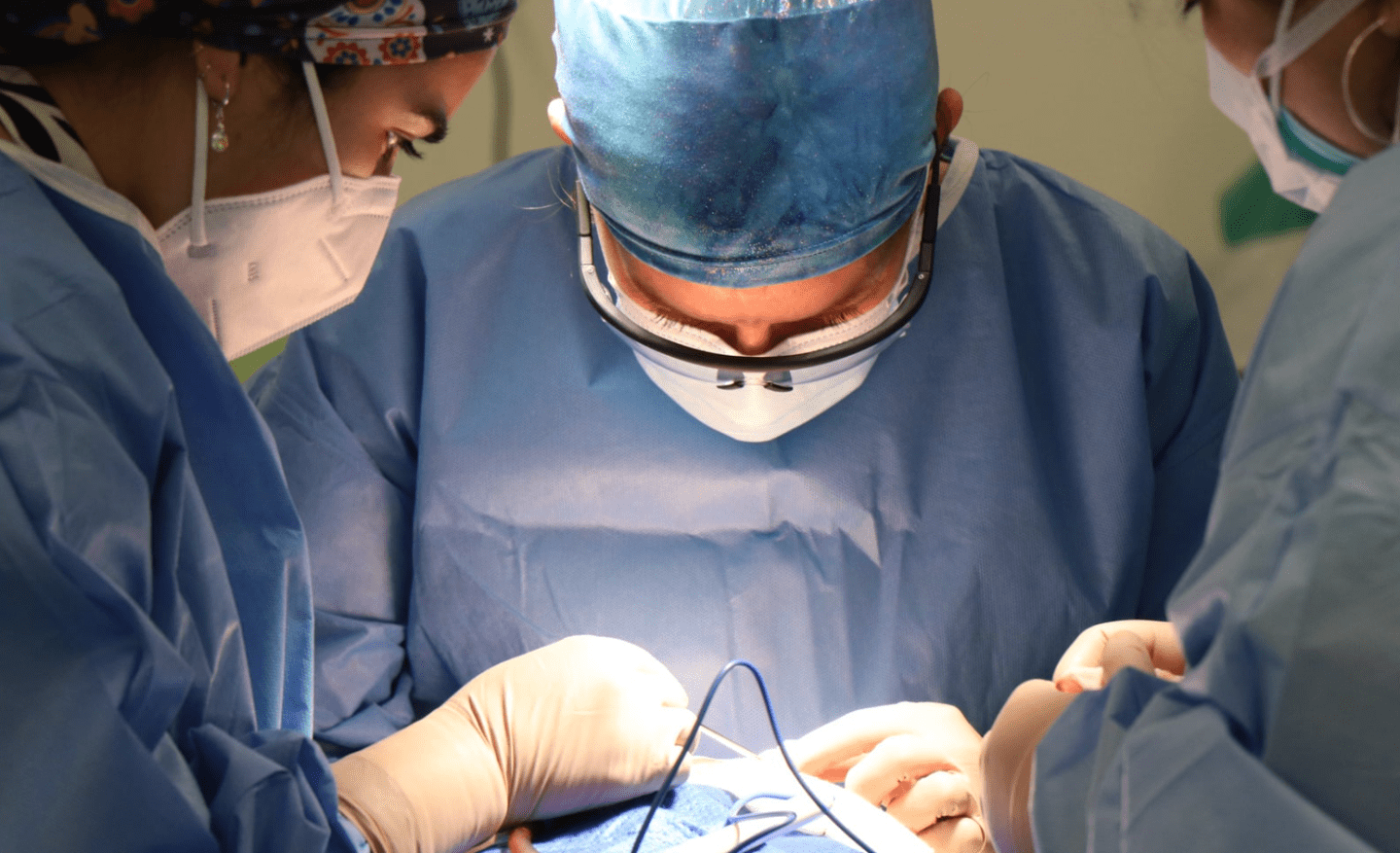
Bush was transferred to MedStar Franklin Square Medical Center, where she met neurosurgeon Dr. Jugal Shah. Shah looked at the scans and the diagnosis Bush had been given, and something didn’t sit right with him. The mass had the appearance of a tumor, but to his eye, it looked like it could be something else: an infection.
“Infection can have the same appearance as a tumor,” Shah said. “But everything I saw made me highly suspicious that this was an infection.”

He decided to operate. And when he opened her skull, his suspicion was confirmed in the most immediate way possible.
“As soon as we opened the brain, yellow pus came out. I knew my suspicions were immediately correct,” Shah said.
Bush didn’t have cancer. She didn’t have a tumor at all. She had a brain abscess, a pocket of infection that, on imaging, can closely mimic a malignant mass. Specifically, Shah identified it as an odontogenic brain abscess, meaning it originated from her tooth.
Bush had recently been having dental work done. The infection was caused by Streptococcus intermedius, a type of bacteria commonly found in the mouth. In rare cases, that bacteria can enter the bloodstream and travel to the brain, where it can establish an abscess. It’s uncommon, but it’s well-documented and treatable. A stage IV cancer diagnosis very much is not.
Ask questions and advocate
The distinction wasn’t academic. If Bush had been treated for the cancer she didn’t have, the actual infection would have gone untreated, which could have killed her. Instead, she got the right medication and treatment for the abscess and recovered well over time.
Her family credits Shah for being willing to question a diagnosis that other doctors had already delivered with confidence. But Bush also credits her family, who pushed her to get checked in the first place and stayed engaged throughout her care.
“I probably wouldn’t be here today if it weren’t for my family,” she said. “They were like advocates for my care.”
Walls took a specific lesson away from the experience, and it’s a useful one for anyone navigating a serious diagnosis. “You have to question things,” she said. “Why are you doing that? What is that for? It’s very important to be there for your family.”
A second opinion isn’t a sign of distrust. Sometimes, as in Bush’s case, it’s the entire difference between a treatment plan for a disease you don’t have and a cure for the one you do.