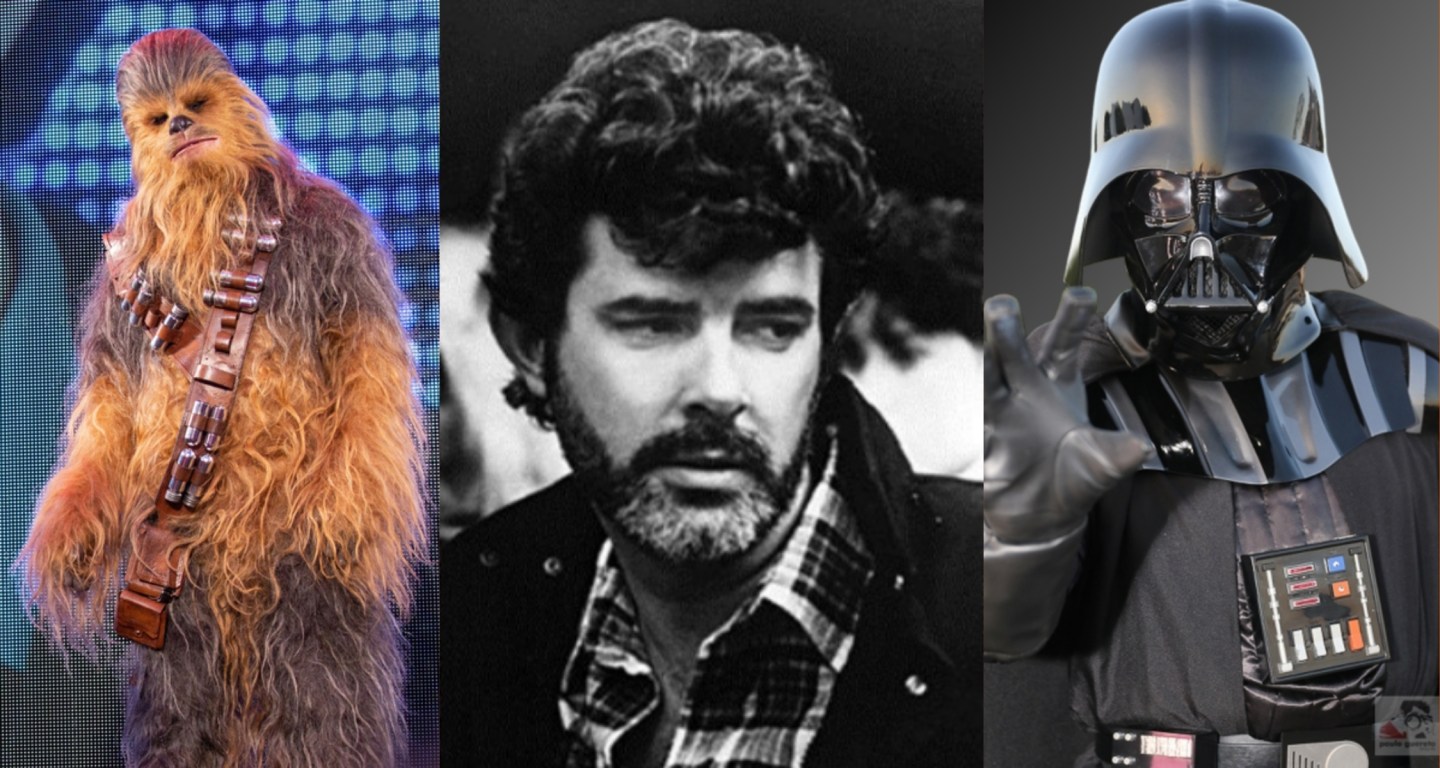
A long time ago in an editing bay far, far away, Marcia Lucas (then the wife of writer/director George Lucas) helped take a somewhat jumbled collection of shots and storylines and crafted them into one of the most iconic science fiction films of all time. This, of course, was Star Wars: Episode IV – A New Hope, originally titled simply Star Wars. And while George is still considered the mastermind behind what many believe to be a near-perfect film, some refer to Marcia as the “heart” who made it all come alive.
Many film historians have explored the idea that editors are often underappreciated. A clip posted on the RocketJump YouTube page titled, “How Star Wars was saved in the edit” takes a look at editing and just how much Marcia was able to use her brilliant mind to make it all make sense. (She had helped do this with with many cinematic greats, including a few of George’s other films.)
The clip explains that the movie didn’t test especially well a few months before it was released in May of 1977. “George Lucas invited some of his closest friends to watch a rough cut of his new film, Star Wars. In attendance, among a handful of people, were Steven Spielberg and Brian De Palma. The response was…not good. According to Spielberg, this is how De Palma reacted—” The video then cuts to Spielberg speaking on the matter, doing an impression of De Palma: “What? This makes no sense! Nonsense!”
The narrator continues that the movie needed help. “Sure you could point at the superficial problems with the rough cut such as placeholder VFX, stock footage, and unfinished sound and temp music. But the real issues were fundamental: the story, the scenes, the characters, the pacing.”
Optimistically, he adds a bit of hope befitting for a movie with this title. “The film was not beyond saving because they say a film is written three times. First in the screenplay, next in production and finally, in the edit.” All three of these are exemplified through clips of dialogue and footage between Obi-Wan Kenobi and Darth Vader, as they hoist their glowing lightsabers into the air and begin to battle.
Perhaps less hopeful, the clip makes it clear that, originally, all signs were pointing to failure. Enter Marcia Lucas to help save the day. She was not alone. Joining her on this editing challenge were Richard Chew and Paul Hirsch. “It was only due to their laborious editorial process, that Star Wars snatched victory from the jaws of defeat. Their job was to rebuild a bloated first act, cut tons of unnecessary material, create clarity, tension, and drama in places that had none and restructure scenes and entire sequences to propel the story forward.” Ya know, just all that.
The clip uses the original script, deleted scenes, and comparisons between the rough and final cuts to show just exactly what Marcia (and her fellow editors) were able to do.
Opening crawl
As mentioned, the film had issues from the jump. The famous opening crawl always existed, but in early drafts, the exposition “text” was much longer. According to the clip, it went well into the weeds about Republic Galactica, Siths, and the political climate of the Star Wars universe. (Think Phantom Menace…) “Brian De Palma was particularly brutal about the opening crawl. So George enlisted him and Jay Cox to rewrite it.”
Luke Skywalker
In earlier cuts of the film, the audience meets the lead protagonist, Luke Skywalker (as played charmingly by Mark Hamill) at a completely random time. He’s intercut into fight scenes, leaving many scratching their heads as to who this young man and his robot (who later become R2-D2) even are.
In a 2019 piece discussing the edit, writer Jim Nelson shares his thoughts. “Marcia Lucas and her fellow editors crispened the first act by reordering scenes to better establish the story and get the audience involved. Since viewers are able to fill in blanks on their own, the reordering allowed for the removal of entire scenes, keeping the storyline brisk and taut.”
He adds, quite poetically, that the power of the editor is not to be discounted. “Revising scene order is the author at her most godlike. She is rearranging the events of her dream world like a child building up and tearing down sand castle turrets. Scene reordering requires bold moves and wide peripheral vision. It’s not about word choice and tightening dialogue, it’s asking if each scene is in the right place at the right time—or even if it should be included at all.”
Darth Vader
Footage of the original scenes show Darth Vader discussing the Force before Obi-Wan does. Swapping out scenes in the edit meant that the audience had a buildup to Vader’s dramatic discussion through Obi-Wan’s philosophical explanation about “Vader’s seduction by the dark side of the Force.”
In fact, Marcia and her team also cut unnecessary Vader and Jabba scenes. “You don’t need them. All they do is repeat the same information the audience already knows.” Instead, they “dubbed Greedo with an alien language and added subtitles” in the scene where Han Solo (Harrison Ford) is held at gunpoint.
Definitely the droids they’re looking for
The clip highlights a handful of other smaller changes that Marcia was able to fine-tune. In particularly poorly shot scenes (like one where Skywalker is flying with C-3PO) they cut to a wide shot and use dubbing for the dialogue.
In another, they show how the editors were able to reverse many scenes, to create more clarity and suspense. One example given in the clip was a scene in which the Stormtroopers were searching for droids. They inserted a scene where C-3PO and R2-D2 were hiding, so the audience might feel nervous they’d be found.
And one of the most crucial changes is the choice to cut to droids for more reaction shots. Marcia foresaw the effect that, especially R2, might have on the audience’s heartstrings and helped play that up.
The Death Star
Not to be forgotten in saving the film, was the entire finale. “The entire sequence is truly breathtaking and it’s a remarkable feat of editing. But it took a lot of work to get it there.” As we’re shown “star fighter jets” approaching, the VO explains, “As it was originally written, the cut of the Battle of Yavin went something like this: Gold Leader does a pass, he gets destroyed. Then Red Leader doesn’t run, just hits the surface. Luke does a run and also fails. Then he does another run and finally succeeds and Kaboom!”
But that’s not what we saw. “Here’s the big difference. In that version, the Death Star wasn’t about to destroy the rebel base. This is where Marcia Lucas came in. The first thing she did was re-cut the trench run, basically from the ground up. This included removing Luke’s first run, but also more importantly including the idea that the Death Star was about to blow up the rebel base. If you pay close attention, you’ll notice that every single piece of footage that has to do with this idea is being delivered with off-screen dialogue over inserts. Or by re-using footage from other scenes.”
They use Marcia’s own words: “It was all editorially manufactured,” adding, “So why is this important? If there’s no threat to the rebels, then there’s no joy in the victory.”
It takes a village
It’s noted, especially for hardcore fans of the films, that of course it takes a village to make any great movie. Ben Burtt, the sound designer. John Williams, the composer. And of course, George Lucas for the unwavering vision and decades of loyalty and hard work.
In a video essay posted on the Honeycutt Videos YouTube page, a man makes it clear that even Marcia herself gives most of the credit to George. But as noted by online movie reviewer Jim Gisriel’s “Marcia Lucas: The Heart of Star Wars,” mini YouTube documentary, he shares that Marcia is “the only Lucas to receive an Oscar for Star Wars…and the only editing Oscar the franchise ever received.”
Take that as you will. To paraphrase C-3PO, Marcia saw the point, but suggested a new strategy.