Upworthy asked people at the 2015 New York #FightFor15 protest why it’s so important to them that we raise the minimum wage. Their responses remain true today.
Like this man, many others believe that people who work full-time shouldn’t still end up in poverty.
It reads: “I’m fighting for $15 and a union because no one should work full-time and still live in poverty.”
Another common concern was the rising cost of living. This woman puts it clearly:
It reads: “I’m fighting for $15 ‘cuz the rent won’t wait.”
Others, like this woman, want to help make the world a better place for future generations.
It reads: “My son just graduated from college. He and all the sons and daughters need a living wage. I hope this movement jump starts a new, vital labor movement.”
And to this woman, it’s about respect.
It reads: “I’m fighting for $15 to raise America and the economy. I believe we can win for us all. Workers just want to be respected. #FightFor15 #RaiseAmerica”
Home health care workers, adjunct faculty, child care professionals, and others joined in solidarity.
It reads: “We’re home health aide workers and we’re fighting for $15 because life is expensive.”
And like this man says, paying a living wage is the humane thing to do.
It reads: “I’m fighting for $15 because people deserve to live like people, not like animals!”
This home care worker knows how rough it can be trying to support your family on low wages.
It says: “I’m a home care worker. I’m here to fight for a better salary because life is difficult at $10 an hour. I cannot pay all my expenses. I’m a single mom, and it’s hard every single day. I think it’s very good to be a union member cause I feel support in my life. Thanks.”
A plumber chimed in, echoing the comments about supporting a family.
It reads: “I’m a union plumber. I’m here supporting workers for a fair wage of at least $15 per hour. We all have families to support.”
And this group from Belgium doesn’t think $15 is so much to ask.
It reads: “I’m from Belgium, and the American people deserve $15!”
For many, however, it’s as simple as wanting to be able to take care of your family.
It reads: “I #FightFor15 for me and my 6 kids.”
It’s no surprise that workers everywhere are asking for a living wage. When you adjust for productivity, the minimum wage has actually decreased by 23% since 1968.
According to the Economic Policy Institute, if the minimum wage kept up with the rate of worker productivity, the minimum wage should actually be closer to $18 an hour.
But these protests can’t really change anything, right? Wrong.
If it weren’t for these efforts in cities like Seattle and San Francisco, it’s likely that things would have stayed how they always were. Both cities have recently boosted their minimum wages to $15 an hour — and on April 4, 2016, the governors of California and New York followed suit by raising their states’ minimum wages to $15. Because people got out there and made their voices heard, two of the most populous states now sport two of the best worker wages in the country!
Who’s to say we can’t make this happen nationwide?
Have your own reason to #FightFor15? Tweet your own signs at @Upworthy and share this post to let us know why!
In a small village in Pwani, a district on Tanzania’s coast, a massive dance party is coming to a close. For the past two hours, locals have paraded through the village streets, singing and beating ngombe drums; now, in a large clearing, a woman named Sheilla motions for everyone to sit facing a large projector screen. A film premiere is about to begin.
It’s an unusual way to kick off a film about gender bias, inequality, early marriage, and other barriers that prevent girls from accessing education in Tanzania. But in Pwani and beyond, local organizations supported by Malala Fund and funded by Pura are finding creative, culturally relevant ways like this one to capture people’s interest.
The film ends and Sheilla, the Communications and Partnership Lead for Media for Development and Advocacy (MEDEA), stands in front of the crowd once again, asking the audience to reflect: What did you think about the film? How did it relate to your own experience? What can we learn?
Sheilla explains that, once the community sees the film, “It brings out conversations within themselves, reflective conversations.” The resonance and immediate action create a ripple effect of change.
MEDEA Screening Audience in Tanzania. Captured by James Roh for Pura
Across Tanzania, gender-based violence often forces adolescent girls out of the classroom. This and other barriers — including child marriage, poverty, conflict, and discrimination — prevent girls from completing their education around the world.
Sheilla and her team are using film and radio programs to address the challenges girls face in their communities. MEDEA’s ultimate goal is to affirm education as a fundamental right for everyone, and to ensure that every member of a community understands how girls’ education contributes to a stronger whole and how to be an ally for their sisters, daughters, granddaughters, friends, nieces, and girlfriends.
Sheilla’s story is one of many that inspired Heart on Fire, a new fragrance from the Pura x Malala Fund Collection that blends the warm, earthy spices of Tanzania with a playful, joyful twist. Here’s how Pura is using scent as a tool to connect the world and inspire action.
A partnership focused on local impact, on a global mission
Pura, a fragrance company that recognizes education as both freedom and a human right, has partnered with Malala Fund since 2022. In order to defend every girl’s right to access and complete 12 years of education, Malala Fund partners with local organizations in countries where the educational barriers are the greatest. They invest in locally-led solutions because they know that those who are closest to the problems are best equipped to solve and build durable solutions, like MEDEA, which works with communities to challenge discrimination against girls and change beliefs about their education.
But local initiatives can thrive and scale more powerfully with global support, which is why Pura is using their own superpower, the power of scent, to connect people around the world with the women and girls in these local communities.
The Pura x Malala Fund Collection incorporates ingredients naturally found in Tanzania, Nigeria, Pakistan, and Brazil: countries where Malala Fund operates to address systemic education barriers. Eight percent of net revenue from the Pura x Malala Fund Collection will be donated to Malala Fund directly, but beyond financial support, the Collection is also a love letter to each unique community, blending notes like lemon, jasmine, cedarwood, and clove to transport people, ignite their senses, and help them draw inspiration and hope from the global movement for girls’ education. Through scent, people can connect to the courage, joy, and tenacity of girls and local leaders, all while uniting in a shared commitment to education: the belief that supporting girls’ rights in one community benefits all of us, everywhere.
You’ve already met Sheilla. Now see how Naiara and Mama Habiba are building unique solutions to ensure every girl can learn freely and dare to dream.
Naiara Leite is reimagining what’s possible in Brazil
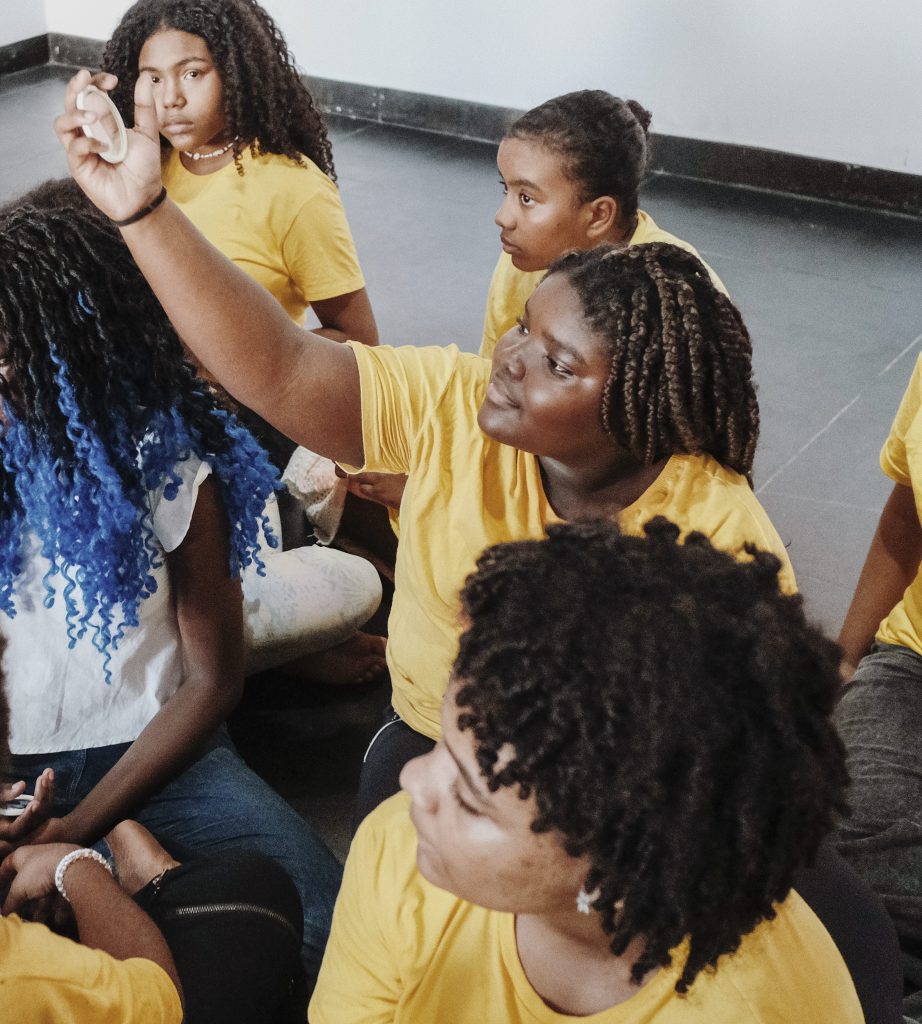
Julia with Odara in Brazil. Captured by Luisa Dorr for Pura
In Brazil, where pear trees and coconut plantations cover the Northeastern Coast, girls like ten-year-old Julia experience a different kind of educational barrier than girls in Tanzania. Too often, racial discrimination contributes to high dropout rates among Black, quilombola and Indigenous girls in the country.
“In the logic of Brazilian society, Black people don’t need to study,” says Naiara Leite, Executive Coordinator of Odara, a women-led organization and Malala Fund partner. Bahia, the state where Odara is based, was once one of the largest slave-receiving territories in the Americas, and because of that history, deeply-ingrained, anti-Black prejudice is still widespread. “Our role and the image constructed around us is one of manual labor,” Naiara says.
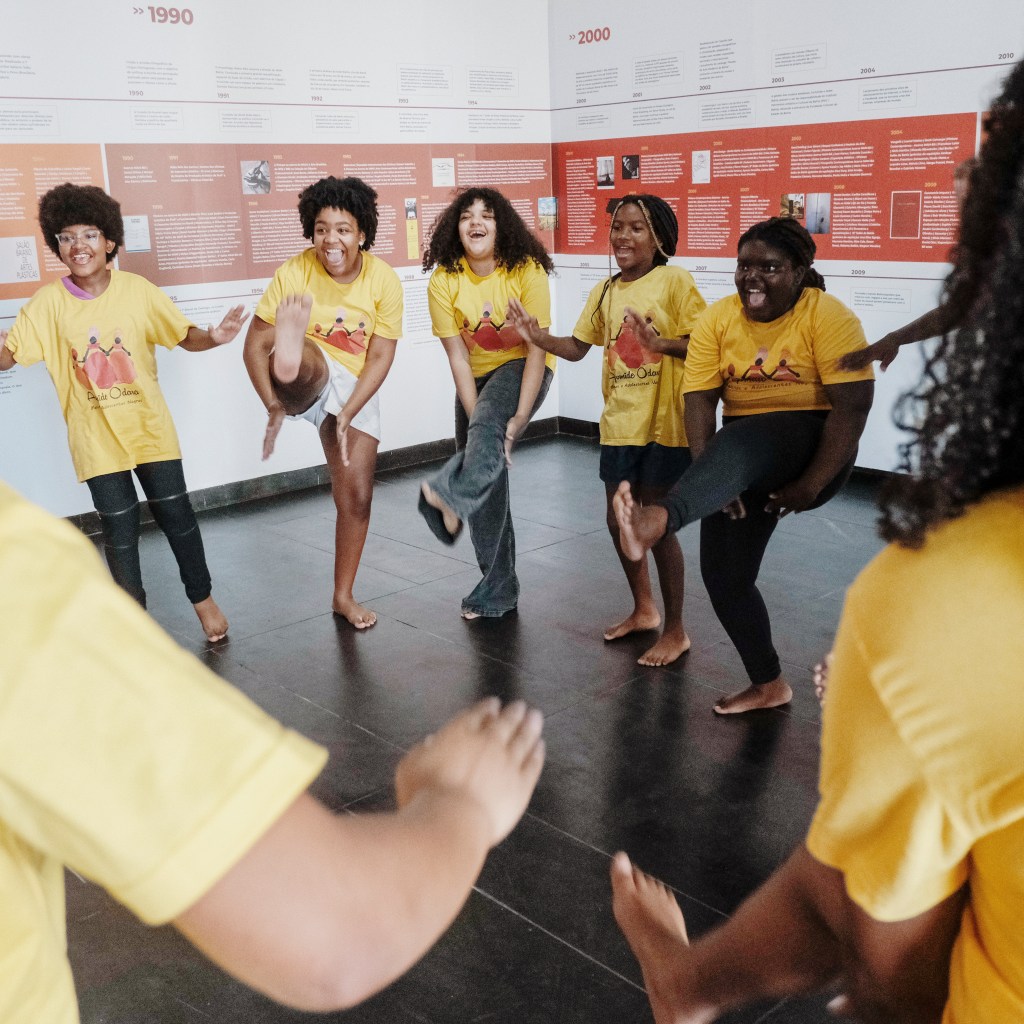
But education can change that. In 2020, with assistance from a Malala Fund grant, Odara launched its first initiative for improving school completion rates among Black, quilombola, and Indigenous girls: “Ayomidê Odara”. The young girls mentored under the program, including Julia, are known as the Ayomidês. And like the Pura x Malala Fund Collection’s Brazil: Breath of Courage scent, the Ayomidês are fierce, determined, and bursting with energy.
Ayomidês with Odara in Brazil. Captured by Luisa Dorr for Pura
Ayomidês take part in weekly educational sessions where they explore subjects like education and ethnic-racial relations. The girls are encouraged to find their own voices by producing Instagram lives, social media videos, and by participating in public panels. Already, the Ayomidês are rewriting the narrative on what’s possible for Afro-Brazilian girls to achieve. One of the earliest Ayomidês, a young woman named Debora, is now a communications intern. Another former Ayomidê, Francine, works at UNICEF, helping train the next generation of adolescent leaders. And Julia has already set her sights on becoming a math teacher or a model.
“These are generations of Black women who did not have access to a school,” Naiara says. “These are generations of Black women robbed daily of their dreams. And we’re telling them that they could be the generation in their family to write a new story.”
Mama Habiba is reframing the conversation in Nigeria
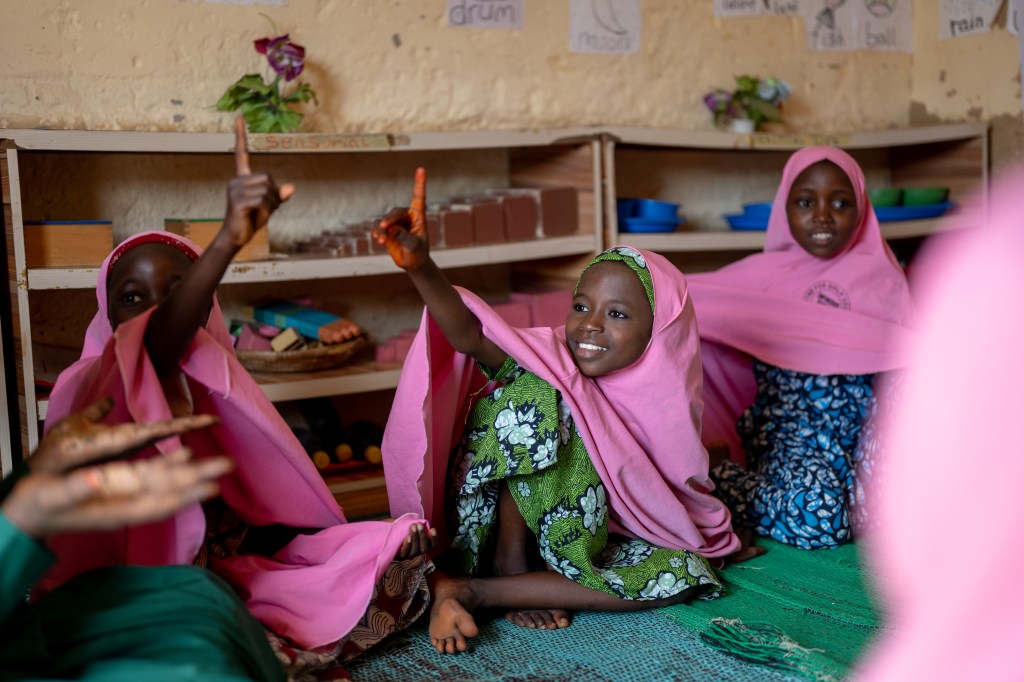
Centre for Girls' Education, Nigeria. Captured by James Roh for Pura
In Mama Habiba’s home country of Nigeria, the scents of starfruit, ylang ylang and pineapple, all incorporated into the Pura x Malala Collection’s “Nigeria: Hope for Tomorrow,” can be found throughout the vibrant markets. Like these native scents, Mama Habiba says that the Nigerian girls are also bright and passionate, but too often they are forced to leave school long before their potential fully blooms.
“Some of these schools are very far, and there is an issue of quality, too,” Mama Habiba says. “Most parents find out when their children are in school, the girls are not learning. So why allow them to continue?”
When girls drop out of secondary school, marriage is often the alternative. In Nigeria, one in three girls is married before the age of 18. When this happens, girls are unable to fulfill their potential, and their families and communities lose out on the social, health and economic benefits.
Completing secondary school delays marriage, and according to UNESCO, educated girls become women who raise healthier children, lift their families out of poverty and contribute to more peaceful, resilient communities.
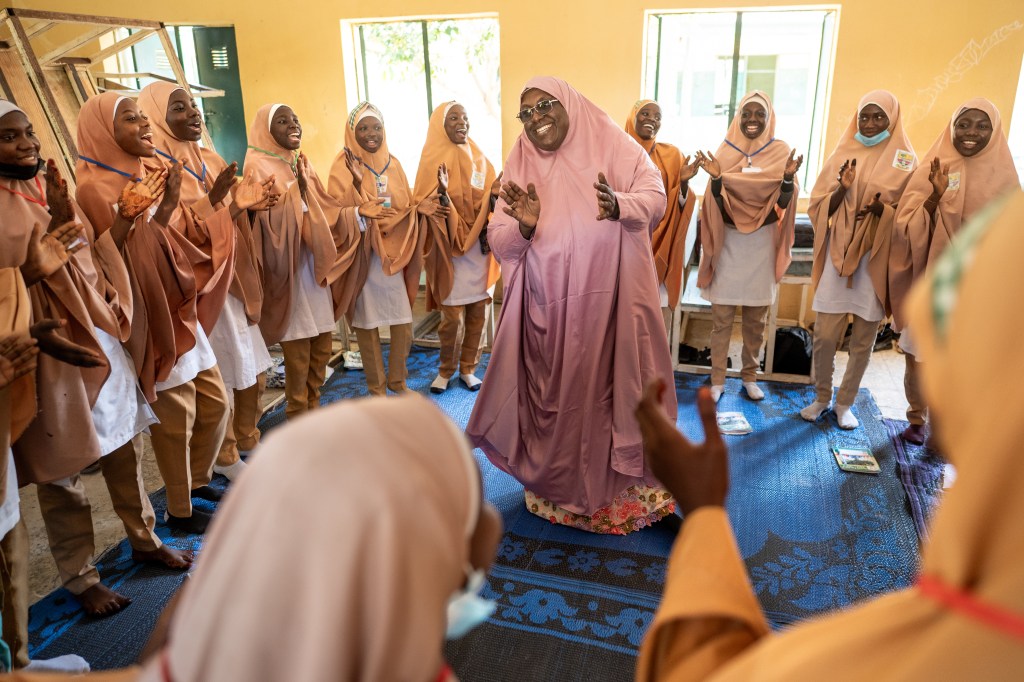
Centre for Girls’ Education, Nigeria. Captured by James Roh for Pura
To encourage young girls to stay in school, the Centre for Girls’ Education, a nonprofit in Nigeria founded by Mama Habiba and supported by Malala Fund and Pura, has pioneered an initiative that’s similar to the Ayomidê workshops in Brazil: safe spaces. Here, girls meet regularly to learn literacy, numeracy, and other issues like reproductive health. These safe spaces also provide an opportunity for the girls to role-play and learn to advocate for themselves, develop their self-image, and practice conversations with others about their values, education being one of them. In safe spaces, Mama Habiba says, girls start to understand “who she is, and that she is a girl who has value. She has the right to negotiate with her parents on what she really feels or wants.”
“When girls are educated, they can unlock so many opportunities,” Mama Habiba says. “It will help the economy of the country. It will boost so many opportunities for the country. If they are given the opportunity, I think the sky is not the limit. It is the starting point for every girl.”
From parades, film screenings to safe spaces and educational programs, girls and local leaders are working hard to strengthen the quality, safety and accessibility of education and overcome systemic challenges. They are encouraging courageous behavior and reminding us all that education is freedom.
Experience the Pura x Malala Fund Collection here, and connect with the stories of real girls leading change across the globe.
If this sounds familiar, you’re not alone. Introverts make up one-third to one-half of the population, but our conversation norms—both online and off—are designed for extroverts.
Susan Cain, author of the bestselling book Quiet: The Power of Introverts in a World That Can’t Stop Talking, calls this phenomenon the “New Groupthink.” It’s a culture that favors constant collaboration and rapid-fire replies over stillness and deep thought. We live in a world that measures contribution by the number of messages sent, and it’s easy to feel like you’re falling behind when you go silent.
But what if this isn’t about falling behind? What if silence is just a different way of engaging? If you’ve ever wondered why you go quiet in group chats, consider these 10 signs you might be an introvert.
Unlike their extroverted counterparts, introverts take time to think about their responses before firing off a text. Photo credit: Canva
As Cain describes in her book, introverts “listen more than they talk, think before they speak, and often feel as if they express themselves better in writing than in conversation.”
In a group chat setting, this internal processing means you might mentally prepare a response, revise it, overthink the timing (can’t be too quick or too slow, right?), and then decide the conversation has already moved on without you. The perfect response you crafted vanishes before you hit send.
2. Surface-level banter drains you
For introverts, not all conversations are created equal. You might find endless small talk, quick memes, and emoji reactions tiresome, and yearn for messages with more substance. That’s because introverts crave depth—a meaningful exchange that explores an idea, a feeling, or a genuine problem.
How would you react in this situation? I already interact too much with some of my coworkers on a daily basis so please leave me out the group chat. Thanks #groupchat#introverts#workgossip
Research published in the Journal of Personality and Social Psychology found that serious conversations are more enjoyable than people expect, yet we consistently underestimate others’ interest in them. For introverts, this inclination toward depth isn’t a personality quirk—it’s a fundamental part of how they communicate.
3. You observe everything
If you’re quiet in the group chat, it doesn’t mean you’re not paying attention. Introverts are sharp readers of context: they notice shifts in tone, track emotional undercurrents, and pick up on what’s not being said as much as what is. This ability to observe and accurately synthesize group dynamics is one of the most underappreciated traits in online communication.
Introverts are sharp readers of context—everything that’s not being said. Photo credit: Canva
Psychologist Daniel Goleman found that empathy is a core component of emotional intelligence, and that quiet people often exhibit greater empathy because they listen more deeply. So while you may not be contributing messages to the group chat, you’re still playing an active role—picking up on subtle cues, like a shift in someone’s tone.
4. Group chats drain your social battery
Group chats require a lot of mental and social energy as you process multiple conversations, competing personalities, shifting group dynamics, and implicit social cues all at once. That’s an enormous cognitive load, especially compared to one-on-one conversations, where your focus can be directed toward a single person without all the noise.
If you feel overwhelmed, muting the chat might not be a bad idea. You need to manage—and maintain—your energy well.
5. You refuse to break the silence with noise
You won’t send a message just to be seen. While some group chat members are happy to drop a fire emoji or send an “lol” to stay visible, introverts tend to hold back unless they have something substantial to contribute. They’re committed to authentic communication.
Blake Griffin Edwards, a licensed marriage and family therapist, explains it this way: “Introverts must think it out before they are able to talk it out very well.”
As a result, your communication style is built on intention rather than impulse. You may send fewer messages, but when you do, they’re more meaningful.
6. Group chats can feel overwhelming, even for good writers
Here’s a paradox many introverts recognize: writing often feels more natural than speaking. Text removes the social pressure of real-time performance, giving you space to choose your words carefully. Yet despite being text-based, group chats can still trigger overstimulation.
The problem lies with pace. A group chat doesn’t move at the same speed as a thoughtful email chain or a journal entry. It’s fast and unpredictable—like a live conversation—which creates the same timing pressures introverts face in verbal group settings. Hans Eysenck’s foundational theory of introversion suggests that introverts have a higher baseline level of cortical arousal, meaning they reach sensory overload faster than extroverts when external stimulation—like a flood of notifications—keeps escalating.
7. You tune into how others are feeling
You’re not just reading the words in a thread—you’re reading between the lines. As an introvert, you probably notice delicate emotional shifts, like a person’s messages becoming shorter, a joke that falls flat, or silence from someone who’s usually chatty. This emotional sensitivity is a strength, but it can also make group chats feel more burdensome than expected.
Emotional sensitivity can feel like a burden in group chats. Photo credit: Canva
In The Mirror, Katie Oborn observed that introverts “pick up on unspoken emotions and subtle shifts in conversation and tone.” That level of awareness means introverts are often the first to notice when something is off.
8. You don’t bend to the pressure to perform
Group chats carry an implicit social pressure: respond quickly, be entertaining, stay visible. For emotionally independent introverts, that pressure can feel crushing. People who resist the pull to perform in group settings often have a strong internal compass about what matters to them and why. They won’t chime in for the sake of it, and they won’t be dragged into drama just because the group demands a response.
9. Constant notifications break your focus
For introverts, great thinking often happens when you’re alone. There’s research to support this: studies consistently link solitude to improved emotional regulation, creativity, and decision-making. When a group chat keeps pinging you—interrupting a reading session, the workday, or a quiet moment—it fragments the kind of deep focus and flow state introverts depend on.
Studies from Microsoft Research confirm that instant message notifications slow task performance and make it more likely you’ll lose your train of thought. For introverts, who need more time to process information, these interruptions can be even more costly. The “ping” of a phone notification can disrupt deep focus.
Scroll through your messages, and you might notice a pattern—either in yourself or in your introverted friends. Long periods of silence often lead to a single, valuable message that adds meaning to the conversation. That’s what strategic participation looks like: waiting for the right moment, then contributing something meaningful.
Embracing your strength
For introverts, hanging back and staying quiet in a group chat isn’t withdrawal. It’s a form of meaningful participation that favors observation, thoughtful processing, and intentional engagement over simply making noise.
If you recognize these signs in yourself and want to start engaging more on your own terms, these small shifts can help:
Try preparing your thoughts before or at the start of a lively group conversation.
Remember, writing is your natural way in. A thoughtfully crafted message at the right moment can carry more weight than a dozen impulsive replies.
Feel free to set notification boundaries without guilt.
When you’re ready to chime in, trust your timing and insight.
As Susan Cain reminds us, being the loudest in the chat doesn’t mean having the best ideas. The quietest voice may actually be paying the closest attention—and when their words are shared deliberately, they can shift the entire conversation.
Luke Thompson has achieved heartthrob status as Benedict Bridgerton, the free-spirited, second-born son of the noble family featured in the popular Bridgerton television series. The show’s fourth season focuses on Benedict’s Cinderella-esque love story with a servant named Sophie, played by Yerin Ha.
In an interview promoting season four, Thompson and Ha read questions from Bridgerton fans. One person asked Thompson, who grew up in France and speaks fluent French, to share his favorite French phrase.
We can’t think of a better French teacher! 🇫🇷 Luke Thompson revealed what his favourite French phrase is and taught Yerin the language of love in the process! Watch the FULL video of Yerin Ha and Luke Thompson texting fans at the link in our bio. 🔗 Part 1 of ‘Bridgerton’ season 4 is streaming NOW on @Netflix. #LukeThompson#YerinHa#Bridgerton#French#BenedictBridgerton @Yerin Ha
“My favorite French phrase is probably…Oh! ‘Un ange passe,’” he said.
Ha asked what it meant, and Thompson helped her decipher it. Un = a/an. Ange = angel. Passe = pass(es). In English, “Un ange passe” means “An angel passes.”
“What it means is, when you’re having a conversation, or like just in a group, it’s a nice way of expressing awkward silence,” Thompson explained. “But it’s just those moments where like, just, there’s a bit of a lull and no one says anything. And you say, ‘Un ange passe.’”
“You say, ‘An angel passes,’” Ha said. “That’s really nice.”
It is nice. And it appears to be a glaring omission from the English language, since people in the comments shared that they have similar phrases for awkward silences in their cultures:
“OMG we say the same thing in Arabic!”
“We say the same in Portuguese… ‘passou um anjo’ ☺️”
“In Spanish we say that, at least in Chile ‘pasó un angel or ‘un angel pasó.’”
“In Spanish we say the same thing!! México 🇲🇽”
“In Philippines we have this too! Haha may dumaang anghel 😂”
“In Malay we said: malaikat lalu.”
“We have that phrase in Danish too. But it’s more an angel went through the room.”
“The Dutch also have this, but a reverend walks by instead of the angel 🙈 Angel is much nicer.”
“We say that too in Nigeria. ‘Ndị muozi na agafe.’”
this is so interesting to know because we say the same thing in malay when there’s sudden silence, “malaikat lalu”, which also means “an angel passes” https://t.co/hYa6pcfoRz
It seems that many cultures have handy phrases like this to make a conversational lull feel mystical or magical instead of uncomfortable and awkward. The wording may differ from place to place—apparently, in Russia and Kazakhstan they say, “A cop was born”—but why don’t we have anything even close to it in English?
When silence falls over a group of English speakers, we just stand there and shift our gaze, feeling the heavy seconds tick by. Occasionally, someone might acknowledge the silence by saying, “Well, this is awkward…” but that only emphasizes the awkwardness.
The irony here is that English speakers tend to be particularly uncomfortable with silence, at least compared to cultures in which silence is viewed more positively.
In his research, linguist Haru Yamada found that Americans consider the length of silence in Japanese speakers’ conversations to be “unbearably long.” Unlike many other cultures, we have no sweet, playful saying to slice through the pregnant pause.
Researchers from Holland determined that it takes about 4 seconds for a silence to become awkward.
Not all silence is uncomfortable, of course. It becomes awkward when we expect others to speak—or when we are expected to speak—and no one does.
According to Rebecca Roache, associate professor of philosophy at the University of London, the awkward feeling of silence comes from fear of how it might be interpreted: “Specifically, we worry about one or both of two things: having others misinterpret our silence, and having others correctly interpret our silence.”
In other words, we might worry that people think we’re boring if we don’t have something to say, which would be a misinterpretation of our silence. Then again, we might worry that people will think we’re nervous, which may be a totally correct interpretation of our silence—but just not the impression we want to give others.
everyone on Zoom during that awkward pause between the small talk and the work talk pic.twitter.com/HLUXGkRi69
The beauty of having a standard phrase like “un ange passe” is that it allows everyone to acknowledge that lulls in conversation are a normal, universal phenomenon. It says, “This is so common, we even have a saying for it.” That alone helps lessen the awkwardness. The English language’s lack of such a phrase now feels like a big, gaping hole in our social lives.
Where did the idea of saying “un ange passe” come from in the first place? According to the Lawless French website:
“No one seems to know the origin of the expression, whether the angel’s passing is what causes the silence or if she is attracted by the tranquility, but either way, un ange passe is a nice way to break the tension and continue chatting.”
Can we just start saying “an angel passes” now? Do we need to ask anyone’s permission for this? It appears to be pretty universal, so maybe we English speakers just missed the boat somewhere along the centuries. It feels well past time to remedy that.
When Brody Ridder came home from school on May 24, 2022, his mom took one look at his yearbook and felt her heart crack open. He’d asked all kinds of kids to sign it. Two had. Two teachers had. And then, on one of the pages, in his own handwriting: “Hope you make some more friends. — Brody Ridder.”
He had signed his own yearbook. And then wished himself better luck next year.
Cassandra Ridder posted a photo of the page to the school’s private Facebook parent group that night. She didn’t ask Brody first, but as she told the Washington Post, she knew he’d be fine with it. “Brody has always told me he wants to be part of the solution.” Her message to other parents was simple: talk to your kids about kindness. She had no idea what was about to happen.
snip* It is the time of year when kids are signing each other’s yearbooks. But what happens when no one wants to sign yours?
That happened to Brody Ridder, a sixth grader at The Academy of Charter Schools in Westminster.https://t.co/tCDWYkLD1A
Other parents showed the post to their kids. Seventeen-year-old Joanna Cooper got a text from her mom with a screenshot and made a decision on the spot, as she told KDVR. “We’re going to sign his yearbook,” she said, “because no kid deserves to feel like that.” She started texting friends. Meanwhile, Simone Lightfoot, also an 11th grader, was doing the same thing. “When I was younger, I was bullied a lot like him,” she told the Washington Post. “We walked in and we were like, ‘Where’s Brody at? Is Brody Ridder in here?’ And they’re like, ‘Yeah, he’s in the back.’ And we’re like, ‘Brody! We’re here to sign your yearbook, bud.’”
The older kids didn’t just sign their names. As Goalcast reported in its coverage, they asked Brody about his hobbies, which turned out to include chess and fencing, and gave him a pep talk. Many of them had been in similar situations at his age. Once the upperclassmen started filling pages, the kids in Brody’s own class started getting up from their seats to sign it too. “It was like a domino effect,” Cassandra told Fox News. “It was beautiful.” By the end of the day, Brody had collected more than 100 signatures, paragraphs of encouragement, and a handful of phone numbers.
“It just made me feel better as a person,” Brody told KDVR. “I don’t know how to explain it. It just makes me feel better on the inside.”
The teenagers marched into Brody Ridder's class and filled the sixth grader's yearbook with messages of friendship and support. https://t.co/NAbQIBvTat
The story didn’t stay local for long. After Cassandra posted an update to her personal Facebook, it spread widely. Letters started arriving at the Ridders’ P.O. Box from people across the country and around the world, people of all ages who recognized something in Brody’s story. By July, at least 600 letters had arrived, with more still coming, including one dictated by a three-year-old to his mom.
Among those who reached out was Paul Rudd. According to the Denver Post, Rudd’s sister saw Cassandra’s post and contacted her to say the actor would love to connect with Brody. Rudd FaceTimed him and sent a care package that included a signed Ant-Man helmet and a handwritten note telling Brody that things get better and that many people, Rudd included, thought he was “the coolest kid there is.”
Cassandra and Brody have since partnered with The UGLI Foundation, an anti-bullying nonprofit, to keep the conversation going, according to the Denver Post. Cooper, the 11th grader who organized the original yearbook visit, said she planned to push for a schoolwide signing event the following year so no student would face an empty book again.
Brody said he’s not sure all the kids who refused to sign will become his friends. But something shifted. “It made me feel like there’s hope for the school,” Cassandra said, “there’s hope for humanity, and there are a lot of good kids in this world.”
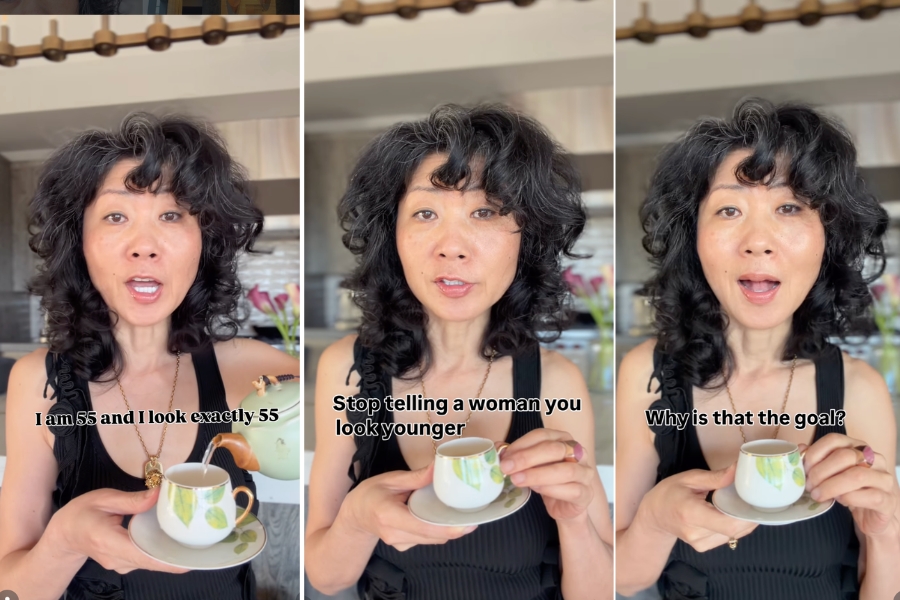
While such comments may be well-intentioned, a woman’s viral video challenges the idea that they are actually compliments. Ting, who posts as @tingmystyle on Instagram, looks directly at the camera and says matter-of-factly, “I am 55 and I look exactly 55. Stop telling a woman, ‘You look younger,’ or ‘You look good for your age.’ It’s not a compliment.”
Ting says such comments only reinforce our youth-obsessed culture.
“Everyone ages so differently,” she points out. “What are we even supposed to look like at this age? So tired of hearing that ‘She’s in her 50s but looks 20 years younger.’ Why is that the goal?”
It’s a question worth asking—and definitely one worth pausing to answer. So often, people go along with what society dictates as the norm, and today that norm means trying to look younger than one’s age. But why? Traditionally, elders have been revered. When did we decide youth was superior?
As Ting declares, “I don’t survive five decades to be obsessed with looking 30. How many people never made it to 55?”
Getting older IS a privilege. When I hear people saying they won’t celebrate their birthdays or they’re sad about getting older I always provide a reality check. This life is not promised.
Aging is a privilege not everyone gets. Shouldn’t we feel happy to have lived as long as we have? Part of wanting to look younger may be that getting older reminds us of our mortality. But in reality, none of us knows our timeline, and if we see each day of life as a gift, the more days we’ve lived, the better.
“Women don’t owe the world youth, beauty frozen in time,” Ting states. “Looking my age, or even older than my age, is not a failure. Youth is not a standard. It’s just a season. And the seasons change.”
Amen. When we hold youthful beauty up on a pedestal, we miss the beauty of every other season. And though women have borne the brunt of the expectation to remain young-looking, men are feeling the pressure to look younger as well. Just look at the Hollywood starsacross the gender spectrum getting facelifts and eyelifts. There’s nothing wrong with wanting to look good. But that’s not the same as trying to look young.
“We look our age not because we’ve let ourselves go, but because we’ve finally let ourselves be,” says Ting. “I am so proud to look my age.”
Embracing aging with pride
It feels like an act of defiance to let ourselves look our age, much less be proud of it. But with more than eight million views, middle-agers everywhere heard Ting’s message loud and clear.
“Ooooh, youth is not a standard, it’s just a season. Loveeeee.”
“‘How many people never made it to 55.’ My mum never made it. I would have loved to send this video to her.”
“Turning 39 next year and I’m excited! Like wow thank you for another year of life! I almost died in 2022 from a stroke and every birthday I’m just so thankful for my life.”
“Aging is a privilege. I’ve lost too many people who would have loved to be here, wrinkly & full of sun spots and grey hairs.”
“Yes! I’m 58. Don’t call me ‘young lady.’ Don’t tell me ‘happy 30th,’ on my birthday. Do you imagine I was having this much fun when I was 30? I wasn’t.”
“Yes! Yes! Yes! When I turned 50 someone said to me – and I quote – ‘That’s ok 50 is the new 30!’ And I immediately shot back – ‘God I hope not. At 30 I was knee deep in diapers, never got any sleep and cared way too much about what other people said.’ At 58 when someone tells me I don’t look my age all I say is yes I do and change the subject.”
I find aging actually so beautiful like there’s a certain elegance in older women who have grown to know themselves so well… have their own signature scent & style, unapologetically who they are, smile lines & endearing eye crinkles.. reapplying hand cream every hour
“I’m 55 too. My only goal is to have clear glowing skin. I’m not supposed to look like my kids and I’m okay with that.”
“I like giving compliments like wow you have amazing skin. Or wow you have such gorgeous shiny hair. Your eyes are bright – etc. You’re so right about youth-based compliments.”
Examining our own habits
So many are taking Ting’s message to heart, and it’s something to consider the next time we feel compelled to tell someone they look young for their age. Is this really a goal we want to reinforce? Or is it a social norm that needs to be thoughtfully examined—if not outright done away with?
Thank you, Ting, for putting it so plainly and for serving as an example for us all.
Having a lemonade stand is like a rite of passage for children in the United States. So much so that they’ve become a trope in many movies set in America.
Lemonade stands evoke nostalgia and fond childhood memories for many Americans. According to Smithsonian Magazine, 40% of Baby Boomers reported having a lemonade stand during their childhood.
So when a non-American on Reddit genuinely asked if lemonade stands are “a real thing” here in the States, they got a flood of emphatic responses.
Adding that in their country “parents would be embarrassed if their kids did that,” they asked Americans to describe “the vibe” of lemonade stands.
“Is it seen as a cute hobby or an actual way to learn about money?” they wrote.
And while many Americans confirmed that lemonade stands are indeed breeding grounds for future entrepreneurs, they also explained why they symbolize so much more in American culture.
American lemonade stands, explained
Some American Redditors took a more straightforward approach, describing what lemonade stands are all about and how they support kids with a business mindset:
“It’s not something kids do to actually support their families. It’s a for fun thing typically done when school is out for pocket money or for fun to learn about running a business.”
“I’ll also add that many people like to support kids doing this. I rarely want a cup of lemonade, but I pretty regularly stop to buy some when I see a stand in the summer. People like supporting kids who are putting in effort and people find it cute. It’s similar to kids mowing lawns, shoveling snow, selling bottled water, watering gardens, etc. for cash.”
“I don’t want the lemonade, but I want to reward the kids for initiative. I’ll usually pay for a few, drink one and then tell others to stop by.”
“I ALWAYS stop when I see one. Anytime I do I always overpay. $1 lemonade? Here is $5+ (depends on what I have). I’ve done it… 4 times so far? Not often but enough to make me happy to do it.”
“Yes and I personally believe it’s illegal to not buy lemonade from a lemonade stand, especially if the kids are young and having fun.”
“Yeah it’s viewed here they the kid is a ‘go getter’. They’re motivated and trying to get ahead. It’s not common on super busy roads, but on smaller neighborhood roads.”
Americans share their nostalgic lemonade stand memories
Others offered up their personal stories of how setting up a lemonade stand back in the day impacted them:
“I remember receiving a Sacagawea dollar as a kid selling lemonade!! Best customer ever!”
“When I was of the age (early 1970s) we had a giant lemon tree in our yard, that we used to make the lemonade. Ours was definitely not ‘warm and horrible.’ Ice came from the trays for free, but my mother lent us the money to buy the sugar, and we paid her back from profits. I guess she was really into the authenticity of the business experience.”
“My dad made me pay him back for the frozen lemonade cans (where you add water to create a quart or half gallon), but didn’t tell us until after so our price of $0.50 barely covered it. Killed my business initiative real quick Selling coffee at the bottom of my driveway that was across from a polling place was far more effective.”
According to Smithsonian Magazine, the first recorded lemonade stand in the U.S. appeared in New York City in the fall of 1839. The publication also noted that in 1880, The New York Times reported that “a customer can have a glass of ice-cold lemonade, made before his eyes, for five cents.”
Back then, lemonade was hawked by adults. By the early 1900s, it had become a popular entrepreneurial venture for children. Kids initially sold lemonade for charitable purposes. After states passed laws in 1918 requiring school attendance for children, lemonade stands became a summer staple.
In recent years, many states have cracked down on lemonade stands due to public health concerns. Some began requiring permits for kids to run them. However, many states have also bucked regulation—including Georgia and Texas—ensuring that lemonade stands continue to be part of many American childhoods.
Mental health therapy in the United States is expensive. According to a 2024 study that analyzed over 175,000 psychotherapy providers, the average cost of a therapy session was $143.26 for those paying cash without insurance coverage.
Unfortunately, the high costs of mental health services and support can prevent many people from getting the help they need. According to the National Alliance on Mental Illness (NAMI), nearly half of Americans with mental health needs go without treatment.
To help others, a teacher on Reddit making a “teacher salary” with “teacher mental health needs” shared the affordable mental health resources they discovered to help them stay well on a small budget after “refusing to pay $175/hour.”
“Spent a summer researching what actually exists between ‘expensive therapy’ and ‘suffer alone.’ More options than I expected,” they wrote.
They found several mental health services that were both free and low-cost. “Total: under $100/month for real, human support,” they added, noting that they receive monthly therapy at a community health clinic for $35, peer support calls between sessions for about $50 per month, and a free NAMI support group twice monthly.
“It’s not perfect. I’d love weekly therapy with a specialist,” they shared. “But this is sustainable on my salary and it’s genuinely helping.”
These are some of the helpful resources they found, along with additional suggestions from frugal Redditors who shared how they afford mental health services.
According to the site, “Warmlines (also known as peer support warmlines or peer-operated behavioral health warmlines) are phone, chat, or text lines that provide empathetic listening and peer support to individuals who may be experiencing distress or loneliness, or those seeking validation from a peer with lived experience who identifies with their concerns and can offer a confidential and non-judgmental space for connection and self-directed exploration of possible solutions and alternatives.”
7 Cups is an online therapy resource. The teacher explained that, in their experience, “quality varies, but it’s free.”
Library books
The teacher shared that CBT (Cognitive Behavioral Therapy) and DBT (Dialectical Behavior Therapy) books available for free through their local library are “surprisingly helpful.”
Another Redditor noted, “a lot of public libraries now offer free access to meditation and mental health apps through their digital services. My library gives free Headspace access and also has Libby for audiobooks — there’s a surprising amount of good CBT and mindfulness stuff in audiobook form that you can just listen to on a walk.”
The U.S. Department of Veterans Affairs offers veterans a number of options for free mental health support.
“In the USA if you are a military veteran who served in a combat zone, you can go to a Vet Center and get mental health support for as long as you need it,” another Redditor shared. “For me that will be for the rest of my life. Not just for people who served in a combat zone, several other qualifiers– drone operators, Coast Guard drug patrols, military sexual trauma, and a few other I can’t remember. Call and ask and they will tell you. It saved my life.”
Apps
Redditors also shared their favorite free mental health apps.
“Chiming in with my favorite free resource: freeCBT app on iOS and Android. parts of CBT are so formulaic it can literally be a … form,” one explained. “Anyway this has definitely helped me when I remember to use it.”
Another shared: “There is also a free [mindfulness meditation] app by UCLA called Mindful worth looking into, to at least help ppl get started.”
The teacher noted that Open Path Collective can also help you find affordable therapists through its membership-based model.
University training clinics
Some local universities offer low-cost services through training clinics.
The teacher shared that you may be able to find affordable care, noting that in their experience they found help for “$20-50 with supervised grad students.”
One Redditor also shared that this helped them: “The university training clinic tip is gold. I did therapy there for a year, paid $25/session, and the grad student I worked with was excellent. They’re motivated and current on research.”
Another Redditor added that they were “also seconding the university training clinic tip. The grad students are usually way more up-to-date on current research than some private practice therapists who haven’t read a new paper in 15 years. And they’re supervised by licensed clinicians so it’s not like you’re getting unqualified help.”
If you’re looking to move abroad from the United States, the United Kingdom seems like a natural candidate on its face. After all, moving to the UK means you’ll already speak the language, be relatively familiar with the country’s political structure, and exist within a similar pop culture and media ecosystem.
But many people who move to London or its surrounding areas are stunned to learn just how different American and British cultures can be.
Ashley Jackson recently moved from Amarillo, Texas, to South Manchester. She’s been documenting her journey acclimating to the new culture on her TikTok channel. Recently, she shared three “mortifying” experiences that almost made her rethink her new life in the UK.
In the tongue-in-cheek post, she reiterates that despite the difficulties and hilarious flops that have arisen from her new life, she’s still having a great time living in Manchester. But things were certainly touch-and-go for a while at first.
“One, I’ve had a full-on conversation with a person and I didn’t understand a lick of it. She had a very different accent I couldn’t understand,” Jackson says.
Accents and regional dialects in the UK are among the most diverse and wide-ranging in the world. In the U.S., there are subtle differences between Southern, Cajun, and Northeastern accents, for example. But that’s nothing compared to what even locals encounter in the UK. Even they sometimes have a hard time understanding more niche or obscure dialects like Glaswegian or Devonian. Most Americans are woefully unprepared for the accents they encounter there.
Issue number two for Jackson? “It hailstoned. While on a hike up a hill, it rained, hailstone, my daughter was crying. Everyone was wet, soggy, feet muddy. Quite traumatizing for all of us, but we’re still here.”
Weather in the UK can be all over the map, but one thing the region is famous for is rain and hail. Heatwaves and climate change have only contributed to hailstones becoming larger and more frequent. In another video, Jackson says acclimating to the weather in the UK has been a challenge, noting that she had to “toughen up.”
And finally, issue number three: “I was cut off by my GP (general practitioner) after the 10-minute mark. I didn’t realize there were 10-minute time slots for doctor’s appointments. Learned that one the hard way.”
One big appeal of living in the UK is the mostly free healthcare provided through the NHS. However, appointments can be hard to come by, and many doctors are strict about keeping visits under 10 minutes so they can manage their patient load. Jackson was stunned to be “cut off” in the middle of a visit, but for locals, that’s just the way it goes.
Americans moving to the UK often experience extreme culture shock. We sometimes expect the cultures to be so similar that the small differences that do exist catch us completely off guard.
The language, though fundamentally similar, can take Americans a while to pick up on. British culture is full of slang, regional dialects, and colloquialisms that can be confusing for outsiders. One American who moved there, for example, was baffled when everyone kept calling her cookies “biscuits.”
A lot of American daily conveniences either don’t exist in the UK or are far more rare. Air conditioning and garbage disposals, for example, are hard to come by. Houses and living quarters in general are much smaller than what most Americans are used to as well.
Work culture is very different in the UK as well. Citizens usually have a stronger work-life balance and a government-mandated minimum of five weeks of paid vacation.
In short, moving from America to the UK won’t necessarily be easy just because of the common language. Whether you ultimately enjoy American or British culture more is a matter of taste, but it will take some getting used to—that’s for sure.
As for Jackson, she says in her videos that even if the adjustment wasn’t easy, she loves the rain, the NHS, and the walkability of life in the UK. She just had to stick it out through a few embarrassing faux pas before she could start enjoying all the perks.
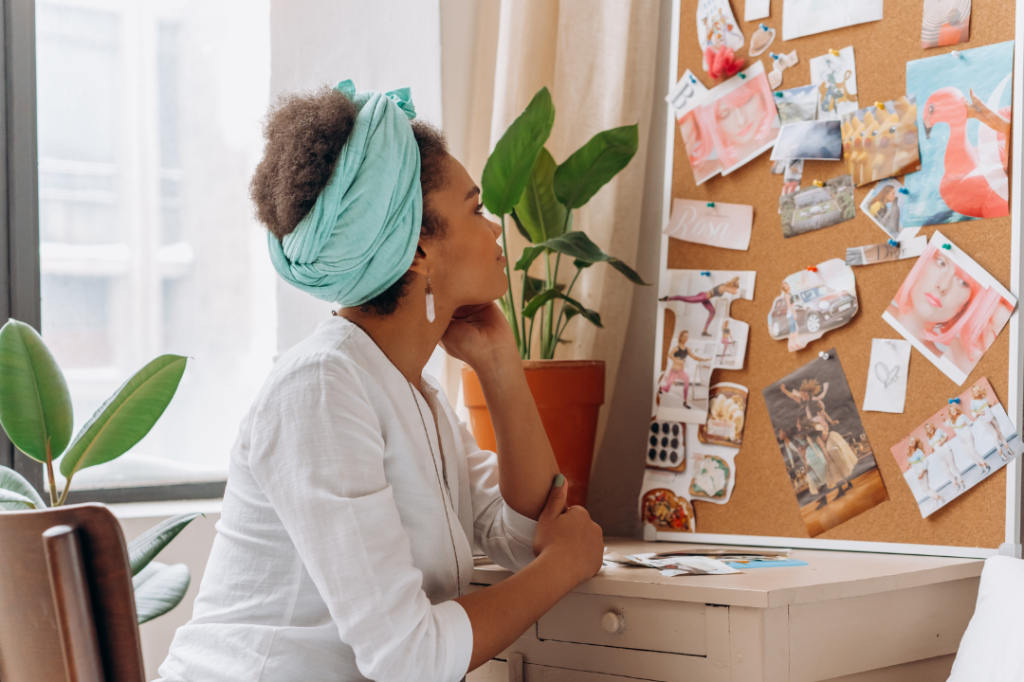
A new trend is sweeping the Internet, and it goes something like this: A person posts a TikTok. They say they’re doing a “sprint month.” Then they disappear and return a few weeks later with a follow-up video. They’ve transformed. They’re calmer, more focused, and, in a weird way, more themselves. The comment section goes appropriately wild.
In May 2025, TikTok user Kelli (@growwithkelli) shared a video titled “A Sprint Month Changed the Trajectory of My Life,” which garnered over 58,000 likes and has been viewed nearly 700,000 times. In it, Kelli explains the sprint month phenomenon: “A few months ago, I did what’s called a ‘sprint month,’ and it absolutely changed the trajectory of my life. I feel like I’ve jumped timelines into becoming a different version of myself.”
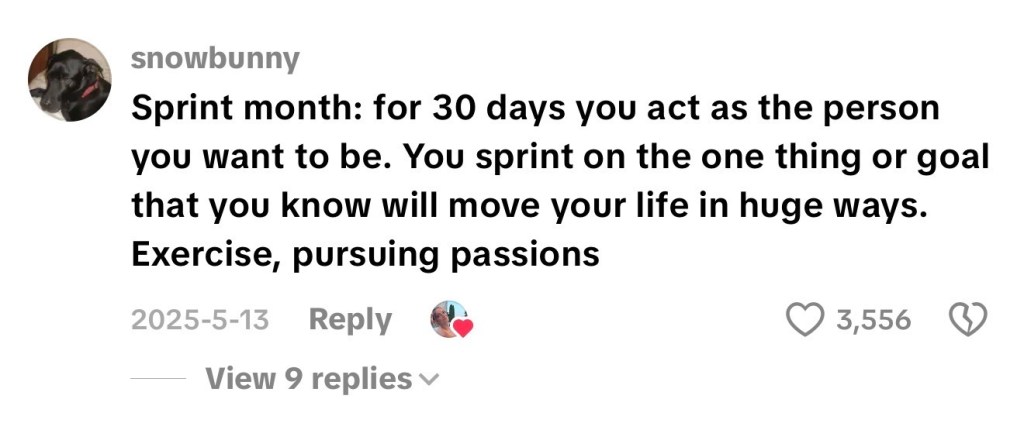
“A sprint month is basically a process where, for thirty days, you become the person you want to be. You act as that person. Before long, you start to notice all the excuses you’ve been using for so long that have prevented you or stopped you [in the past]. For thirty days, you put those excuses to the side, and you sprint towards ‘the goal’ or the one thing that you know will move your life in monumental ways.” – Kelli
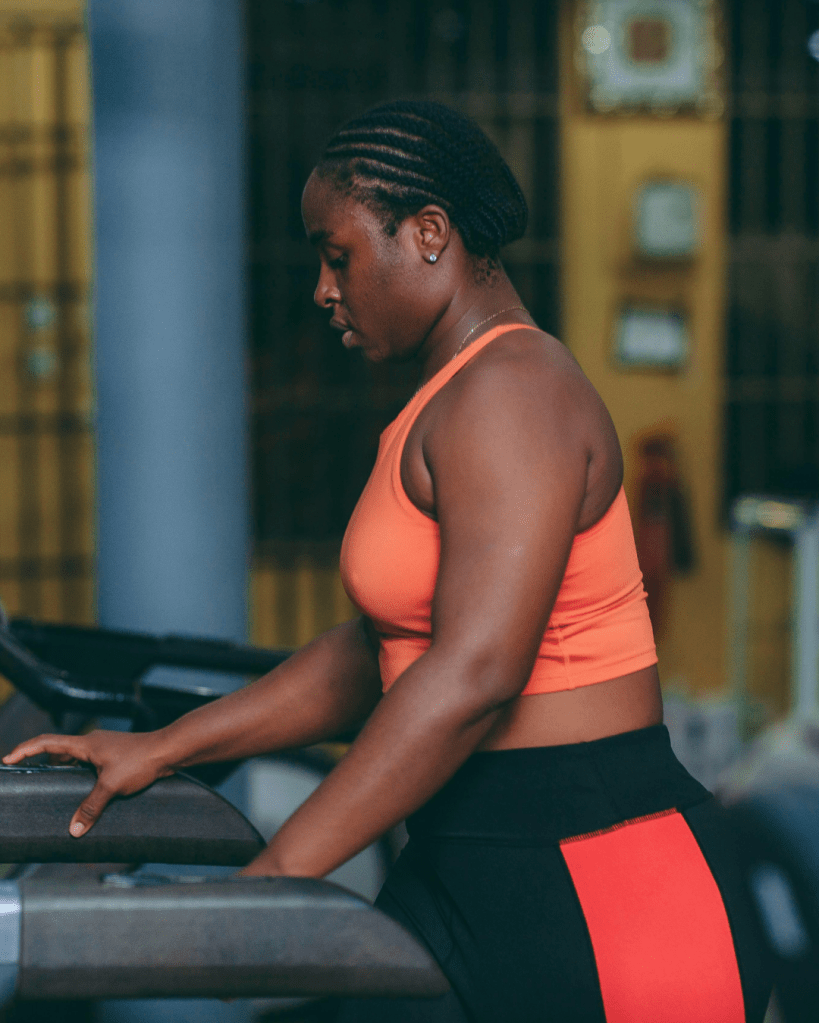
She goes on to detail her sprint month goals (technically, “sprint months”—Kelli kept this going for two consecutive months): she wanted to eat healthier, show up more at the gym, and pursue her passions outside her nine-to-five job.
Yes, you can accomplish a sprint month while holding down a full-time job.
This is more than a social media fad: it’s a certified movement supported by leading psychology. There’s a reason this concept has connected with hundreds of thousands of people on TikTok, Instagram, and wellness blogs. Sprint months tap directly into how our brains process time, motivation, and personal transformation. And we’re sharing the secrets to running your sprint month safely, the history of the trend, and the psychology of “locking in.”
The Internet’s reaction
Kelli finished back-to-back sprint months while holding down a full-time job. Seems like a lot, right? That’s exactly the point. In her viral video, she goes on to detail the positive effects she noticed during her sprint months: “When you start acting in alignment with who you feel like you’re meant to become, it creates this ripple effect in every area of your life.”
She provides examples: Over the past few months, she’s landed a job that’s more aligned with her personal passions. She started a social club that’s improving every day. Her anxiety softened. Her relationship with her partner improved. The best part? Those weren’t even her sprint month goals.
A comment from Kelli’s viral video. Photo credit: Screenshot
“These things happened, even though I wasn’t prioritizing those specific [areas],” says Kelli. “I was just focusing on a few key areas. That’s the power of a sprint month.”
Kelli’s comment section erupted, with other users chiming in with their own sprint month experiences. “I did that for a couple of months, and now I’m living in France in my dream apartment,” wrote one commenter. “The less you resist, the more you receive!” chirped another.
Hollie Fleischman (@hmfleischmann) wrote: “I saw your video and did one in March, and continue to do one every month. March was weight loss, April was studying for my certificate, and May is my financial month! I’ve lost over 25 pounds since then and saved over $3,000! Thank you for the idea!!”
Kelli isn’t alone. Search “sprint month” on TikTok, and you’ll find hundreds of videos—made overwhelmingly by young women—showing how they drastically changed their lives in just 30 days.
In a video titled “A Sprint Month could change your life,” Grace (@graciesecrist) shared her sprint month wishlist with the platform. “I’ve seen people posting about [sprint months] before, and I would always think, ‘Oh, I’ll start on the first of the month,’ or, ‘I’ll start on a Monday.’ But I need to stop making excuses for myself. Because at the end of the day, I’m only wasting more time,” she tells viewers. She’s aiming to walk 10,000 steps per day, break her doomscrolling habit, and explore New York City.
For people who don’t know where to start, a video posted by Kelly Matthews (@kellylmatthews) details a general template designed for those who want to “accelerate the timeline” toward becoming a different person. She recommends aiming for 10,000 steps a day (8,000 minimum), planning three gym sessions a week (and putting them on your calendar ahead of time), eating one gram of protein per pound of body weight per day (plus 25 grams of fiber), and putting your phone away half an hour before bed.
She ends the video with a challenge. “So what’s it going to be?” she asks. “Are you going to walk towards the goals you have? Or are you going to sprint? 30 days. That’s it. We can do it.”
From software teams to your TikTok For You Page
“Sprint months” didn’t come from the self-help world. The term “sprint” is actually lifted from Scrum, an agile project management framework developed for software engineering in the early 1990s. In the Scrum Guide(which details the product’s accountabilities, events, artifacts, and rules), co-creators Jeff Sutherland and Ken Schwaber define a sprint as “a fixed-length event of one month or less.” Sprints are designed to give developers a clear goal, a set timeframe, and an opportunity to review progress at the end.
Sprints entered the personal growth stratosphere when productivity writer J.D. Meier introduced the “Monthly Improvement Sprints” method. Instead of chasing a single long-term goal, his personal growth framework centers on a series of twelve monthly themes each year. “This way, each month would be a fresh start,” he writes. “What I generally notice is that a lot of the hurdles I hit in my first week are gone by week 2. Little improvements each day add up quickly.”
Meier adds suggestions for sprint month themes:
Make progress on a dream (chip away at a big dream or [invent] a little dream and make it happen).
Sharpen a skill.
Try your hand at something new.
Reshape your body.
Adopt a new habit.
TikTok users discovered this framework and, no pun intended, ran with it. Creator @kellylmatthews pumps up sprinters in her viral clip:
“For thirty days, you’re not going to walk towards your goals. You’ll be sprinting towards all the things you want to accomplish this year. This isn’t about toxic hustle culture. It’s not ‘I’ll sleep when I’m dead.’ It’s about increasing the amount of work that you’re willing to put in.”
Why 30 days hits that perfect sweet spot
Besides glowing anecdotes and enthusiastic letters of recommendation, there’s a decent chunk of psychology and science backing 30-day sprints. The “Fresh Start Effect” helps explain the psychology behind sprint months and why this 30-day challenge feels so motivating. Researchers from the Wharton School found that people are more likely to work toward their goals after a “temporal landmark,” like the start of a new week, a birthday, or the first of the month.
Temporal landmarks provide us with a mental clean slate. They are moments that help us distinguish our “past self” (who might feel discouraged by past struggles or perceived failures) from our “future self,” whom we believe will succeed. A sprint month transforms the beginning of the month into a portal: accept the challenge, and you’re given a fresh opportunity to embody the person you’re meant to become.
I saw @Sprint Month / vaere_wellness talking about the sprint month and I’m all in! Let’s gooooo! 1) Nutrition Coaching Certification 2) Maintain calorie deficit- for weight loss 3) Save a specific amount/ No excess spending #sprintmonth#fyp#over40
“While consistency over time is important, we can’t always put considerable effort toward one thing for a year. Having a clear start date and a clear end date enables us to push more than we usually would on something. The structure and containment of sprint months is what makes them so powerful and useful.”
While we normally pursue long-term goals (like exercising) to receive delayed rewards (like improved health), that mindset can be counterintuitive. Fishbach and Woolley found the opposite: immediate rewards—such as enjoyment, fun, or positive experiences—better indicate whether a person will stick with an activity. Immediacy creates a perceptual fusion between the activity and its reward, linking the two. In the context of “sprint months,” when you see results in such a short time span, your brain begins to associate your progress with pleasure. The activity itself—whether it be working out, eating better, or lowering your screen time—starts to feel rewarding. That’s incredibly powerful.
A daily feeling of achievement, a visible streak on a tracker, or encouragement from a TikTok accountability group can all act as immediate rewards that help keep motivation high.
How sprint months compare to other viral challenges
You may not have encountered sprint months before, but you’ve likely heard of their buddies: “75 Hard,” “The Winter Arc,” and “The Great Lock-In.”
Sprint months are part of a rising number of fitness challenges on TikTok. Photo credit: Canva
Sprint months don’t exist in a vacuum. They’ve emerged as part of a rising trend of short-term self-improvement challenges popular among Gen Z and Millennials.
75 Hard, created by entrepreneur Andy Frisella, is a grueling program in which participants must complete five intense daily tasks for 75 consecutive days: two 45-minute workouts (one outdoors), drinking a gallon of water, following a strict diet with no cheat meals or alcohol, reading 10 pages of nonfiction, and taking a daily progress photo. If you miss a single day, you have to start over.
“This is not a fitness challenge,” Frisella warns on his website. “I spent years feeling like I was nothing, trying program after program to get back on track…only to fall off right after I completed it. Then I realized that the root cause of all my problems was not addressed by any existing program.”
The Winter Arc rose to fame on TikTok in late 2024. This self-improvement trend avoids the “new year, new me” trap and urges people to jump-start their personal growth well before the ball drops on January 1. Miami-based influencer Carly Berges (known as @carlyupgraded) is widely credited as the creator of the Winter Arc; her TikTok about it has garnered over 4.8 million views.
“If you’re seeing this video before October 1st, then you are just in time for your Winter Arc,” says Berges. “This is a time where people tend to let their foot off the gas, but there are still three months left in the year.” She goes on to reframe October, November, and December as an opportunity to “dial the f*** in” and get serious about your personal transformation goals.
Unlike the severity of 75 Hard, the Winter Arc has no fixed ruleset. Instead, participants typically build a personal list of around 10 daily self-improvement habits they commit to for the duration, usually spanning fitness, sleep, mental health, nutrition, and relationships. The hashtag #winterarc quickly climbed to fifth on TikTok’s U.S. trending chart, accumulating over 250,000 videos.
Start with small actions you can consistently show up for.
Track your wins visibly and daily (Glenn suggests using a daily habit tracker or sticky notes).
Adopt the “never miss twice” rule. You can skip one day, but never miss two. Create friction for bad habits (removing harmful apps from your phone, for example) and enable flow for desirable ones (like laying out your gym clothes the night before).
Writer Cal Newport noted that “lock in” was voted the “most useful” term of 2024 by the American Dialect Society, stating that the concept reflects Gen Z’s desire for undistracted focus amid constant notifications.
In comparison to their counterparts, sprint months are shorter and more focused. These 30-day challenges are meant to be more accessible, and missing a day (or two!) doesn’t mean starting over, which provides a more realistic way to build habits.
The part no one talks about: Burnout
Now the not-so-fun part. When pushed to the extreme, sprint months can be dangerous, and it’s important to recognize that.
Dr. Meghan Marcum, chief psychologist at AMFM Healthcare, warns participants not to slip into all-or-nothing perfectionism. A single missed day should not feel like a total failure. Clinical psychologist Jamie Evan Bichelman echoes this: “Where this trend could become unhealthy is the act of comparison: seeing influencers who obsessively post about their progress…and comparing their achievements to your busy life.”
Planning a sprint month? Beware of burnout and perfectionism. Photo credit: Canva
Establish short, achievable minimums for tough days. Even five minutes spent toward your goal counts. Remember that perfection isn’t what you’re after, and be gentle with yourself.
Break your sprint goal into daily actions with a specific time and place. Prioritize these actions in your schedule.
Here’s a truth that gets overlooked: the 30-day sprint isn’t the finish line. It’s just the beginning.
The feeling you get when you complete a goal, or set your mind to something—and achieve it—feels like magic. But in reality, it’s the logical result of a combination of structure and intent. Yes, a concentrated 30-day effort builds the type of momentum needed to push through initial resistance. However, the habit won’t be second nature—not yet. But you’ve already done the hardest part: showing up.