The television and film industries have long collaborated with cops. Will that change now?

This article originally appeared on The Conversation. You can read it here. In a recent interview, Minnesota Attorney General Keith Ellison was asked why it’s so difficult to prosecute cases against police officers. “Just think about all the cop shows you may have watched in your life,” he replied. “We’re just inundated with this cultural…

Array
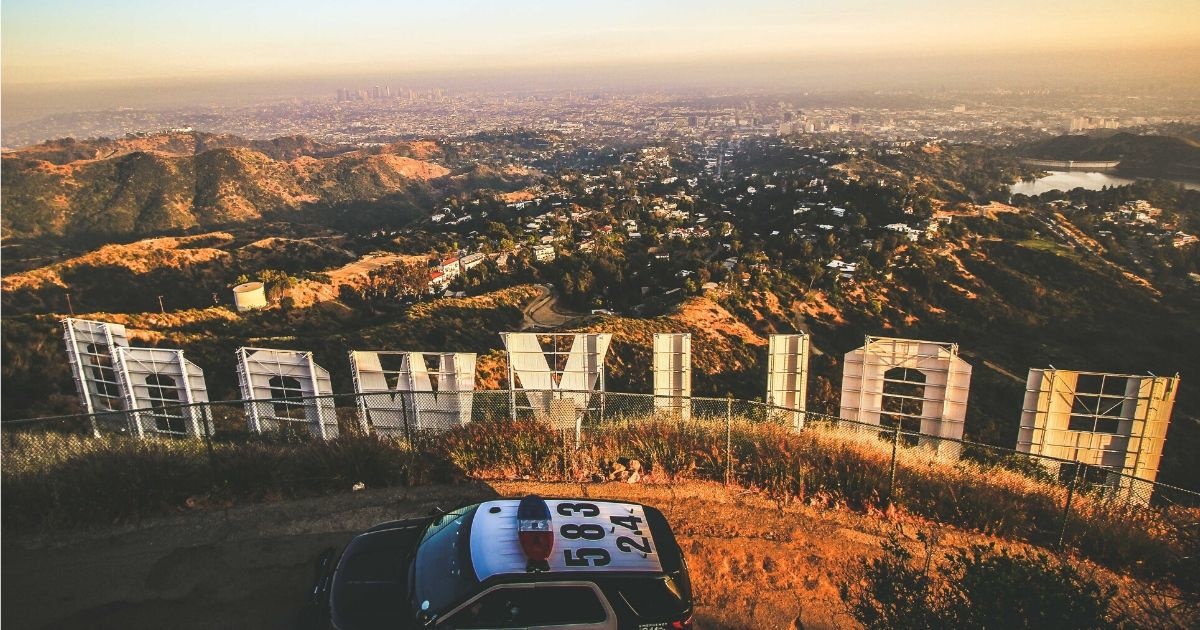
Photo credit: Photo by Florian Wehde on UnsplashArray

This article originally appeared on The Conversation. You can read it here.

In a recent interview, Minnesota Attorney General Keith Ellison was asked why it’s so difficult to prosecute cases against police officers.

“Just think about all the cop shows you may have watched in your life,” he replied. “We’re just inundated with this cultural message that these people will do the right thing.”

While two of those shows, “Cops” and “Live PD,” have just been canceled, Americans have long been awash in a sea of police dramas. In shows like “Hill Street Blues,” “Gangbusters,” “The Untouchables,” “Dragnet,” “NYPD Blue” and “Law and Order,” audiences view the world from the perspective of law enforcement, in which alternately heroic and beleaguered police fight a series of wars on crime. These shows – and countless others – mythologize the police, ensuring that their point of view has dominated popular culture.

This didn’t happen by accident.


As a media historian, I’ve studied how, beginning in the 1930s, law enforcement agencies worked closely with media producers in order to rehabilitate their image. Many of the shows proved to be hits with viewers, and this symbiotic relationship spawned numerous collaborations that would go on to create a one-sided view of law and order, with the voices of the policed going unheard.

The FBI’s PR machine

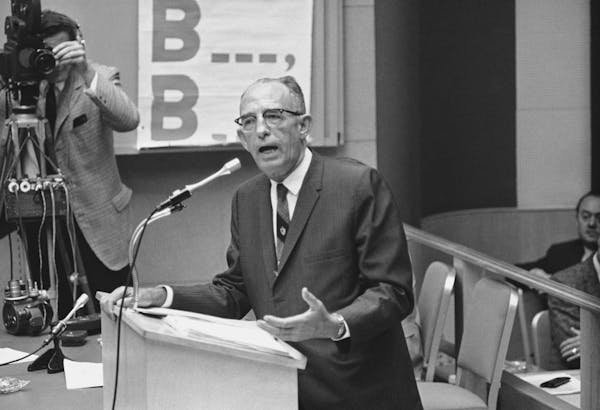
For FBI director J. Edgar Hoover, police served a primary role: to protect a “vigorous, intelligent, old-fashioned Americanism” that was threatened by what he saw as unreasonable demands for civil rights and liberties.

Hoover wanted his agents to reflect his vision of “Americanism,” so he hired agents with an eye toward whether they fit the mold of what he deemed a “good physical specimen“: white, Christian and tall. They couldn’t suffer from “physical defects” like baldness and impaired vision, nor could they have “foreign” accents.

In the 1930s, Hoover also established a public relations arm within the agency called the Crime Records Division. At the time, the image of the police was sorely in need of rehabilitation, thanks to high-profile federal crime commissions that documented widespread violence, suppression and corruption within police departments.

Hoover realized that broadcast media could serve as a perfect vehicle to disseminate his conception of law enforcement and repair the police’s standing with the public.

The Crime Records Division cultivated relationships with “friendly” media owners, producers and journalists who would reliably endorse the FBI’s views. In 1935, the FBI partnered with Warner Brothers on the film “‘G’ Men.” A “G-Men” radio series followed, made in collaboration with producer Phillips H. Lord and reviewed by J. Edgar Hoover,” who “checked every statement” and made “valuable suggestions,” according to the series’ credits.

A year later, the FBI worked with Lord again on the radio series “Gang Busters,” whose gunshot-filled opening credits boasted of the show’s “cooperation with police and federal law enforcement departments throughout the United States” its status as “the only national program that brings you authentic police case histories.”

Although Hoover and Lord notoriously clashed over the details – Hoover wanted to emphasize the science of policing and the professionalism of law enforcement, while Lord wanted more drama – the focus on the police as protagonists went largely unquestioned.

The FBI’s collaborations continued into the 1970s, with the long-running series “This is Your FBI” (1945-1953) and “The FBI,” (1965-1974). Like “G-Men” and “Gang Busters,” these programs were based on solved police cases and made the most of their ripped-from-the-headlines realism.

Other writers and producers pursued similar collaborations with law enforcement. The iconic series “Dragnet,” for example, was written with the approval of Los Angeles police chief William H. Parker, who notoriously headed the LAPD during the 1965 Watts riots.
Reactionary retaliation

The FBI didn’t just collaborate on media production. My research on the television blacklist – a smear campaign to silence anti-racist progressives in the media industry – reveals how the agency routinely retaliated against its critics.

When journalist John Crosby criticized the FBI during a 1952 television broadcast, Hoover scrawled a note on the report of the incident: “This is an outrageous allegation. We ought to nail this. What do our files show on Crosby?”

Shortly afterwards, Crosby was denounced in American Legion Magazine as someone who supported supposedly communist performers and artists.

When lawyer and government official Max Lowenthal was completing a book critical of the FBI in 1950, the Bureau wiretapped his phone and planted stories so disparaging that few copies of the book sold, ending Lowenthal’s government career. The Bureau even succeeded in getting at least one writer fired from “This is Your FBI” merely because it believed his wife was not a sufficiently “loyal American citizen.” Worse was always visited on black performers, journalists and activists, who were subject to far more intense spying, surveillance and police abuse.

Law enforcement’s efforts to control its image through production and repression helped create police dramas that seldom questioned their built-in bias. Meanwhile, the dearth of diversity in writers’ rooms reinforced this formula.

Of course, some notable exceptions dulled the police drama’s sheen, including David Simon’s “The Wire” and “The Corner,” and Ava DuVernay’s recent miniseries “When They See Us.” These dramas upend the traditional police point-of-view, asking viewers to see the police through the eyes of those most often policed and punished.

Time’s up for the police drama?

Periodically, Americans have been made aware of the one-sidedness of these media depictions of police conduct. In 1968, for example, the Kerner Commission explored the causes of uprisings in black communities. Its report noted that, within these communities, there was longstanding awareness that “the press has too long basked in a white world looking out of it, if at all, with white men’s eyes and white perspective.”

Changing that perspective requires more than recognizing the role police dramas have played as propaganda for law enforcement. It means reckoning with the legacy of stories that gloss over police misconduct and violence, which disproportionately affect people of color.

“We want to see more,” Rashad Robinson, the executive director of the civil rights advocacy organization Color of Change, told The New York Times after the cancellation of “Cops.” “These cop reality shows that glorify police but will never show the deep level of police violence are not reality, they are P.R. arms for law enforcement. Law enforcement doesn’t need P.R. They need accountability.”

Carol A. Stabile is a professor at the University of Oregon
  • Retired teachers in their 30s live on cruise ships full-time for a little over $10K a year
    Photo credit: via Matthew Barra/PexelsA cruise ship could be your home for a way lower price than you'd expect.

    You know that feeling toward the end of a great vacation when you stop and think: I wish I could stay here forever. It might be an all-inclusive resort, a secluded beach, or a fun-filled cruise on the high seas that you just don’t want to leave. Of course, for most people, it’s a fantasy. You can’t just quit your job and live a permanent vacation. But what if you could?

    Giving it all up and retiring to live on a cruise ship at 32 seems like a lifestyle choice only available to the ultra-wealthy. However, two financially savvy retired school teachers from Tennessee have managed to do just that, spending under $10,000 for the first eight months at sea.

    Falling in love with cruises

    Monica Brzoska, 32, and Jorell Conley, 36, met in 2015 while teaching in Memphis, Tennessee. The following year, they booked a week-long cruise to Mexico, Belize, and Grand Cayman. After that, they were hooked on cruising together.

    Eight years later, in March 2023, they booked a week-long Caribbean cruise and had the time of their lives. When it was over, instead of returning home to Memphis, they had a wild idea: Why not continue to book consecutive cruises? So, they did just that.

    Monica was inspired to start living the life she always wanted after her father fell ill and her mother told her: “Don’t wait for retirement. Follow your dreams.”

    How They Made the Numbers Work

    The couple crunched the numbers and found that if they chose the cheapest cabins and used the deals and promotions they’d received from Carnival Cruises, they could book the first 8 months for just under $10,000.

    That’s not per month. That’s the total, coming out to around $1250 per month. Not a bad deal whatsoever. Plus, the more cruises they book, the more perks and deals they get.

    “It sounds mad, but the numbers made sense. Accommodation, food and entertainment would be included – we’d only need spending money,” Brzoska “And because we’d been on so many Carnival cruises, we’d earned access to some amazing offers.”

    Hopping from ship to ship isn’t difficult for the couple because many disembark from the same ports. But they sometimes have to fly when they can’t walk to the next ocean liner.

    Cruising toward retirement

    The couple then quit their jobs, sold their possessions, and started a new life on the high seas. They rent out their 3-bedroom home in Memphis to maintain steady cash flow. The average 3-bedroom home in the area rents somewhere between $1200 to $1900 a month.

    Over the first year of their new life, the couple completed 36 consecutive cruises.

    They have already visited countless destinations across the globe, but they can’t choose a favorite. “For a cultural experience, we loved Japan,” Brzoska told a Carnival Cruise director on Instagram. The couple also loved Greece for its “history” and Iceland because it was the “closest to being on Mars.”

    More recently, they’ve spent time in Amsterdam, the UK, Germany, Belgium, and more. What an amazing adventure.

    One of the most incredible benefits of living on a cruise ship is that so many things are taken care of for you. The couple never has to cook any meals, do any laundry, or drive. Every night, there is something to do, whether it’s checking out a comedy show or enjoying drinks and dancing in the nightclub. Plus, there are always new friends to meet on board with every new cruise.

    Plus, on cruises, just about all the costs are covered, so you rarely have to open your wallet. It’s a stress-free, all-inclusive lifestyle. Brzoska says that when you remove the everyday stresses from life, it’s great for your marriage. “Without the daily stresses of life, we rarely argued, but always told each other if we needed space or more time together,” she said.

    They are not the only ones

    Brzoska and Conley were one of the first high-profile couples to get attention, followers, and media coverage for the permanent cruising lifestyle, but they’re definitely not the only ones. It’s an especially popular choice for retired adults and seniors, who find it cheaper and way more fun than living in a retirement community or nursing home. It’s also a great choice for people who can work remotely and flexibly, or who own their own digital-nomad-friendly businesses.

    The couple also makes sure to have one date night a week, during which they dress up and have a nice meal together.

    The couple has been cruising full-time for more than two years, logging 106+ cruises and visiting over 45 countries as of this and counting. Absolutely unreal.

    Most people may be unable to give it all up and live their lives hopping from ocean liner to ocean liner. But there’s a great lesson in the story of Brzoska and Conley: You never know how much time you have left, so don’t wait for retirement to live the life of your dreams.

    This article originally appeared two years ago. It has been updated.

  • Gen X is trying to come to grips with getting ‘old.’ It’s not going well.
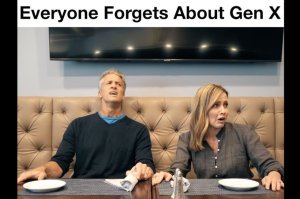
    Photo credit: The Holderness Family/FacebookGen X couple freaking out at dinner.
    ,

    Gen X is trying to come to grips with getting ‘old.’ It’s not going well.

    We are NOT prepared for Salt-N-Pepa to be played in the doctor’s office waiting room, thankyouverymuch.

    The thing about Gen X being in our 40s and 50s now is that we were never supposed to get “old.” Like, we’re the cool, aloof grunge generation of young tech geniuses. Most of the giants that everyone uses every day—Google, Amazon, YouTube—came from Gen X. Our generation is both “Friends” and “The Office.” We are, like, relevant, dammit.

    And also, our backs hurt, we need reading glasses, our kids are in college and how in the name of Jennifer Aniston‘s skincare regimen did we get here?

    It’s weird to reach the stage when there’s no doubt that you aren’t young anymore. Not that Gen X is old (50 is the new 30, you know) but we’re definitely not young. And it seems like every day there’s something new that comes along to shove that fact right in our faces. When did hair start growing out of that spot? Why do I suddenly hate driving at night? Why is this restaurant so loud? Does that skin on my arm look…crepey?

    As they so often do, Penn and Kim Holderness from The Holderness Family have captured the Gen X existential crisis in a video that has us both nodding a long and laughing out loud. Salt-n-Pepa in the waiting room at the doctor’s office? Uh, no. That’s a line we are not ready to cross yet. Nirvana being played on the Classic Rock station? Nope, not prepared for that, either.

    Watch:

    Hoo boy, the denial is real, isn’t it? We grew up on “Choose Your Own Adventure” books, for goodness sake, and it’s starting to feel like we made a wrong choice a chapter or two back and suddenly landed our entire generation in a time warp. This isn’t real, is it? Thirty years ago was the 1970s. That’s just a Gen X fact. So what if we’ve lived long enough for our high school fashions to go out of style and then back into style and then back out of style again?

    Seriously, though, we can either lament our age and stage in life or we can laugh about it, and people are grateful to the Holdernesses for assisting with the latter. Gen X fans are also thrilled to see their own experiences being validated, because at this point, we’ve all had that moment in the grocery store or the waiting room when one of our jams came on and we immediately went into a panic.

    Gen X, middle age, getting older, Holderness Family, generational humor
    A woman shopping at a grocery store. Photo credit: Canva

    Fellow Gen Xers commiserate in the comments:

    “They were playing The Cure in the grocery store and I almost started crying. I mean, how ‘alternative’ can you be if you’re being played in Krogers? You guys are great! Thanks for making us laugh.”

    “When I turn on the classic rock station I expect the Doors or CCR not Soundgarden or Nirvana.”

    “I couldn’t believe it when I heard Bohemian Rhapsody being played in Walmart. That was edgy in my day.”

    “I know!!! Bon Jovi at the grocery store!!! That was my clue in!!”

    “That horrifying feeling when I realized that when I play Nevermind for my kids now in 2024, I’m playing them 33-year-old music, but when my dad played the Let It Be for me in 1984, it was only 14-year-old music.”

    “The first time I heard my jams on the oldies station I cried. I’m not old! I just have to take a picture of something to blow it up so I can see it better with my readers but everyone does that. Early dinners? Hey I’m hungry by 5 why wait.”

    “Long live Gen Xers! We have to be strong!! We can get through this together!! #NKOTBmeetsAARP

    Hang in there, Gen X. We didn’t build up all that resilience and attitude in our youth just to fall apart at this point. Let’s own this stage like we invented it and make it as cool as we are.

    You can find more from the Holderness Family on their Facebook page, their podcast and their website, theholdernessfamily.com.

    This article originally appeared two years ago. It has been updated.

  • 15 pop song ‘oopsies’ that were kept in recordings, turning mistakes into iconic moments
    Photo credit: Public domain imagesThe Beatles and David Bowie

    “There are no mistakes, only happy accidents,” Bob Ross assured us. In the case of over a dozen popular songs, mistakes didn’t just turn out to be happy accidents, but ultimately became iconic moments in music.

    Musician and teacher David Hartley compiled 15 examples of mistakes in well-known songs that you can’t unhear once you know about them. Most will be familiar to pop music fans, who may or may not know that they were actually unintentional.

    Hartley’s video goes into the details of these 15 song elements that weren’t supposed to be there:

    1. The alarm clock ringing in The Beatles’ ‘A Day in the Life’

    Hartley shares that The Beatles had an alarm clock placed on the piano to keep track of time in the studio. It just happened to go off while they were recording the bars that separate the two sections of the song, and the ringing couldn’t be removed afterward. It fit perfectly with the “Woke up, fell out of bed” lyrics, however, so it seemed intentional.

    2. Elvis Presley laughing while singing “Are You Lonesome Tonight”

    While performing his hit “Are You Lonesome Tonight” live in Las Vegas in 1969, Elvis saw a bald man in the audience lose his toupee. The singer spontaneously changed the line “Do you gaze at your doorstep and wish I was there?” to “Do you gaze at your bald head and wish you had hair?” He laughed at his own hilarity and kept chuckling through the rest of the song. The recording made it onto one of his live albums.

    3. The ‘I know, I know, I know, I know…’ section of ‘Ain’t No Sunshine’

    “In 1971, Bill Withers was recording his debut album, which included the song ‘Ain’t No Sunshine,’” says Hartley. “When he got to the bridge section in the middle, he realized that he hadn’t written any lyrics, so he just repeated ‘I know’ 26 times.” Other musicians encouraged him to keep it, and the song became a huge hit.

    4. The phone ringing at the end of David Bowie’s ‘Life on Mars’

    “Unfortunately, right by the side of the piano, there was a toilet, and in that toilet was a public phone,” explained sound engineer Ken Scott. “Someone got a wrong number and called in halfway through that great take, and we had to stop it, and Ronaldo was cursing and swearing about it.” They didn’t realize until they put the whole song together that the ring and Ronaldo’s voice had made it in.

    5. That one-off piano chord that kicks off Elton John’s ‘Bennie and the Jets’

    When Elton sat down to record the song, he played the opening chord on its own on a whim. Producer Gus Dudgeon thought it sounded like something a pianist would do warming up for a live performance, so they decided to make the song sound like a live performance, even though it wasn’t, adding in crowd sound recordings.

    6. Two unintentional sounds in the segue into Pink Floyd’s ‘Wish You Were Here’

    Pink Floyd did something unusual in between songs on the album Wish You Were Here. In the segue into the title track, they inserted radio sounds that were actually recorded while the band was scrolling through stations in lead guitarist David Gilmour’s car.

    “We can hear a brief section from Tchaikovsky’s fourth symphony and an extract from a radio play that to this day nobody knows what it is,” says Hartley. A cough from Gilmour also slipped in, which resulted in an urban legend that the recording prompted him to quit smoking. (He has said he was never a smoker.)

    7. Steely Dan’s drummer’s uncharacteristic mistake with the sticks that fit the song perfectly

    Steely Dan is apparently known for being meticulous about their recordings, so the fact that an unintentional click of drummer Steve Gadd’s drumsticks made it into the studio recording of “Aja” is quite remarkable. The timing of the click made it sound seamless, though, so why redo it?

    8. A bad piano chord in the intro to ‘Roxanne’ and the laughter that followed

    “The timing and the way it resolves to the G minor chord that they’re playing makes it sound like it was intentional,” says Hartley. “But as Sting explains, it happened by pure accident.” There was an open piano next to him and he leaned on it to rest and accidentally played that chord, which made him laugh.

    9. The gated reverb drum sound that was accidentally created on Peter Gabriel’s song, ‘Intruder’

    Hartley says the iconic ’80s drum sound, where the drumbeat sounds big and echoey and then cuts off abruptly, was created accidentally by Steve Lillywhite, Hugh Padgham, and Phil Collins when recording “Intruder.” Phil Collins ended up showcasing the gated reverb drum in “In the Air Tonight” the following year.

    10. Two different lyrics sung at the same time in The Who’s ‘Eminence’

    “For the first line of the first chorus, Pete Townsend and Roger Daltry sing something slightly different,” Hartley shares. “One of them sings ‘behind an eminence front’ and the other sings ‘it’s an eminence front,’ meaning they are one syllable out from each other.” The mistake was initially left in the recording, but was corrected years later.

    11. Billy Joel fumbling a lyric and laughing in ‘You’re Only Human’

    People familiar with the song may remember when Joel seems to stutter, “S-s-sometimes that’s all it takes” and then laughs. That was a genuine stumbling mistake, but it fit so well with the song’s theme and other lines (like “it’s alright, you’re supposed to make mistakes”) he was convinced to leave it in.

    12. Perfectionist Prince allowing a track recording oopsie to remain

    During the recording of the song “Forever in My Life,” the tape was misaligned by one bar while recording the final track, which made the backing vocal preempt the lead vocal. Prince ultimately liked the effect, so he left it that way.

    13. The ‘Where do we go now’ lyrics at the end of ‘Sweet Child O’ Mine’

    “It was suggested that at the end of the song, after the guitar solo, they add a breakdown to finish the song,” Hartley explains. “But when it came to recording, lead singer Axel Rose didn’t have any lyrics, and he didn’t know where the song would end up. So the line, ‘Where do we go now?’ is a genuine question to his bandmates.”

    14. Christina Aguilera’s ‘Don’t look at me’ line in ‘Beautiful’

    Hartley shares that the recording of “Beautiful” was actually just supposed to be a demo vocal, and you can hear various imperfections in it if you listen closely with headphones. And the spoken line, “Don’t look at me,” was a real instruction to her friend just before she started singing.

    15. The extra ‘My life is brilliant’ at the beginning of James Blunt’s ‘You’re Beautiful’

    Blunt simply came in too early with the opening lyric, so he ended up repeating the line. They could have easily taken it out, but decided to leave it.

    Mistakes or happy accidents, it’s fun to see how unintentional oopsies can turn into iconic moments when you decide to roll with it.

    You can follow David Hartley on YouTube for more interesting music content.

  • Millennials are ditching ‘boring grey’ for this joyful mid-century color
    Photo credit: Mike Shaw, Wikimedia CommonsRetro '50s-styled bathroom.
    ,

    Millennials are ditching ‘boring grey’ for this joyful mid-century color

    Just a few tweaks can bring this look into every bathroom.

    Everything old is pink again, to paraphrase a famous adage. This applies even in bathrooms. Neutral colors have ruled the interior design of powder rooms for quite some time. But some Millennials (and Gen X-ers too) are ready to swap the greys and tans for vintage pops of mid-century pinks, yellows, and bright greens.

    While of course Millennials had their own brand of pink (which has been popular since around 2016,) they did often flock to neutral colors, perhaps for a sense of serenity. But as is the case for all generations, it can be fun to dabble back into the vintage pool.

    Where did these bright colors come from?

    In the piece “The Retro ‘50s Pink Bathroom is Back and Designers are Giving it a Deluxe New Twist,” Contributing Lifestyle Reporter Wendy Rose Gould shares the history of the design. “Pink bathrooms are an icon of mid-century Americana, rising in popularity from the 1940s through the 1960s. Pam Kueber, founder of the original ‘Save the Pink Bathrooms’ website (now called Retro Renovation), writes that pink was the single-most popular color for bathrooms in the 1950s. And that an estimated 5 million pink bathrooms went into the 20+ million homes built in the United States from 1946 to 1966.”

    The “Save the Pink Bathrooms” movement Gould is referring to was the brainchild of Kueber, who felt that builders and designers were getting rid of historical mid-century design too quickly. On her site, Kueber claims that, like other fans of the style, they were concerned that “original vintage pink bathrooms were being ripped out of post-war American homes way too hastily.”

    This of course didn’t just apply to bathrooms. The site, as previously mentioned, became Retro Renovation. It gives all kinds of tips on how to bring kitchens, bedrooms, and dining rooms restored to a long, lost era.

    Adding a modern twist

    But back to those bathrooms, the vintage color pops are coming back swiftly. In a piece for Better Homes and Gardens, E-design Consultant Maria Sabella shares that as is the case with most resurgences of old designs, there can be a modern twist. “When you think of retro bathrooms, chances are you picture floral print wallpapers and salmon pink tiles. While these iconic features are making an updated comeback (spoiler alert!), experts say nostalgic decor classics are returning in a more stylish form.”

    She quotes design expert Daniel Siegel, who gives excellent tips on how to pair the old with the new. “When paired with clean lines, thoughtful lighting, and modern details, these retro touches feel timeless rather than trendy.”

    Retro wallpaper patterns

    While not everyone can re-tile a bathroom, especially renters or those who don’t have tons of remodeling money laying around, there are super easy ways to grab the vibe.

    Wallpaper is one simple way to jump on the retro train. The article shares designer Thecla Glueck’s thoughts on the trend. “Layered thoughtfully, retro and vintage-inspired patterns bring intimacy and warmth, transforming the bathroom into a cocooning retreat rather than a purely functional environment.” She even adds specific patterns, noting, “Checkerboard in classic black and white marble or jewel-tone checks, small geometric shapes such as penny rounds or hexagon, pastel mosaics, floral, or softly faceted subway, are returning with a more restrained, contemporary lens.”

    Easy ways to bring in the look

    Skirted sinks are also an easy way to bring back the mid-century flair. In another quote, Glueck explains how useful these can be. “They discreetly conceal storage and reinforce the idea of the bathroom as a thoughtfully designed room, not just a utilitarian space.”

    Oval mirrors are mentioned as well, as something that can be mixed and matched into a room without commitment. The same goes for accessories like tissue boxes and perfume caddies. Pinks, buttery yellows, greens, and blues can all be mixed and matched to create a more vibrant feel without spending too much money.

  • Welfare check on a 91-year-old woman ends with funny twist police never saw coming
    Photo credit: CanvaAn older woman plays a video game.

    Many communities are trying to provide quality attention and care to their elderly residents. For example, seniors in Westlake, Ohio, can sign up for a program that provides frequent welfare checks. But when the police were sent on a welfare check for a 91-year-old woman after multiple unanswered phone calls, they couldn’t have expected a better, funnier result.

    The woman was safe and sound in her bedroom, playing video games

    “Everyone was a little bit alarmed that she was missing these contacts,” Westlake Police captain Jerry Vogel told News 5 Cleveland. “It turned out to be okay. Everyone got a good laugh out of it.”

    The elderly gamer was a part of Westlake’s “Are You Okay?” program for senior citizens and other qualified residents. Upon signing up, elderly residents receive a daily phone call to answer, ensuring that they are safe and okay. If the call goes unanswered, the police do a welfare check. After multiple missed calls, including a follow-up from police dispatch and one from the woman’s daughter, the police entered the woman’s home to find her trying to beat her record in a “bubble pop” video game.

    The police and the woman both laughed in relief, and the woman thanked the police for checking in through the “Are You Okay?” service. To protect her privacy, the police shut off their body cams and aren’t releasing the 91-year-old gamer’s identity.

    Seniors are a growing demographic in video gaming

    While this welfare check ended in a funny result, the police shouldn’t have been too shocked to see a person over 90 playing a video game. In fact, seniors are a growing demographic in video gaming. An Entertainment Software Association report found that 28% of gamers in the United States are over the age of 50.

    The reasons why more elderly people play video games are numerous. Some play video games involving hunting, fishing, bowling, etc., since they can continue their favorite pastimes regardless of their mobility or accessibility. Other older gamers play to connect with their grandkids or just younger people in general.

    There are also studies showing and encouraging seniors to play video games for health benefits, including improving their social lives through in-person or online gaming. Some games are mentally challenging, helping seniors’ cognitive health as well.

    So the next time you log in to play Call of Duty, Minecraft, Fortnite, or another game online, there’s a chance that one of the people you’re playing with could be a senior. Who knows? It could be a 91-year-old woman in Westlake.

  • ‘Hecka tight, bra’: Millennial teacher bridges generational gap by translating ’90s slang to Gen Z speak 
    Photo credit: CanvaA teacher's lesson on 1990s slang.

    These days, there’s a lot of love for the 1990s, especially among younger generations, who fantasize about the last decade before smartphones and social media upended society. In fact, a 2023 study found that 60% of American Gen Z adults “wished they could return to a time before everyone was ‘plugged in.’”

    Kaity Broadbent, a microschool teacher and head of learning at Prenda, had a really fun lesson with her students by showing them the parallels in slang among Gen Zers, Gen Xers, and Millennials who were young during the golden era of the 1990s.

    The interesting thing about her lecture is that it showed how young people, regardless of generation, create their own slang terms for the same words.

    In her Instagram Reel, Broadbent bridged the generational divide by noting that “bruh,” a popular term among Gen Z and Gen Alpha, sounded different in the ’90s, when it was pronounced “bra,” like the ladies’ undergarment. Although the pronunciation is different, the meaning is the same. She put it in a sentence, asking her students to say, “Hecka tight, bra.” (It seems she substituted “hella” for “hecka” to be more classroom-appropriate.)

    She also introduced her students to the term that kids in the ’90s used to reveal they’d fooled someone: “Psych!” which is a shorter version of saying, “Psyched you out.”

    She then rattled off some of the ’90s greatest hits:

    • “As if” (Cher from Clueless, you paying attention?)
    • “You da bomb” — a phrase meaning that someone is great or incredibly attractive. 
    @aliciasilverstone

    Ugh! As if… I wouldn’t join TikTok. 😉💛😘 #Clueless #AsIf

    ♬ Ugh… As if – Alicia Silverstone
    • She also noted that kids from the ’90s had their own version of one of Gen Z’s most popular slang phrases for questionable people or things. “So, instead of sus, we would say sketch,” she said in a very studious tone.
    • “I gotta bounce” or “I’m outtie” means that you have to leave. Extra ’90s points: If you’ve ever said, “I gotta go, Audi 5-thou.” This takes the term “outtie” and merges it with a popular luxury car at the same time: the Audi 5000.
    • She also noted that in the ’90s, your “crib” was your house, as evidenced by MTV’s popular show Cribs.
    @topwtf_

    Sad that’s most of these are fake 😪 #mtv #mtvcribs #topwtf_

    ♬ original sound – TOPWTF
    • “Home skillet” and “home slice” are two phrases that Gen Zers probably wouldn’t naturally understand, but they mean the same thing. It’s an evolution of the term “home boy,” meaning friend, which became “homie” or “home skillet.”
    • What would a ’90s kid say if someone was acting strangely or seemed confused about a situation? “You straight trippin’, G.” That means, “I believe that you are out of your mind, friend.”
    • She then asked a big question that makes little sense in the smartphone era: Why would we say ‘411’? Because “You would call 411, and you’d pick it up, and that was calling information.”

    The post sparked a great conversation among the commenters:

    “This is all that and a bag of chips,” Kid joked.

    “We stopped saying ‘psych’ when I was in 6th grade and switched to ‘NOT!’” Amanda clarified.

    “This is both amazing and hurts so much,” Mads admitted.

    Broadbent’s lesson is a great reminder for older people to stop being annoyed by younger generations’ slang, because when they were young, their trends were pretty cringey, too. It’s also a great lesson for the young people out there: Be careful how you judge your elders; one day you’re going to be just like them.

  • People in their 40s say these 5 unique life changes make it the weirdest and most diverse phase of life
    Photo credit: Canva & XA 42-year-old’s observations about his early 40s are striking a nerve on social media.

    Turning 40 marks a major milestone for many people. It can be an exciting time when your family, career, hobbies, and sense of self are finally falling into place. Unfortunately, it can also be the decade when your joints start hurting and your hair goes gray.

    In other words, your 40s can be a mixed bag. What’s especially fascinating is that everyone’s experience in their early 40s will be different. Some people say that’s exactly what makes it such an interesting season of life.

    Guy on X notices a few strange things about being in his 40s

    Ben Eisenhart, a self-described dad and husband who turned 42 earlier this year, recently took stock of his peers and found that there was a wild amount of variety.

    He realized that he’d reached a point in time when minor differences in life choices, luck, and genetics that were barely noticeable in his 20s were becoming massively evident.

    The post was a hit, racking up nearly two million views and hundreds of comments from people eager to share their own experiences and observations. Here are five things people say make your 40s the weirdest and most interesting decade of your life.

    1. Kids

    In your early 20s, the vast majority of your peers don’t have kids yet. In your mid-to-late 20s, the process begins, and newborns start crashing group hangouts. Late nights at the bar become lazy afternoons at the brewery as parent friends try to survive the early stages of parenthood. Others either aren’t ready for kids yet or have decided not to have them.

    In your 40s, it’s not nearly as simple.

    Some folks are still child-free. Others might have grown children who are out of the house. Some are even grandparents by this point. Others are just getting started in parenthood with their first newborn. In fact, the latter is becoming increasingly common, with over 20% of women now having their first child after the age of 35.

    2. Looks

    Some people look older, and some look younger. That’s just the genetic lottery, and it’s true at almost any age.

    But by your 40s, life choices and health issues have piled up and widened this gap. Some 40-year-olds could pass for being in their 20s, while others look 20 years older.

    Genetics alone can account for huge differences in how we age, and it’s a topic of great interest to scientists. But a few decades of staying fit, or smoking, or using or not using sunscreen really start to show up around your early 40s.

    3. Couples

    Similar diversity shows up not just in whether people are partnered up, but in the many different shapes and timelines of romance that appear.

    As Eisenhart notes, many people marry relatively young and remain together well into their 40s and beyond. Others are divorced, on their second or third marriage, or have been single the entire time. Even among those who are single, they may be dipping their toe in the dating pool of folks their own age…or, in some cases, much younger.

    It can make for some very interesting get-togethers.

    4. Career

    There’s a great camaraderie in your 20s when everyone you know is just getting started in their careers. Some are struggling through menial jobs, while others are in more prestigious fields but are grinding their way up from the bottom of the totem pole.

    You’re all in it together, in a sense.

    In your 40s, those career paths have diverged a great deal over the years. Some folks are executive-level leaders at big companies. Others have been doctors and scientific researchers for over a decade. Some have suffered setbacks or are in the midst of a career change, piecing together work the best they can. More and more people in their 40s are even going back to school.

    It can, and should, be a time of deep empathy and leaning on one another.

    5. Hope for all

    Ultimately, most people in their 40s who commented on the post agreed on one thing: it’s a pretty cool season of life.

    “All these are just lessons that we ain’t competing with anyone, at every age in our life just live your best and do things that makes you happy and always love yourself even more,” one X user wrote.

    Another said, “Life really doesn’t follow one timeline. People the same age can be in completely different seasons, and that’s normal.”

    “I turn 48 in July, and what ive gathered is wherever you find yourself during these years, as long as you find the joy, its all good,” another user added. “Out of all my decades, 40s have been surprisingly my favorite, mainly because ive learned to only worry about what i can control.”

    One person noted that your 40s offer an amazing opportunity for transformation: “Early 40s is the last time of a big ‘potential’ horizon. Where you could totally reinvent yourself and make it if you wanted to.”

    And finally, many wisely advised that your 40s are nothing to fear:

    It wasn’t just 40-year-olds who were drawn to the viral post, however. More than a handful of people in their 50s and 60s stopped by with just a few choice words: “Just you wait.”

  • The Bee Gees’ 1973 acoustic performance of ‘Run to Me’ perfectly showcases their amazing harmonies
    Photo credit: via MIdnight Special/YouTubeThe Bee Gees singing "Run to Me."

    On June 22, 1973, the Bee Gees, brothers Barry, Robin, and Maurice Gibb, appeared on the TV show The Midnight Special and, throughout the 90-minute broadcast, showcased their humor, soul, and incredible harmonies. But, by far, the highlight of the night was a performance of their recent hit, “Run to Me,” off their 1972 release, To Whom It May Concern.

    The Midnight Special was a late-night music and variety show that ran on NBC for nine years (1972-1981). Along with “Run to Me,” on this episode, the Bee Gees played their 1968 hit “I Gotta Get a Message to You,” sang a duet with Wilson Pickett of The Beatles’ “Hey Jude,” and performed a medley which included, “Morning of My Life,” “Holiday,” “Let There Be Love,” and “My World.”

    The Bee Gees’ incredible ‘Run to Me’ performance

    Their performance of “Run to Me” is incredible because with the stripped-down, acoustic-guitar-only arrangement, you can really hear their amazing harmonies—especially when Robin and Maurice hop in on the chorus.

    “‘Run to Me’ was one of those songs that all three of us sang. It was never really written for one person. ‘I’ll sing the verses. You sing the chorus because they are much higher,’ Gibb recalled, as if speaking with his brothers. “Robin’s voice was much higher than mine … See, it wasn’t like a group. It was a family. And so, whoever wanted to sing, sang.”

    The origins of ‘Run to Me’

    “We wrote [Run to Me] at our manager Robert Stigwood’s house in Beverly Hills. He was a great visionary and championed our beliefs and chemistry as brothers. Lyrically, this song chronicles the wishes of a man who longs to be noticed by a broken-hearted girl,” Robin recalled.

    Even though the Bee Gees appear at the top of their game in the performance, it was a transitional point for the band. “Run to Me” would be their last significant hit for three years, until they transitioned into a more soulful, disco sound, with their 1975 hit “Jive Talkin’.” This would launch the band into superstardom, peaking with 1977’s Saturday Night Fever Soundtrack which featured three number one singles from the album contributed by the Bee Gees—”How Deep Is Your Love”, “Stayin’ Alive,” and “Night Fever.” The brothers also penned “If I Can’t Have You,” which became a number-one hit for Yvonne Elliman.

    Sadly, Maurice Gibb would pass away in 2003 and Robin in 2012. But “Run to Me” got a second life in 2021 when Barry re-recorded it with country singer Brandi Carlile for his solo album, Greenfields. Greenfields features reworked versions of his Bee Gees hits, sung with country collaborators, including Dolly Parton, Jason Isbell, and Miranda Lambert. 

    This new version of “Run to Me” features a similar vocal arrangement to the original, with Carlile filling in for the late Robin.

    Earlier this year, Barry spoke with Upworthy about his love for Bob Dylan and his opposition to the Vietnam War. You can read it here. 

    Here is the entire June 22, 1973, broadcast of The Midnight Special.

Pop Culture

15 pop song ‘oopsies’ that were kept in recordings, turning mistakes into iconic moments

Nostalgia

Millennials are ditching ‘boring grey’ for this joyful mid-century color

Life Hacks

‘MIT Monk’ shares his VIBE method for choosing the perfect adult hobby

Family

Former flight attendant says families should board last. Does she have a point?