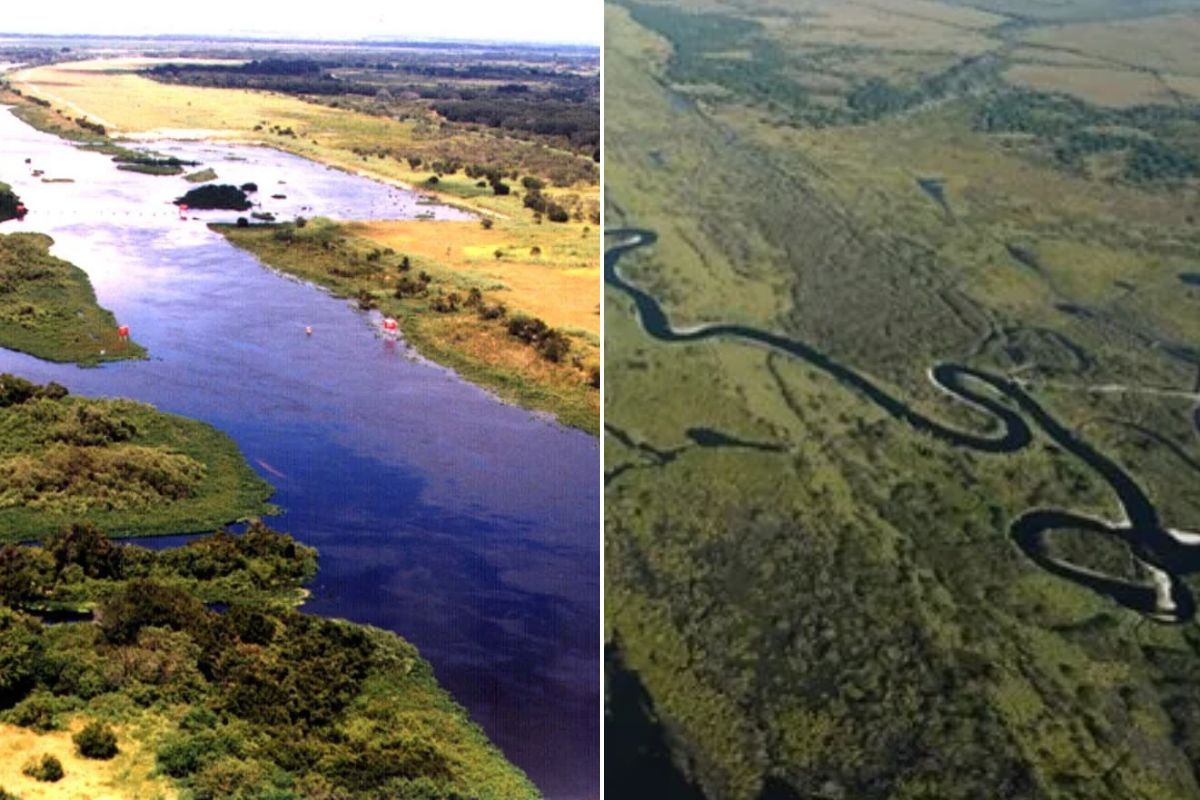
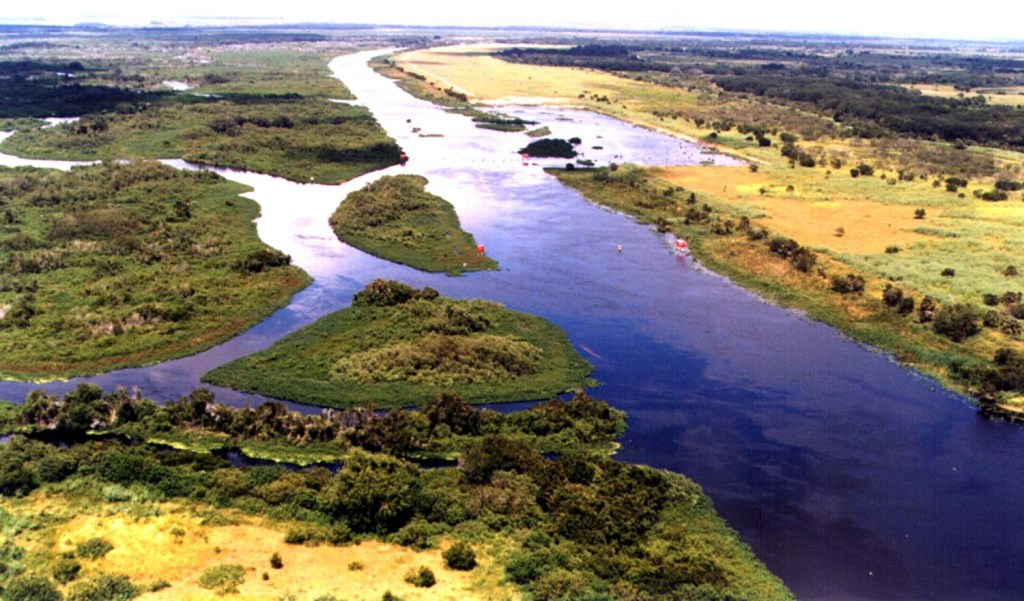
The Kissimmee River in Florida, with its winding curves and surrounding swamplands, caused major headaches for the state in the 1940s. Engineers were brought in to “fix” things, but the solution only made everything worse.
Engineers straightened out the Kissimmee River, and accidentally broke it
A rough hurricane season in 1947 caused massive flooding in central and southern Florida, and citizens demanded that the state do something about it. In response, Florida asked the U.S. Army Corps of Engineers to address the floodplain around the Kissimmee. It was mostly swamps and wetlands, which were not viewed as having much value, so the Army Corps decided to drain them into a large canal.
From roughly 1962 to 1971, engineers painstakingly carved the snaking river into a 56-mile drainage canal. The curves of the Kissimmee were cut off from the completely straight canal, and they mostly dried up. The result was an ugly, if effective, solution to protect against future flooding.
It also had the added benefit of diverting water away from the wetlands, which could then be used for agriculture and development.
Win-win, right?
Unfortunately, the engineering project proved to be an ecological disaster. While the canal reduced flooding, the wetlands dried up completely, causing wildlife populations to plummet. Herons, wood storks, and egrets nearly disappeared. Even the fish populations suffered severely.
But even worse, the water quality became horrendous. The water flowing from the Kissimmee channel into Lake Okeechobee was heavily polluted, thanks to all the development on the former floodplain. Okeechobee became known as the most polluted lake in the country. Toxic algae blooms were rampant.
The channelization of the Kissimmee was, clearly, a huge mistake.
Righting the wrong
In the 1990s, Florida began taking steps to fix the problem. With an investment of around $1 billion, they began efforts to restore the Kissimmee River’s natural bends and curves.
The ruler-straight canal the Army Corps had dug was filled in over several years. Water began returning to its original channels, restoring around 40,000 acres of wetlands and swamps.
The final sections of the man-made canal were filled in 2021, and now the river has had about five years to make a full recovery.
However, engineers didn’t completely abandon modern innovations. Advanced water control measures were added or left in place, including some portions of the straight channel. Emergency water control structures are now in place, allowing water to flow freely in its natural state without overflowing and damaging nearby communities.
The re-curved river pays off
The concept of water having a “memory” was made famous in Disney’s Frozen 2. It’s amazing to watch it play out in real life, as water finds its way back to its historic pathways, even long after they’ve dried up.
The wildlife seems to remember, too. Since the river’s restoration, they’ve returned to the area in incredible numbers.
“Birds are back, both wading birds and ducks. They’re all over the place,” Paul Gray of Audubon Florida told NPR. “The oxygen levels in the river are better. There’s a lot more game fish in the river like bass and bluegill and stuff. Most of the biological perimeters, the goals of the restoration we’ve already met.”
The water, now naturally filtered by the wetlands, is far cleaner. Lake Okeechobee has also seen significant recovery, though there’s more work to be done.
It’s not the first time we’ve tried to “fix nature,” and, historically, it rarely goes well. Amber Moore, an environmental scientist at Florida Atlantic University, wisely told Fox 13, “Mother Nature knows so much more than we do.” It’s best we let her take the lead.