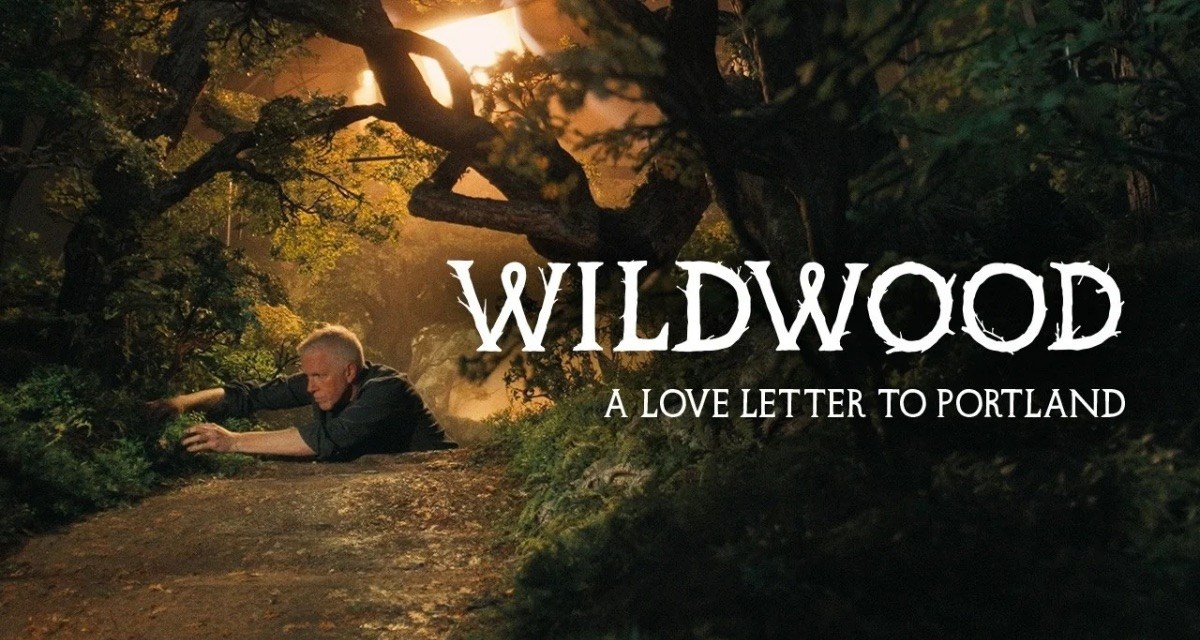
If you have the chance to see Wildwood on the big screen, definitely do it. But I highly recommend diving into the making of the film before you go, instead of after.
I promise, you won’t ruin any of the movie magic by peeking behind the curtain first. In fact, you can’t fully appreciate how magical it truly is unless you get a glimpse of why it took 16 years to plan and create it.
Wildwood is like no animated film you’ve ever seen
If you’ve seen Laika Studios’ other films (such as Coraline, ParaNorman, Kubo and the Two Strings) and understand how they were made, you might be able to appreciate Wildwood for what it is. But even at that, Laika has never done a stop-motion film on the scale of Wildwood, and neither has anyone else.
When I say there aren’t enough adjectives to describe how mind-blowing it is, I’m being literal. It’s not that the story itself is outstanding; it’s based on a fantasy book series and has the elements you’d expect. But the artistry that went into telling that story and the layers of human creativity beneath it deserve all the accolades, because WOW.
16,000 handmade feathers for just one character
Laika Studios creates elaborate handmade sets for all of its films, paying attention to the tiniest of details. And in Wildwood, there are a lot—like a lot—of details.
For intance, a golden eagle named The General, who helps the main character, Prue, was created with 16,000 individual, handmade feathers across several different puppets. And that was just one bird. This film is full of birds, in addition to humans, coyotes, and more.
Laika chief marketing & operations officer Dave Burke told Variety that the studio likes to always top its previous work. For Wildwood, that meant an incredibly ambitious scope.
“We’ve got 136 locations in the feature, and many of them are so large that the crew can walk through them,” he said. “We’ve really moved from that tabletop world into a grand, sweeping, kind of mythical epic. … There’s 231 practical puppets, 54 hero characters, and each and every one of them has been engineered and costumed like a bespoke work of art.”
Characters had to change their facial expressions in nearly every frame of the film. At 24 frames per second, that meant making over 140,000 individual 3D-printed faces, each one just slightly different. The scale of everything they created for this 2 hour and 20 minute film is truly jaw-dropping.
A beautiful ‘love letter to Portland’
Travis Knight, CEO of Laika and director of Wildwood, has called the film his “love letter to Portland.” Knight is the son of Phil Knight, the founder of Nike, and has lived in the Portland area almost his entire life.
As someone who loves Portland, this film feels like a love letter to the area. The natural wilderness woven throughout the city, the quirky people, the iconic Powell’s bookstore, Pittock Mansion, and more are showcased in beautiful detail. There’s even a cameo by the UniPiper, a Darth Vader mask-wearing unicycler who rides around Portland playing the bagpipes. (Yes, he’s a real person.)
Prue’s parents are quintessential Portland hipsters. I giggled out loud when, after watching the film in a Portland suburb, I saw a couple who looked exactly like them at the grocery store that same evening. If you know Portland at all, it will feel familiar. If you’ve never been, you might wonder if the portrayal is accurate. To me, as someone who visits frequently, it really does feel as magical as the film.
An artistic labor of love funded by Nike’s success
Travis Knight is a billionaire, thanks to the shares he holds in Nike. He certainly hasn’t become wealthy from running Laika Studios. In fact, most of the studio’s films lose money. Coraline is the only one of Laika’s six feature films that has outearned its budget.
But Knight keeps making movies anyway, funded from his own family’s pocket. Wildwood reportedly had a $100 million budget. According to the Motion Picture Association, Knight employed more than 1,000 artists, craftspeople, technicians, and filmmakers, including 49 animators in the making of the film.
Wildwood hasn’t even come close to recouping that cost at the box office. It doesn’t matter. Funding of the arts by the wealthy is a long-standing tradition, and in the age of AI, supporting genuine, human-created art feels like a pretty worthwhile investment.
A celebration of human artistry and creativity
When you’ve seen what happened behind the scenes to make Wildwood, it’s easy to see it as a celebration of art and artistry.
But Laika doesn’t shun technology altogether. “We do use computers; we’re not Amish,” Knight told a live audience at the Academy of Motional Pictures Museum. “We’re not making these things by candlelight while we’re churning butter in the background, using tools from a watchmaker’s widow.” Wildwood includes some CGI animation when necessary. But Knight says they draw the line at AI.
“It’s incredible technology,” he told Thomas Duke. “But there’s no humanity to it.” Even digital animation has a human artist behind it, and Knight intentionally makes sure every part of a Laika film is “brought to life by an artist’s hands.”
Wildwood is definitely worth seeing on as large a screen as possible to really appreciate all the details. If you do see it in a theater, stay through the credits to see the list the names of more than 80 babies born to the cast and crew during the production of the film—a testament not only to the years that went into it, but to the humans behind it as well.