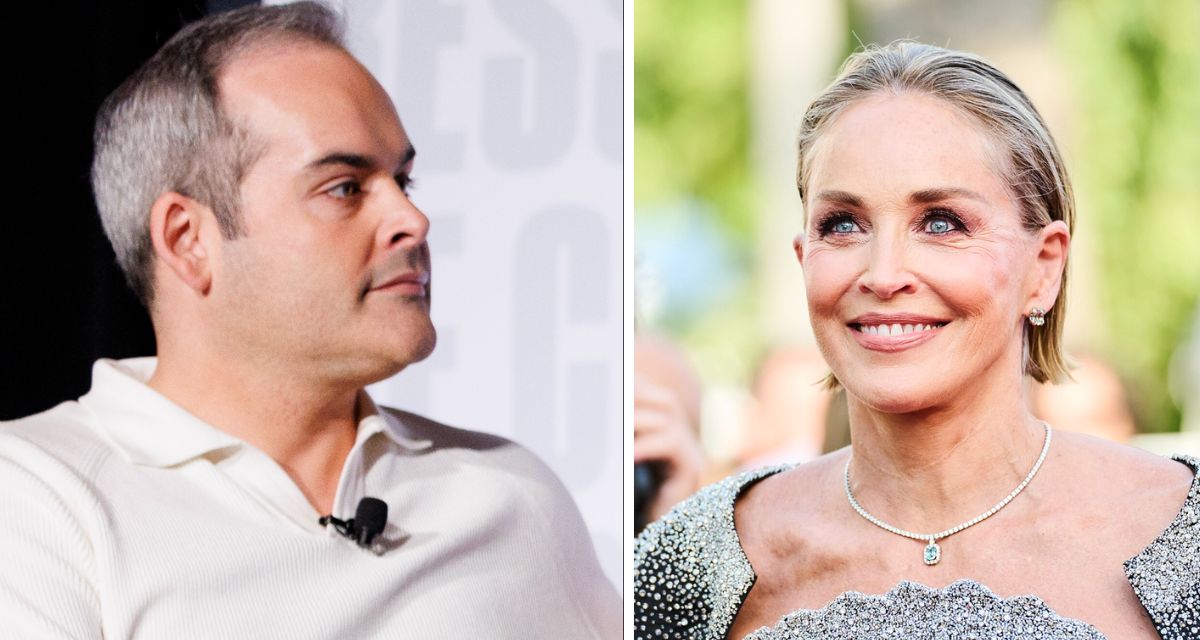
Sharon Stone recently appeared on David Begnaud’s The Person Who Believed in Me podcast, at which point she revisited an unsavory memory from the early 2000s where she found out that she had breast tumors.
Even worse than the bleak diagnosis, she recalled, was the reaction she got from her then-husband.
A devastating diagnosis followed by an even more devastating response

“One of [the tumors] was bigger than the size of my entire left breast,” Stone told Begnaud, saying that the doctor who had made a house visit suggested a “bilateral mastectomy,” since her condition likely pointed towards cancer.
Despite feeling like her tumors weren’t cancerous, Stone decided at that moment to undergo the surgery, which made her ex (whom she didn’t name, but many people believe was journalist Phil Bronstein, whom she was married to between 1998 and 2004) “furious.”
“My husband said, ‘This is ridiculous!’ And got up and left the room,” said Stone.
Seemingly incredulous, Begnaud clarified, “He was mad about the breasts being removed,” to which Stone replied, “Yeah. And so the doctor said to him, ‘If I had more patients like her, we’d have more women alive today. You need to sit down.’ And I said, ‘I make the decisions, not you.’”
This reaction, Stone explained, ultimately marked “the end of the marriage.”
“That was it. He was done with me then. It was over. He thought it was foolish. He thought I was making too many decisions myself,” she said, although she didn’t, in fact, end up doing the mastectomy because her tumors were benign.
As to be expected, Stone’s testimony struck a chord with viewers. Many noted how gut-wrenching it must have been to receive the opposite of support “at her lowest moment.”
“No one deserves that,” one person wrote, while someone else said, “Heartbreaking to see that the man you thought cared for you only valued your body.”
Women share similar experiences
The real tragedy here is that Stone’s story is far from unique. On Reddit, it prompted a wave of other women who unfortunately had very similar experiences of partners either overreacting to physical changes that occurred due to a health condition, or solely focusing on how the ailment affected them.
“My aunt…was able to get a breast reduction after having back pain from having big breasts almost her whole life. She was like an H cup or something, and even pulled her back at least twice. She got the reduction done, had ten pounds of breast tissue removed, and her husband left because she didn’t have huge tits anymore.”
“When I had a cervical spinal injury, I cut off my hair because it was too much work to wash and brush. It hurt too much to raise my arm. When my boyfriend came home, he asked me if I was ‘mad at him.’ I was befuddled. He thought I cut off my hair to spite him??? Like I even was thinking about him AT ALL.”
“I got a suspected diagnosis confirmed and called my boyfriend from the pharmacy, where I had to pick up a prescription and had to calm him down from the ‘your life is over, our life is over, doom and gloom commentary’ for 20 minutes before I had to just tell him stop, the pharmacy is about to close.”
“My ex complained in couples therapy about a lack of sex after multiple surgeries to remove cancerous and precancerous cells from my cervix.”
“My best friend got left while she was in the hospital… just after giving birth to their kid. He was in the room with her during the birth and the next day said that watching her give birth changed his view of her for the worse. And he just fucked off. That was like 14 years ago now, and I will never ever forget it because it just blew me away.”
It has even been documented in multiple scientific studies that (in heterosexual relationships) men were more likely than women to abandon their spouse should they become sick. However, it’s worth noting that a serious diagnosis reveals and exacerbates existing dynamics within a relationship. There are also plenty of partners out there who want to be helpful, but just don’t know where to start.
What supportive partners actually do to support a loved one in a health crisis
Supportive partners don’t need to have all the answers, but they do need to make an effort to listen, respect medical decisions, and prioritize their loved one’s wellbeing over their own fears or preferences.
Healthcare professionals frequently emphasize that patients should feel empowered to make informed choices about their own bodies, especially when facing major procedures or life-altering treatments. Having a partner who offers encouragement, attends appointments when asked, and helps navigate uncertainty can make an already difficult situation feel more manageable.
Stone’s experience may be decades old, but the conversations it has sparked show that many people still recognize themselves in similar stories. If there is a takeaway, perhaps it’s that moments of illness and vulnerability often reveal what support truly looks like, and everyone deserves to have that support when they need it most.
Watch the full episode of The Person Who Believed in Me below: