Selena Gomez is giving ‘Sixteen Candles’ a comedic Latina twist
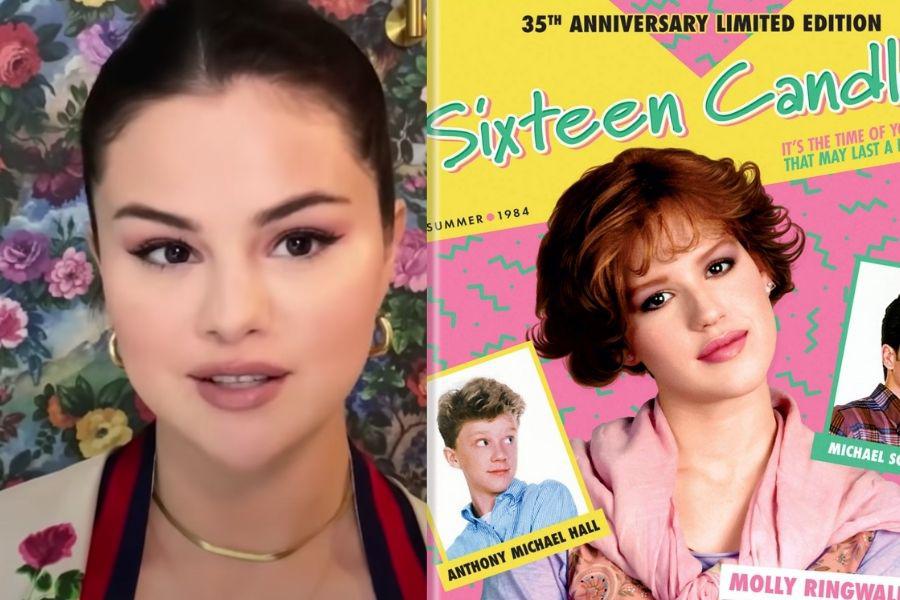
Selena Gomez, along with creators Tanya Saracho and Gabriela Revilla Lugo, have teamed up to develop a TV show based on John Hughes’ beloved 1984 coming-of-age comedy, “Sixteen Candles.” Only this time, Latinas will be the stars. The original “Sixteen Candles” starred Molly Ringwald as Sam Baker, a sophomore approaching her 16th birthday, only to…
Selena Gomez, along with creators Tanya Saracho and Gabriela Revilla Lugo, have teamed up to develop a TV show based on John Hughes’ beloved 1984 coming-of-age comedy, “Sixteen Candles.”
Only this time, Latinas will be the stars.
The original “Sixteen Candles” starred Molly Ringwald as Sam Baker, a sophomore approaching her 16th birthday, only to have her own special day forgotten thanks to her older sister Ginny getting married.
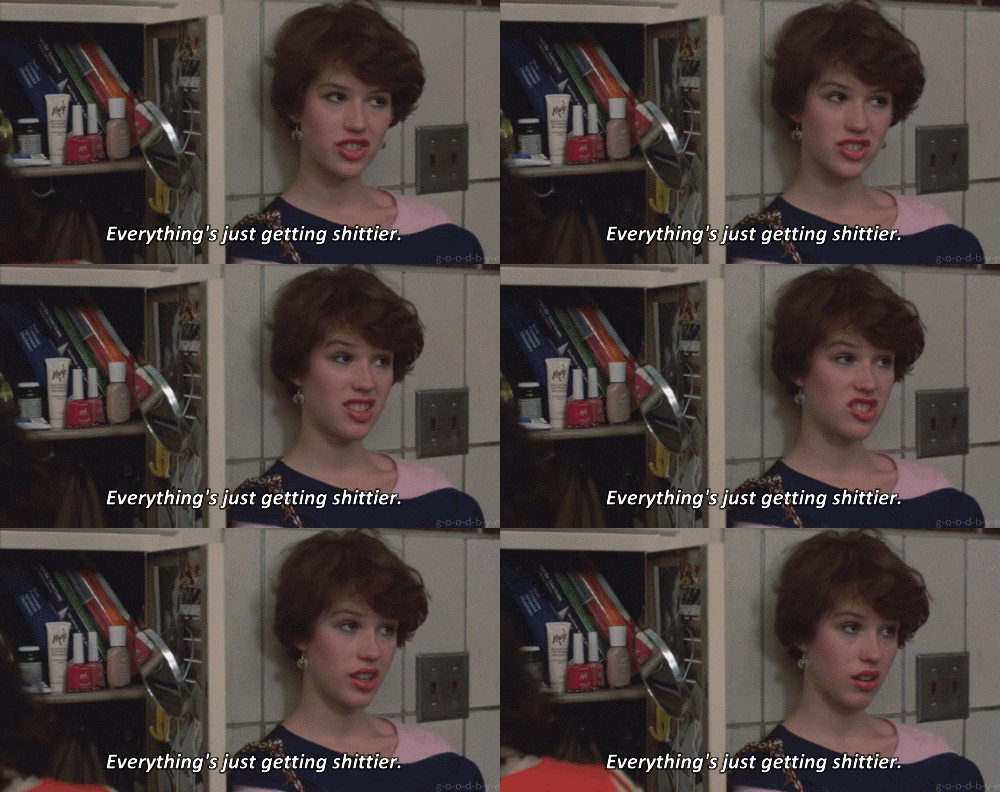
It seems like the remake will be more of an ensemble story, delving into slightly different (yet very important) themes.
Deadline reports that “The half-hour series … follows four young Latinas starting high school as they overcome their feelings of invisibility while exploring what it means to leave childhood behind through the lens of the traditional female coming-of-age rite: the quinceañera.”
Which is why the show’s title was appropriately renamed “15 Candles.” Brilliant.
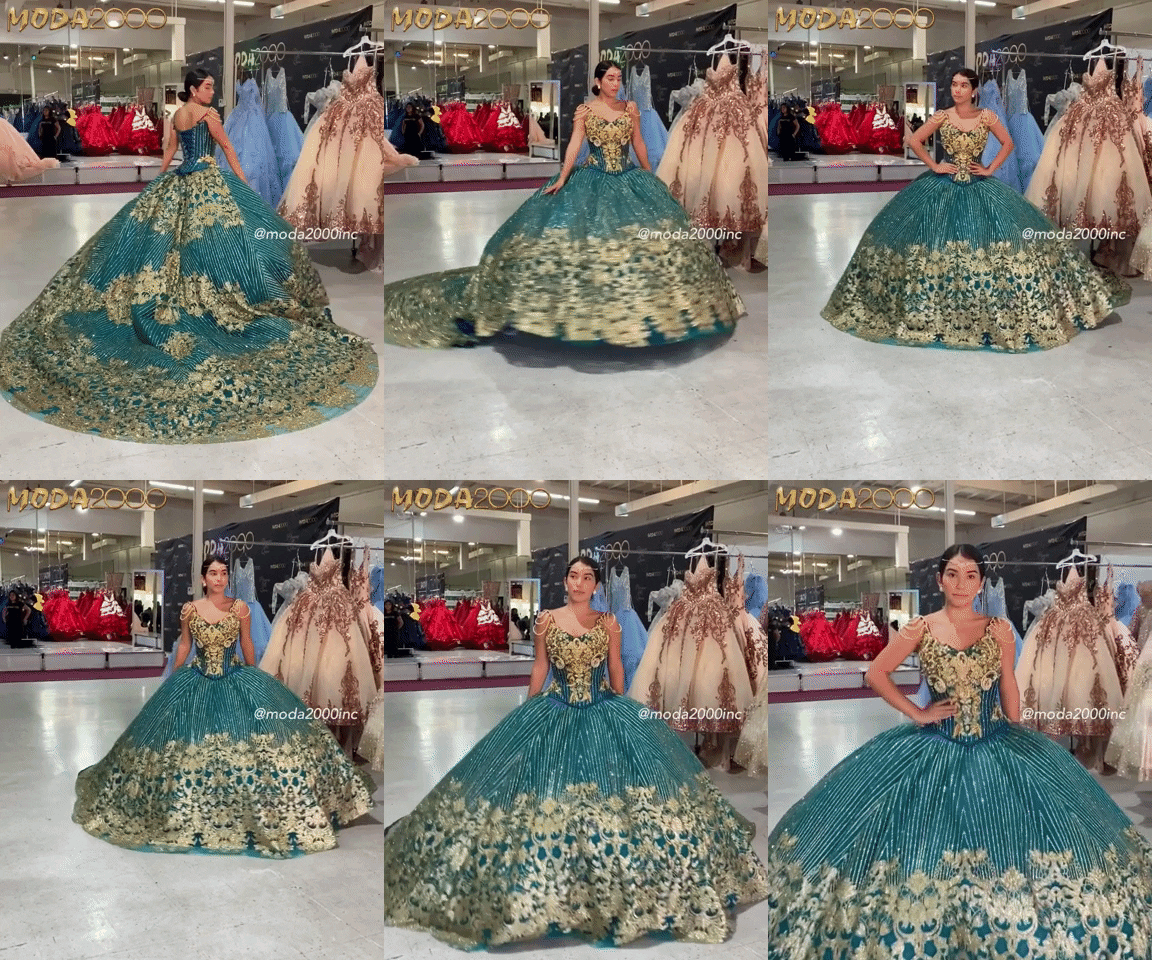
Princess Xv GIF by Moda 2000 Inc <a href="https://giphy.com/gifs/moda2000inc-m2k-m2kmodels-model-j3Dag6JESxi02WJM49">Giphy</a>
A quinceañera is part religious ceremony, part social celebration that marks the passage from girlhood to womanhood. I, of course, have never participated in one (sad), but I have catered about a million quinceañeras. The dresses alone make it feel like something out of a fairy tale. But, as with every family function, there are multiple opportunities for pure comedy gold.
Deadline added that Saracho, a playwright and TV writer, co-founded the Untitled Latinx Project, which aims to “increase Latinx representation in television, broadcast, cable, and streaming platforms through content created by Latinx writers.” Her organization has been described as a “sisterhood” for the way it celebrates fellow creators.

Selena Gomez GIF <a href="https://giphy.com/gifs/gomez-popcorn-6IpZXE1PhYCuk">Giphy</a>
Movie reboots can often feel flat at best, and downright cringey at worst. But when done well, they can offer fresh perspectives to classic stories, especially when told through a different lens.
Take “One Day at a Time” or “Cheaper by the Dozen” for instance. These remakes allowed underrepresented families to be portrayed in the mainstream. This is more than for entertainment’s sake. Representation matters on a deep level, and a lack of it takes a toll on mental health—especially for kids and teens.
Though normally the announcement of (yet another) Hollywood remake makes me question if there really are no more ideas left in the world, I’m actually excited about this one.
In a small village in Pwani, a district on Tanzania’s coast, a massive dance party is coming to a close. For the past two hours, locals have paraded through the village streets, singing and beating ngombe drums; now, in a large clearing, a woman named Sheilla motions for everyone to sit facing a large projector screen. A film premiere is about to begin.
It’s an unusual way to kick off a film about gender bias, inequality, early marriage, and other barriers that prevent girls from accessing education in Tanzania. But in Pwani and beyond, local organizations supported by Malala Fund and funded by Pura are finding creative, culturally relevant ways like this one to capture people’s interest.
The film ends and Sheilla, the Communications and Partnership Lead for Media for Development and Advocacy (MEDEA), stands in front of the crowd once again, asking the audience to reflect: What did you think about the film? How did it relate to your own experience? What can we learn?
Sheilla explains that, once the community sees the film, “It brings out conversations within themselves, reflective conversations.” The resonance and immediate action create a ripple effect of change.
MEDEA Screening Audience in Tanzania. Captured by James Roh for Pura
Across Tanzania, gender-based violence often forces adolescent girls out of the classroom. This and other barriers — including child marriage, poverty, conflict, and discrimination — prevent girls from completing their education around the world.
Sheilla and her team are using film and radio programs to address the challenges girls face in their communities. MEDEA’s ultimate goal is to affirm education as a fundamental right for everyone, and to ensure that every member of a community understands how girls’ education contributes to a stronger whole and how to be an ally for their sisters, daughters, granddaughters, friends, nieces, and girlfriends.
Sheilla’s story is one of many that inspired Heart on Fire, a new fragrance from the Pura x Malala Fund Collection that blends the warm, earthy spices of Tanzania with a playful, joyful twist. Here’s how Pura is using scent as a tool to connect the world and inspire action.
A partnership focused on local impact, on a global mission
Pura, a fragrance company that recognizes education as both freedom and a human right, has partnered with Malala Fund since 2022. In order to defend every girl’s right to access and complete 12 years of education, Malala Fund partners with local organizations in countries where the educational barriers are the greatest. They invest in locally-led solutions because they know that those who are closest to the problems are best equipped to solve and build durable solutions, like MEDEA, which works with communities to challenge discrimination against girls and change beliefs about their education.
But local initiatives can thrive and scale more powerfully with global support, which is why Pura is using their own superpower, the power of scent, to connect people around the world with the women and girls in these local communities.
The Pura x Malala Fund Collection incorporates ingredients naturally found in Tanzania, Nigeria, Pakistan, and Brazil: countries where Malala Fund operates to address systemic education barriers. Eight percent of net revenue from the Pura x Malala Fund Collection will be donated to Malala Fund directly, but beyond financial support, the Collection is also a love letter to each unique community, blending notes like lemon, jasmine, cedarwood, and clove to transport people, ignite their senses, and help them draw inspiration and hope from the global movement for girls’ education. Through scent, people can connect to the courage, joy, and tenacity of girls and local leaders, all while uniting in a shared commitment to education: the belief that supporting girls’ rights in one community benefits all of us, everywhere.
You’ve already met Sheilla. Now see how Naiara and Mama Habiba are building unique solutions to ensure every girl can learn freely and dare to dream.
Naiara Leite is reimagining what’s possible in Brazil
Julia with Odara in Brazil. Captured by Luisa Dorr for Pura
In Brazil, where pear trees and coconut plantations cover the Northeastern Coast, girls like ten-year-old Julia experience a different kind of educational barrier than girls in Tanzania. Too often, racial discrimination contributes to high dropout rates among Black, quilombola and Indigenous girls in the country.
“In the logic of Brazilian society, Black people don’t need to study,” says Naiara Leite, Executive Coordinator of Odara, a women-led organization and Malala Fund partner. Bahia, the state where Odara is based, was once one of the largest slave-receiving territories in the Americas, and because of that history, deeply-ingrained, anti-Black prejudice is still widespread. “Our role and the image constructed around us is one of manual labor,” Naiara says.
But education can change that. In 2020, with assistance from a Malala Fund grant, Odara launched its first initiative for improving school completion rates among Black, quilombola, and Indigenous girls: “Ayomidê Odara”. The young girls mentored under the program, including Julia, are known as the Ayomidês. And like the Pura x Malala Fund Collection’s Brazil: Breath of Courage scent, the Ayomidês are fierce, determined, and bursting with energy.
Ayomidês with Odara in Brazil. Captured by Luisa Dorr for Pura
Ayomidês take part in weekly educational sessions where they explore subjects like education and ethnic-racial relations. The girls are encouraged to find their own voices by producing Instagram lives, social media videos, and by participating in public panels. Already, the Ayomidês are rewriting the narrative on what’s possible for Afro-Brazilian girls to achieve. One of the earliest Ayomidês, a young woman named Debora, is now a communications intern. Another former Ayomidê, Francine, works at UNICEF, helping train the next generation of adolescent leaders. And Julia has already set her sights on becoming a math teacher or a model.
“These are generations of Black women who did not have access to a school,” Naiara says. “These are generations of Black women robbed daily of their dreams. And we’re telling them that they could be the generation in their family to write a new story.”
Mama Habiba is reframing the conversation in Nigeria
Centre for Girls' Education, Nigeria. Captured by James Roh for Pura
In Mama Habiba’s home country of Nigeria, the scents of starfruit, ylang ylang and pineapple, all incorporated into the Pura x Malala Collection’s “Nigeria: Hope for Tomorrow,” can be found throughout the vibrant markets. Like these native scents, Mama Habiba says that the Nigerian girls are also bright and passionate, but too often they are forced to leave school long before their potential fully blooms.
“Some of these schools are very far, and there is an issue of quality, too,” Mama Habiba says. “Most parents find out when their children are in school, the girls are not learning. So why allow them to continue?”
When girls drop out of secondary school, marriage is often the alternative. In Nigeria, one in three girls is married before the age of 18. When this happens, girls are unable to fulfill their potential, and their families and communities lose out on the social, health and economic benefits.
Completing secondary school delays marriage, and according to UNESCO, educated girls become women who raise healthier children, lift their families out of poverty and contribute to more peaceful, resilient communities.
Centre for Girls’ Education, Nigeria. Captured by James Roh for Pura
To encourage young girls to stay in school, the Centre for Girls’ Education, a nonprofit in Nigeria founded by Mama Habiba and supported by Malala Fund and Pura, has pioneered an initiative that’s similar to the Ayomidê workshops in Brazil: safe spaces. Here, girls meet regularly to learn literacy, numeracy, and other issues like reproductive health. These safe spaces also provide an opportunity for the girls to role-play and learn to advocate for themselves, develop their self-image, and practice conversations with others about their values, education being one of them. In safe spaces, Mama Habiba says, girls start to understand “who she is, and that she is a girl who has value. She has the right to negotiate with her parents on what she really feels or wants.”
“When girls are educated, they can unlock so many opportunities,” Mama Habiba says. “It will help the economy of the country. It will boost so many opportunities for the country. If they are given the opportunity, I think the sky is not the limit. It is the starting point for every girl.”
From parades, film screenings to safe spaces and educational programs, girls and local leaders are working hard to strengthen the quality, safety and accessibility of education and overcome systemic challenges. They are encouraging courageous behavior and reminding us all that education is freedom.
Experience the Pura x Malala Fund Collection here, and connect with the stories of real girls leading change across the globe.
Luke Thompson has achieved heartthrob status as Benedict Bridgerton, the free-spirited, second-born son of the noble family featured in the popular Bridgerton television series. The show’s fourth season focuses on Benedict’s Cinderella-esque love story with a servant named Sophie, played by Yerin Ha.
In an interview promoting season four, Thompson and Ha read questions from Bridgerton fans. One person asked Thompson, who grew up in France and speaks fluent French, to share his favorite French phrase.
We can’t think of a better French teacher! 🇫🇷 Luke Thompson revealed what his favourite French phrase is and taught Yerin the language of love in the process! Watch the FULL video of Yerin Ha and Luke Thompson texting fans at the link in our bio. 🔗 Part 1 of ‘Bridgerton’ season 4 is streaming NOW on @Netflix. #LukeThompson#YerinHa#Bridgerton#French#BenedictBridgerton @Yerin Ha
“My favorite French phrase is probably…Oh! ‘Un ange passe,’” he said.
Ha asked what it meant, and Thompson helped her decipher it. Un = a/an. Ange = angel. Passe = pass(es). In English, “Un ange passe” means “An angel passes.”
“What it means is, when you’re having a conversation, or like just in a group, it’s a nice way of expressing awkward silence,” Thompson explained. “But it’s just those moments where like, just, there’s a bit of a lull and no one says anything. And you say, ‘Un ange passe.’”
“You say, ‘An angel passes,’” Ha said. “That’s really nice.”
It is nice. And it appears to be a glaring omission from the English language, since people in the comments shared that they have similar phrases for awkward silences in their cultures:
“OMG we say the same thing in Arabic!”
“We say the same in Portuguese… ‘passou um anjo’ ☺️”
“In Spanish we say that, at least in Chile ‘pasó un angel or ‘un angel pasó.’”
“In Spanish we say the same thing!! México 🇲🇽”
“In Philippines we have this too! Haha may dumaang anghel 😂”
“In Malay we said: malaikat lalu.”
“We have that phrase in Danish too. But it’s more an angel went through the room.”
“The Dutch also have this, but a reverend walks by instead of the angel 🙈 Angel is much nicer.”
“We say that too in Nigeria. ‘Ndị muozi na agafe.’”
this is so interesting to know because we say the same thing in malay when there’s sudden silence, “malaikat lalu”, which also means “an angel passes” https://t.co/hYa6pcfoRz
It seems that many cultures have handy phrases like this to make a conversational lull feel mystical or magical instead of uncomfortable and awkward. The wording may differ from place to place—apparently, in Russia and Kazakhstan they say, “A cop was born”—but why don’t we have anything even close to it in English?
When silence falls over a group of English speakers, we just stand there and shift our gaze, feeling the heavy seconds tick by. Occasionally, someone might acknowledge the silence by saying, “Well, this is awkward…” but that only emphasizes the awkwardness.
The irony here is that English speakers tend to be particularly uncomfortable with silence, at least compared to cultures in which silence is viewed more positively.
In his research, linguist Haru Yamada found that Americans consider the length of silence in Japanese speakers’ conversations to be “unbearably long.” Unlike many other cultures, we have no sweet, playful saying to slice through the pregnant pause.
Researchers from Holland determined that it takes about 4 seconds for a silence to become awkward.
Not all silence is uncomfortable, of course. It becomes awkward when we expect others to speak—or when we are expected to speak—and no one does.
According to Rebecca Roache, associate professor of philosophy at the University of London, the awkward feeling of silence comes from fear of how it might be interpreted: “Specifically, we worry about one or both of two things: having others misinterpret our silence, and having others correctly interpret our silence.”
In other words, we might worry that people think we’re boring if we don’t have something to say, which would be a misinterpretation of our silence. Then again, we might worry that people will think we’re nervous, which may be a totally correct interpretation of our silence—but just not the impression we want to give others.
everyone on Zoom during that awkward pause between the small talk and the work talk pic.twitter.com/HLUXGkRi69
The beauty of having a standard phrase like “un ange passe” is that it allows everyone to acknowledge that lulls in conversation are a normal, universal phenomenon. It says, “This is so common, we even have a saying for it.” That alone helps lessen the awkwardness. The English language’s lack of such a phrase now feels like a big, gaping hole in our social lives.
Where did the idea of saying “un ange passe” come from in the first place? According to the Lawless French website:
“No one seems to know the origin of the expression, whether the angel’s passing is what causes the silence or if she is attracted by the tranquility, but either way, un ange passe is a nice way to break the tension and continue chatting.”
Can we just start saying “an angel passes” now? Do we need to ask anyone’s permission for this? It appears to be pretty universal, so maybe we English speakers just missed the boat somewhere along the centuries. It feels well past time to remedy that.
At school, during a “talk about your family” day, Thomas told his class: “My uncle is Superman.” His classmates were stunned. Nobody believed him. His teacher, less than impressed, told him plainly: “Thomas, we don’t lie in school.”
Thomas did not back down. “My uncle is Superman,” he insisted.
The teacher, now genuinely concerned, raised the issue with Thomas’s mother when she came to collect him that afternoon. She walked her through the whole incident, explaining that the school did not encourage children to make things up in front of their peers. Thomas’s mother listened patiently, then delivered the news as gently as she could.
“I hate to tell you this,” she said, “but it’s all true.”
Cavill told the story on The Tonight Show with Jay Leno in June 2013, and it got so much mileage that he retold it on Live with Kelly and Ryan in 2018. Both times, audiences loved it for the same reason: Thomas never wavered. He knew what he knew, and no amount of adult skepticism was going to change it.
“My uncle is Superman” is not the kind of claim most teachers are prepared to receive. But from Thomas’s perspective, it was simply a fact about his life, one that happened to be harder to verify than most. As Cavill told the story, there was no drama, no grand reveal. Just a small boy, stubbornly telling the truth, and a mother who had to gently correct a teacher’s assumptions at school pickup.
The clip from the Live with Kelly and Ryan appearance has amassed over nine million views, with fans delighting in the specifics. “I hope the teacher replied by saying ‘I’m going to need you to prove that,’” one commenter wrote. “If my uncle was Superman I would brag about it every single day,” said another.
Thomas, for his part, appears to have handled the whole thing with exactly the composure you’d expect from someone whose uncle saves the world for a living.
When Brody Ridder came home from school on May 24, 2022, his mom took one look at his yearbook and felt her heart crack open. He’d asked all kinds of kids to sign it. Two had. Two teachers had. And then, on one of the pages, in his own handwriting: “Hope you make some more friends. — Brody Ridder.”
He had signed his own yearbook. And then wished himself better luck next year.
Cassandra Ridder posted a photo of the page to the school’s private Facebook parent group that night. She didn’t ask Brody first, but as she told the Washington Post, she knew he’d be fine with it. “Brody has always told me he wants to be part of the solution.” Her message to other parents was simple: talk to your kids about kindness. She had no idea what was about to happen.
snip* It is the time of year when kids are signing each other’s yearbooks. But what happens when no one wants to sign yours?
That happened to Brody Ridder, a sixth grader at The Academy of Charter Schools in Westminster.https://t.co/tCDWYkLD1A
Other parents showed the post to their kids. Seventeen-year-old Joanna Cooper got a text from her mom with a screenshot and made a decision on the spot, as she told KDVR. “We’re going to sign his yearbook,” she said, “because no kid deserves to feel like that.” She started texting friends. Meanwhile, Simone Lightfoot, also an 11th grader, was doing the same thing. “When I was younger, I was bullied a lot like him,” she told the Washington Post. “We walked in and we were like, ‘Where’s Brody at? Is Brody Ridder in here?’ And they’re like, ‘Yeah, he’s in the back.’ And we’re like, ‘Brody! We’re here to sign your yearbook, bud.’”
The older kids didn’t just sign their names. As Goalcast reported in its coverage, they asked Brody about his hobbies, which turned out to include chess and fencing, and gave him a pep talk. Many of them had been in similar situations at his age. Once the upperclassmen started filling pages, the kids in Brody’s own class started getting up from their seats to sign it too. “It was like a domino effect,” Cassandra told Fox News. “It was beautiful.” By the end of the day, Brody had collected more than 100 signatures, paragraphs of encouragement, and a handful of phone numbers.
“It just made me feel better as a person,” Brody told KDVR. “I don’t know how to explain it. It just makes me feel better on the inside.”
The teenagers marched into Brody Ridder's class and filled the sixth grader's yearbook with messages of friendship and support. https://t.co/NAbQIBvTat
The story didn’t stay local for long. After Cassandra posted an update to her personal Facebook, it spread widely. Letters started arriving at the Ridders’ P.O. Box from people across the country and around the world, people of all ages who recognized something in Brody’s story. By July, at least 600 letters had arrived, with more still coming, including one dictated by a three-year-old to his mom.
Among those who reached out was Paul Rudd. According to the Denver Post, Rudd’s sister saw Cassandra’s post and contacted her to say the actor would love to connect with Brody. Rudd FaceTimed him and sent a care package that included a signed Ant-Man helmet and a handwritten note telling Brody that things get better and that many people, Rudd included, thought he was “the coolest kid there is.”
Cassandra and Brody have since partnered with The UGLI Foundation, an anti-bullying nonprofit, to keep the conversation going, according to the Denver Post. Cooper, the 11th grader who organized the original yearbook visit, said she planned to push for a schoolwide signing event the following year so no student would face an empty book again.
Brody said he’s not sure all the kids who refused to sign will become his friends. But something shifted. “It made me feel like there’s hope for the school,” Cassandra said, “there’s hope for humanity, and there are a lot of good kids in this world.”
In 2004, the film Catwoman (directed by a French visual effects supervisor known simply as Pitof) was unleashed on the world, and it did not go well. The movie received scathing reviews, landing at 8% on Rotten Tomatoes (with an audience score of 18%). This didn’t go unnoticed by the Golden Raspberry committee, which bestowed seven nominations on the film, including Worst Picture, Worst Screenplay, and Worst Actress for Halle Berry.
Did this stop Berry from having a good time? Absolutely not. In 2005, she created one of the most iconic power moves Hollywood has ever seen.
For those unaware, the Golden Raspberry Awards (better known as the Razzies) began in 1981 as a satirical antithesis to the Oscars. The idea was that if filmmakers received prizes for “good work,” they should also have to accept awards for the “best worst” movies.
So when Berry “won,” she didn’t just take it in stride. She used it as a reminder that she’s one of the entertainment business’ most incredible performers.
Posted on the Razzie YouTube page, we see two presenters announce her name: “Halle Berry for Catwoman.” The crowd claps and laughs as we see a clip of Berry in the film, sniffing catnip manically.
“Ladies and gentlemen—Halle Berry.” The crowd erupts as Berry, clad in a beautiful black dress, comes roaring onto the stage holding both her Razzie and her Oscar, which she received in 2002 for her work in Monster’s Ball. She feigns shock and excitement as the crowd jumps to its feet for a standing ovation.
Berry’s speech
“Oh my gosh,” she yells into the mic while milking every cheer. She pretends to hyperventilate, perhaps even tearing up a bit. “Thank you, guys! Thank you so much! I never in my life thought I’d be up here winning a Razzie.” The crowd laughs uproariously. “I mean, it’s not like I ever aspired to be here, but thank you!”
What she does next is on another level. She holds up her Oscar and screams, “And no, I don’t have to give this back—it’s got my name on it!” Now the audience knows she’s in charge. She composes herself and says, “Ya know? I’ve got so many people to thank, because you won’t win a Razzie without a lot of help from a lot of people. So please indulge me and let me go through this.”
Spoofing an Academy Award acceptance speech, she begins her list of “gratitude.” “First of all, I want to thank Warner Bros. Thank you for putting me in a piece-of-s–t, God-awful movie! It was just what my career needed, ya know? I was at the top, and then Catwoman just plummeted me to the bottom. Love it!”
She pauses, then says, “It’s hard being on top. It’s much better being on the bottom.” The list continues. “I want to thank my manager, Vincent Cirrincione,” she says, and ushers him onto the stage. Cirrincione humbly listens while she kids, “This guy loves me. He loves me so much that he tells me I’m the greatest actress who ever was. He loves me so much that he convinces me to do projects even when he knows they’re s–t!”
He humbly nods and plays along. “My only advice to you, Vinnie, is next time I do a movie—if I get a chance to do another movie—maybe you should read the script? Just counting the zeroes behind the one really isn’t enough. You’ve really got to read the script. Love you, man. Love you!”
Berry is far from done.
“I want to thank my agent and lawyers, who obviously don’t give a s–t. They’re not here tonight, but love you guys! I want to thank the writers—all twenty of them—for thinking this was a good idea.” She adds, “You tried, hey.”
She couldn’t do it alone
Now it’s time for her fellow actors to receive some love.
“I want to thank the cast. You know, it’s really important. In order to give a bad performance like I did, you need a lot of bad actors around. So I want to thank all of them for being bad right along with me! One of them is here—Alex Borstein. Come on out!”
Borstein, who played Sally, the “sassy best friend,” mugs and chews the scenery onstage as she stumbles out with fake tears. The crowd cheers. After they calm down a bit, Berry gets more serious. “One of the best things about Catwoman is I got to make some really wonderful lifelong friendships, and this lady is one of them.”
Borstein composes herself and gazes into Berry’s eyes. She continues, “And you know what? I want to thank you for every single day looking up at me and telling me I was doing a great job—that I was the best Catwoman you ever saw. I want to thank you for lying straight to my face every day. You know, in Hollywood they lie behind your back, but she lied straight to my face!”
Again, the crowd goes wild as Berry refocuses her energy. “I also want to thank our director, Pitof—you know, that one-name French guy? Thank you very much.” She admits his accent made it hard to take direction. “I mean, I didn’t know what the hell he was saying, but I’m sure it showed in my performance. But it was truly a joy and a pleasure.”
Her acting coach is now on deck: “I want to thank my acting coach, Ivana Chubbuck. She just wrote a book called The Power of the Actor. You all should rush to get it. It could change your life too.”
Berry ends on a serious note, saying, “When I was a kid, my mother told me that if you could not be a good loser, then there’s no way you could be a good winner. If you weren’t able to take criticism, then you were not worthy of getting your praise.”
She then shares a story of having begun in beauty pageants and learning to control her rage when she lost. “So as you can imagine, I wanted to slap the s–t out of the Razzie people that brought me here tonight. But I won’t do that. I’ll do what my mother taught me and I’ll stand here graciously. I’ll take the criticism—take it as a lesson learned—and hope to God I never see these people ever again. Thank you all!”
The response
The audience claps with joyous applause. So did the comment section. On the official YouTube page, there are over 4,000 comments, with one reading, “This lady is classy as hell! Anyone who accepts their Razzie in person has my respect, and the delivery was absolutely priceless!”
Another comment references the time Adrien Brody gave a six-minute speech for his Best Actor win for the film The Brutalist. The YouTuber jokes, “This speech is longer than Adrien Brody’s 6-minute speech, and hers is undeniably not a second wasted.”
A clip circulating on Instagram has nearly 18,000 likes and a heap of support for her talent and her sense of humor. One person jokes, “The fact that she brought her Oscar…”
The Sound of Music has been beloved for generations, partially for the music (and Julie Andrews’ angelic voice), partially for the historical storyline, and partially for the love story between Maria and Georg Von Trapp. The idea of a nun-in-training softening the heart of a curmudgeonly widower, falling in love with him, and ultimately becoming a big, happy family is just an irresistible love story.
But it turns out the real love story behind their union is even more fascinating.
Maria Von Trapp (left) was played by Julie Andrews and her husband Georg was played by Christopher Plummer in Photo credit: Public domain
The National Archives has collected information about what’s fact and what’s fiction in The Sound of Music, which is based on a real family in Austria named Von Trapp. The film was generally based on the first section of Maria Von Trapp’s 1949 autobiography, The Story of the Trapp Family Singers, with some of the details being true and others fictionalized for a movie audience.
For instance, Maria was actually hired on as a tutor for just one of Georg’s children, not as a governess for all of them. The children, whose names, ages and sexes were changed, were already musically inclined before Maria arrived. Georg was not the cold, grumpy dad he was portrayed as in the beginning of the film, but rather a warm and involved parent who enjoyed making music with his kids. Maria and Georg were married 11 years before leaving Austria, not right before the Nazi takeover. The Von Trapps left by train, not in a secret excursion over the mountains.
But perhaps the most intriguing detail? Maria was not in love with Georg at all when they got married.
Sound Of Music Flag GIF by The Rodgers & Hammerstein Organization Giphy
It doesn’t initially make for a great Hollywood romance, but the Von Trapp love story began with marriage for other reasons and evolved into a genuine love story. Maria wrote that she fell in love with Georg’s children at first sight, but she wasn’t sure about leaving her religious calling when Georg asked her to marry him. The nuns urged her to do God’s will and marry him, but for Maria it was all about the children, not him. When Georg proposed, he asked her to stay with him and become a second mother to his children. “God must have made him word it that way,” Maria wrote, “because if he had only asked me to marry him I might not have said yes.”
“I really and truly was not in love,” she wrote. “I liked him but didn’t love him. However, I loved the children, so in a way I really married the children.”
However, she shared that her feelings for Georg changed over time. “…[B]y and by I learned to love him more than I have ever loved before or after.”
The idea of marrying someone you don’t love is antithetical to every romantic notion our society celebrates, yet the evolution of Maria’s love for Georg has been a common occurrence across many cultures throughout history. Romantic love was not always the primary impetus for marriage. It was more often an economic proposition and communal arrangement that united families and peoples, formed the basis of alliances, and enabled individuals to rise through social ranks. Some cultures still practice arranged marriage, which limited research has found has outcomes identical to love-first marriage in reports of passionate love, companionate love, satisfaction, and commitment. The idea of marrying someone you don’t already love is anathema to modern Western sensibilities, but the reality is that people have married over the centuries for many reasons, only one of which is falling in love.
Maria’s marriage to Georg actually was about falling in love, but not with him. She loved his children and wanted to be with them. It definitely helped that she liked the guy, but she wasn’t swept off her feet by him, there were no moonlit confessions of love a la “Something Good,” and their happily ever after love story didn’t come until much later.
Ultimately, Maria and Georg’s love story was one for the ages, just not one that fits the Hollywood film trope. And it’s a compelling reminder that our unwritten rules and social norms determining what love and marriage should look like aren’t set in stone. Do marriages for reasons other than love always evolve into genuine love? No. Do marriages based on falling in love first always last? Also no. Should a marriage that starts with “like” and develops into to a genuine, deep love over years be considered “true love” in the way we usually think of it? Who can say? Lots to ponder over in this love story.
But Maria’s description of learning “to love him more than I have ever loved before or after” is a pretty high bar, so clearly it worked for them. The Von Trapps were married for 20 years and had three more children together before Georg died of lung cancer in 1947. Maria would live another four decades and never remarried. She died in 1987 at age 82 and is buried next to Georg on the family’s property in Vermont.
This article originally appeared last year It has been updated.
Twelve years ago, this unassuming couple went viral for the greatest gas station karaoke performance ever. – Photo credit: Monifa Sims (used with permission)
When Will and Monifa Sims stopped to get gas in Burbank, California, in 2013, they had no idea they were about to become a viral sensation. What began as a little “go-with-the-flow” singing on the spot at a gas station altered their lives forever.
Here’s what happened: Will began pumping gas when suddenly actor Tim Stack (playing newscaster Jack Rafferty) appeared on a tiny TV above pump 16. What Will didn’t know was that this was one of The Tonight Show with Jay Leno’s pranks, where a fake newscast appears. The fake newscaster then asks a gas station patron to perform some type of wacky stunt or sing their favorite karaoke song. In exchange, they’re told they’ll get free gas.
The setup
After Will hummed a few bars of a song to himself, Stack suddenly addressed him. “You at pump 16 in Burbank. You’ve got a real nice singing voice.” It took Will a few seconds to understand what was happening, but he soon laughed and expressed gratitude. Stack continued, “Do you do that professionally?” Will answered, “No, just karaoke.”
It was then that Stack made him a proposition: “Guess what? We’ll pay for your gasoline. How ’bout a little karaoke from you?”
Will was totally game. He didn’t hesitate for a second. “Okay! What you want?” It was determined that Will was an “eighties kid,” so he liked Bon Jovi. They decided “Livin’ on a Prayer” was the way to go, and Stack asked, “Do you need the words?” Will answered emphatically, “No, I know ’em, baby.”
He started singing the 1986 hit with all his might. “Tommy used to work on the docks / Union’s been on strike / it’s tough / So tough.” He went on, nailing every note, even hitting the falsetto parts in the chorus. “Ooooh, we’re halfway there / Oh, oh! Livin’ on a prayer…” We then heard another voice on the “TV” note, “The girl in the front seat is just dying.”
Will finished strong and asked, “How was that?” Stack asked if it was his wife in the car, and Will didn’t miss the opportunity to ask if she should show off her skills as well. “Want to do it as a duet?” Monifa wasn’t quite ready, so Stack continued complimenting Will while he improvised, “Oh, oh! Livin’ on a tank of gas! Livin’…for…the…gas…whoa!”
Other customers at the station began gathering to see where the “pumpcast” was set up. Perhaps they’ll get lucky too. But it was Monifa who Stack and the gang had their sights on. And somehow, they convinced her.
“‘Sweet Dreams’ by the Eurythmics!” she says boldly. Stack gets the words up on his laptop, shows them to the camera, and away she goes. “Sweet dreams are made of these / Who am I to disagree / I travel the world and the seven seas / Everybody’s looking for something…” Like her husband, she is 100 percent on key and outstanding. Will chimes in every once in a while (especially on the “Hold your head up / Keep your head up” part), and they finish perfectly.
It’s then that Stack informs them enthusiastically, “You’re gonna be on Jay Leno on The Tonight Show.” Now what started out as an unusually awesome day just got even better. They both scream with delight, “Oh yeah! Tell Bon Jovi I love him!”
The pair did joyously make it onto The Tonight Show, wherein Leno admits, “It almost seems like a plant. We had no idea these people would come to the tank.” Monifa jokes there’s no way she could have known ahead of time, because she’d have prepared. “I wouldn’t have looked like that! That wasn’t my best look after working out.”
Leno asked how long the couple had been married. They answered, “Twelve years this year!” They then shouted out their daughter in the audience. Of course, the appearance wouldn’t have been complete without a song. This time, they got an entire band backing their duet rendition of “Livin’ on a Prayer.” Once again, it was absolute perfection.
People are loving the viral revival
The original clip is making the rounds once more, and, as one might imagine, social media is loving it.
On YouTube, it continues to spark joy. “I come back to this video every so often for the past few years…always puts a smile on my face,” one person wrote. “This couple is so cool and down to earth…not bad singers either.”
One fan on Facebook wrote, “This couple will be retired, 90 years of age, re-watching this beautiful clip on some new platform. This is LOVE right there.”
Where are they now?
That prediction seems to be true so far. Upworthy had the chance to chat with Monifa, who gave us a bit more information about that fateful day.
“It happened in Burbank, California, where, believe it or not, lots of good things used to happen like this, so it was not uncommon at all,” she said. She shared that it was a no-brainer to take the challenge. “We’re always up for a good time, so a good time paired with a free tank of gas was easy.”
She said the virality of it was surprising:
“We were absolutely shocked about how viral it went and still continues to be. That was made 12 years ago. It was on the cusp of YouTube becoming really big. There was no Instagram or TikTok. Once it was over, we went home and didn’t even think twice about it until The Tonight Show reached out to us about how funny they thought it was. I always say editing really helped it to be funny, but obviously, you can only edit what you have.”
As for where they are now? Still happily together and working.
“I am a host on QVC. Will is bicoastal (works in LA a few months of the year, so he travels back and forth). Most exciting? Right now, we are in our year of 25! We are celebrating 25 years of marriage in July, but we have been celebrating all year long. We started off the year with an amazing trip to Phuket, Thailand, and Bali! We will be celebrating more this year with friends and family as well.”
They’re creating more consistent content and trying to grow their brand. “I wrote a cookbook,” Monifa shares, referring to Life in Full Flavor. And as for their karaoke songs? “They really have not changed, but we sing a little bit of everything to keep it spicy!”
Vincint Cannady, who uses they/them pronouns, recently opened up about the grieving process a year after losing their mother. On the podcast Tell Me Something Messy, the musician explains that the loss of their mother came four years after the death of their father. “It is the strangest feeling not having them here,” Cannady says.
Losing a loved one is an unfortunate part of life that most people will experience. No two people grieve the same, but some things about grief remain consistent for everyone. Grief is not linear, and it can show up unexpectedly. But for viewers of the podcast, Cannady’s analogy about grief moved some to tears.
Admittedly, the grieving child did not create the analogy, but read it somewhere and found it helpful. The singer explains that losing your parents takes away a certain amount of joy that you don’t realize until you experience it.
“I read something the other day that I thought was really beautiful,” Cannady says. “Grief is like glitter. I don’t know about you, but I hate glitter. It’s lovely at first in small doses, but like grief, you don’t know when it’s coming. You don’t know how much of it is going to be there, but like glitter, glitter gets everywhere.”
They go on to explain that, like after coming into contact with glitter, you find grief everywhere. “It comes in doses, and you’re overwhelmed, and you hate it, and you want to get it off, and you don’t know how to, but it’s there.”
As time passes, the person wearing the glitter showers some of it away, but some still remains. No matter how much you try to rid yourself of it, glitter still shows up. The same goes for grief. No matter how much you try to rid yourself of grief, it still pops up in unexpected places.
It’s then that Cannady shares something beautiful. After fighting with the sticky, sparkly grief for what feels like an eternity, it’s not as present.
“And then days pass, and weeks pass, and months pass,” Cannady tells the podcast host, Brandon Kyle Goodman. “And then someday you’re in your closet, and you pull out a coat or a jacket, and a bit of glitter falls on your hand, and you get sad because you remember what that glitter means. But it’s not as heavy as it was before, and it’s not as messy as it was before.”
As time passes, glitter is found less often. However, Cannady explains that glitter is part of you now: “Even though it is annoying at times, and sometimes it gets in your eye, but you get it out, and you move on. You remain shiny. It’s just a remembrance of a lot of love.”
The singer shares advice for those experiencing grief, saying that people should give themselves grace. They encourage others not to focus on how other people feel about how you feel about your grief. Grieving is personal, but talking about it with others is therapeutic, according to Cannady. They share that pouring grief into other things, like work or creativity, can be helpful.
“You have to find ways to pour your grief into other things,” they advise. “You pour your grief into your work. You pour your grief into life. You pour your grief into your friends and your relationships, and you make sure that they know how much it means to you. Because it’s not just grief, because before it was grief, it was love. It’s still love. It’s just love in absence.”
When the clip was shared to Instagram, people were moved to tears.
One person comments, “Whew, and just like that — my glitter is back.”
“Whew, I think I have a piece of glitter in my eye because…. I lost my father in July and it truly changes you,” someone else writes.
“I remember I couldn’t say my mom died out loud,” another person shares. “If I did, I would burst into tears. It felt too real!! Saying it out loud almost 2 1/2 years later, it still feels unreal, but it doesn’t hurt as much. I still cry a little while saying it.”
Everyone’s heard of Staples. But now people are actually going there in droves thanks to one employee affectionately known online as the “Staples Baddie.”
Back in January, Kaeden Rowland, a Staples employee, filmed a brief clip of herself during a work shift. Donning the recognizable red shirt and lanyard, she quipped, “You finna need something printed? I gotchyu.”
That single video quickly turned into a mega-viral series. It’s a fun combination of slang-filled humor, nail-clacking ASMR, and genuinely helpful tutorials and insights. The content is breathing new life into the brand and being hailed by fans and experts alike as “marketing genius.”
A major aspect of Rowland’s shtick is explaining certain lesser-known services you can get at Staples. In one particularly popular video, she quips:
“It’s come to my attention that y’all don’t really know the full scope of what Staples, like, does. We can make ornaments. We can make mugs, shirts, backpacks, signs, posters, whatever you could need. A banner that’s like eight feet long? Sure. Why not?”
In another video, she explains the difference between Staples’ direct-mail services. One is for business and can generate a mailing list based on a target demographic. The other is for personal use, like wedding invitations. Though she jokes that either service is too pricey for committing “evil against your ex.”
Other times, you might catch her letting you know when certain things go on sale: “You’re not getting your shawty a 40% off mug from Staples? And men wonder why women cheat.”
She also dissects the different personalities of the printers (the Xerox PrimeLink C9200 has “clean girl” vibes, apparently). Finally, she hits a groove showcasing some of her favorite stationery products. At the moment, she’s very into a tiny botanical planner that fits into her small purse.
Despite not having any formal marketing training, Rowland has made an undeniable impact. A company struggling to stay competitive now has fresh enthusiasm. Folks are getting their personalized mugs there. They’re switching suppliers. They’re even using Staples to supply their best analog life. The best part is none of this is because of an expensive micro-influencer, but someone who actually works there.
In a video analyzing the Staples Baddie, marketing analyst and PR expert Katie Omstead said, “Just a scan of the comments on any of these videos will show you that people are thinking about Staples more than ever before.”
Rowland is just the latest in a growing trend of people who happened to share their creative ideas at just the right time, somehow skyrocketing to full-blown brand collaborations. Think back to Romeo, whose silly Dr Pepper jingle went viral.
MarketerMilk calls this “human-first media,” where corporations rely on the fact that “people buy things from people they trust, not from businesses.” This can look like companies “leveraging their existing employees to become influencers.”
This, of course, can also look like corporations trying to recreate something organic, thus squelching its spark. One Staples employee lamented on Reddit that their team is being encouraged to replicate the Staples Baddie moment in their own stores.
On the bright side, Staples has shared their appreciation for their resident “Baddie.” Not only have they sent a care package Rowland’s way, according to Fast Company, it’s also “exploring opportunities to collaborate and continue supporting her creativity and engagement with the community.”
We very well might be seeing much more of the Staples Baddie in the future.