Researchers dumped tons of coffee waste into a forest. This is what it looks like now.
30 dump truck loads and two years later, the forest looks totally different.

One of the biggest problems with coffee production is that it generates an incredible amount of waste. Once coffee beans are separated from cherries, about 45% of the entire biomass is discarded. So for every pound of roasted coffee we enjoy, an equivalent amount of coffee pulp is discarded into massive landfills across the globe. That means that approximately 10 million tons of coffee pulp is discarded into the environment every year.
When disposed of improperly, the waste can cause serious damage soil and water sources.
However, a new study published in the British Ecological Society journal Ecological Solutions and Evidence has found that coffee pulp isn't just a nuisance to be discarded. It can have an incredibly positive impact on regrowing deforested areas of the planet.
via British Ecological Society
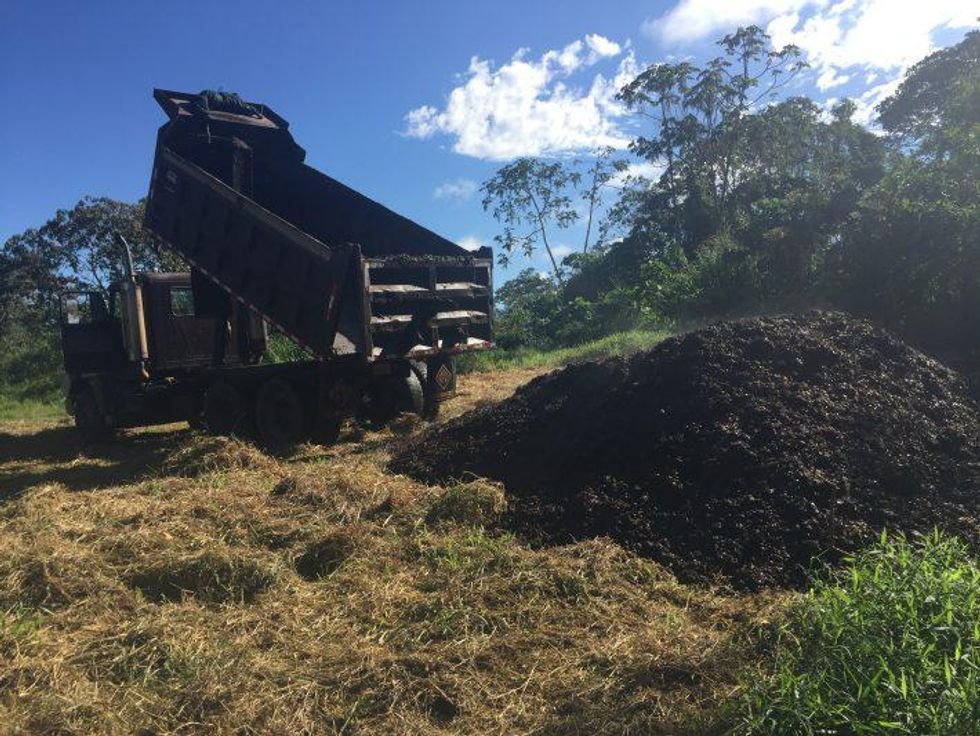
In 2018, researchers from ETH-Zurich and the University of Hawaii spread 30 dump trucks worth of coffee pulp over a roughly 100' x 130' area of degraded land in Costa Rica. The experiment took place on a former coffee farm that underwent rapid deforestation in the 1950s.
The coffee pulp was spread three-feet thick over the entire area.
Another plot of land near the coffee pulp dump was left alone to act as a control for the experiment.
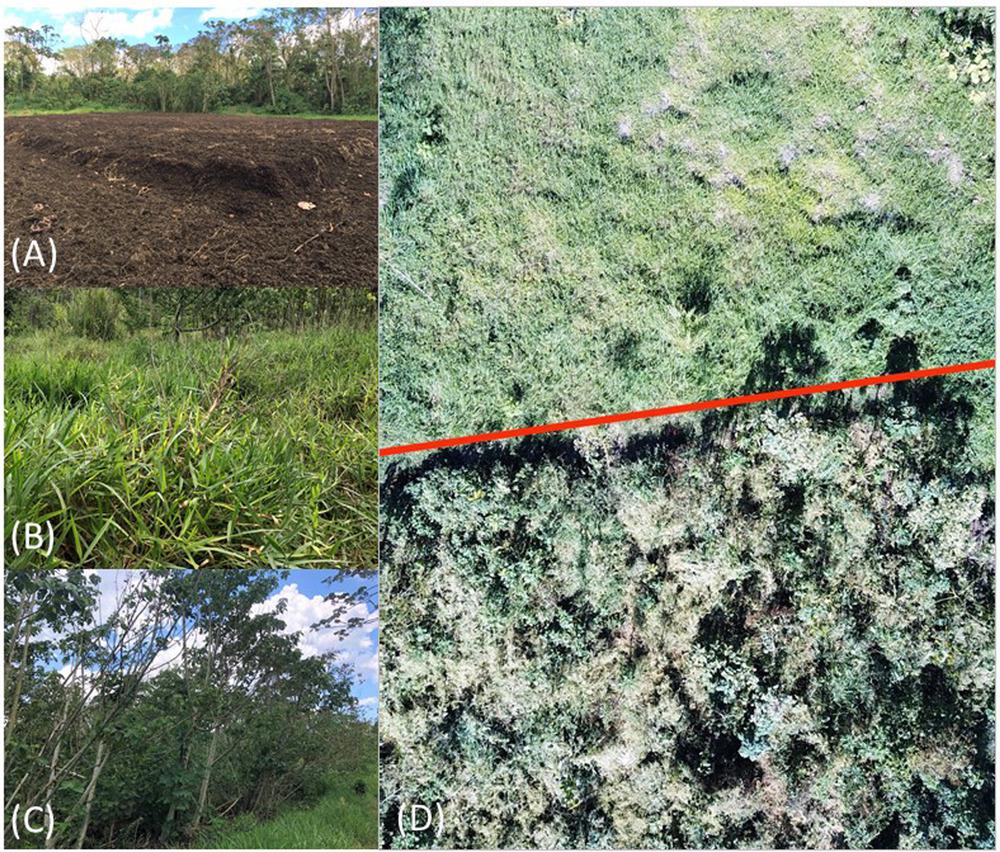
"The results were dramatic." Dr. Rebecca Cole, lead author of the study, said. "The area treated with a thick layer of coffee pulp turned into a small forest in only two years while the control plot remained dominated by non-native pasture grasses."
In just two years, the area treated with coffee pulp had an 80% canopy cover, compared to just 20% of the control area. So, the coffee-pulp-treated area grew four times more rapidly. Like a jolt of caffeine, it reinvigorated biological activity in the area.
The canopy was also four times taller than that of the control.
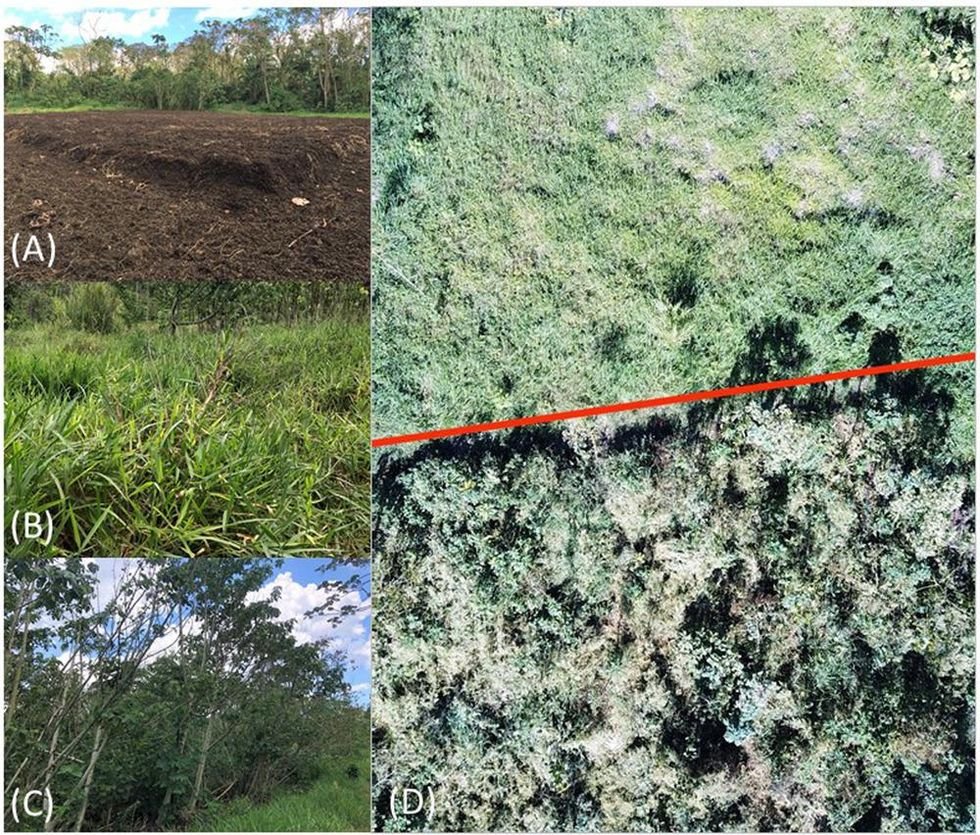
The coffee-treated area also eliminated an invasive species of grass that took over the land and prevented forest succession. Its elimination allowed for other native species to take over and recolonize the area.
"This case study suggests that agricultural by-products can be used to speed up forest recovery on degraded tropical lands. In situations where processing these by-products incurs a cost to agricultural industries, using them for restoration to meet global reforestation objectives can represent a 'win-win' scenario," Dr. Cole said.
If the results are repeatable it's a win-win for coffee drinkers and the environment.
Researchers believe that coffee treatments can be a cost-effective way to reforest degraded land. They may also work to reverse the effects of climate change by supporting the growth of forests across the globe.
The 2016 Paris Agreement made reforestation an important part of the fight against climate change. The agreement incentivizes developing countries to reduce deforestation and forest degradation, promote forest conservation and sustainable management, and enhance forest carbon stocks in developing countries.
"We hope our study is a jumping off point for other researchers and industries to take a look at how they might make their production more efficient by creating links to the global restoration movement," Dr. Cole said.
This article originally appeared three years ago.
- President Trump won't address climate change, so Beyoncé will ... ›
- Breaking down the conspiracy theory mindset at the heart of climate ... ›
- Climate change is not a partisan issue. So, let's stop treating it like ... ›
- Bach wrote an entire song about a woman who loves coffee - Upworthy ›
- How coffee was discovered and spread throughout the world ›
- Danish city paid people to return their coffee cups. Here's how it went. - Upworthy ›
- Young female artist sold $7 million worth of paintings before she was 14 - Upworthy ›
- Man builds small puddle in forest it attracts astounding scene - Upworthy ›
- Transforming sustainability with ancient Hawaiian wisdom - Upworthy ›
- Man builds small pond in the Brazilian forest and the life it attracts is incredible - Upworthy ›


A Generation Jones teenager poses in her room.Image via Wikmedia Commons
An office kitchen.via
An angry man eating spaghetti.via 


An Irish woman went to the doctor for a routine eye exam. She left with bright neon green eyes.
It's not easy seeing green.
Did she get superpowers?
Going to the eye doctor can be a hassle and a pain. It's not just the routine issues and inconveniences that come along when making a doctor appointment, but sometimes the various devices being used to check your eyes' health feel invasive and uncomfortable. But at least at the end of the appointment, most of us don't look like we're turning into The Incredible Hulk. That wasn't the case for one Irish woman.
Photographer Margerita B. Wargola was just going in for a routine eye exam at the hospital but ended up leaving with her eyes a shocking, bright neon green.
At the doctor's office, the nurse practitioner was prepping Wargola for a test with a machine that Wargola had experienced before. Before the test started, Wargola presumed the nurse had dropped some saline into her eyes, as they were feeling dry. After she blinked, everything went yellow.
Wargola and the nurse initially panicked. Neither knew what was going on as Wargola suddenly had yellow vision and radioactive-looking green eyes. After the initial shock, both realized the issue: the nurse forgot to ask Wargola to remove her contact lenses before putting contrast drops in her eyes for the exam. Wargola and the nurse quickly removed the lenses from her eyes and washed them thoroughly with saline. Fortunately, Wargola's eyes were unharmed. Unfortunately, her contacts were permanently stained and she didn't bring a spare pair.
- YouTube youtube.com
Since she has poor vision, Wargola was forced to drive herself home after the eye exam wearing the neon-green contact lenses that make her look like a member of the Green Lantern Corps. She couldn't help but laugh at her predicament and recorded a video explaining it all on social media. Since then, her video has sparked a couple Reddit threads and collected a bunch of comments on Instagram:
“But the REAL question is: do you now have X-Ray vision?”
“You can just say you're a superhero.”
“I would make a few stops on the way home just to freak some people out!”
“I would have lived it up! Grab a coffee, do grocery shopping, walk around a shopping center.”
“This one would pair well with that girl who ate something with turmeric with her invisalign on and walked around Paris smiling at people with seemingly BRIGHT YELLOW TEETH.”
“I would save those for fancy special occasions! WOW!”
“Every time I'd stop I'd turn slowly and stare at the person in the car next to me.”
“Keep them. Tell people what to do. They’ll do your bidding.”
In a follow-up Instagram video, Wargola showed her followers that she was safe at home with normal eyes, showing that the damaged contact lenses were so stained that they turned the saline solution in her contacts case into a bright Gatorade yellow. She wasn't mad at the nurse and, in fact, plans on keeping the lenses to wear on St. Patrick's Day or some other special occasion.
While no harm was done and a good laugh was had, it's still best for doctors, nurses, and patients alike to double-check and ask or tell if contact lenses are being worn before each eye test. If not, there might be more than ultra-green eyes to worry about.