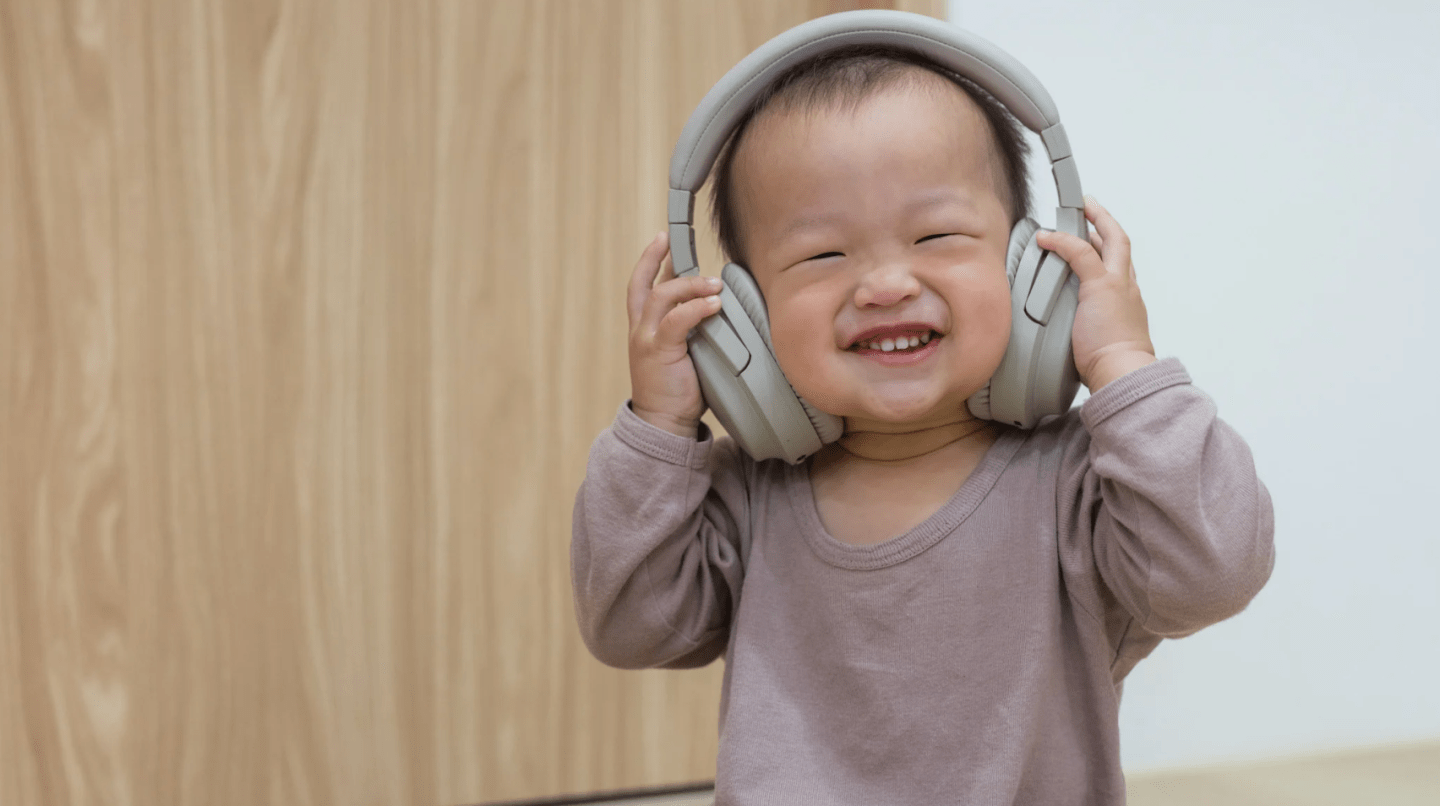
Every parent has seen that magical moment when a toddler, barely able to stand, starts bouncing perfectly in time to a catchy beat. It turns out that those rhythmic wobbles are not just cute accidents. According to a report from Neuroscience News, humans are actually born with a “music blueprint” that is hardwired into our biology.
The evidence suggests that our musicality is an ancient capacity that might even predate the development of human language. As Brighter Side reported, music cognition professor Henkjan Honing has spent two decades researching how our brains process sound. His findings indicate that we do not just learn to like music through culture or upbringing. Instead, we are born with a dedicated capacity for it.
Professor Honing explained that these abilities emerge spontaneously in infants. Babies respond to melody and rhythm without any formal instruction, which suggests that we come into the world with a biological predisposition for musical structures.
To test how deep this goes, researchers even looked at other species. In one experiment, macaque monkeys were able to synchronize with complex rhythms, suggesting that the building blocks of music are shared across different branches of the evolutionary tree.
While we often think of music as a hobby, for many it is a lifeline. According to data from Edison Research, the average member of Gen Z spends over four hours a day listening to music. About 86 percent of those young listeners told researchers that music is a primary tool for boosting their mood, and 61 percent said it helps support their mental health.
This deep connection makes sense if music is a fundamental part of our species. Professor Honing noted that musicality is a combination of many traits, including our understanding of pitch, timing, and intervals. While songbirds and marine animals show some of these traits, humans have a unique and integrated system for it.
The next time a certain song touches your heart or makes you want to dance, you can thank your own biology. It is not just a vibe. It is a part of what makes us human. As Professor Honing concluded, we are simply musical beings by nature.
This article originally appeared earlier this year.