In October 2017, Bradley Rhoton and his wife were carving pumpkins for Halloween when he noticed something strange. Every time he inhaled through his nose, there was a whistling sound.
“Did you hear that?” he asked her. She had. It had come out of nowhere.
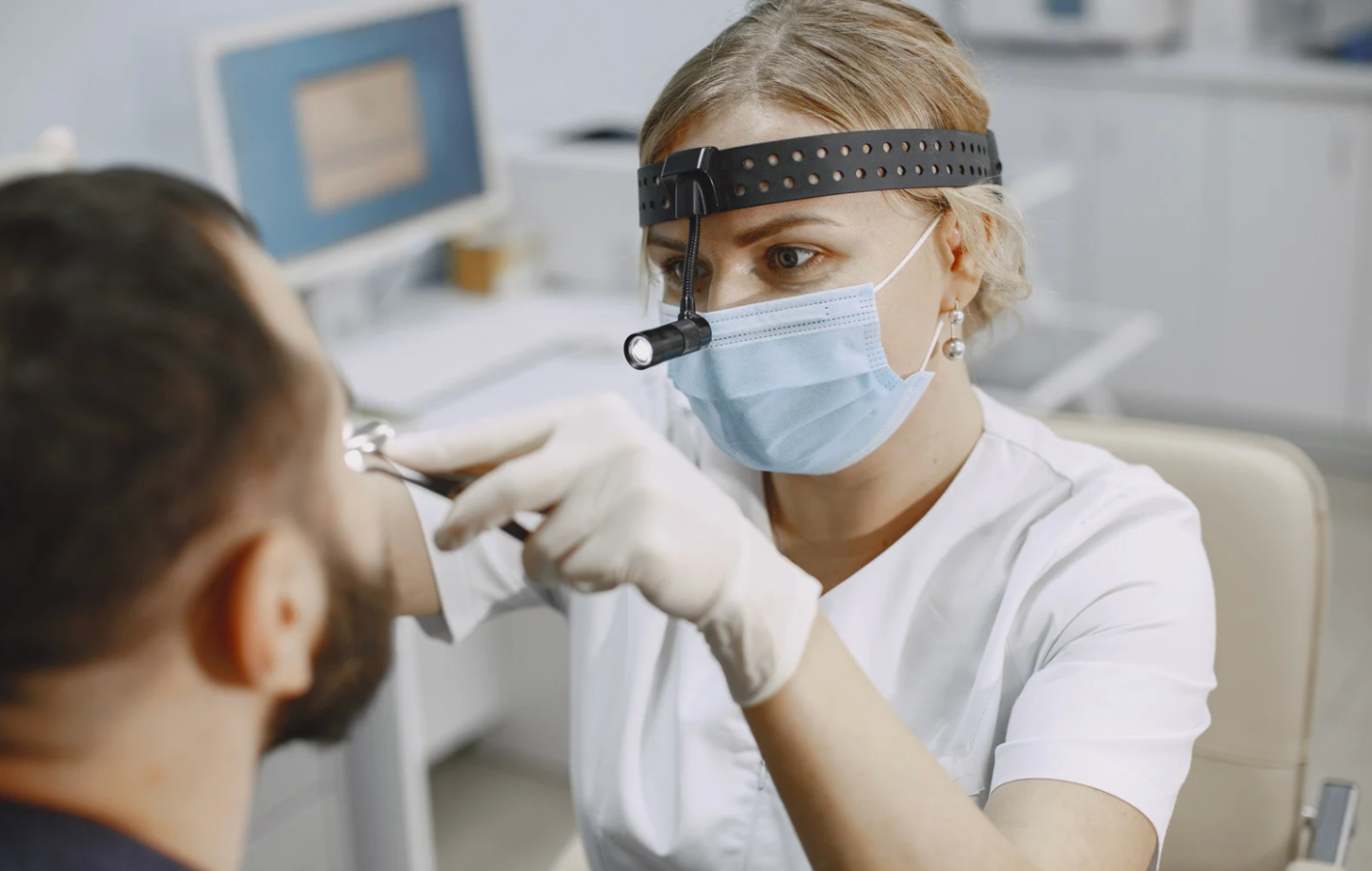
Rhoton, a software marketer in Boston, went to an ear, nose, and throat specialist who diagnosed a deviated septum, a common condition where the partition between the nostrils is off-center, The Washington Post reported. The doctor recommended corrective surgery, and Rhoton agreed. The doctor also suggested doing a second procedure at the same time: a near-total removal of a turbinate in each nostril.
That second procedure is where everything went wrong.
Turbinates are small structures inside the nose that warm, filter, and moisturize the air you breathe. They’re easy to overlook, but they turn out to be critical. After the surgery, instead of breathing better, Rhoton got dramatically worse. He developed relentless nasal congestion, disrupted sleep, and a constant, grinding fatigue.
“My symptoms made daily life a struggle simply to function,” he said. As a father of an infant and a toddler, the exhaustion was brutal. “It was like I was on a two-hour battery. I wanted to do fun things with my kids, but I was so diminished that I couldn’t care for them. I’d fall asleep in the lawn chair while I was supposed to be watching them play outside.”
So he went looking for answers. And looking. And looking. Over the next several years, Rhoton saw 17 different doctors. None of them could find anything wrong.
“They told me my nose looked fine,” he recalled. “They said, ‘Your nose is wide open. Straight. Healed. There’s nothing wrong with you.’”
Some doctors suggested it might be psychological, that he was imagining the whole thing. After roughly 18 months of being told he was fine while feeling anything but, Rhoton started to wonder if they were right. “It was an upsetting journey that raised questions about how the health-care system responds and the often overlooked psychological toll of being misunderstood,” he said.
The breakthrough finally came in November 2023, when Rhoton found Dr. Subinoy Das, medical director of the U.S. Institute for Advanced Sinus Care and Research in Columbus, Ohio, through social media. Das couldn’t diagnose him over the phone, but he raised a possibility no one else had mentioned: Empty Nose Syndrome.
ENS is a rare and controversial condition that can occur after turbinate surgery. The reason it’s controversial is that it’s counterintuitive. Turbinate surgery is supposed to improve breathing, but in a small subset of patients, removing too much turbinate tissue creates a paradoxical sensation of suffocation, even though the nasal passages are physically wide open. The air rushes through without being properly slowed, warmed, or sensed, and the brain essentially can’t register that the person is breathing.
That explained everything. The wide-open nose the other doctors kept pointing to wasn’t proof that nothing was wrong. It was the problem.
Rhoton eventually saw Dr. Jayakar Nayak, an ENT surgeon at Stanford University. Nayak used a scoring system that rates ENS symptoms from 0 to 30, with 30 being the worst. Rhoton scored 26. Then Nayak did a simple but revealing diagnostic test: he placed small pieces of cotton in the areas of Rhoton’s nose where turbinate tissue was missing. Suddenly, Rhoton was breathing like a normal person. His score dropped from 26 to 2.
“He was so pleased, he was almost crying,” Nayak recalled. “He told me that ‘whatever you just did, just leave it be. I finally can breathe through my nose again.’”
The treatment that followed involved a series of injections, four or five in each nostril, of a gel filler called carboxymethyl cellulose that bulks up the nasal passages and improves airflow. The filler isn’t permanent and doesn’t restore lost nerves, but it helps. A more lasting solution for good candidates involves surgically implanting rib cartilage to replace the missing turbinate tissue.
ENS isn’t universally accepted, but the doctors who treat it insist it’s real. Pryor Brenner, a Washington, D.C. otolaryngologist who has performed 2,000 nasal surgeries over 24 years, said he discusses the risk with every patient. “I discuss the possibility of ENS with all my patients because it’s a major medical problem when it does occur,” he said.
After six years, 17 doctors, and a long stretch of being told it was all in his head, Rhoton finally had an answer that fit the facts. More importantly, he could breathe again.
The whistle that started it all turned out to be the least of his problems. The real damage was done on an operating table, by a procedure that was supposed to help.