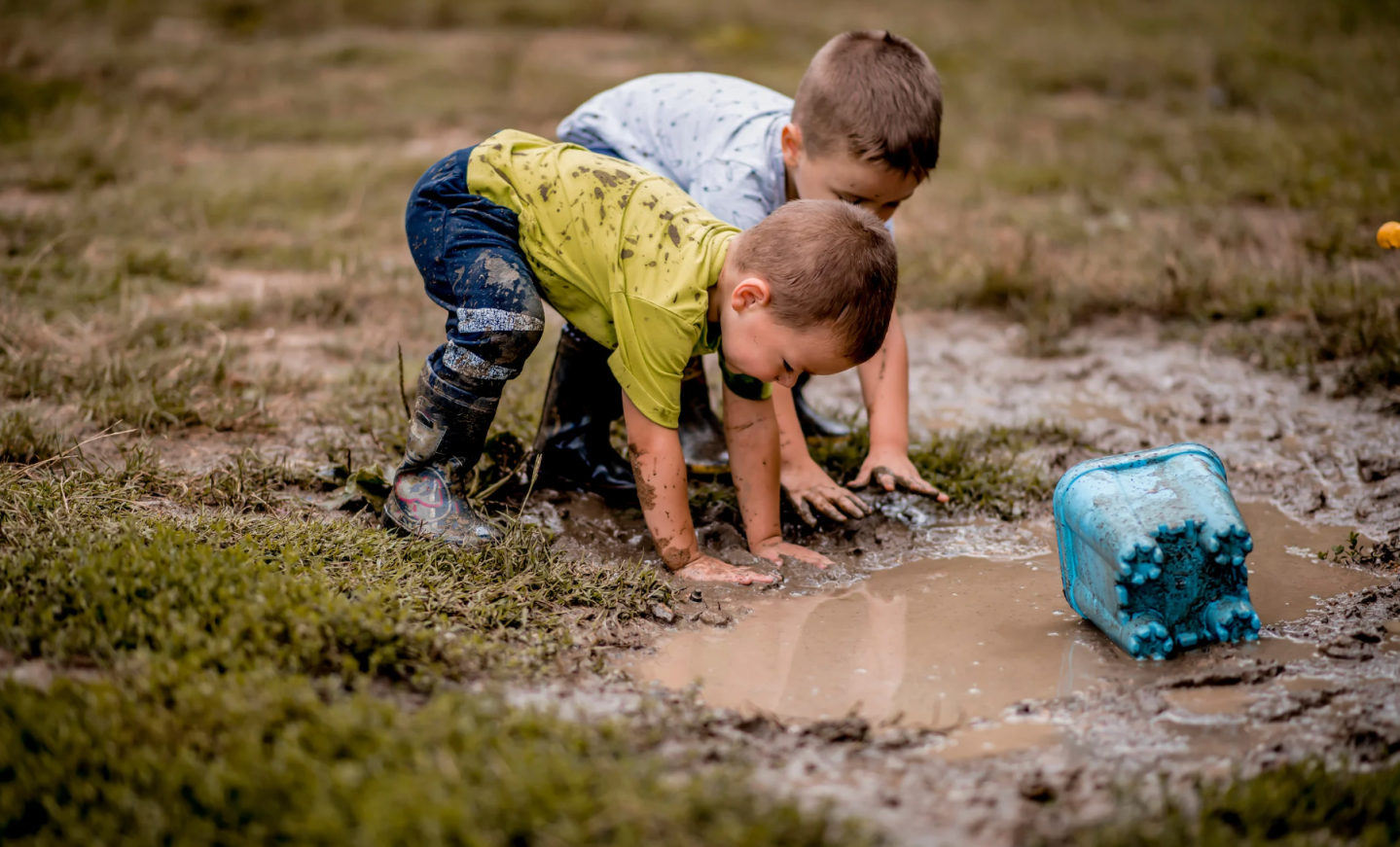
In Finland, researchers wanted to test a simple idea: what happens to kids’ health if you swap out the pavement, gravel, and plastic in their daycare yards for actual nature?
So, they dug up segments of forest floor and moved them into urban daycare centers. They rolled out grass. They added planter boxes where kids could grow and tend crops, and peat blocks for climbing and digging. Then they waited and ran blood tests.
The results, published in the journal Science Advances and coordinated by the Natural Resources Institute Finland, were striking enough to surprise the scientists themselves.
The study
The study tracked 75 children between the ages of three and five across 10 daycare centers in the cities of Lahti and Tampere. Some daycares kept their standard urban yards of concrete and gravel. Some took kids on regular nature outings. Four had their yards transformed with forest undergrowth and greenery. Researchers analyzed the children’s skin and gut bacteria, took blood samples, and monitored their immune markers.
Within just 28 days, the kids playing in the greened-up yards showed measurable changes. They had more diverse skin microbiota, increased levels of regulatory T cells (the cells that help prevent the immune system from attacking the body itself), higher plasma TGF-β1 levels, and a shift in immune markers associated with better regulation.

In other words, a month of playing in dirt and forest litter made their immune systems function better.
We’re meant to be in nature
This supports something called the “biodiversity hypothesis,” the idea that growing up surrounded by a rich variety of microbes essentially trains the immune system to behave properly. The theory suggests that the modern combination of high hygiene, urban living, and minimal contact with nature leaves the immune system under-educated, which may help explain the rising rates of allergies, asthma, type 1 diabetes, and other immune-related conditions in developed countries.
“The results of this study support the biodiversity hypothesis and the concept that low biodiversity in the modern living environment may lead to an un-educated immune system,” the study authors wrote.
Improving heal and wellness, naturally
Marja Roslund, a scientist at the Natural Resources Institute Finland whose thesis the study was part of, framed it in practical terms: “Immune diseases are expensive,” she said. “Even a small reduction in the burden of these diseases is good for national health and the economy.”
The findings have prompted Finland to put real money behind the idea. According to The Guardian, 43 daycare centers across the country have received roughly $966,000 to rewild their surroundings, replacing asphalt, plastic, and rubber with trees, flowers, sandpits, rocks, and grass.
One of those is the Poutapilvi-Puimuri daycare, currently being remodeled to bring more nature into the children’s play space. “We’re moving the action from inside to outside,” said director Marjo Välimäki-Saari. “We want to show the children nature, so they learn about it.”
The idea is catching on beyond Finland’s borders too. Visitors from Iceland, Denmark, and Norway have toured the Finnish centers and left wanting to build something similar back home.
It turns out the thing many parents instinctively worry about, kids getting dirty, might be one of the better things for them. The mud was never the problem. In a lot of ways, it was the point.