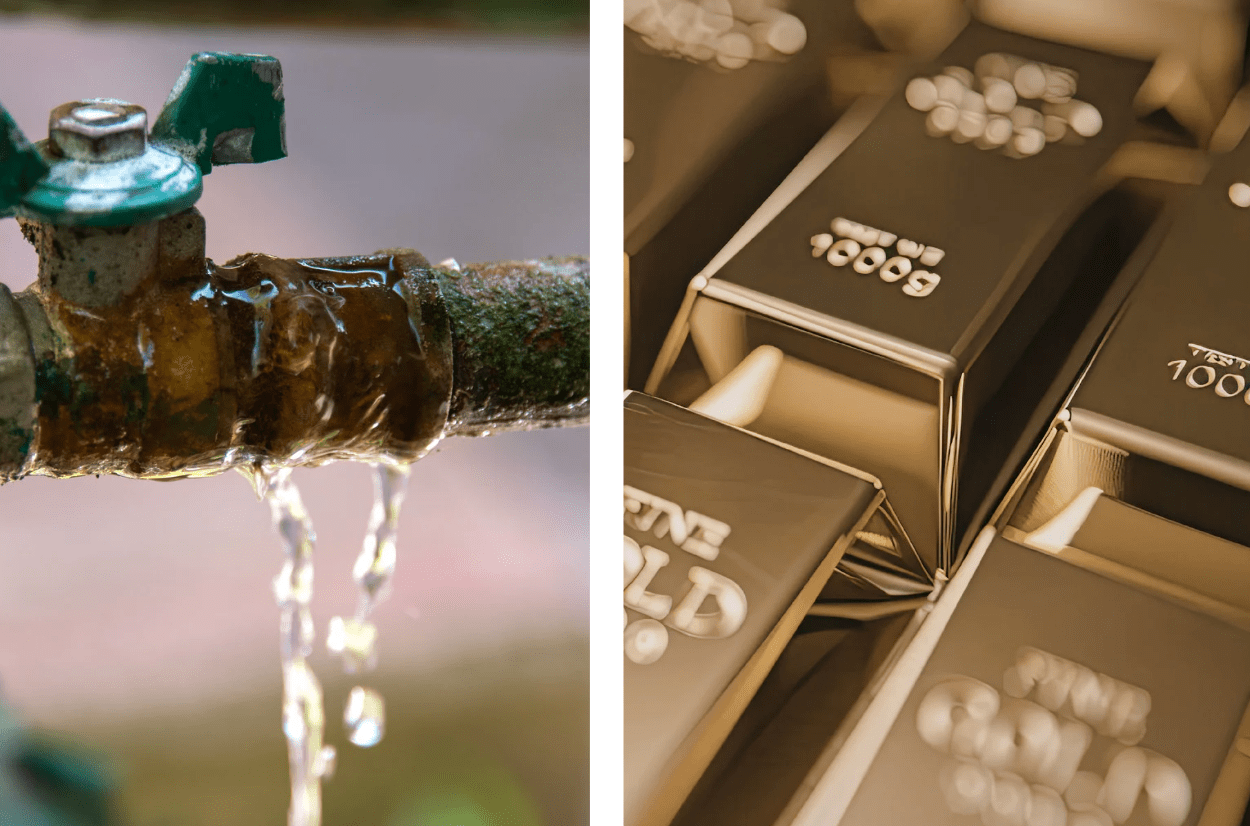
When living in a community, people are expected to chip in to improve it. This is typically done through taxes or donation checks—or sometimes through anonymous gifts. In Osaka, Japan, however, an anonymous donor sent 46 pounds of solid gold to help fix the water system.
In a press conference, Mayor Hideyuki Yokoyama shared that a mystery donor sent his office gold bars worth a total of $3.6 million. Why? The donor wanted their donation to fund the repair and replacement of the aging water pipes in Osaka.
“It’s a staggering amount and I was speechless,” said Yokoyama. “Tackling aging water pipes requires a huge investment, and I cannot thank enough for the donation.”
Osaka is home to more than three million people and is the third-largest city in Japan. While it’s bustling, it’s also an aging city. Its water system has had more than 90 reported cases of leaking pipes beneath its streets. As a major commercial hub, tourist destination, and home to so many residents, the donor was motivated to make such a large gold donation. Reportedly, the same donor had previously donated 500,000 yen to the municipal waterworks.
Aging public water pipe systems aren’t just an issue in Japan, but also in the United States. With much of the country’s piping installed 50 or more years ago, the system is deteriorating. This has led not only to water leaks, but to contamination within the pipes as well.
The mayor and the Osaka City Waterworks Bureau intend to use the gift in accordance with the donor’s intentions, while also respecting their wish to remain anonymous.
Other bizarre anonymous donations
Osaka’s golden donation isn’t the first odd or eccentric mystery donor case—and likely won’t be the last.
In 2009, a mystery donor approached 14 colleges throughout the U.S. and donated a total of $81.5 million. Each college received the same note and instructions: don’t try to figure out the identity of the donor, and use the money for financial aid for women and minority students.
In 2021, a package sent to City College of New York contained $180,000 in cash. Delivered to the physics department, it sat unopened for more than a year. The donor remained a mystery, but a note inside said they had enjoyed a “long, productive, immensely rewarding to me, scientific career.” The money was ultimately used to fund undergraduate scholarships.
In 2025, a charity bucket at a Salvation Army location in Vermont contained a gold coin wrapped in a dollar bill. The coin was worth $4,100.
These stories, along with the Osaka gold donation, show that there are people out there who want to give back to their communities without needing credit or praise.