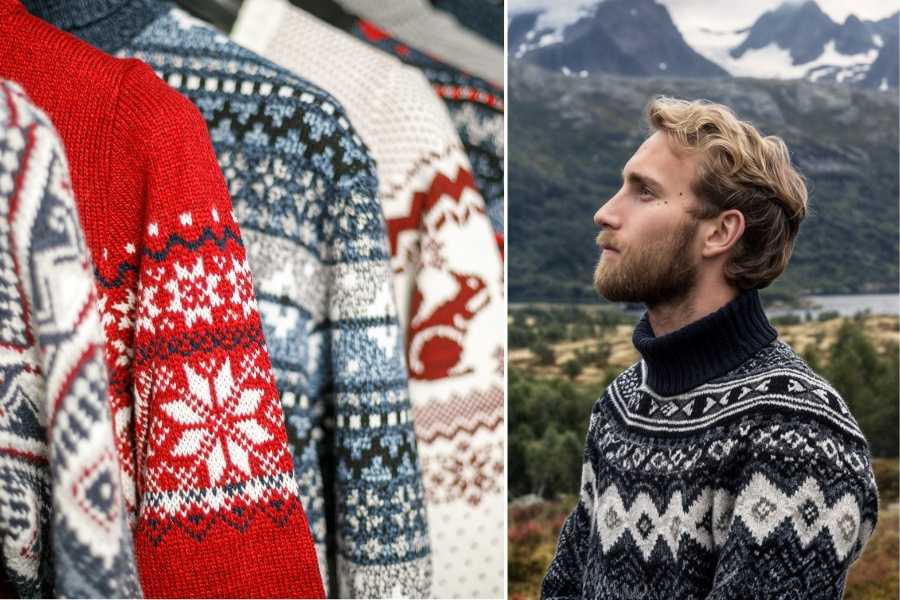
Norway is known for the distinct folk art designs of its knitted sweaters, with geometric snowflakes and nature motifs, but did you know that the reason they look the way they do isn’t purely aesthetic?
The clothing expert behind The Iron Snail clothing brand shares all kinds of fascinating facts about textiles on the company’s social media site, and his video about Norwegian sweaters is particularly fascinating. Anyone who has owned a traditional, authentic Norwegian sweater knows that they are warm. Not like normal sweater warm, but warmer than a full-on coat warm. But why?
Here’s the secret behind the warmth
As the video explains, Norwegians perfected the art of stranded knitting to create a sweater that’s warmer than a fur coat or a wool coat, and without all the bulk. Instead of knitting with one strand of yarn, this method uses two strands, essentially creating a double layer of wool that insulates heat incredibly well. The designs serve as a way to anchor the two different yarn strands together, in addition to looking beautiful. Being able to wear a sweater outside instead of a hefty coat makes it easier to do work in the cold, snowy mountains.
And people had a lot to say about it
With over seven million views and over 2,000 comments, it’s clear people are intrigued:
“I’m a big fan of stranded colorwork, but I had only thought of the visuals. It hadn’t occurred to me that all the floats would in fact make wearables warmer! And one thing about it is that the strands would add an insulation layer of yarn, and a second layer with the air between the floats and the knitting (which if you’ve got a comforter or duvet, you know how warm that air can keep you), but it takes way less yarn than a full knit layer, so it definitely saves on material!”
“I get it from a materials perspective. It’s an insulating layer with its own bulit-in mesh liner. More negative space near the skin, better breathability/moisture control and less heat loss.”
“I always figured that elaborate patterns like this serve a purpose beyond looks, most likely ease of making or strengthening the knitting, but it’s nice to get confirmation.”
“I was lucky enough to receive a Dale sweater as a gift when I was 15. At the time I didn’t realize the story behind these sweaters, and I had no idea how expensive they are. Believe me when I say that these things truly last a lifetime – 20 years later, I still have and use the same sweater, and it’s still in almost perfect condition. It’s one of the only cherished items in my wardrobe and I also think it’s one of the ugliest things I own.”
“I thrifted a Norway sweater years ago without really fully knowing how awesome they were (I knit and liked it for that) it is literally the BEST thing I have ever thrifted by a long shot. So warm! So comfy! I also get a lot of compliments on it and people recognize the knit style which makes my fibre art loving heart happy.”
“AND as you wear it, if the sweater is 100% wool, the yarns will felt together a little bit, making those floats on the inside super sturdy and even less likely to catch your fingers.”
So what does one of these actually cost?
Norwegian sweaters are functional works of art, and the price reflects that fact. A traditional Norwegian sweater will easily run in the $200–$300 range. The official sweater of the Norwegian Olympic team, made by Dale of Norway (a company that has been making sweaters for nearly 150 years), costs $350.
But this style of sweater isn’t only found in Norway. Often referred to as Nordic sweaters, they can be found all over Scandinavia and Iceland. They may set you back some dough, but they’re worth the investment if you’re looking for a high-quality, heirloom textile that keeps you as warm as a wool coat without the bulk.
You can follow The Iron Snail on YouTube for more cool clothing history and facts.
This article originally appeared in January. It has been updated.