
You get tickets to visit the local natural history museum, and you’re psyched to spend an afternoon learning about ancient artwork, the evolution of local species, and seeing lots and lots of dinosaur bones. However, after 30 minutes, you start to yawn, look for a bench to sit on, and realize you’re not exactly stoked to walk through the next long corridor to see the buffalo exhibit.
What happened? Are you really just fooling yourself when you say you’re into an afternoon of culture? No, not at all. The reason you got exhausted so quickly was first identified 110 years ago by Benjamin Ives Gilman, secretary of the Museum of Fine Arts, Boston, who called it “museum fatigue,” and it’s a real phenomenon. Gilman outlined it in a paper for The Scientific Monthly.
What is “museum fatigue”?
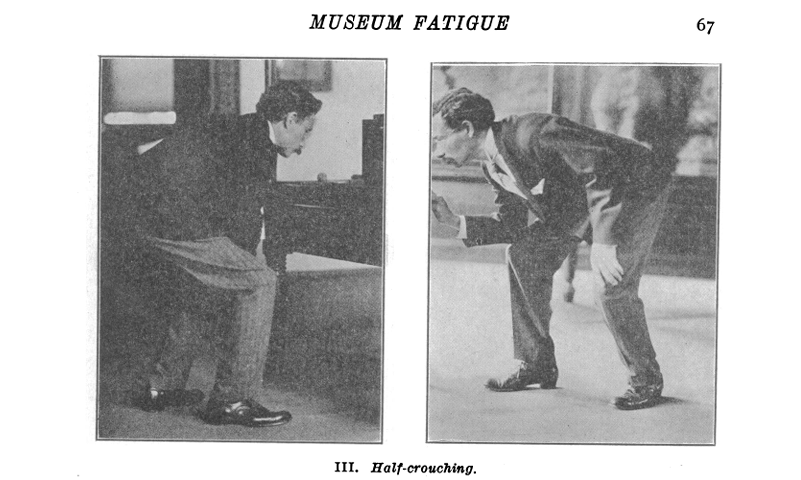
“‘Museum fatigue’ is an admitted evil, hitherto tacitly accepted as admitting only relief. May not a study of how it comes about suggest some means of prevention?” Gilman wrote. He introduced the topic in The Scientific Monthly through a series of photographs showing how people had to stand in uncomfortable positions to study artwork.
Why a trip to the museum is so exhausting
Even though a stroll through an art museum seems like a great way to relax on a weekend, it’s actually a physically and mentally exhausting experience.
1. Displays aren’t at eye level
Since Gilman’s original piece, curators have worked to place more exhibits at eye level for the average person. However, museums have become increasingly immersive, and patrons are often required to crane their necks upward to see bones suspended from the ceiling or lean in close to ancient hieroglyphs to see the details. This can create physical strain throughout the body.

2. Mental fatigue sets in quickly
A museum can be mentally draining because your brain, which uses up to 20% of the body’s metabolic energy, is busy soaking in new information. After 30 minutes, the brain can enter cognitive overload, where taking in new information becomes increasingly difficult. It’s like sitting through a college lecture where, toward the end, you just can’t retain any new information.
3. Repetition
If you walk into a room of art from a particular era, you may see the same themes repeated over and over again, whether it’s another depiction of war or another ancient statue of a woman carrying a large pot of water. After a while, it becomes harder to pay attention.

4. Lighting
Museums are often dimly lit to help create a relaxing atmosphere and preserve the artwork. However, this lack of exposure to natural light can make people feel sleepy.
5. Hard flooring
Museum floors are designed to handle thousands of people walking through every day, so they are often made of marble, polished concrete, or dense hardwood. There is little to no shock absorption on these surfaces, so throughout your visit, your body receives countless micro-jolts through your skeletal system. After half an hour or so, this can turn walking through a cavernous museum into a slog.
Next time you plan to visit a museum, think of it as an intense mental and physical experience and plan your day accordingly. Understand that you may need to take a few breaks or split the experience into multiple visits to get the most out of it. Also, wear comfy shoes.