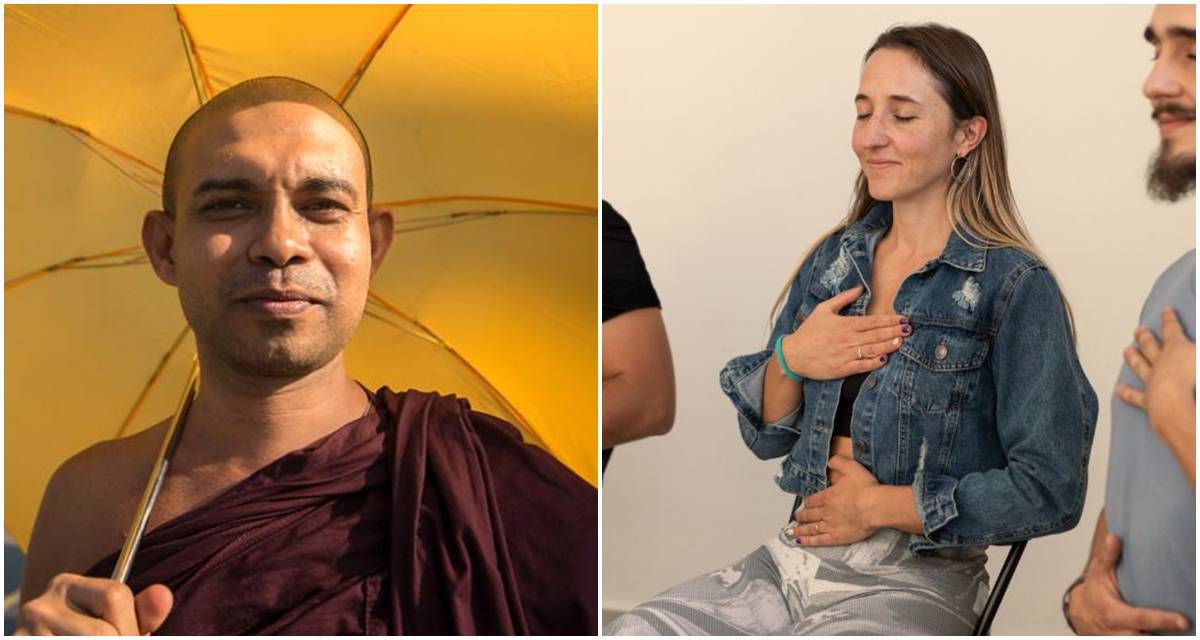
Many believe that you have to put in a lot of time and effort to get real benefits from a mindfulness practice. People who practice Transcendental Meditation do so for 40 minutes a day. Vipassana meditation practitioners regularly do around two hours a day. Some Tibetan Buddhist practitioners go on meditation retreats lasting three years, three months, and three days.
Psychologist Eli Susman, author of Micropractice, spent a month on a meditation retreat at Plum Village, the mindfulness practice center founded by popular Buddhist monk Thich Nhat Hanh. There, he was taken aback to find that the seated meditations lasted only 30 minutes. So, Susman went to his room and meditated for three hours to prove himself.
“Later, I went up to a monk and probably said, ‘I just meditated for 3 hours.’ Almost like I was expecting some shiny badge for my efforts,” he recalled on the Time Billionaires podcast. “And his eyes widened. He said, ‘Three hours?’ And then he smiled, and he said something I’ll never forget: ‘How about three breaths? That’s all you need to tune into the present moment.’”
Humbled by the monk’s comments, Susman began to wonder if he had this mindfulness thing all wrong. Challenging assumptions about the benefits of mindfulness practices based on the length and duration of spiritual practice became a throughline in his research at Harvard and UC Berkeley. This research led him to discover a research-backed 20-second practice that improved self-compassion, reduced stress, and boosted emotional well-being.
The 20-second self-compassion practice
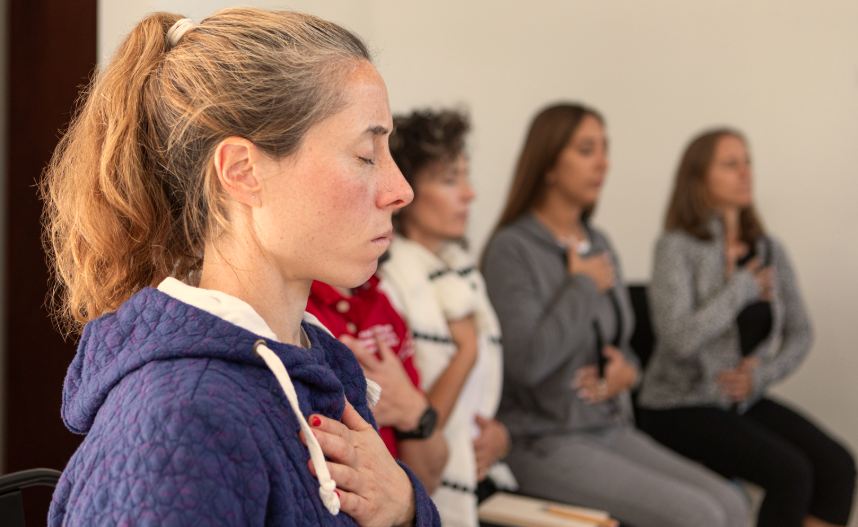
The 20-second practice is simple:
- Place one hand over your heart and another on your abdomen.
- Close your eyes and think about something that’s been bothering you or making you feel that you’re not enough.
- Notice the feelings that arise in your body.
- Ask yourself, “How can I be a friend to myself in this moment?”
- Open your eyes.
“The main finding was that before a stressful situation, doing 20 seconds of this gesture can lower the physiological stress response,” Aljoscha Dreisoerner, a lecturer at the University of Graz Institute of Psychology in Austria, told The Washington Post.
“Touch is an expression of care,” Kristin Neff, founder and president of the Self-Compassion Institute, told The Washington Post. “You start with the body, and it’s easier for the mind to say: ‘I’m here for you. I care about you.’”
Repetition is the key to getting the full benefits of the practice
The key to reaping the benefits of this fast, simple practice is consistency. A study by Susman and his team found that those who performed the self-compassion exercise daily saw increased levels of self-compassion and lower levels of depression and anxiety compared to those who didn’t do the practice regularly.
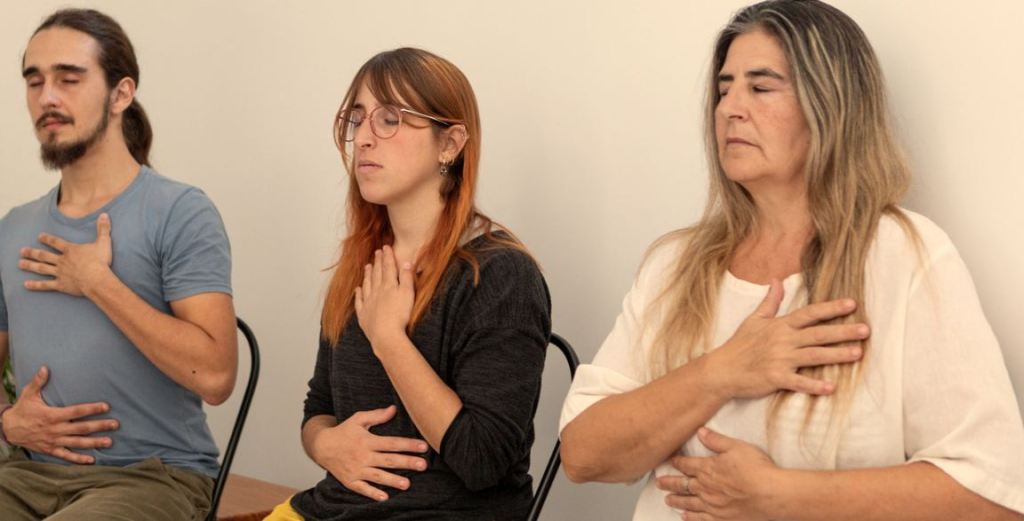
The self-compassion study’s results led Sussman to consider how quick, easy mindfulness exercises, known as micropractices, can foster big changes. “What if this points to something bigger?” Susman asked, according to Mind and Life, “like an entirely new category of practice—something short enough to weave into daily life, yet powerful enough to change it?”
The great thing about a micropractice like the self-compassion exercise is that you can do it anywhere. They’re a great way to weave mindfulness into your day and enjoy benefits that compound over days, weeks, and months. Susman warns that the micropractice is no substitute for getting mental health help from a professional. “Just as brushing your teeth or flossing doesn’t replace the dentist,” he says, “micropractice is not a replacement for professional mental health care when you need it.”