There’s a nationwide running joke that the food we get from fast-food places isn’t actually food. That doesn’t stop Americans from consuming it. But we do so assuming that this food, which can fossilize in the back of a minivan, is still edible. One man decided to see whether fast food contains enough nutrients to grow vegetables if it’s turned into soil.
Ted Nivison is not a scientist, and does not play one on television. For this experiment, though, he dons a metaphorical lab coat and gloves. After spending time growing his own vegetables, he wanted to see what would happen if he changed up the soil. But instead of adding something practical, like Miracle-Gro, he decided to get innovative.
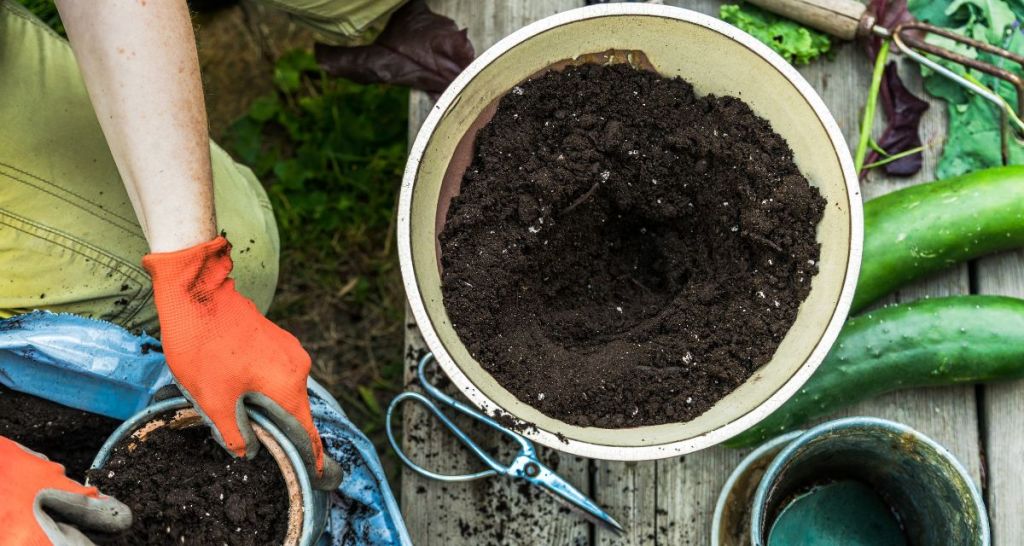
Photo credit: Canva
Nivison set his sights on making his own soil from fast-food scraps. In a YouTube video, he’s seen placing a large box on his kitchen counter.
“This is a Lomi. This is a device that lets you turn food scraps into usable soil, or at least what the company calls ‘Lomi Earth,’” he explains. “Obviously, by food scraps, they mean things like vegetables and fruit, but this device can turn any food scraps into soil. So what would happen if I turned fast food into soil? Could I grow a plant from that?”
Surprisingly, the answer to his question was yes. The curious man went to the nearest McDonald’s and dumped two double cheeseburgers, two large fries, 20 chicken nuggets, and a pack of apple slices into the soil-making device. The small machine takes up to 20 hours to turn food into dirt, so Nivison ran some errands before returning to check on the progress.
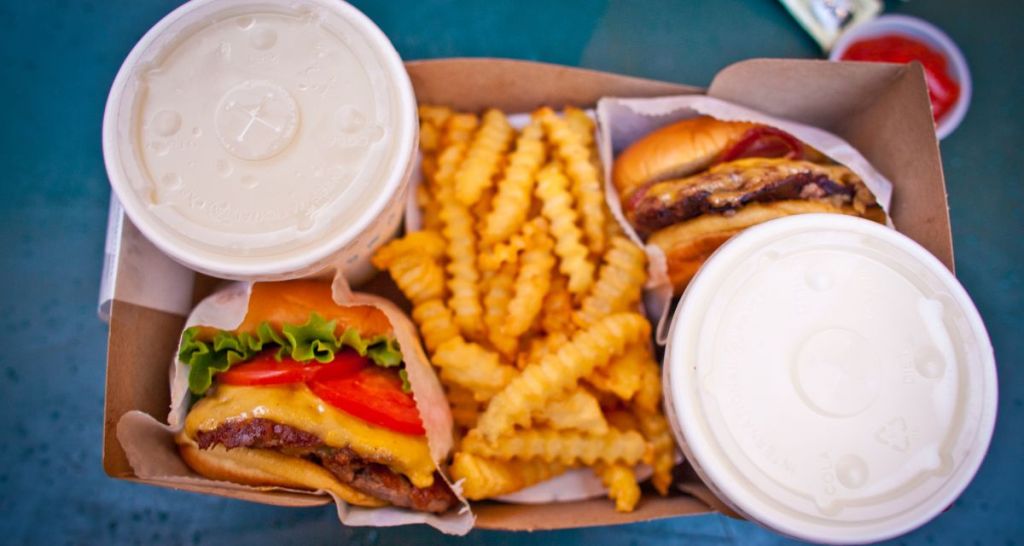
Photo credit: Canva
“I don’t know what I expected to happen here,” he says before it cuts to a clip of him returning home. “I’ve left the Lomi going and my entire apartment smells like McDonald’s.”
When the video cuts back to the present, Nivison reveals, “I had to open up the windows in my apartment just to filter out the air that I was smelling, and I gotta say, the resulting dirt is a little bit creepy.”
He opens the lid to reveal a bright, reddish-brown, dry, clumpy soil that he says smells like Cheetos. The amateur scientist also describes the soil as greasy. This doesn’t dissuade him, though he muses that a plant might taste the soil and say, “I guess I’m not going to live.”
Unfortunately, the McDonald’s haul didn’t produce enough soil to fill a pot, so he decided to mix things up by creating soil from Taco Bell and KFC, too.
Photo credit: Canva
The soil from Taco Bell looks closest to actual potting soil, which he attributes to the food having more vegetables. But the soil from KFC was so incredibly greasy that you could hear it as he moved it around.
To conduct the experiment, he set up a control group, a nod to his high school science education. Then he split the dirt into multiple clay pots with varying levels of traditional potting soil mixed in. One pot contained soil created solely from the fast-food concoction.
It turns out the more Lomi dirt used, the harder the soil became when it was watered. Nivison speculates that this is due to the grease content:
“With 100% Lomi dirt, it looks like the surface of Mars. And I don’t even think the guy in The Martian would’ve been able to grow potatoes from this. This is worse than Mars dirt. It is gross. When I watered it, none of the water would seep into the dirt. It just sat on top, turning into something like a swamp.”
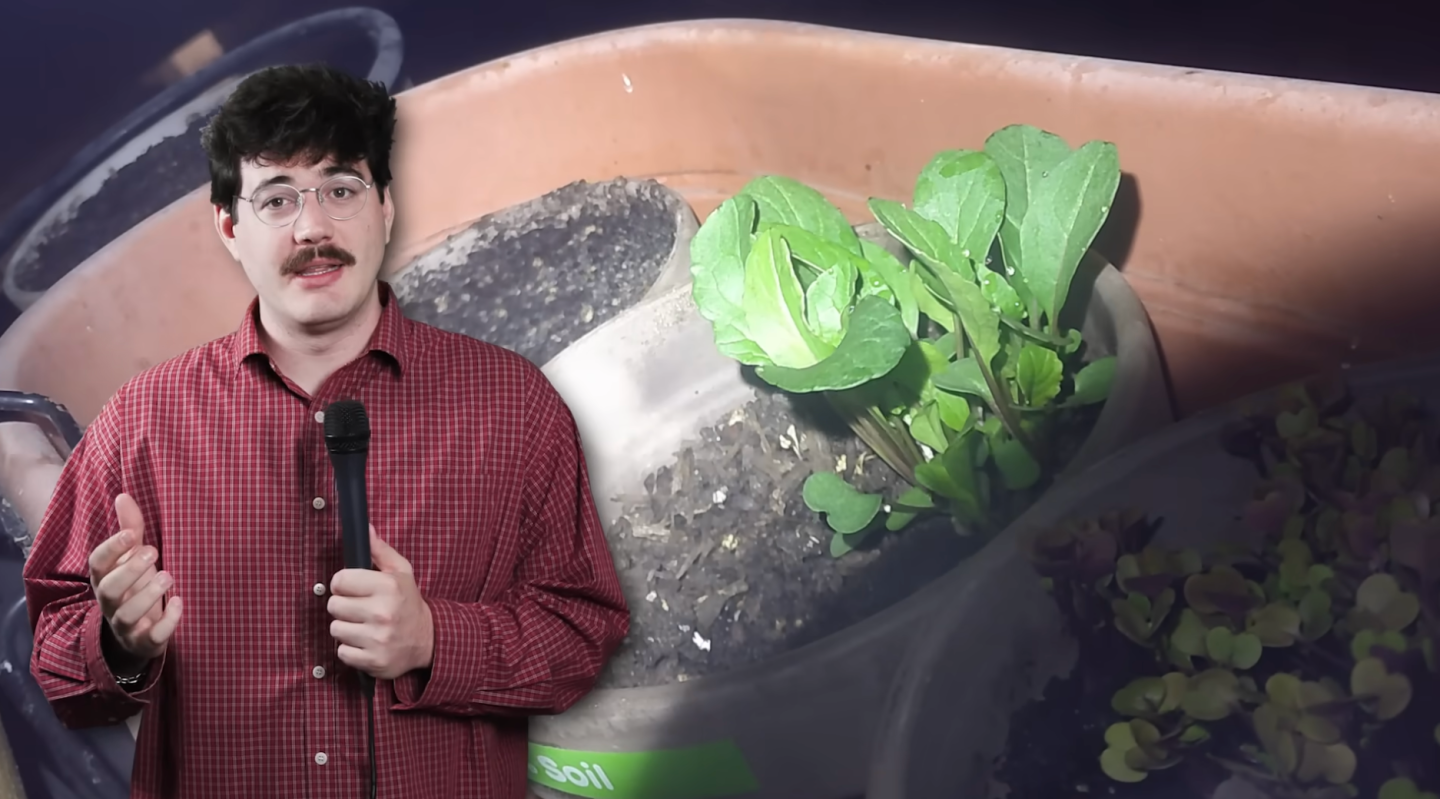
After seeing the progress of the plant grown in 10% fast-food dirt, he decided to increase the amount, making sure not to exceed 50%. Seeds planted in 50% to 100% fast-food dirt molded, but so did the seeds planted in 15% Lomi dirt. Unexpectedly, the arugula planted in 20% fast-food dirt sprouted, though it eventually stopped growing.
If you thought the control plant grew the best, you’d be just as shocked as Nivison. The control plant never got beyond the small initial sprouts. It was the plant soaking up that 10% mixture of greasy fast food that outgrew them all. All that experimenting made for a fairly hungry scientist, so he made an arugula salad.