Light pollution isn’t just bad for stargazing: Why some towns are embracing darkness

There are currently 38 official Dark Sky Communities around the world. Here’s why they matter.

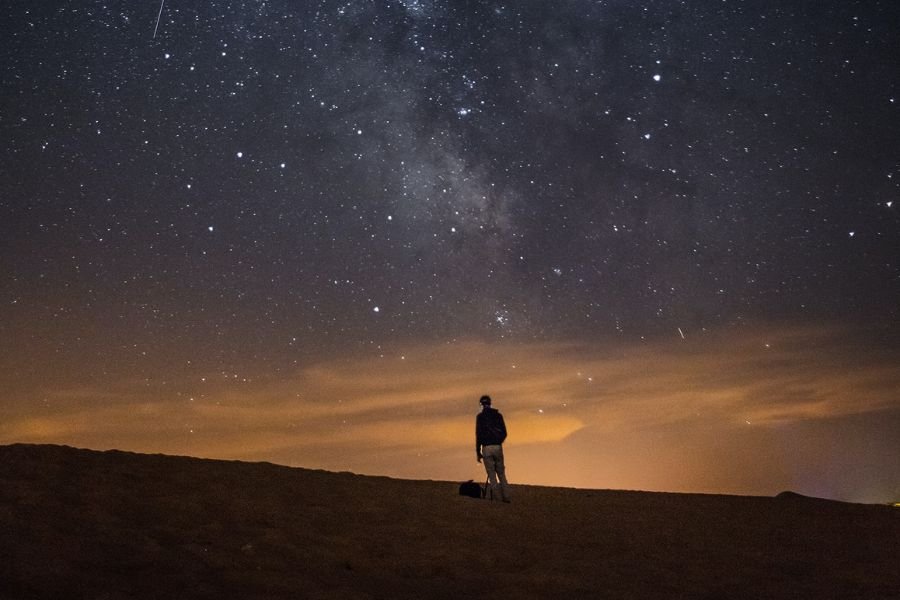
nigh sky, stars
Photo credit: Photo by Khamkéo Vilaysing on UnsplashDark skies are good for people and the planet.

In the 17th century, the wealthy people of Scotland would escape to the small town of Moffat for its healing sulfurous springs. Today, people appreciate Moffat for another kind of healing escape…into darkness.

That’s right. The healing power of the dark of night is a thing, not only for people but for the planet.

If you’ve ever had the bounty of sitting out under the stars far away from city lights, you know how magical it can be to gaze at the night sky, but there are benefits to natural darkness that go far beyond enjoying the aesthetic beauty of space. That’s the premise behind Dark Sky Communities.

Moffat became an official Dark Sky Community in 2016 after it invested in changing the town’s lighting to prevent light pollution. Now it’s an ideal place for stargazing, with a community observatory housing a state-of-the-art telescope and townspeople dedicated to preserving the night sky. Moffat was one of the first Dark Sky Communities in Europe and is one of just 38 around the world as of January 2023.

What exactly is a Dark Sky Community and why does it matter?


The International Dark-Sky Association (IDA) began designating places around the world, from natural environments to cities and towns, as Dark Sky Places in 2001 as a way of recognizing “excellent stewardship of the night sky.” Dark Sky Places preserve and protect the dark through responsible lighting policies and public education about the importance of reducing light pollution. A Dark Sky Community is a legally organized city or town that adopts outdoor lighting ordinances that reduce light pollution and undertakes efforts to educate residents about the importance of dark skies.

Darkness matters—a lot. Not only does light pollution make it harder to see the beauty of the night sky, but it also has a negative effect on wildlife and ecosystems. Many animals, from insects to migratory birds to nocturnal animals rely on the natural rhythm of sunlight and darkness, and artificial light can disrupt their natural behaviors, sometimes to deadly effect. Light pollution also has a detrimental impact on plants, disrupting the circadian rhythm of certain pollinators and leading to reduced plant-pollinator interactions.

Too much artificial light at night can impact human health as well, as light messes with our own circadian rhythms. It’s also just a waste of energy when lights are left on unnecessarily. The IDA estimates that around 30% of outdoor lighting is wasted, just in the U.S. alone. The Artificial Light at Night (ALAN) Research Literature Database provides a wealth of scientific literature on all aspects of artificial light at night research.

But as much as science tells us about the importance of reducing light pollution, there’s also what the IDA refers to as our “night sky heritage.”
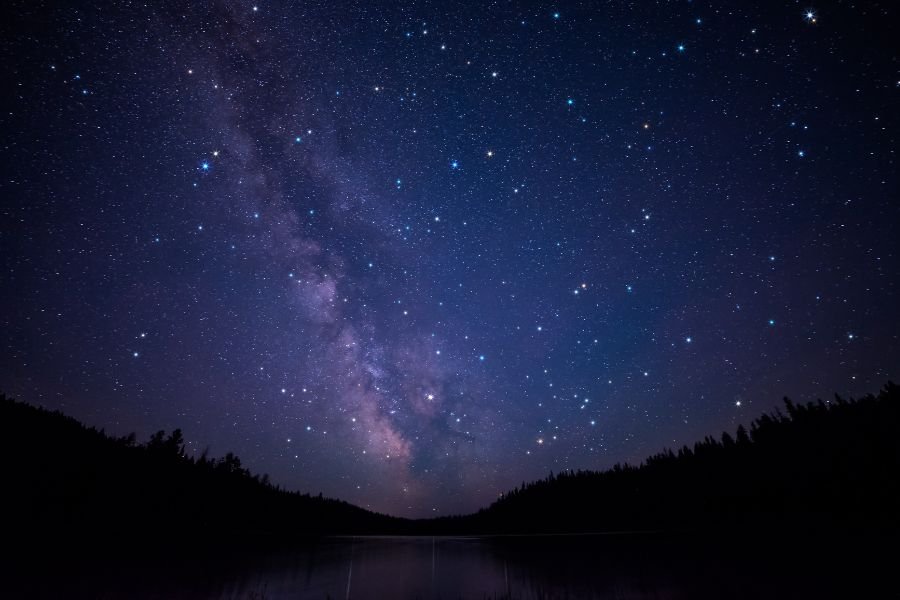
milky way, stars, night sky
The night sky has inspired scientists and poets alike throughout human history. Canva

The IDA website explains:

“Until recently, for all of human history, our ancestors experienced a sky brimming with stars—a night sky that inspired science, religion, philosophy, art and literature, including some of Shakespeare’s most famous sonnets.

The natural night sky is our common and universal heritage, yet it’s rapidly becoming unknown to the newest generations.

Van Gogh painted his famous “Starry Night” in Saint Rémy, France, in 1889. Now, the Milky Way can no longer be seen from there. If he were alive today, would he still be inspired to paint “Starry Night”?

Experiencing the night sky provides perspective, inspiration, and leads us to reflect on our humanity and place in the universe. The history of scientific discovery and even human curiosity itself is indebted to the natural night sky.

Without the natural night sky we could not have:

  • Navigated the globe
  • Walked on the Moon
  • Learned of our expanding universe
  • Discovered that humans are made of stardust”

Our relationship with natural darkness is both practical and poetic, but in a world full of lights and screens, most of us probably don’t it as much thought or care as we should. That’s the whole purpose of naming and certifying Dark Sky Places.

The IDA shares that as of January 2023, there are 201 certified Dark Sky Places in the world, including 115 Parks, 38 Communities, 20 Reserves, 16 Sanctuaries, 6 Urban Night Sky Places, and 6 Dark Sky Friendly Developments of Distinction.

You can find the list of Dark Sky Communities here and an interactive map of all official Dark Sky Places here.

Let’s all do our part to turn off lights and limit light pollution for the good of people and our planet.


  • Why do breakups hurt so much? Researcher put people in MRI scanners to find out. Her answer explains everything.
    Photo credit: CanvaA neurologist looks at brain scans.
    ,

    Why do breakups hurt so much? Researcher put people in MRI scanners to find out. Her answer explains everything.

    “Romantic love is an addiction — a perfectly wonderful addiction when it’s going well, and a perfectly horrible addiction when it’s going badly.”

    Helen Fisher spent decades asking a question most scientists avoided: what is love, exactly, and what is it doing to your brain? By the time she died in August 2024 at 79, she had an answer, and it turns out heartbreak makes a lot more sense once you understand it.

    Fisher was a biological anthropologist and senior research fellow at the Kinsey Institute, best known for pioneering the use of brain imaging to study romantic love. She noted early in her research that love appears in every human society ever studied, and across 170 cultures, there is no example of a society without it. What varies is the expression. What doesn’t vary is the experience.

    To understand what love actually does to the brain, Fisher and her colleagues scanned 17 people who described themselves as newly and madly in love. When shown photographs of their partners, a specific region deep at the base of the brain lit up: the ventral tegmental area, or VTA. This is the area that produces dopamine, the neurotransmitter associated with wanting, motivation, focus, and craving. It is, Fisher noted, the same region that activates during the rush from cocaine.

    Romantic love, she concluded, is not an emotion. It is a drive — a chemical push toward another person that functions like an addiction when it’s working, and like withdrawal when it isn’t.

    Then she scanned the people who had been dumped.

    All 15 showed activity in the same VTA. The drive, the craving, the wanting was all still there. But two additional regions also lit up. One was associated with calculating gains and losses, the part of the brain that runs obsessive post-mortems, asking what went wrong and whether it could be fixed. The other was associated with deep attachment. In the recently published obituary in The Telegraph, Fisher’s research was described as showing activity also in areas linked to physical pain, risk-taking, obsessive-compulsive behavior, and anger. All of this, running simultaneously, in someone who just wants to stop thinking about a person they no longer have.

    “Romantic love is an addiction,” Fisher said. “A perfectly wonderful addiction when it’s going well, and a perfectly horrible addiction when it’s going badly.”

    One person who found Fisher’s framing genuinely useful was Dessa, a Minneapolis-based rapper. She had tried and failed to get over an ex-boyfriend and was frustrated by her own inability to move on despite wanting to. “It really bothered me that, no matter how much effort I tried to expend in trying to solve this problem, I was stuck,” she told NPR. Fisher’s explanation of the VTA gave her a new angle. “That you could objectively measure and observe ‘love,’ that had never occurred to me before.”

    Dessa went on to try neurofeedback, a technique in which participants learn to consciously alter their own brain wave activity. A study published in Neuron found that participants trained to modulate their VTA activity were eventually able to do so without any external stimulus, effectively learning to turn down the volume on the craving.

    It isn’t a cure. Fisher was careful about what she claimed. But understanding that the pain of heartbreak is neurologically structured, that it has a physical location in the brain and follows identifiable patterns, at least makes it feel less like a personal failing and more like a process that, with time, tends to resolve.

    Fisher finished the manuscript for her final book five days before she died.

  • Expert shares the ‘5 communication types’ and how understanding them can make relationships easier
    Photo credit: CanvaA group of people have a conversation.

    Having a healthy communication style isn’t just about how you speak. It’s how you listen and perceive the other person or people to whom you’re talking. Knowing the strengths (and sometimes more importantly, the weaknesses) they might bring to a conversation can often help produce a better outcome.

    Licensed therapist Jason VanRuler developed an efficient quiz to help people determine their communication style. After answering a short series of questions, an individual can find out if they lean toward the “peacemaker, the advocate, the harbor, the thinker, or the spark.” Of course, most of us don’t fit neatly into one box or another. To account for that, each archetype (to borrow Carl Jung’s term) is given a number, so one can see how they relate to each style.

    Reading the room

    In an Instagram Reel posted by VanRuler, he explains how essential mere perception can be. “You may think great communication is about saying the right thing, but it’s actually about knowing how to read the room. When something doesn’t land, we often blame the other person for not understanding, instead of asking how our message may not have connected with them. Different people process information differently, and ignoring that creates disconnect.”

    How to reframe

    There are ways in which he says a person can reframe. “What to Do About It: Shift your focus from ‘Why didn’t they get it?’ to ‘How can I say this in a way that connects with them?’ Pay attention to how people respond and adjust your approach accordingly. Great communicators don’t just express well, they adapt well.”

    In the clip, he describes a time when he was giving a conference to a room full of accountants. “So I got up and I talked a lot about feelings, and I went really deep and got really emotional. And it was really, really quiet. And I left thinking, ‘what was wrong with the audience? Why didn’t they resonate with what I just said?’ But what I didn’t really think about is, what is it about what I just said that didn’t resonate with them?”

    Learning your “style” can help facilitate better relationships through stronger communication. On VanRuler’s website, he explains who he’s attempting to help, writing, “Whether it’s leadership coaching, relationship building, couples therapy, addiction, trauma, or something different, my goal is the same: to speak truth and grace into every life I work with.”

    The 5 types

    In a press piece for his new book Discovering Your Communication Type: The 5 Paths to Deeper Connections and Stronger Relationships, VanRuler gives a quick explanation of the strengths of each type. (He refers to what we might call “weaknesses” as “opportunity.” The idea being to ask one’s self, “what opportunity do I have to strengthen my communication style?’

    Peacemaker

    “Strength: Creates peace and eases tension in difficult or trying moments.
    Opportunity: Can avoid necessary conflict, which delays resolution and repair.”

    Advocate

    “Strength: Focused on justice, fairness, and upholding morals; advocates for their beliefs.
    Opportunity: Can present as intense or overpowering, or advocate when it’s not needed.”

    Thinker

    “Strength: Focused on logic, thoughts, facts, and getting things correct.
    Opportunity: Can miss cues for feelings and appear distant or emotionally unavailable.”

    Harbor

    “Strength: Creates a safe space for others to go deep and talk about feelings and emotions.
    Opportunity: May struggle to express their own needs, communicate boundaries, or be the focal point of a conversation.”

    Spark

    “Strength: Brings lots of energy, creativity, and momentum to conversations.
    Opportunity: Can struggle with consistency and initiating difficult conversations.”

    He makes it clear that understanding these “paths” is a great start to elevating a relationship, saying, “Each path speaks a different ‘language,’ and the more fluent you become in other styles, the better you can bridge the gap between you and the people you care about.”

  • ‘Social prescribing’ has doctors writing scripts for nature walks and art classes. It’s working.
    Photo credit: Canva PhotosDoctors are doing more and more "social prescribing," trading medicine for walks, art, and nature.

    The loneliness epidemic has reached a critical mass, with the Surgeon General warning that social isolation can have dire health consequences. Tons of research backs it up: Being lonely can make us sick.

    For many years, patients have been screened for loneliness and offered only a few limited options: Therapy and medications that treat symptoms of loneliness like insomnia, depression, or heart problems.

    But recently, doctors have been taking a far more radical approach: What if they actually treated the loneliness itself?

    “Social prescribing” trend takes off

    Doctors cant befriend their patients, but more and more they’ve been leaning on a concept called “social prescribing.” It’s a way of treating the whole patient and not just the symptoms.

    How? By writing prescriptions for things like nature walks, art classes, book clubs, singing lessons, and more. All of these activities are shown to boost mental health, decrease loneliness, and create a domino effect of positive health outcomes.

    It’s not just loneliness that can be treated by social prescribing. Depression, anxiety, and chronic pain can all benefit from community-based, real-world activities.

    How social prescribing works

    A person dealing with loneliness might be asked to take part in a community class, volunteer, or even use a service that helps them make friends.

    Depression patients might be asked to spend more time in nature through a birdwatching group or nature-walk group They may also be enrolled in art classes.

    Doctors frequently tell people to exercise more, but social prescribing sees them direct chronic pain patients, for example, to specific group exercise classes.

    social prescribing, medicine, healthcare, wellness, mental health, physical health, wellbeing, nature, walking, community, friendship, psychology
    Prescriptions for art classes can really make a difference. Photo Credit: Canva Photos

    It can be even simpler than that, too. Someone who’s isolated because they’re a caretaker for a family member might be asked to simply go to a coffee shop a few times per week. A person who’s feeling down and disconnected due to remote work might get a social prescription for joining a group or social club. Someone who’s dealing with stress and anxiety related to finances might be assigned to meet with a debt management specialist.

    How it works from a logistical standpoint depends on the doctor and where you live. In the UK, social prescribing has officially been adopted by the NHS. Patients in need will be referred by their doctor to a “link worker” whose sole job is to connect them to the right community resource.

    In America, social prescribing is still in more of a fledgling state. Fortunately, though, more and more local pilot programs are popping up around the country to provide the same support. Experts believe that even in the United States’ heavily privatized model, it can still be effective.

    Social prescribing actually works

    Going for weekly nature walks to help depression and loneliness is a cute idea, but is it actually effective?

    A majority of research says Yes. One study found that patients who received a social prescription were less likely to visit their doctor for other consultations or go to the emergency room. Participants showed not only reductions in anxiety and depression, but major boosts to self-confidence, self-esteem, and overall wellbeing.

    Beyond what’s reflected in the numbers and studies, doctors who practice social prescribing say they’ve seen the impact it can have firsthand.

    Scientific American writes, “The most memorable gains from social prescribing come through in its before-and-after stories. Whether its patients sharing how social prescriptions have provided a ‘reason to wake up in the morning,’ or doctors sharing how it feels like ‘prescribing beauty in someone’s life,’ social prescribing just feels right.”

    The practice is not without its critics, though. Some researchers say that the positive gains from social prescribing only last as long as a healthcare worker is facilitating the activities, but fade away quickly when patients are left to their own devices. They argue that the root causes of loneliness, depression, and anxiety run far deeper in our cultures and require more precise intervention.

    Still, it’s hard to argue with the idea behind social prescribing. Therapy and medications have their place, but human beings have always needed community, connection, and time spent in nature. What’s most surprising about the trend is that it took us this long to give it a try.

  • A 21-year-old kept her symptoms secret out of embarrassment and it led to a life-changing diagnosis
    Photo credit: CanvaGirl in stomach pain and doctors performing surgery
    ,

    A 21-year-old kept her symptoms secret out of embarrassment and it led to a life-changing diagnosis

    “I think I would have gone a little longer without losing my bowel had I gone to the doctor earlier.”

    Alex Lyons is on a mission to make sure no one else suffers in silence. The 21-year-old from Armagh, Northern Ireland, spent months hiding a secret that she feared was too “gross” or “humiliating” to share with her friends and family. But as the BBC reported, that silence nearly cost her everything.

    @alex.lyonss

    What is a stoma? I hope I answered that clearly enough in this video! Thank you all for all of your questions I will answer all of them shortly!

    ♬ original sound – Alex Lyons

    The health costs of staying silent with IBD

    Lyons first noticed she was having frequent, urgent bowel movements and spotted blood in her stool. Instead of seeking help, she ignored the signs, hoping they would simply go away. Her hesitation was rooted in a deep sense of embarrassment and a desire to protect her family. Her twin brother, Joe, had recently undergone bowel removal surgery due to a chronic condition, and Alex didn’t want to put her parents through that trauma a second time.

    @alex.lyonss

    IM GOING HOME!! Thank you thank you thank you for all of the kindess and support you have all shown me I am beyond grateful! Wow! I love you all!

    ♬ original sound – Alex Lyons

    Unfortunately, the symptoms of inflammatory bowel disease (IBD) do not wait for a convenient time to be addressed. By the time Alex finally disclosed her struggle, her condition had progressed to a life-threatening level. She was diagnosed with ulcerative colitis, a form of IBD that causes chronic inflammation and ulcers in the lining of the colon. According to the Cleveland Clinic, these symptoms are often caused by an overactive immune response, and as seen in the case of Alex and her brother, genetic factors often play a significant role.

    The inflammation was so aggressive that standard treatments could no longer save her bowel. She was rushed into emergency surgery, a procedure that saved her life but changed it forever. “I think I would have gone a little longer without losing my bowel had I gone to the doctor earlier,” Alex told the BBC.

    From ambulance to advocacy

    Now, Alex is using her voice to dismantle the stigma that kept her silent. She has become a viral advocate on TikTok, documenting her life with a stoma bag and showing her followers that a medical diagnosis doesn’t mean the end of a vibrant life. She refuses to let her condition stop her from wearing her favorite clothes or going out with friends.

    @alex.lyonss

    My first shower in 7 weeks!! Kinda crazy lol. When you’re on deaths door a shower is the least of your worries trust me! This disease has taken alot from me but it won’t take my pamper days! #stoma #ulcerativecolitis #recovery #pamper

    ♬ original sound – Alex Lyons

    Speaking out about Ulcerative Colitis

    The lesson Alex wants to share is simple but vital: speaking up sooner matters more than avoiding a few minutes of discomfort. What might seem like a minor, embarrassing issue can develop into a serious health crisis if left unaddressed. As Alex and her brother continue their healing journey together, they are proving that there is no room for shame when it comes to saving your own life.

    Follow Alex Lyons (@alex.lyonss) on TikTok for more content on health and lifestyle. 

  • Why don’t space photos ever show stars? NASA’s explanation is simpler than you’d think and a photo from Artemis II proves it.
    Photo credit: NASAImage of the Earth and Moon taken from outer space
    ,

    Why don’t space photos ever show stars? NASA’s explanation is simpler than you’d think and a photo from Artemis II proves it.

    It comes down to basic camera science. The same rules that apply to your phone apply to cameras 400,000 kilometers from Earth.

    Every time NASA releases a stunning image from space of something like the Earth glowing against blackness, or the Moon’s cratered surface in sharp detail, the same question follows: where are the stars?

    It happened again when NASA’s Artemis II crew, which launched April 1, 2026 and flew around the Moon before splashing down in the Pacific on April 10, began beaming back photos from their historic 10-day mission. The images were breathtaking. The backgrounds were pitch black. And the conspiracy theories started almost immediately.

    The camera can only do so much

    NASA’s answer, as explained in an Instagram post, is straightforward: it’s just how cameras work.

    A camera captures a limited range between the brightest and darkest parts of a scene. When you’re photographing the Moon or the Earth from space, you’re dealing with an enormous difference in brightness. The sunlit surface of the Moon is extraordinarily bright, while stars are extraordinarily dim. To expose correctly for the bright object in the foreground, the camera’s settings have to be adjusted in a way that makes the faint stars in the background vanish into black.

    Three settings control this. Shutter speed determines how long the camera’s sensor is exposed to light. ISO controls how sensitive that sensor is to light. And aperture determines how wide the lens opens. Getting the Moon in sharp, detailed focus means tuning all three for brightness, which is the opposite of what you’d need to pick up the faint glow of distant stars. You could technically try to capture both, but the result would be a blurry, overexposed mess where neither looks right.

    The same thing happens on Earth. Try taking a photo of the night sky next to a bright streetlight. The stars disappear. The light itself isn’t unusual. It’s physics.

    The photo that proves both sides

    The most remarkable image from the Artemis II mission accidentally became the perfect illustration of exactly this phenomenon. On April 6, during their seven-hour flyby of the Moon’s far side, the crew captured a total solar eclipse. The Moon completely blocked the Sun for nearly 54 minutes of totality, far longer than any eclipse visible from Earth’s surface.

    In that image, stars are clearly visible. Dozens of them, scattered across the frame around the dark disk of the Moon with its glowing halo of light. Venus appears as a bright silver glint on the edge. It’s one of the most striking photographs ever taken by humans in deep space.

    The reason the stars appear is the same reason they normally don’t: the object in the foreground is dark. With the Moon blocking the Sun, there’s no blinding bright surface to expose for. The camera settings could be adjusted to capture the dim light of distant stars, and they showed up exactly as they should.

    As NASA noted in the image description, stars are “typically too faint to see when imaging the Moon, but with the Moon in darkness stars are readily imaged.”

    A historic mission

    The Artemis II mission marked humanity’s return to the Moon’s vicinity for the first time since Apollo 17 in 1972. The crew included commander Reid Wiseman, pilot Victor Glover, and mission specialists Christina Koch and Jeremy Hansen of the Canadian Space Agency. They set multiple records. Koch became the first woman to travel beyond low Earth orbit. Glover became the first person of color to witness the lunar far side. Hansen became the first person from a nation other than the United States to go to the Moon. And the mission broke the all-time crewed distance record, reaching 406,771 kilometers from Earth, surpassing the mark set by Apollo 13 in 1970.

    The crew also captured an Earthset, with Earth sinking below the Moon’s horizon, that deliberately echoed the iconic Earthrise photo from Apollo 8 in 1968. They photographed ancient lava flows, impact craters, and surface fractures on the far side. They witnessed six meteoroid impact flashes on the darkened lunar surface.

    Koch described the experience with characteristic simplicity: “The Moon really is its own unique body in the Universe. It’s not just a poster in the sky that goes by. It’s a real place.”

    And it turns out space is full of stars. You just need the right conditions and the right camera settings to see them.

  • His mysterious toe pain lasted five years. The scan that finally caught it gave him four days to live.
    Photo credit: CanvaA doctor examines a patent's leg.

    Richard Bernstein walked around barefoot a lot at home, so when his right toe started hurting in 2017, he assumed he’d stubbed it. A visit to his podiatrist confirmed nothing was broken and nothing was wrong. He moved on.

    But the pain didn’t.

    Five years of pain that no one could explain

    Over the next few years it crept upward from his toe to his ankle, then to his knee. A sports medicine doctor suggested stenosis and recommended physical therapy. That didn’t help either. Walking became gradually harder. On a trip to Greece, Bernstein had to sit out while his friends climbed to hilltop monasteries. He took his dog to the park less and less.

    In March 2022, his right leg swelled noticeably. His doctor ordered an abdominal scan. What it found changed everything.

    What they found when they finally looked

    Bernstein had a massive cancerous kidney tumor that had grown into his vena cava, the main vein that returns blood from the lower body to the heart. The tumor and tumor thrombus were a foot long and weighed around two and a half pounds. Because the vena cava was almost completely blocked, blood was backing up in his lower extremities, which explained the years of unexplained pain creeping up his right side. His two main coronary arteries had also been compromised, with 99 percent of their function lost.

    He was referred to Dr. Michael Grasso, chair of urology at Phelps Hospital. Grasso’s assessment was direct. “He told me I had four days to live,” Bernstein said.

    A 12-hour surgery, three specialists, one chance

    The surgery required three specialists working simultaneously over 12 hours at Lenox Hill Hospital in New York City. Dr. Grasso handled the kidney and tumor removal. Cardiothoracic surgeon Dr. Jonathan Hemli performed a double bypass on the coronary arteries, which had been discovered only once Bernstein was already admitted, an unexpected complication that Hemli said they couldn’t ignore. “It would have been really disappointing to cure him of his kidney cancer only to learn in six months, nine months, a year that the poor man had a heart attack and didn’t survive,” Hemli told TODAY. Vascular surgeon Dr. Alfio Carroccio opened the vena cava to remove the tumor thrombus, which extended all the way into the heart.

    To do the work safely, the team had to cool Bernstein’s body, stop his heart, and run him on a heart-lung bypass machine while they operated. Then they slowly warmed him back up and restarted his heart.

    Bernstein spent three days sedated afterward, a week in intensive care, and nearly three weeks in cardiac rehab relearning to walk. He lost around 30 pounds. He gained it back.

    He’s now on ongoing immunotherapy and doing twice-yearly scans. Dr. Grasso’s update: “The cancer hasn’t spread anywhere else, which is amazing, considering where he came from.”

    Bernstein’s own assessment of how he got through it: “My attitude is ‘it is what it is, and there’s not much we can do about it.’ That got me through.” His advice for anyone else in a similar situation: “If something is wrong and they can’t find it, don’t give up looking. Trust your feelings about your own body.”

    And on the swollen leg that finally triggered the scan that saved him: “If my whole leg hadn’t swollen up, I would have dropped dead.”

  • Can you tell someone will die months before it happens? A hospice nurse shares the clues.
    Photo credit: CanvaA nurse comforts a hospital patient.

    Death is a mystery in so many ways, despite the fact that we all know for sure it’s going to happen. We don’t know when we will go and can’t really be sure of what comes next, so whether we’re thinking about ourselves or a loved one, there’s understandably a lot of fear and uncertainty around death.

    That’s why Julie McFadden’s work is so important. As a palliative care nurse in the Los Angeles area, who has seen over a hundred people die, her videos shed light on the process to make us all a bit more comfortable with the inevitable. McFadden is also the author of the bestseller, “Nothing to Fear.” The nurse’s experience helping people in their final stages has given her a unique perspective on the process.

    In one video, she shared how she can see the first symptoms that someone is going to die a natural death about 6 months before they finally do. In other words, she can determine that someone only has half a year left to live when most of us have no idea they have entered the final stages of life.

    @hospicenursejulie

    Replying to @Mariah educating yourself about scary topics will help decrease fear. ✨Nothing to Fear ✨- my book- out june 11th #hospicenursejulie #hospicenurse #caregiversoftiktok #medicaltiktok #learnontiktok #nothingtofearbook

    ♬ original sound – ? Hospice nurse Julie ?

    What are the signs a person is dying at the 6-month mark?

    McFadden says that people who are dying are usually placed in hospice care when the symptoms begin to appear around the 6-month mark.

    “You will have very generalized symptoms. Those symptoms will usually be, one, you will be less social. So you’ll be more introverted than extroverted,” McFadden said. “Two, you will be sleeping a lot more. And three, you will be eating and drinking a lot less. Literally, everyone on hospice, I see this happen to.”

    death, dying, afterlife, hospice, signs of dying
    A heavenly view of the sky. Photo credit: PIxbay/Pexels

    What are the signs a person is dying at the 3-month mark?

    You are going to notice more debility,” McFadden continues. “They will be staying in their house most of the time. It’s going to be difficult getting up and just going to the bathroom. Again, sleeping a lot more and eating and drinking a lot less.”

    What are the signs a person is dying at the 1-month mark?

    Something usually begins to happen in the final month of someone’s life. They start to believe they are in contact with others they have lost. It’s like they are there to make the dying person feel comfortable with their final transition.

    “Usually around the one month mark is when people will start seeing ‘the unseen’, they have the visioning. They’ll be seeing dead relatives, dead loved ones, dead pets, old friends who have died,” McFadden said. “Again, not everyone — but many, many people will start seeing these things at around one month.”

    Angela Morrow, a registered nurse at Verywell Health, agrees that people in the final stage of life often hear from those who have passed before them. Morrow says we should refrain from correcting the patients when they share their stories of talking to people and pets who have died. “You might feel frustrated because you can’t know for sure whether they’re hallucinating, having a spiritual experience, or just getting confused. The uncertainty can be unsettling, but it’s part of the process,” Morrow writes.

    At the end of the video, McFadden says that the most important factors palliative care nurses look at to determine the stage of death are eating, drinking and sleeping. “Most people, a few weeks out from death, will be sleeping more than they are awake. And they will be barely eating and barely drinking,” McFadden said.

    In the end, hospice nurses “allow the body to be the guide” as they help their patients transition from life to death.

    McFadden’s work has brought a lot of peace to her followers as they go through trying times. “My mom is in hospice right now and she’s currently, I think, hours or days from death. YourTikToks have helped me out tremendously,” Deb wrote. “My grandma passed away in February, and she experienced all of this. this page brings me peace knowing everything she went through was natural,” Jaida added.

    “Thanks, Julie. I volunteer in a hospice end-of-life facility, and this helps educate the families. Your posts are wonderful,” Grandma Nita wrote.

    One of the things that makes death so scary is the number of unknowns surrounding the process, so it’s important that McFadden shares her stories of helping people to the next side. She shows that death is a natural process and that hospice nurses are here to help make the transition as peaceful as possible.

    This article originally appeared two years ago. It has been updated.

  • Investigative journalist reveals the simple way you can protect your  phone from getting hacked
    Photo credit: Daily Show/Youtube, CanvaJournalist Ronan Farrow explains how turning off your phone each night can protect you from getting hacked
    , , ,

    Investigative journalist reveals the simple way you can protect your  phone from getting hacked

    His simple tip can offer protection in a time of less-than-stellar privacy regulations.

    There are just so many ways for important information held on your phone to be swiped—from subscription based apps that secretly send private customer data to Facebook to fake accounts that get your friends to invest in some kind of fake crypto.

    And of course—this is more than a modern day inconvenience. It poses real threats to democracy and global human rights, which is why so many are calling for more regulations and safeguards. Of course, as with most regulations, change isn’t coming fast. Which isn’t good news, considering how rapidly technology evolves.

    However, Pulitzer Prize winning investigative journalist Ronan Farrow has an incredibly simple tip for preventing our phones from being hacked: Turn them off more often.

    Why Ronan Farrow says we should all be ‘freaking out’

    While appearing on the Daily Show to promote his new documentary, Surveilled, Farrow told host Desi Lydic that we as a society should be “freaking out” more about the lack of government restraints about spyware technology, saying that it could turn the country “into an Orwellian surveillance state,” affecting anyone who uses a device, essentially—not just political dissidents.

    But, as Farrow noted, turning your phone off and on every day is an easy way to protect yourself, since most current forms of spyware “will be foiled by a reboot.” And even if you aren’t, say, a journalist or a political activist (i.e. common targets for malware), you’re thwarting apps from monitoring your activity or collecting your data. And better still, you’re making it more difficult for hackers to steal information from your phone. Privacy protection aside, it’s a great way of just keeping your device healthy. Basically, it seems like the age-old solution for virtually all tech issues still holds up.

    More easy steps you can take right now

    ronan farrow, surveilled max, documentary, privacy, journalism, daily show, spyware, malware
    Remembering to turn it off…that’s a different challenge altogether. Photo credit: Canva

    There are a few other things worth turning off now and then, such as bluetooth and location devices when you’re not using them, according to the NSA. In addition, Farrow also suggested keeping devices updated, and perhaps most important of all, actually writing to your representative about the issue.

    However, when it comes to wrapping devices in tinfoil as a makeshift Faraday cage…that might not be the best use of one’s aluminum.

    “Experts vary on exactly how effective that approach is,” Farrow told Lydic, just before quipping, “we need better policies. Not just better tinfoil.”

    The documentary that started it all

    Expanding on Farrow’s 2022 New Yorker investagative exposé on the notorious spyware Pegasus, Surveilled, which is available to stream on Max, delves into the multibillion-dollar industry of commercial spyware and its potential threats, making it evidently clear that this is not an issue for the elite few, or one to ignore until the future.

    On a (slightly) brighter note, Farrow debuted another new work in 2025, this time a true crime investigative podcast, titled Not a Very Good Murderer, which he himself narrates. Find it on Audible.

    This article originally appeared two years ago. It has been updated.

Culture

Hero principal crowned prom king after he was shot tackling school shooting suspect

Communication

‘No convincing’: Teacher praised for getting to the heart of ‘no means no’ lesson

Education

Teacher reveals the ‘really obvious’ reason teens no longer read. It’s not just the phones.

Finance

UPS driver has a blunt take on America’s economy after delivering Christmas packages