I made my daughter cry by sharing the history of a local landmark. She needed to hear it.

I made my 11-year old daughter cry yesterday. We were driving to the beach, and we passed the Portland Expo Center. It’s not the usual way we go, but the traffic was bad and this would let us avoid downtown. I asked her if she knew anything about World War 2, and she knew a…

Array
Photo credit: Finetooth/Wikimedia CommonsArray

I made my 11-year old daughter cry yesterday.

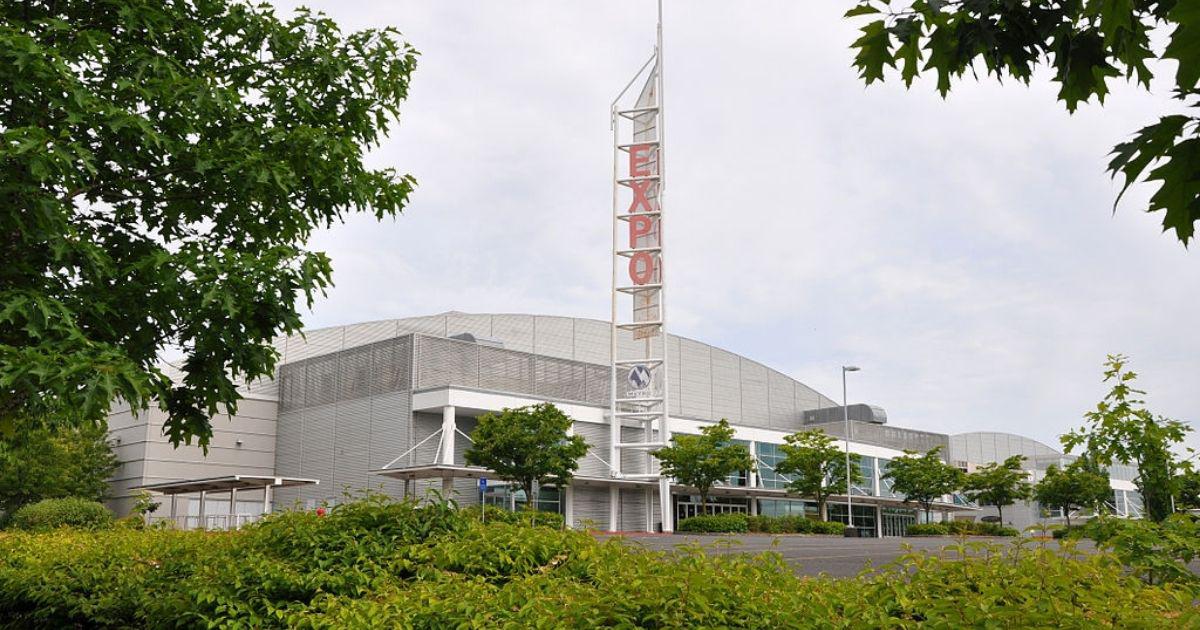
We were driving to the beach, and we passed the Portland Expo Center. It’s not the usual way we go, but the traffic was bad and this would let us avoid downtown.

I asked her if she knew anything about World War 2, and she knew a little… she remembered, for instance, that in that war the US was fighting against Germany and Japan.

So I pointed out the Expo building to her, and I told her, “During the war, the US government was afraid that Americans with Japanese heritage might be spies or might side with Japan, so they gathered them all up in that building. It was a livestock building. They moved all the cattle out and moved all the people in, and they kept them there for almost a year.”

“Did they kill them?” she asked.

“No,” I said. “But they all lost their jobs. Many of them lost their businesses, their houses, and most of their possessions.”

She didn’t say anything after that, but she’s a sensitive kid and I looked over to see that she was softly crying, wiping the tears from her eyes with the sleeve of her sweatshirt.

Why would I do that to my kid?

Well it’s not because of “CRT” or because I hate white people, or because I want her to. It’s not because I’m cruel or overly fixated on race. It’s not because of political correctness or politics.

It’s because things like this still happen today and they’ll happen again in the future and when that day comes I don’t want her to stick her head in the sand and say, “Well that could never happen in the Land of the Free,” but instead be one of the people standing up to say, “Not this again, this is wrong, how dare you.”


It’s because she has Asian-American friends, and when they are in danger or the victims of Anti-Asian racism or violence I don’t want her to be confused or surprised, I want her to be able to stand in the gap to protect, support, and comfort her friends.

It’s because she has Latina friends who have been deported. It’s because she has Asian-American friends who have family members who have been spit on or harassed. And just because she’s 11 and white doesn’t mean she should be shielded from that… her friends of color aren’t. She’s old enough to know that the world her friends live in is the same world she’s in.

And yes, she needs to know that these things happened in living memory. That right now there’s a kind older woman who volunteers at the Japanese American Museum of Oregon who will tell you the story of when her family packed their bags and met at the Expo Center. She’ll tell you about how they stayed in a cattle stall with a sheet for a door, and how the flypaper hung over her, heavy with flies, while her family tried to figure out what was going to happen to them all, what their own government was going to do to them (the answer being, send them to a camp in California and then transfer them to a camp in Idaho where they would live one family to a room, sleeping on cots, the guards outside the camp with their rifles, barbed wire on the fences. The answer being that some of their fathers and brothers got out early if they volunteered to fight, but the families remained in the camps, imprisoned by their own government, not “innocent until proven guilty” but “presumed guilty because of their ethnicity.”).

She needs to know that if every story she ever hears about the USA is “we are the good guys” that she’s listening to liars. We have done some incredible, beautiful things in the world (and still are), and we have done some horrific, evil things in the world (and still are).

Because we’re not raising her to be a good American, we’re raising her to be a good person.

And because when we’re driving through the streets of our cities, the history matters. We should be able to point out, “This church belonged to Black people until the city decided it was time to revitalize downtown and they forced all the African Americans north, out of downtown.” We should be able to say, “This is Fort Vancouver” and also know that the coming of that fort meant that in a span of barely thirty years entire cultures of Native people were nearly wiped out by smallpox and other diseases… and many of the remaining peoples were forced onto the worst pieces of land at the threat of death so that the great American empire could continue to expand.

I tell my daughter all of this not because of some political agenda. I tell her because it’s true.

I tell her this because if she’s going to be a good citizen she needs to know what to fight against. She needs to know who we’ve been to recognize who we are.

I tell her this because I love America and I want us to be better.

I tell her this because I love her and I don’t want her to grow up closing her eyes to injustice.

I tell her this because she needs to know that when we talk about camps built for racist reasons in World War 2 we call them “concentration camps” in Germany and we call them “internment camps” in California or Idaho. She needs to know that we try to hide it, to soften it, to make it somehow something understandable rather than something evil.

I tell her this because once upon a time on May 2nd, 1942, three thousand six hundred and seventy-six Japanese Americans showed up at the Expo center carrying their bags – they could only bring what they could carry — or carrying their infants and toddlers, and were moved into cattle stalls. They lived there, in our city, for five months until we could get our camps built, get the barbed wire installed, get the guard posts filled, get the trains ready to pack with our own citizens.

I tell her because their story – OUR story – matters. She needs to know.

I tell her all this because if she’s never cried about something America has done, she doesn’t know America.

This post was first published on the author’s Facebook page. Find more writing from Matt Mikolatos on his website.


  • Simple photography lesson shows why selfies distort how you really look
    Photo credit: via Evey Winters/FacebookA selfie camera can distort how you look in real life.

    We’ve all done it: You snap a selfie, look at it, say, “OMG is my nose swollen?” then try again from a different angle. “Wait, now my forehead looks weird. And what’s up with my chin?” You keep trying various angles and distances, trying to get a picture that looks like how you remember yourself looking. Whether you finally land on one or not, you walk away from the experience wondering which photo actually looks like the “real” you.

    I do this, even as a 40-something-year-old who is quite comfortable with the face I see in the mirror. So, it makes me cringe imagining a tween or teen, who likely take a lot more selfies than I do, questioning their facial features based on those snapshots. When I’m wondering why my facial features look weird in selfies it’s because I know my face well enough to know that’s not what it looks like. However, when a young person whose face is changing rapidly sees their facial features distorted in a photo, they may come to all kinds of wrong conclusions about what they actually look like.

    Not that it should matter, of course. But we’re talking about people living in a society obsessed with personal appearance. It’s going to matter to a lot of people, and if they get the wrong impression of their face, some people will go to all sorts of lengths to change it. That’s why understanding a bit about how focal lengths on cameras can impact what we see in photographs is vital.

    Why do I look different in selfies?

    Writer Evey Winters shared some of that education in a post on Facebook. She writes about this topic through a trans and dysmorphia lens, but it applies to everyone.

    Winters points out that if someone is thinking of doing surgery to change their bodies, they should seek sources outside of themselves and a cellphone camera.

    “I have dysmorphia and recognize that in myself,” she wrote, “but even if I didn’t, there’s not a selfie I’ve ever taken that would accurately help me make choices about my face. Mirrors are slightly better only for their minimal distortions.”

    Why do people look different in selfies?

    “Almost any photo taken of you with a commonly available cell phone without additional equipment will not display anything approaching an accurate summation of you but an artistic rendering of what the camera is able to capture,” she continued. “Cameras are not people. People don’t freeze frames of time for all eternity down to the pixel and automatically enhance certain features like the darkness of pores and fine lines in your skin.”

    “If you want the best chance at getting good feedback pre-op about what you might want to change,” she added, “I’d recommend a skilled photographer take a series of photos of you at different focal lengths and even then none of these will be entirely accurate as none of these employ humans’ binocular vision and filtering.”

    selfies, photography, friends in photos, camera phone, smartphone, good selfies, bad selfies
    A group of friends taking a selfie. Photo credit: Canva

    One collage that proves your selfie camera is lying to you

    Winters shared a collage of photos of the same girl’s face at different focal lengths to show the significant difference it makes. “Notice how in different photos this child’s eyes may appear to be slightly hooded,” she wrote. “The nose appears enlarged disproportionately. Hairline seems to shift with every snap. So does jaw shape, face shape, and even the width and size of the ears.”

    The same person can look drastically different in photographs. Photo credit: Facebook

    The difference between each of these photos is significant, but the difference between the first and the last is stunning. Cellphone selfie cameras usually have an even smaller focal length than the 40 mm shown here (Winters points out that many smartphone selfie cameras have a focal length equivalent of around 23 mm), so they distort facial features even more. It also depends on how far away from the camera you are. The closer you are, the more distortion you’ll see. Lighting matters, too, but even the best lighting can’t cancel out what the focal length is doing.

    Vox shared a video specifically about the “big nose” phenomenon with selfies, showing how drastic the distortion can be.

     At a time when so many people are making decisions about their appearance based on what they see on tiny screens, this kind of education matters more than ever. A phone camera is a remarkable piece of technology, but it was built to capture moments, not to render an accurate portrait of your face. Before you book a consultation or spiral into self-criticism over a photo, take a breath and remember: the camera is distorting you, not defining you.

    This article originally appeared four years ago. It has been updated.

  • Teen confused by paper with ‘$200’ written on it. The answer was hilariously simple.
    Photo credit: CanvaA paper check, left, and a confused teenager.

    There’s a viral trick where, if you ask people to “pretend” to answer a phone, the way they hold their hand will tell you which generation they belong to.

    Maybe the same can be said for how they react to seeing a paycheck.

    Mom posts hilarious generational moment on LinkedIn

    Michelle Boggs, a senior advisor at GoFundMe, recently posted a screenshot of a text from her teenager on the professional networking platform.

    The teenager, awaiting a payment of $200, opened an envelope and was surprised to find that it did not contain the cash they were expecting—only a note on a piece of paper indicating that $200 was owed.

    The teenager elaborated: “There was no money just on papers that said my amount.”

    And that’s when Boggs realized what was really going on: “That is called a check, honey.”

    gen z, millennials, gen x, generations, generational differences, money, checks, technology, old technology, culture, humor, linkedin, funny
    Old things are hard. Photo credit: Canva

    Millennials and Gen X forget just how outdated their upbringing is

    The post spread far and wide on LinkedIn, with hundreds of likes and dozens of comments. Many people had stories about their own encounters with Gen Zers who were completely baffled by items and activities that were commonplace just a few decades ago, such as:

    Addressing an envelope: “I facilitated a training with consultants, most of whom were 23 to 25. There was an exercise at the end where you write yourself a letter that gets mailed to you in like five years time. They instructed us to tell people how to address the envelope. I thought it was a joke until the guy next to me did in fact turn to me and say, ‘What do I do here again?’”

    Saving a file on the computer: “I’ll never forget the day a young one asked me why the save icon looked like that. They’d never seen a floppy disk. I felt my bones creak in the wind.”

    Calling a landline: “How about when your 15 year old calls her grandmother and gets a busy signal?”

    Listening to music on a stereo: “We did [a run to the dump] with a 00s stereo system in the car and my eldest said ‘what is this Mom, some kind of music machine?’. To them, music is Alexa or Spotify!”

    Watching actual TV: “I also recently got rid of cable and I gave them the heads up like ‘hey guys I got rid of cable’ and my son responded ‘what’s cable?’”

    How the tables have turned

    While the older generations love getting a good laugh out of younger people not recognizing “fundamental” pieces of technology, the comedy definitely goes both ways.

    “My favorite moment was when my youngest was in my home office and told me to follow the link to a particular website. I clicked on what I thought I was supposed to click on and he scowled in disgust and said this is why old people get so much malware,” one commenter shared.

    Millennials and Gen Xers are often totally baffled by Gen Alpha slang, TikTok trends, Kik streamers, looksmaxxing, ChatGPT, and more. It’s only a matter of time until today’s teenagers are impatiently holding their parents’ hands through crypto, VR, or vibe-coding—in fact, it’s already happening.

    gen z, millennials, gen x, generations, generational differences, money, checks, technology, old technology, culture, humor, linkedin, funny
    An ancient artifact: The paper check. Photo credit: Todd Lappin/Flickr

    In true LinkedIn fashion, Boggs pulled a lesson from the humorous story, one that really does resonate.

    “Honestly, teens will keep you humble and if you’re paying attention, they’ll also keep you sharp,” she wrote. “[If something] feels slow, clunky, or outdated we’re not just behind, we’re invisible to the next generation. They’re not learning our systems. We need to learn theirs.”

    She’s right. Walden University estimates paper checks will be completely extinct any day now, replaced by direct deposit, Venmo, and other “frictionless” options.

    For the business professionals of LinkedIn, the takeaway is obvious. But all Millennials and Gen Xers need to remember that rotary phones and VCRs aren’t coming back anytime soon. Teaching younger generations about a rapidly aging way of life is probably less urgent than learning ourselves where things are heading.

  • This 4-year-old piano prodigy started playing just 8 months ago. He’s set to perform at Carnegie Hall.
    Photo credit: Charleston International Music Competition/YouTubeMichael Girgis, 4, plays the piano.
    ,

    This 4-year-old piano prodigy started playing just 8 months ago. He’s set to perform at Carnegie Hall.

    Michael Girgis plays on a piano outfitted with an adjustable pedal extender to match his small frame.

    At just four years old, Michael Girgis is solidifying his spot as an up-and-coming piano prodigy. While he always had a musical inkling, it wasn’t until September 2025 that he began playing the piano under the guidance of his teacher, Ms. Elena.

    By December 2025, the Montgomery County, Maryland native was playing in his first piano recital. Since then, the young boy has been stacking up piano awards. (So far, he’s earned four prizes.)

    “He reads the notes better than he reads the alphabet,” his mother, Yulia Tsaturova, told WJLA-TV.

    Girgis currently practices piano three times a week for 30 to 45 minutes each session. He also uses a piano pedal extender for a customized fit.

    “I like playing music. I like playing piano, nothing else. You have to work hard so you’ll get more money,” he told WJLA-TV.

    Who is Michael Girgis?

    Girgis was inspired to play the piano after watching his older siblings play.

    “When I was 18 months old, I watched my older brother and my two sisters playing the piano… and I couldn’t wait for my turn. Everyone said, ‘when you grow up’,” he shared in an Instagram post.

    In his bio, Girgis also offered his new fans some fun facts about himself. Besides playing the piano, he has a full life as a four-year-old.

    “I enjoy swimming, roller skating, biking, ice skating, and running,” he shared. “I have many friends and love going to birthday parties! I enjoy to visit and explore new places and try new activities.”

    He added, “two sisters and a brother. And all of them playing piano, too. I love candies and chocolates. My favorite color is blue. I love watching cartoons and my favorite cartoon is Peppa Pig.”

    Playing at Carnegie Hall

    Girgis won the 2026 American Protégé International Piano and Strings Competition in March 2026. As a result, he will be playing twice at Carnegie Hall in New York City later this year.

    He is set to make history as the youngest-ever pianist to perform at the esteemed hall. In July 2025, his fellow piano prodigy, five-year-old Alec Van Khajadourian, made his debut at Carnegie Hall. At the time, he was the youngest pianist to perform there.

    Girgis is scheduled to play during the American Protégé Winners Recital on May 31, 2026, as well as on July 14, 2026.

    “It’s something we couldn’t have dreamed of, was hoping, but it’s actually real, so we’re very, very excited about that,” Magdy Girgis, Michael’s father, told WJLA-TV.

    And his piano teacher, Ms. Elena, saw his potential from the start.

    “Michael is truly a rising star. His dedication, passion, and artistry shine through every time he sits at the keys,” she shared in a February 2026 Instagram post about her talented student. “It has been a joy to watch him grow, and seeing his hard work recognized on an international stage makes me beyond proud.”

  • Former Levi’s CEO Chip Bergh settled the debate on how often you should wash your jeans
    Photo credit: via Levi Strauss and Ricardo Gomez Angel/Unsplash Levi's CEO Charles Bergh settles the jean washing debate

    Social media has become a fertile breeding ground for conversations about hygiene. Whether it’s celebrities bragging about how little their family bathes, or battles over how often people should wash their sheets or bras, there’s no shortage of strong opinions.

    One of the debates that gets the most diverse responses is how often people wash their denim jeans.

    Denim atelier Benjamin Talley Smith tells TODAY that jeans should be washed “as little as possible, if at all.” Laundry expert Patric Richardson adds they should be cleaned “after nine or 10 wearings, like to me, that is the ideal.” At that point, they probably have stains and are “a little sweaty by that point, so you need to wash ’em,” Richardson says.

    Still, some people wash and dry them after every wear while others will hand wash and never hang dry. With all these significant differences of opinion, there must be a correct answer somewhere, right?

    What the former Levi’s CEO says about washing jeans

    The former CEO of Levi Strauss, Chip Bergh, has stepped up to set the record straight on when and how to wash your jeans. He caused a stir in 2014 when he said he only washes his jeans once a year, but it was for environmental reasons more than hygiene.

    He later clarified his thoughts in a blog post, “The Dirty Jean Manifesto” he posted to LinkedIn.

    “I made this provocative statement because I believe strongly in what our brands stand for: quality, durability and lasting products made sustainably. I also said it because I believe we don’t need to wash jeans as often as most people think we do,” Bergh wrote.

    “We learned that an average pair of jeans consumes roughly 3,500 liters of water — and that is after only two years of use, washing the jeans once a week,” Bergh wrote. “Nearly half of the total water consumption, or 1,600 liters, is the consumer throwing the jeans in the washing machine. That’s equivalent to 6,700 glasses of drinking water!”

    To add to the problem, denim jeans are often manufactured in places where water is scarce, such as India, Pakistan, Mexico, China and parts of California.

    CEO offers clarification on his comments

    Bergh spoke with CNBC’s Christine Tan and clarified his thoughts on jean cleanliness.

    “True denim heads, people that really love their denim, will tell you to never put your denim into a washing machine. So that’s what I do,” Bergh explained. “If I drop some curry on my jeans, I’m gonna clean it. But I’ll spot-clean it. And if they get really gross you know, if I’ve been out sweating or something and they get really gross, I’ll wash them in the shower.”

    However, when Bergh washes his jeans in the shower, he does it while wearing them and washing them with soap. The image that the scene conjures is of a cowboy bathing in a cartoon, clothes on and all.

    There are a lot of different opinions on how often one should wash and dry their jeans and many of them boil down to personal preference. But the debate on the topic has brought up one very big point we should all consider: when choosing how often we wash our jeans, a big part of the decision should be considering the amount of water we use.

    This article originally appeared three years ago. It has been updated.

  • Gen Xers share 17 nostalgic dishes they ate growing up—and still make for dinner
    Photo credit: Image via RedditA family enjoys dinner during the 1970s.

    Generation X (those born between 1965-1980) grew up eating classic Americana meals. During the 1970s, comfort meals like tuna casserole and salmon roquettes were popular meals.

    Gen X also grew up eating some pretty unhinged (but all the more yummy) sandwiches. These meals are steeped in childhood nostalgia.

    And to this day, Gen Xers are still fond of their favorite dishes they grew up eating. Together, they discussed on Reddit their most-loved home-cooked dishes that they still whip up, starting with sloppy joes.

    Here are 17 iconic Gen X comfort meals to keep in mind the next time you make dinner:

    “Breakfast. We will have a ‘breakfast for dinner’ at least a couple times a month. Yum!” – fadeanddecayed, KddKc

    “Pizza bread! My mom would cut Italian bread into pieces, put butter and garlic salt on them, then pour some spaghetti sauce on them, cover with mozzarella cheese, and broil for like ten or fifteen minutes. Super easy and quick to make and so tasty. I’m sure my mom loved that I was so into something that took roughly zero effort for her to make.” – hornybutired

    “Grilled cheese and soup.” – reincarnateme

    Meat loaf. I use 2 pounds ground beef, replace bread crumbs with minute rice, add 1 pkg beef soup flavoring, chop an entire onion for it, and mix BBQ sauce into mixture. Oh, important: do not overmix! Place all ingredients into bowl, then mix quickly 10 or 12 swirls of a large spoon. Grease loaf pan, carefully place mixture in, pat down & bake about an hour. (Extra info: for even better flavor, mix the night before, pat into loaf pan, cover with plastic, put into fridge overnight. Remove from fridge about an hour before baking. BE SURE TO REMOVE PLASTIC WRAP! [Esp. If in Pyrex glass loaf pan])” – jehardt, AbbyM1968

    “White guy tacos.” – najing_ftw

    “Skillet dinner. Kielbasa, bell pepper, onion, spuds in a cast iron pan. One dish. Easy peasy.” – UnimportantOutcome67

    “Chicken pot pie or chicken ala king.” – sattersnaps

    “Fried catfish, greens, and red beans and rice.” – User Unknown

    “Shepherds pie, technically cottage pie if it’s ground beef. Homemade enchiladas, usually made as a layered casserole instead because I don’t have time to roll them. Pork chops with mashed potatoes and veggies.” – XerTrekker

    “Fried rice with chicken or pork leftovers.” – AlternativeResort181

    “Hot hamburgers: hamburger patty open face on Texas toast thickness bread, cover with fries then cover that with brown gravy. Wife’s variation is hamburger patty over rice with brown gravy.” – EnricoMatassaEsq

    “Stuffed peppers. I make it much more easily by cooking it all in one large frying pan ‘deconstructed’. Sauté onions garlic and ground beef, add cut up peppers, tomatoes or tomato sauce, sometimes a little spinach, then add separately cooked rice, salt and pepper and serve. It comes together pretty quickly and tastes just as good as stuffing and baking peppers in the oven.” – Affectionate-Map2583

    “Macaroni and cheese with cut up hot dogs. Seriously, that’s what I ate tonight.” – Dazzling-Walrus9673

    “Homemade Stroganoff casserole. Ridiculously easy to make. Ingredients:

    1.25-1.5 lbs. Ground Beef
    1 each of large white onion, green pepper, and red pepper
    1 can mushroom pieces, drained and rinsed
    12 oz. Bag of wide egg noodles
    1 can cream of mushroom soup
    16 oz. Sour cream
    Worcestershire Sauce
    Louisiana Hot Sauce
    White or Black Pepper
    Panko bread crumbs

    To Make: Preheat oven to 360 degrees. Worcestershire, hot sauce, garlic powder, and pepper are all to taste, depending on how much flavor and punch you want it to have. Cook noodles per instructions. Drain. Peel and slice onion (not diced), core and cut peppers into strips Brown meat, onions and peppers along with liberal amount of Worcestershire; garlic, pepper, and hot sauce. Add mushrooms. Cook until meat is fully brown, onions are translucent and peppers are tender. Drain. Combine drained meat, etc. with whole can of soup, half of the sour cream. Gradually add noodles into the mix. Add sour cream as needed to maintain consistency. Add Worcestershire, hot sauce, and pepper to taste. Dump into large, deep Corning dish or whatever. Cover too with bread crumbs. Cover and bake for forty minutes.” – CynfullyDelicious

    This article originally appeared last year. It has been updated.

    This article originally appeared last year. It has been updated.

  • Heckler flirts with comedian on stage and it turns into a surprise masterclass on romantic chemistry
    Photo credit: CanvaFemale comedian (left) Male audience member (right)

    Dealing with hecklers just comes with the territory of being a comedian. But flirting with them? That wasn’t something Rebecca Reingold had prepared for. 

    On March 11, the New York City-based stand-up comic uploaded a recent set to her Instagram aptly captioned “We found love in a hopeless place (a comedy club).”

    In the now-viral clip, Reingold shared a bit about not being “good” at flirting with men, saying that she would inadvertently “be mean” to them “because they liked it.”

    Playful roasting turns into something more

    rebecca reingold, comedy, stand-up comedy
    Microphone against a blurry backdrop Photo credit: Canva

    Then, during the set, someone from the crowd must have been talking too enthusiastically, because Reingold playfully called them out for being loud. This someone, a man, responded that he was with his parents at the show, to which Reingold quipped, “You look bad. Your parents look a lot younger than you.”

    Without missing a beat, the man in the audience responded that, given the logic she gave just moments earlier, she must like him, since she was throwing shots at him. 

    “Oh yeah, you’re right! That does mean I like you! You were listening. Oh my god, I’m in love,” said Reingold, blushing. “You’re so annoying but so loveable so its so tough, you know what I mean?”

    The Internet wastes no time weighing in

    Over 16 million viewers later, and people were applauding both Reingold’s ability to go with the flow, and this mysterious man’s mad game. Many were hoping that this became an actual meet-cute. 

    “Damn she really turned red when she realised he listened.”

    “You handled this so well 👏🙌”

    “… and, that is how I met your mother.”

    “The fact that he did not drop the ‘I’ll shut up in exchange for your number’ line is mind boggling to me.”

    “So when’s the wedding. Lol”

    Romantic antagonism IRL

    Perhaps people were rallying for this interaction to lead to romantic entanglement because it resembles the ever-popular enemies-to-lovers trope found in countless rom-coms and romantasies. This dynamic of building attraction through animosity and tension makes for great entertainment…but does it make for healthy relationships in real life? The annoying but accurate answer is, of course: it depends.

    Primarily, it depends on a) whether both partners are enjoying the teasing and b) whether the jokes are landing in sensitive territory. If both those parameters are met, it can become its own love language. If not, then it can foster resentment. 

    This can obviously become even more complicated when it comes to flirting, since there is already a lot of indirect language happening between strangers. But at least in this case it looked like everyone was having a good time.

    Sadly, it has yet to be revealed whether or not Reingold and this heckler ever did connect after the show. We’ll just have to wait and see. In the meantime, be sure to give her a follow on Instagram to stay tuned on both her comedy stylings and, perhaps, her love life.  

  • 40-something woman who grew up in foster care beats the odds in college graduation video
    Photo credit: CanvaA woman in her cap and gown for graduation.
    ,

    40-something woman who grew up in foster care beats the odds in college graduation video

    Less than 5 percent of people in foster care go on to get a bachelor’s degree.

    Jade Tompkins, who goes by @Craftyhag on social media, made a simple video on TikTok. In a moment of pure vulnerability, she humbly shared her story. What she might have felt was merely a cool accomplishment feels, to many of us watching, like a triumph.

    In the clip, she sits at a table in a simple gray sweater with yellow flowers, holding colorful ropes. Looking straight into the camera, she asks, “You guys wanna see something cool? I don’t have a lot of friends, or at least people who can be proud of me, I guess. I’m 40-something, and I get to graduate with a bachelor’s degree in a few weeks or a month, I guess.”

    Beating the odds

    Tompkins takes a slight pause and adds, “I grew up in foster care, and a lot of people might not know this. But people in foster care–like less than 2 percent of them, I looked it up–of people in foster care go on to get a bachelor’s degree. I don’t know, maybe it’s just because I’m older.”

    And Tompkins is right. The numbers for people who experience life in foster care are extremely challenging. More recent numbers say only about 3-4% of people with a background in foster care end up graduating with a bachelor’s degree, compared with more than 30% of the general population, according to research.

    She takes a breath, seemingly letting the information she just shared sink in, even for herself. “Anyway, I just wanted to show you guys. I don’t even know if I’m gonna go to graduation, but I still got the stuff just in case.” She holds up a red, satin-looking sash. “This is my stole thing. And I got all these cords. And if I do go, I don’t know if I’m gonna wear them or not.”

    Her achievements are nothing short of incredible. “My grades are really good. I have almost a 3.9. And I’ve worked full time since I’ve been doing it, so that feels like a big accomplishment. And I joined student associations and stuff.”

    “You’re never too old to set another goal”

    Picking up her graduation hat, she shows off the colorful writing on top. “So this is my graduation hat. I had it made. It says, ‘You’re never too old to set another goal or to dream a new dream.’ So I thought that was kind of appropriate. And I already got accepted to a Master’s program, so I think that’s kind of cool.”

    She ends the video as humbly as she began it. “Anyway, I just wanted to share because I don’t really have a lot of people to share it with. And I guess if anyone sees it and thinks, ‘Hey, I should go back to school,’ and you have the means or the dream or wish to do it and think you can, whatever. I don’t know. Just thought I’d share.”

    “Walk for all of us!”

    Her story was exactly what a lot of people needed to hear. On TikTok alone, she has nearly 850,000 likes and almost 70,000 comments.

    “Foster kid to foster kid, please walk,” one person shared. “Walk for all of us! Walk for those of us that are still trying to find out confidence. Walk for those of us that are not sure if we should dream. Walk for those of us that want to see our own kind SHINE. Your shine will help to light another’s pathway. I can say that the Class of Foster Kids, we are proud of you! Keep going.”

    Even some corporations, like Hilton (and many others), jumped into the chat. They sent her a little gift, writing, “Jade, milestones like this deserve to be celebrated. DMing you as we’d like to send something sweet your way.”

    This TikToker might have summed up what so many seem to think: “1. You’re f-ing awesome! 2. That cap is f-ing awesome. 3. Damn, that’s a lot of cords. 4. Your TikTok friends are f-ing proud of you!”

    According to an update posted just under a month later, Tompkins did attend and “walk” at graduation. Chyroned over a meme, she writes, “Me deciding to go to graduation because 700,000 people convinced me to go.”

  • She got fired from her bank job on the way home, sat on the train, said a prayer. Her phone rang 15 seconds later.
    Photo credit: CanvaA recently-fired woman holds a box of her belongings from work.

    She had just been let go from her job as a bank teller. The mistake was an $800 error she couldn’t fix, and when she came back to work her manager told her she was done. She got on the train home feeling “so sad,” as she put it, and cried.

    Then, instead of sitting with the loss, she prayed. Not a prayer asking for something, but one offering thanks. “God, thank you so much for allowing me to have this job for so long,” she said quietly. She put on a worship song.

    Fifteen seconds later, her phone rang.

    faith, job loss, viral, inspiration, TikTok
    A woman looks at her cell phone. Photo credit: Canva

    The man on the other end had a cheerful voice. His sister, he explained, had worked with her at the bank and spoken highly of her, perticularly her kindness and her service. Based on that, he thought she’d be a good fit for his company. She got the job that same day.

    The woman, who shares the story on TikTok under the handle @ashp_tv, posted about it in March and it spread quickly. The timing is the part that gets people because it’s not just that something good followed something hard, but how fast it happened, and that the call came specifically because someone had noticed how she’d treated people at the job she’d just lost.

    @ashp_tv

    Mustard seed faith STILL moves mountains. 🤍 #fyp #god #testimony #faith

    ♬ original sound – ASH P TV

    “All you need is faith,” she said. Whether you take that literally or as shorthand for something more like trust and openness, the story holds up either way.

    For more lifestyle content follow @ashp_tv on TikTok.

Animals

Diver convinces a tiny octopus to trade a plastic cup for a shell in Pixar-worthy video

Culture

Former Levi’s CEO Chip Bergh settled the debate on how often you should wash your jeans

Pets

Couple buys new house and finds abandoned dog tied to a tree

Pop Culture

Gen Xers share 17 nostalgic dishes they ate growing up—and still make for dinner