On August 26, 1920, the 19th Amendment became law. After a long, 72-year battle that began at the Seneca Falls Convention, American women won the right to vote. However, four years prior, a woman was elected to Congress.
Enter: Jeannette Rankin
Rankin grew up in Montana exploring various passions but really developed her calling for activism in San Francisco when she was 27. Over the next few years, she traveled to New York and Washington to support suffrage organizations. She then returned to her home state to do the same, even becoming president of the Montana Women’s Suffrage Association…
Rankin was instrumental in the passage of suffrage legislation in Montana in 1914
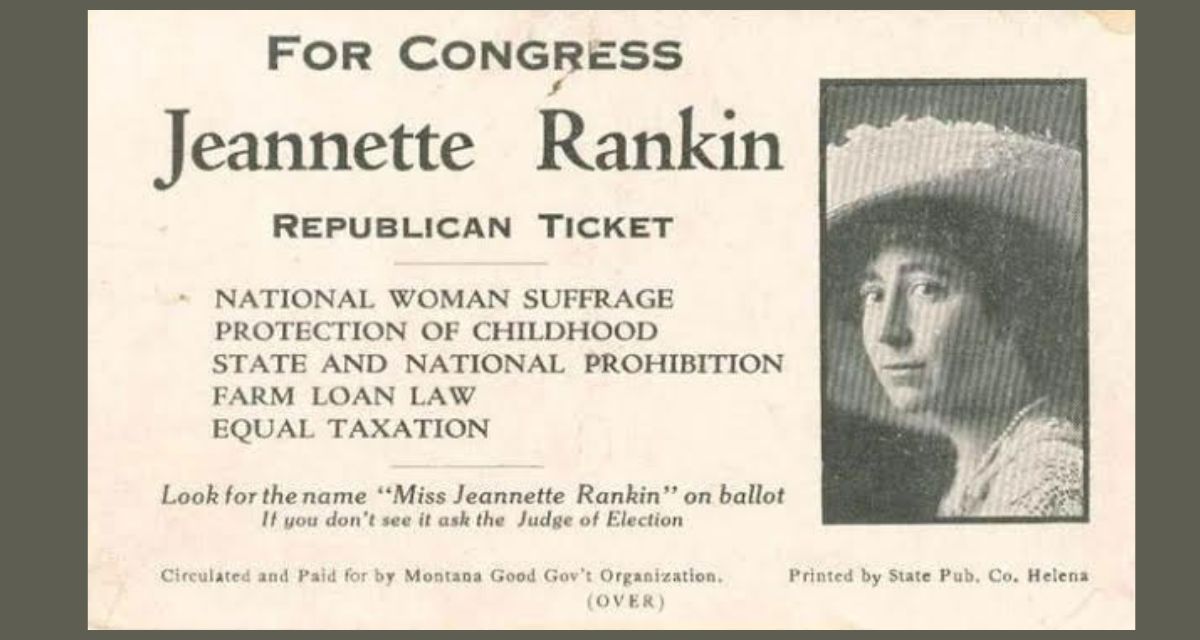
…which undoubtedly aided her when she decided to run for Congress in 1916…and won.

Running on a progressive Republican ticket, Rankin connected with voters not only on women’s suffrage but also over child welfare and keeping the U.S. out of World War I.
Of course, there would be a lot of misogynistic hemming and hawing over whether her presence was appropriate, so Rankin wouldn’t actually take her rightful place until a year later in 1917. But during her term, she worked tirelessly to sponsor legislation that aided women and children, pushed for better working conditions for laborers, and advocated for the passage of the 19th Amendment.
Rankin temporarily stepped away from Congress in 1919 after losing the election, but in 1940, at age 60, she ran again and snagged a second term.
Pro-women, anti-war
Throughout her career, Rankin fiercely stood up for her pacifist beliefs, which is summed up beautifully in one of her speeches:
“There can be no compromise with war. [I]t cannot be reformed or controlled; cannot be disciplined into decency or codified into common sense, for war is the slaughter of human beings, temporarily regarded as enemies, on as large a scale as possible.”

A mere four days into her first term, she called for President Woodrow Wilson not to have the United States enter World War I, saying, “I want to stand by my country, but I cannot vote for war. I vote no.” She then vehemently opposed Roosevelt’s preparation to enter World War II. And following the attack on Pearl Harbor, she was the only person to vote against U.S. retaliation. When some of her colleagues tried to convince her to vote yes, or at least abstain from voting so that the decision would be unanimous, she famously said, “As a woman, I can’t go to war, and I refuse to send anyone else.”
Met by a flurry of hisses and hungry reporters, Rankin had to take refuge in a Republican phone booth before the police escorted her back to safety.
Yet this didn’t deter her stance. Even at 87 years old, Rankin led a march of several thousand women in Washington, D.C., to protest the Vietnam War, which she called “stupid and cruel” and a “ruthless slaughter.”
While we still have quite a ways to go to reach gender equality in the White House, we currently have the largest percentage of female members of Congress in U.S. history. And we have Rankin, and women like her, to thank for it. What a great reminder that staying true to your beliefs does pay off.
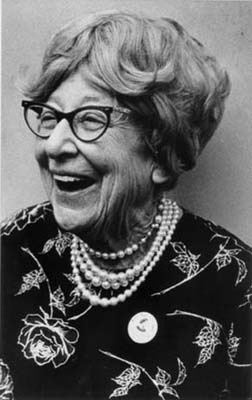
And with that, enjoy Rankin’s best quote, by far:
“If I had my life to live over, I would do it all again, but this time I would be nastier.”