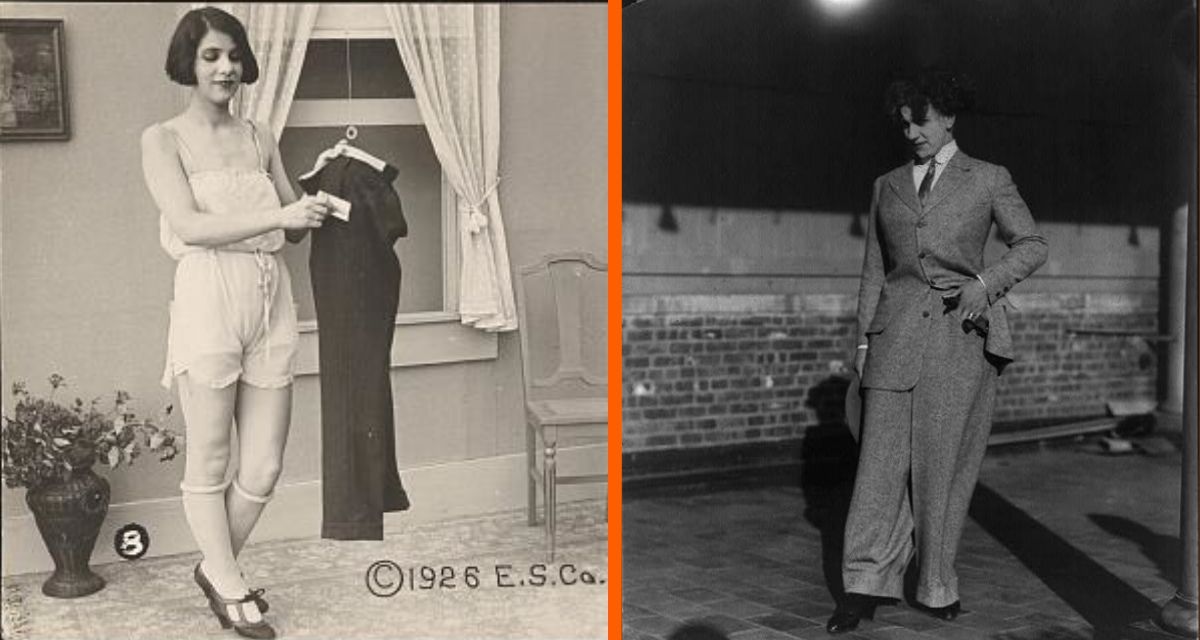
Helen Hulick went to jail in 1938 for wearing pants. Although it may sound ludicrous, it’s a true story.
Hulick was a 28-year-old kindergarten teacher at the time. She went to a California courtroom on Nov. 9, 1938, to testify against two men who had burglarized her home. But rather than find justice, she found a judge who disapproved of her wardrobe.
After refusing Judge Arthur S. Guerin’s orders to show up the next day to court in a dress, the judge found her in contempt—and ordered her to jail for five days. Hulick bravely stood up to the judge and societal norms about dressing at the time.
Helen Hulick defies orders
After Judge Guerin noticed Hulick wearing slacks instead of a dress, he was not pleased and postponed her hearing until the following day. According to The Los Angeles Times, Hulick reportedly said to her attorney William Katz, “You tell the judge I will stand on my rights. If he orders me to change into a dress I won’t do it. I like slacks. They’re comfortable.”
The next day, Hulick defiantly showed up in pants. And Judge Guerin immediately took notice that she was once again not in “garb acceptable to courtroom procedure”. He reprimanded her, saying:
“Today you come back dressed in pants and openly defying the court and its duties to conduct judicial proceedings in an orderly manner. It’s time a decision was reached on this matter and on the power the court has to maintain what it considers orderly conduct…The court hereby orders and directs you to return tomorrow in accepted dress. If you insist on wearing slacks again you will be prevented from testifying because that would hinder the administration of justice. But be prepared to be punished according to law for contempt of court.”
Hulick stands her ground
Hulick was not going to blindly follow orders. She said, “Listen, I’ve worn slacks since I was 15. I don’t own a dress except a formal. If he wants me to appear in a formal gown that’s okay with me. I’ll come back in slacks and if he puts me in jail I hope it will help to free women forever of anti-slackism.”
Ultimately, she was sent to jail by Judge Guerin. However, she only stayed there for a few hours before being released.
Per The Los Angeles Times, “after being divested of her favorite garment by a jail matron and attired in a prison denim dress, Miss Hulick was released on her own recognizance after her attorney, William Katz, obtained a writ of habeas corpus and declared he would carry the matter to the Appellate Court.”
An article from the New York Daily News reported that “Superior Judges Edward T. Bishop and B. Rey Schaufer, of the Appellate Division, ruled that wearing of slacks by Miss Hulick came under the category of ‘good taste’ and did not come under jurisdiction of the court. They ordered the five-day sentence to be dissolved and the pretty defendant set free.”
The history of women wearing pants
There has never been a nationwide law in the United States preventing women from wearing pants—including Hulick. However, many ordinances in different parts of the country were in place to prevent “cross-dressing” based on gender.
For example, in 1848 in Columbus, Ohio, there was a law forbidding a person from appearing in public “in a dress not belonging to his or her sex.”
By the 1850s, dress reform was fully underway in the United States. A suffragist named Elizabeth Smith Miller led the charge by wearing “wearing “a short skirt over loose trousers”, per the Library of Congress.
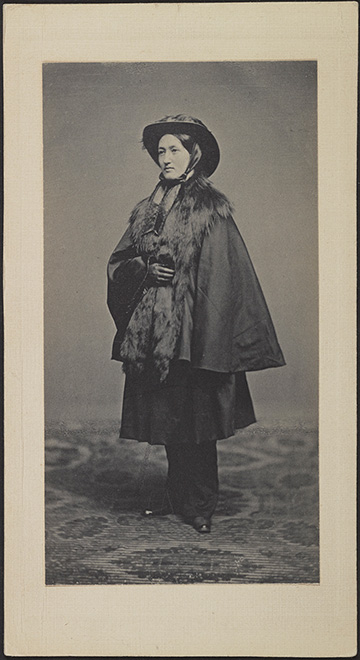
Photo Courtesy: Library of Congress
Other suffragists, including Miller’s cousin Elizabeth Cady Stanton and Amelia Bloomer (who the term ‘bloomers’ are named after) also began to wear them. However, pants were still considered by American society to not be suitable for women.
During World War I, women who took over men’s jobs while serving began to wear pants out of necessity, which also began to change attitudes. And by the time Hulick appeared in court in slacks, there had been an effort on a political level to validate women wearing pants as a-okay. That’s thanks to former U.S. Attorney General Harry Daugherty. On May 28, 1923, newspapers reported that Daugherty had declared it legal for women to wear trousers ‘where and when they please’.
During World War II, women wearing pants once again became more commonplace to take over labor-intense work. But it wasn’t until the women’s rights movements in the 1960s and 1970s that beliefs more “firmly” changed about women wearing pants.
For example, in 1969, Rep. Charlotte T. Reid, a Republican from Illinois, became the first woman to wear pants (a “black wool, bell-bottomed pantsuit”) on the House floor. But it wasn’t until 1993 that three Senators (Barbara Mikulski, Nancy Kassebaum and Carol Moseley-Braun) wore pants on the Senate floor, “breaking an unofficial rule that women must wear dresses or skirts.”