It's Black History Month and there's a good reason why we celebrate it in February

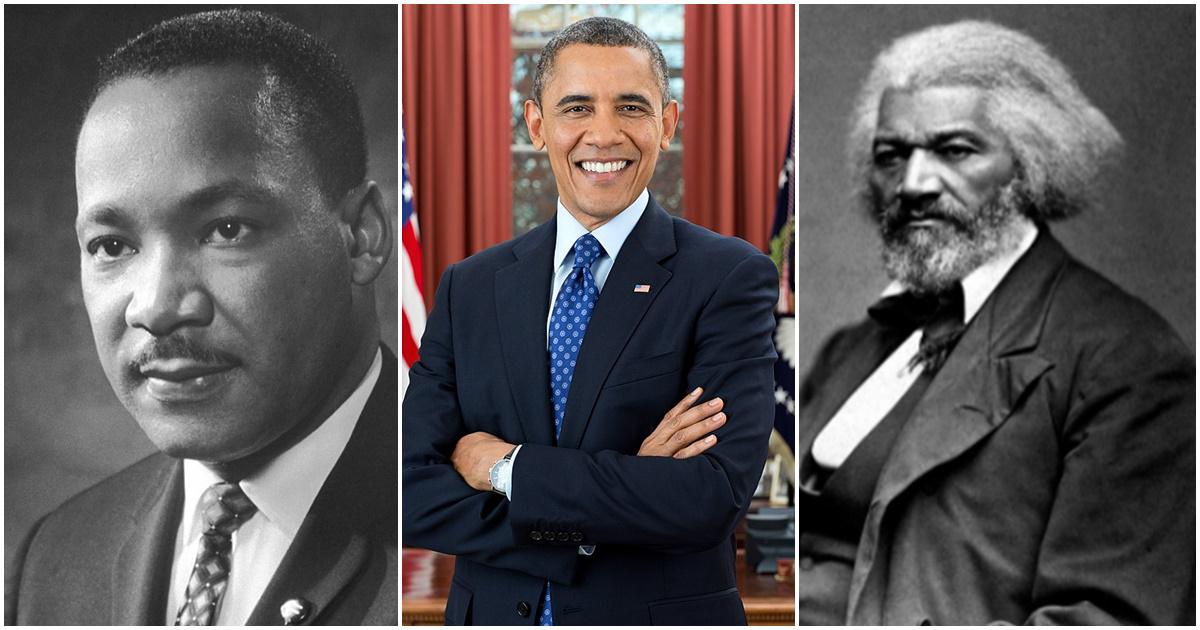
Dr. Martin Luther King, Jr., Barack Obama, Frederick Douglass
Comedian Chris Rock once famously joked that Black History Month is in February because it’s the “shortest month of the year, and the coldest—just in case we want to have a parade.” Given the lessons that come with studying Black history, it’s not too far-fetched to believe Rock’s explanation.
However, there are in fact two very important reasons why the month was chosen and they have nothing to do with the weather or parades, and everything to do with the abolition of slavery.
Long before Black History Month was established, Black people would often celebrate the emancipation of the slaves in February because it was the month that abolitionist Frederick Douglass and President Abraham Lincoln were born.
Lincoln was born on the 12th and Douglass’ actual birthday was never recorded, but he celebrated it on the 14th.
Douglass was an escaped slave who became a prominent activist, author, public speaker and leader in the abolitionist movement. President Lincoln paved the way for the 13th Amendment, which outlawed slavery.
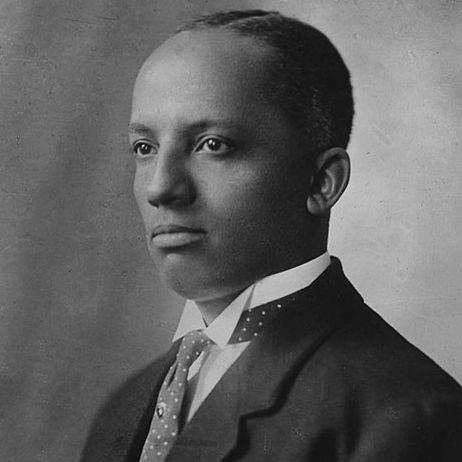
Carter G. Woodson
The push for what would become Black History Month started in 1915 when Harvard-educated historian Carter G. Woodson attended a 50th-anniversary celebration of the 13th Amendment. The three-week-long event featured various exhibits about the history of Black culture in America. The event inspired Woodson to form the Association for the Study of Afro-American Life and History (ASALH) and write a book “The Journal of Negro History.”
In 1924, Woodson’s fraternity created Negro Achievement Week. Over the next few decades communities across the country began to celebrate what evolved into Negro History Week and the ASALH expanded the idea to become Black History Month.
In 1976, President Ford made it official declaring February Black History Month, and asked Americans to "seize the opportunity to honor the too-often neglected accomplishments of Black Americans in every area of endeavor throughout our history."
The 2022 Black History Month theme is Black Health and Wellness. This focus celebrates the contributions and breakthroughs of Black professionals as well as to “nontraditional” health and wellness practitioners.
This year for #BlackHistoryMonth, join us as we embrace the official theme announced by the Association for the Study of African American Life and History (@ASALH), Black Health & Wellness, starting with a look at midwives: https://nmaahc.si.edu/blackhistorymonth\u00a0\u2026 #SmithsonianBHMpic.twitter.com/iaLZS6pwTM— Smithsonian NMAAHC (@Smithsonian NMAAHC) 1643724057
President Barack Obama made a speech in 2016 about why we celebrate Black History Month and he did a great job at encapsulating why and how it should be celebrated. Obama’s speech at the White House—a building built by slaves—is a testament to one of the central messages behind the month. We celebrate Black History Month to learn from our past to build a better future.
"Black History Month shouldn’t be treated as though it is somehow separate from our collective American history, or somehow just boiled down to a compilation of greatest hits from the March on Washington, or from some of our sports heroes," President Obama said.
"It’s about the lived, shared experience of all African Americans, high and low, famous and obscure, and how those experiences have shaped and challenged and ultimately strengthened America. It’s about taking an unvarnished look at the past so we can create a better future. It’s a reminder of where we as a country have been so that we know where we need to go."
- This hilarious skit about race from 'SNL' last season should be ... ›
- Lunar New Year gets funky—watch this amazing Asian dance group ... ›
- Celebrate Black History Month at Upworthy market by supporting local Artisans—save $7 with code IMPACT7 - Upworthy ›
- There are plenty of things to celebrate about Black Wall Street that you maybe didn't know - Upworthy ›
- Google celebrates 'Toni' Stone ›
- Google celebrates 'Toni' Stone - Upworthy ›
- Have you ever heard of the Ludlow Massacre? You might be shocked when you see what happened. - Upworthy ›
- Last witness to Lincoln assasination was on TV - Upworthy ›
- What is the Ludlow Massacre? - Upworthy ›


Student smiling in a classroom, working on a laptop.
Students focused and ready to learn in the classroom.
Fish find shelter for spawning in the nooks and crannies of wood.
Many of these streams are now unreachable by road, which is why helicopters are used.
Tribal leaders gathered by the Little Naches River for a ceremony and prayer.

Communications expert shares the perfect way to gracefully shut down rude comments
Taking the high ground never felt so good.
A woman is insulted at her job.
It came out of nowhere. A coworker made a rude comment that caught you off guard. The hair on the back of your neck stands up, and you want to put them in their place, but you have to stay tactful because you're in a professional setting. Plus, you don't want to stoop to their level.
In situations like these, it helps to have a comeback ready so you can stand up for yourself while making making sure they don't disrespect you again.
Vince Xu, who goes by Lawyer Vince on TikTok, is a personal injury attorney based in Torrance, California, where he shares the communication tips he's learned with his followers. Xu says there are three questions you can ask someone who is being rude that will put them in their place and give you the high ground:
Question 1: "Sorry, can you say that again?"
"This will either make them have to awkwardly say the disrespectful remark one more time, or it'll actually help them clarify what they said and retract their statement," Xu shares.
Question 2: "Did you mean that to be hurtful?"
The next step is to determine if they will repeat the disrespectful comment. "This calls out their disrespect and allows you to learn whether they're trying to be disrespectful or if there's a misunderstanding," Xu continues.
Question 3: "Are you okay?"
"What this does, is actually put you on higher ground, and it's showing empathy for the other person," Xu adds. "It's showing that you care about them genuinely, and this is gonna diffuse any type of disrespect or negative energy coming from them."
The interesting thing about Xu's three-step strategy is that by gracefully handling the situation, it puts you in a better position than before the insult. The rude coworker is likely to feel diminished after owning up to what they said, and you get to show them confidence and strength, as well as empathy. This will go a lot further than insulting them back and making the situation even worse.
Xu's technique is similar to that of Amy Gallo, a Harvard University communications expert. She says that you should call out what they just said, but make sure it comes out of their mouth. "You might even ask the person to simply repeat what they said, which may prompt them to think through what they meant and how their words might sound to others," she writes in the Harvard Business Review.
More of Gallo's suggested comebacks:
“Did I hear you correctly? I think you said…”
“What was your intention when you said…?”
“What specifically did you mean by that? I'm not sure I understood.”
“Could you say more about what you mean by that?”
Ultimately, Xu and Gallo's advice is invaluable because it allows you to overcome a negative comment without stooping to the other person's level. Instead, it elevates you above them without having to resort to name-calling or admitting they got on your nerves. That's the mark of someone confident and composed, even when others are trying to take them down.