America is full of inventors. Each year, about 370,830 patents are issued, according to the U.S. Patent and Trademark Office (USPTO).
Patents enable inventors in the U.S. to “exclude others from making, using, offering for sale, or selling…or importing” an invention they create, per the USPTO. And since the country’s start, Americans have been innovating.
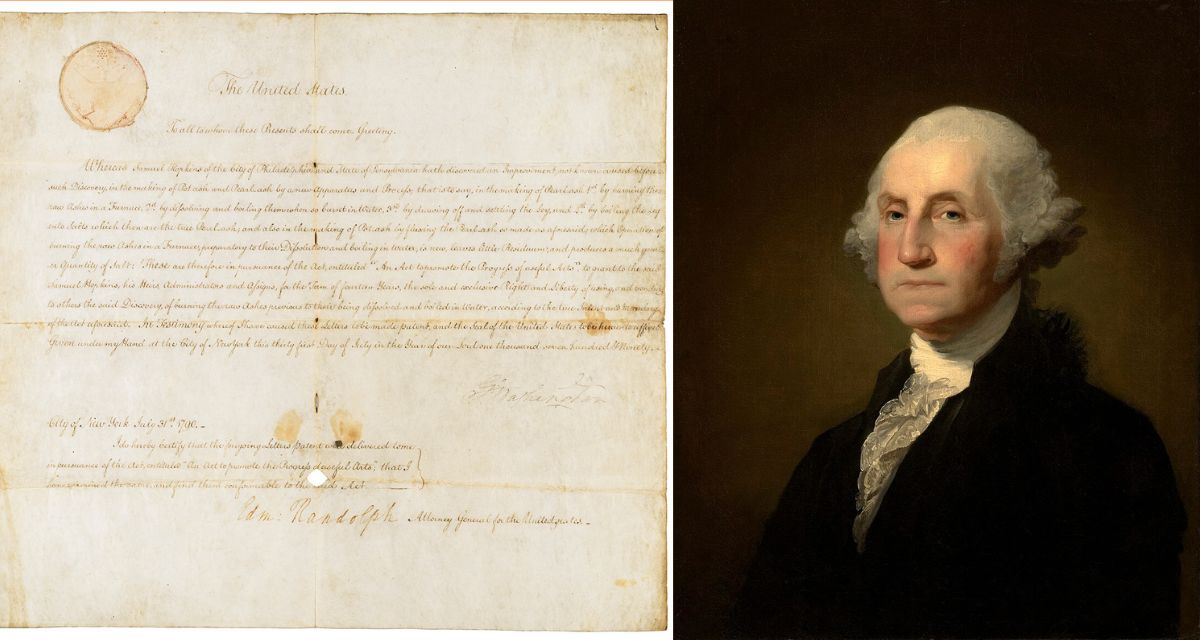
The history of patents in the U.S. dates back to July 31, 1790. President George Washington signed the first patent to a man named Samuel Hopkins.
The creation of American patents
Patents in the U.S. were vaguely referenced in the Constitution. When it was ratified in 1788, a clause on intellectual property was included.
Article I, Section 8, Clause 8 reads: “[The Congress shall have Power . . . ] To promote the Progress of Science and useful Arts, by securing for limited Times to Authors and Inventors the exclusive Right to their respective Writings and Discoveries.”
It set the groundwork for American entrepreneurs. Washington called on Congress to to create a patent system.
On April 10, 1790, Congress passed the first patent statute, which resulted in the start of patents being examined by America’s first Patent Board.
The Patent Board included key leaders, such as Secretary of State Thomas Jefferson, Secretary of War Henry Knox, and Attorney General Edmund Randolph.
Fees were established, and submitting a patent would cost $5 to $6.
The first U.S. patent
Hopkins was a Quaker and inventor in Philadelphia, Pennsylvania. He created a new method for the creation of potash and pearl ash.
“Potash, later termed potassium carbonate, was used as a fertilizer, as a detergent to clean fibers in textile manufacturing, and as an ingredient in soap,” notes the The Lemelson Center. “Pearl ash was a more refined material used in glassmaking, to make saltpeter for gunpowder, and as a leavening agent in baking.”
Hopkins also played a crucial role in helping other American inventors establish a patent licensing program to help them sell and license their patents. He worked with Jefferson and other leaders.
Hopkins continued to invent. He also patented “flour of mustard,” a ground mustard seed powder that was used for condiments.
Washington signs first patent
Washington signed the patent for Hopkins’ potash and pearl ash creation on July 31, 1790.
Thereafter, every patent would be signed by Washington—as stated in the Patent Act of 1790. In total, Washington signed around 150 patents during his presidency. Presidents would continue to personally sign all patents for the next 46 years, until the The Patent Act of 1836 was established.
The second patent he signed was for J.S. Sampson on August 6, 1790, for candle manufacturing. The third was granted to a man named Oliver Evans on December 18, 1790. Evans created a new method for manufacturing flour and meal.
Washington personally used Evans’ invention at his Mount Vernon estate, where he updated his gristmill. Using Evans’ milling system required less labor and allegedly made Washington’s mill more profitable than it ever had been.