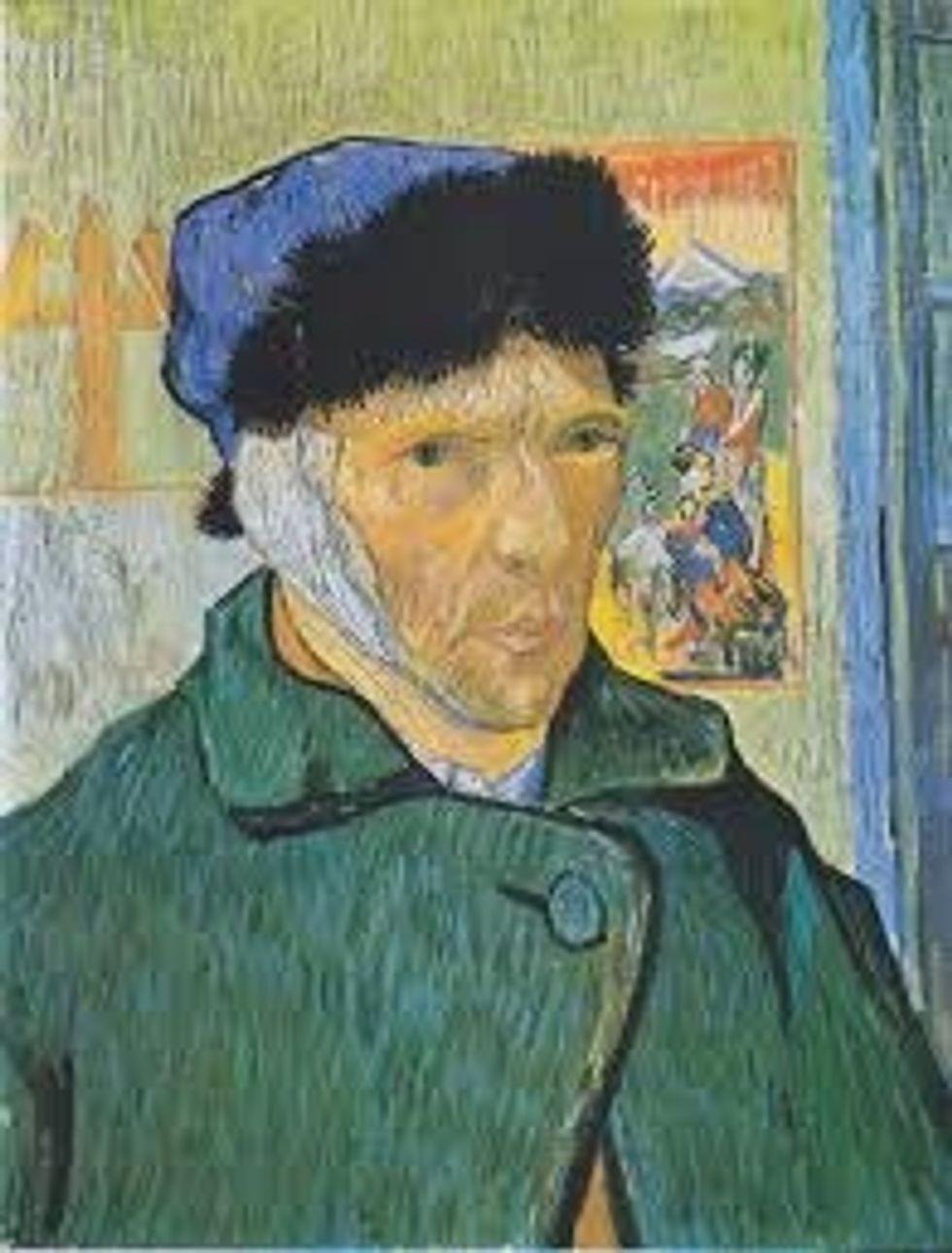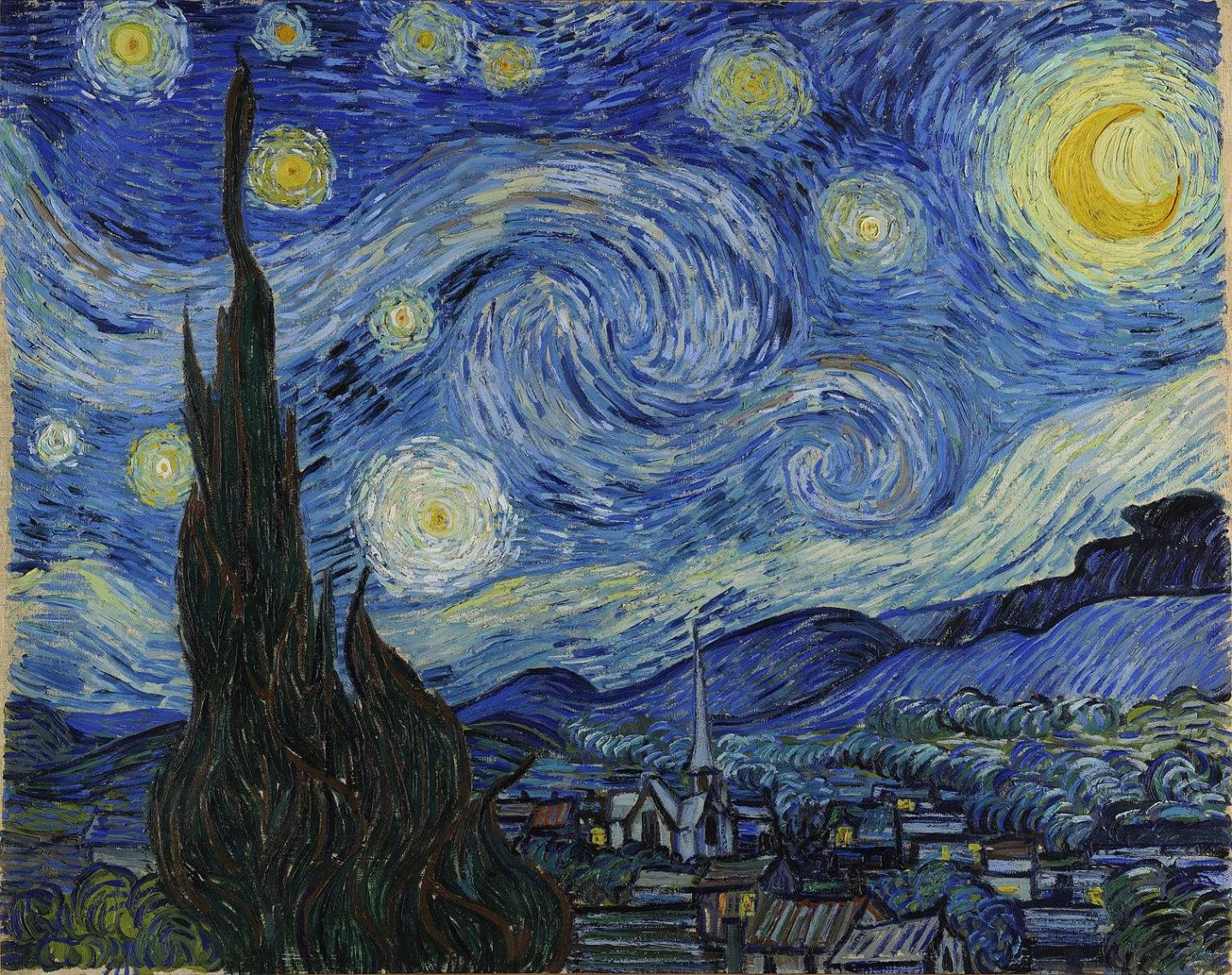
In 125 years, millions of people have looked at this painting. No one really saw it until recently.

Van Gough never got to enjoy his own historic success as an artist (even though we've been able to imagine what that moment might have looked like). But it turns out that those of us who have appreciated his work have been missing out on some critical details for more than 100 years.


I'm not easily impressed, OK?

I know Van Gogh was a genius. If the point of this were "Van Gogh was a mad genius," I would not be sharing this with you.

But I found this and I thought, "Oh, what a vaguely interesting thing." And then I got to the part about the Hubble Space Telescope, and, let me tell you: Mind. Blown.

We've got the set up here, but you have to watch the video for the full effect. It's all the way at the bottom.

Get this: Van Gogh was a pretty cool artist (duh), but as it turns out...

...he was also A SCIENTIST!*

*Pretty much.

Here's the story.

While Van Gogh was in an asylum in France, after he mutilated his ear during a psychotic episode*...

(*Or, and I'd like to thank the entire Internet for pointing this out, there's a theory that his friend Paul Gauguin actually cut off his ear, in a drunken sword fight, in the dark. The more you know!)
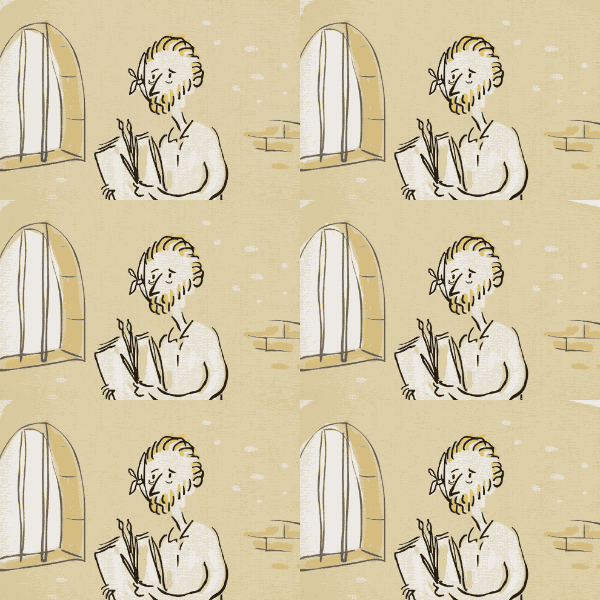
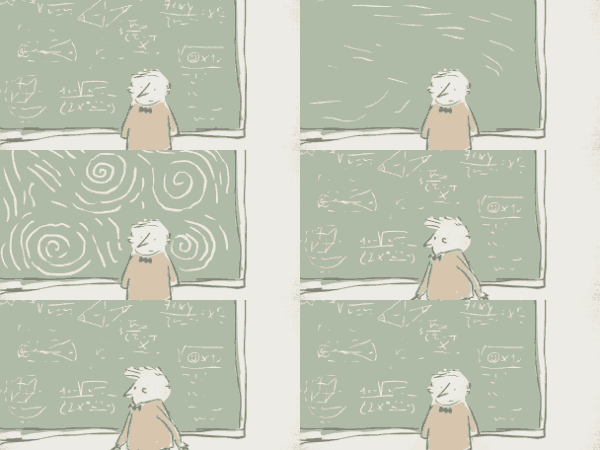
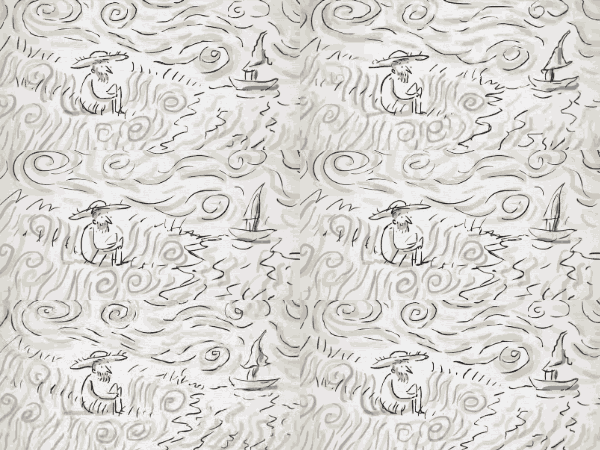
All Van Gogh GIFs via TED-Ed.

...he was able to capture one of science's most elusive concepts:

~~~TURBULENCE~~~
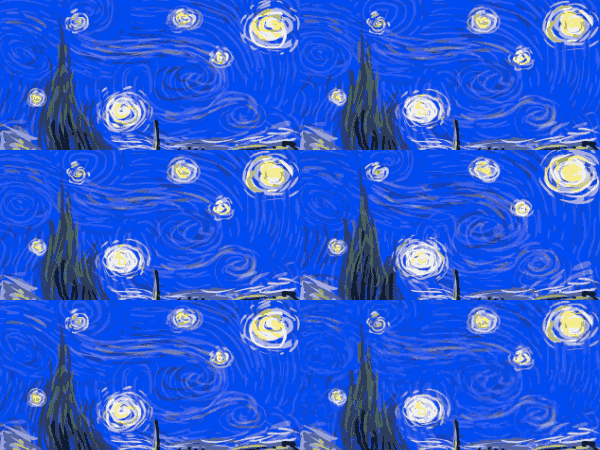
Although it's hard to understand with math (like, REALLY HARD), it turns out that art makes it easy to depict how it LOOKS.

So what is turbulence?

Turbulence, or turbulent flow, is a concept of fluid dynamics where fluid movements are "self-similar" when there's an energy cascade — so basically, big eddies make smaller eddies, and those make even smaller ones ... and so on and so forth.

It looks like this:

See? It's easier to look at pictures to understand it.

Thing is, scientists are pretty much *just* starting to figure this stuff out.
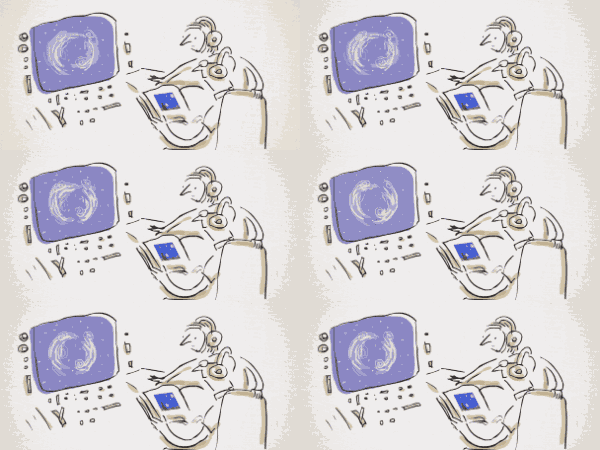
Then you've got Van Gogh, 100 years earlier, in his asylum, with a mutilated ear, who totally nailed it!
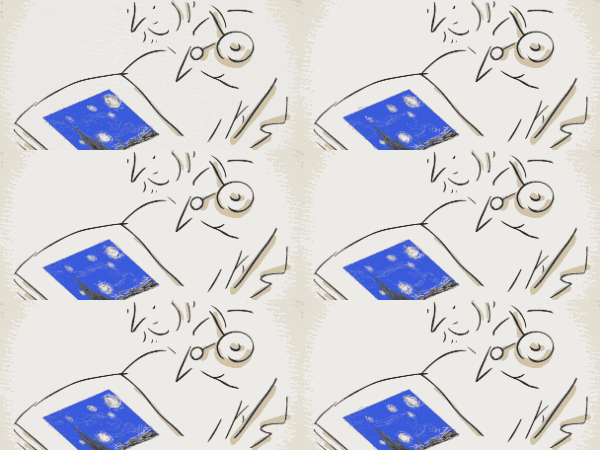
The folks who noticed Van Gogh's ability to capture turbulence checked to see whether other artists did the same. Most impressionists achieved " luminance" with their art (which is the sort-of *pulsing* you see when you look at their paintings that really shows what light looks like).

But did other artists depict turbulence the way Van Gogh did?

NOPE.
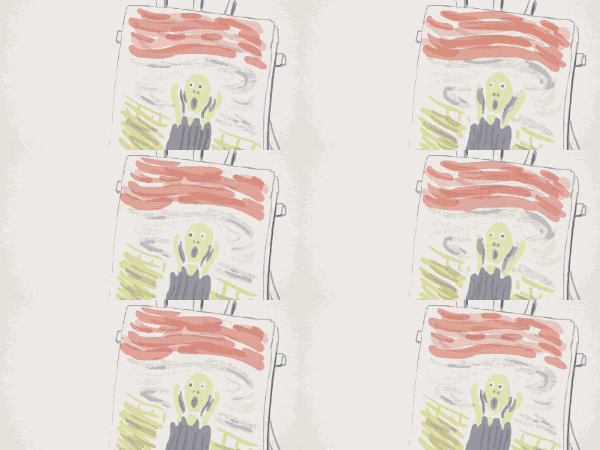
Not even "The Scream" could hold a candle to Van Gogh!

Even in his darkest time, Van Gogh was able to capture — eerily accurately — one of nature's most complex and confusing concepts ... 100 years before scientists had the technology to observe actual star turbulence and realize its similarity to fluid turbulence mathematics as well as Van Gogh's swirling sky.

Cool, huh?

Watch the video below to learn even more:

True

The average American produces nearly 5 pounds of waste material—cardboard, plastic, aluminum cans, and junk mail—each day. The United States creates significantly more garbage than the rest of the world (roughly 3 times more!), and we're running out of places to put it.

Most people are aware that recycling is important, but knowing exactly what and how to recycle properly can be confusing. Let's face it: we are, as a nation, stretched pretty thin in this particular moment; now we have one more thing to worry about? In a word, yes.

Don't worry though, because whether you're new to recycling or have been doing it for years, there is always something more to learn and endless ways you can help. To make saving the planet a little bit simpler, we compiled a list of small things you can do that will make a huge impact.

Acknowledgment. Most of us go about our day without thinking about the garbage we're producing, so simply tuning in to the choices we make is a big step forward. For example, online shopping increased dramatically in 2020, translating into a lot more cardboard boxes, plastic shopping bags, and Styrofoam takeout containers finding their way into households. That is a lot of trash!

Awareness. Buy from brands with a proven track record of environmental responsibility. Select foods in recyclable containers. Take the time to educate yourself on the best eco-friendly grocery stores in your area, and then... actually shop there.

Keep Reading Show less

As the election approaches and millions of Americans prepare to send in their ballots by mail, people might be worried about how it's going to go. Between the president's constant drum-beating about fraud with mail-in ballots (which experts still say is not the major concern that he claims it is) and the administration's ongoing attacks on the United States Postal Service, it's an understandable concern.

But never fear—America's favorite mail carrier, Newman, is here. And he has an important message for all of us regarding the postal service and the election, and a message for President Trump regarding his tax returns.

Keep Reading Show less
Photo courtesy of Lily Read
True

Now more than ever, teachers are America's unsung heroes. They are taking on the overwhelming task of not only educating our children but finding creative and effective ways to do it in an unpredictable virtual learning environment.

Lily Read and Justin Bernard, two Massachusetts educators from one of the most diverse public high schools in the U.S. (over 25 different languages are spoken in the student body!), feel ready to meet the challenges of this unprecedented school year. Their goal: find ways to make virtual education "as joyful as possible" to help support teenagers during quarantine.

"Our school is very economically, racially, and linguistically diverse," said Read, "which means meeting the needs for all those students is incredibly complex." That wide range of diversity means that they spend a lot of time in professional development, preparing to meet students where they are. This summer, educators in their district spent weeks learning everything from how to provide emotional and social support via virtual platforms, to meeting 504 plans and Individual Educational Plans for disabled students virtually, to mastering the various online programs necessary for instruction.

Bernard, now in his fifth year of teaching, also coaches the high school football team. Prior to the pandemic, there were clear expectations for student athletes, with clear goals and incentives to keep their grades up. Now, Bernard is concerned that student athletes will begin to fall through the cracks without the structure of physically going to school each day, and he is on a mission to do everything he can to keep that from happening.

Keep Reading Show less

I saw this poster today and I was going to just let it go, but then I kept feeling tugged to say something.

Melanie Cholish/Facebook

While this poster is great to bring attention to the issue of child trafficking, it is a "shocking" picture of a young girl tied up. It has that dark gritty feeling. I picture her in a basement tied to a dripping pipe.

While that sounds awful, it's important to know that trafficking children in the US is not all of that. I can't say it never is—I don't know. What I do know is most young trafficked children aren't sitting in a basement tied up. They have families, and someone—usually in their family—is trafficking them.

Keep Reading Show less
via Foleyfriends / TikTok

The president's words matter. In what appears to be the waning days of the Trump presidency, they seem to matter less and less but there are still millions of people who mistakenly take his words as gospel.

A poll from last month found that two-thirds of Americans don't trust Trump when it comes to the pandemic. But that still means millions will follow his advice. The frightening thing is that during a pandemic, bad advice can mean the difference between life or death.

On Monday, after returning from Walter Reed Medical Center where he was being treated for COVID-19, President Trump sent out an irresponsible tweet urging Americans to be less concerned with the deadly virus.

A virus that is spreading like wildfire through his administration and their contacts.

Keep Reading Show less