There is one event no living being can escape, and that’s death. Since the dawn of time, religious leaders and philosophers have helped many attempt to understand dying through different lenses. Of course, it has also been studied from a medical and scientific standpoint, and what the data continues to show is truly captivating.
Hospice physician and neurologist Dr. Christopher Kerr, MD, PhD, recently appeared on The Oprah Podcast to discuss his experiences with people as they neared their last breath. After interviewing over 1,500 patients described as being in “lucid” mental states, he has discovered a common theme among the memories of their dreams.
Letting go
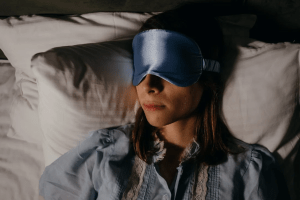
First, Kerr shares how low-key the process actually is. “It’s more anti-climactic than climactic. Dying is a state of progressive sleep and of letting go. It’s very hard to die, in fact, if you’re not physically comfortable, as well as psychologically at peace. And so people get deeper in sleep, and death happens in that state. You usually see it coming, and there usually just isn’t a ‘next breath.’”
When Winfrey questions this, Kerr reiterates, “So people can’t die in a wake state. They die in the depths of sleep. And you can’t get there unless you’re comfortable. And everyone seems to have an understanding of that from a physical standpoint. But psychologically, existentially, you also have to find peace.”
Forgiveness and love
Winfrey then reads a beautiful passage from Kerr’s book, Death Is But a Dream. “End-of-life experiences testify to our greatest need to love and be loved,” she reads. “To be nurtured and feel connected. To be remembered and forgiven. They provide continuity between and across lives. Based on the content of these dreams, it’s obvious that the forgiveness and love that count the most come from family.”
Kerr shares, “When we measured this with patients, we’d give them a questionnaire every day before death and they had a menu list to choose from. The most common thing they would dream about is seeing their deceased loved ones. And it wasn’t just anybody. It was those that loved and secured the most. So there’s almost this form of final justice. If somebody withheld love, one parent, they were excluded, but the one who nurtured and loved and secured was included.”
He gives more examples, sharing, “Maybe one sibling and not two. We even had people who had multiple spouses. They loved the second, not one and three; the second one appears. So it’s very conditioned on that.”
‘The people show up who loved you’
To this, Winfrey shares her understanding. She says, “The people show up who loved you.” Kerr responds, “Yes. And it had a pivotal role in the formation of who you were. And in that sense, in the end, you’re almost put back together by being brought back to family. Overwhelmingly, 88% rated them (the dreams) comforting.
And in the dying process, it was fascinating. The closer they got to death, the more likely they were to see the deceased who had passed. And those were the ones who, when they were measured on comfort, gave them the greatest comfort. Really what’s happening is the life gets affirmed. None of these deny death. They just affirm life and, in doing so, lessen the fear of dying.”

Time and again, Kerr admits that hospice workers, not necessarily trained doctors, were the best at assessing when death would arrive. “The question of that came because the nurses that I was working with at hospice were so able to predict or prognosticate,” Kerr shares. “I had no clue. I mean, this is not something you learn in medical school.”
Winfrey had a similar experience. She shared, “That’s exactly what happened. When my father passed, the doctors were saying one thing and the hospice nurse said, ‘Your father is going to leave this world within a week.’”
Humbling the medical field
Kerr’s staff was humbled knowing how intuitive many of the hospice nurses seemed to be. “It’s the inability to recognize dying in totality. So in medicine, you think of dying in terms of organ systems and failure. People die in whole, not in parts, and the people at the bedside (the nurses, pastoral care), they could see this for what it was.”
When asked what the signs are that these hospice workers see, it comes back to dreams and visions of loved ones. Kerr, again, shares that our bodies go into a sleeping state. “So again, that’s happening in the context of sleep. So you’re sleeping more and, within the sleep state, more and more you’re immersed in these experiences.
Being loved and having mattered, those things are still there. They’re tangent to you. They’re proximate. And time and distance seem to go away. So, you can be 95 years old and lost your mother when you were five, but it’s her voice you hear. You smell the perfume. You’re put back together. And again, this feels virtual to the patient. It feels real.”
Are they dreams?
This is where dreams and experiences cross over. Winfrey points out that Kerr prefers using terms like “end-of-life” rather than dreams. He replies, “I think, in part, it’s because our job was to translate the words and experiences of our patients. What they tell us is typically, ‘I don’t normally dream.’ ‘I don’t remember my dream.’ ‘No, no, this was different. This was a virtual.’ They say, ‘This was happening.’ Sometimes they actually get offended when you imply that it was a dream.
And there’s no symbolism, they’re not a metaphor. Very little is said between the person in the dream and the dreamer, but everything seems to be understood. And what I think is most fascinating, I’ve been doing it for 27 years. I’ve never had a patient ask me, ‘What do you think this means?’ Ah, so there’s no space for analysis because they know what it means.”