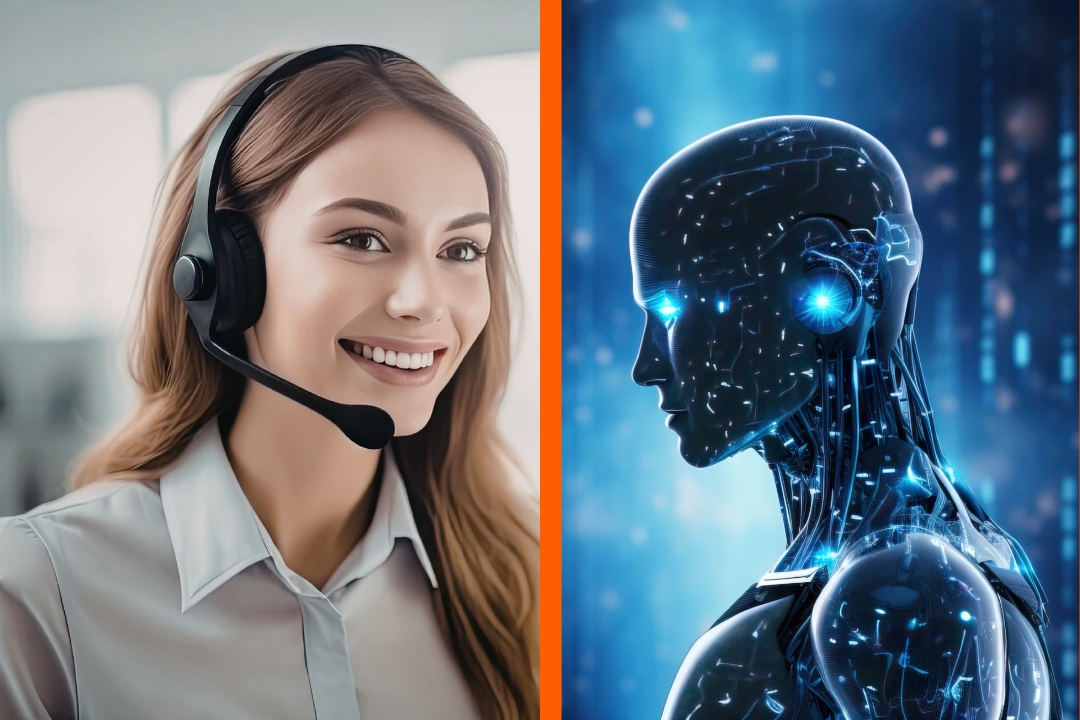
Like it or not, AI technology is almost certainly here to stay. While that might bring new conveniences we never thought possible, it still causes many to stress out over range of topics from our careers to existential level threats.
In a segment for New Normal entitled, “Is Human Connection the New Job Security?” for BBC Global, journalist Katty Kay delves into the idea of job security in this new age. She first recalls a chat she had in 2023 with her old pal, Dermalogica Skincare founder Jane Wurwand.
High touch vs. high tech
In just two words, the corporate mogul had the antidote to “high tech,” and it was really quite simple. She told Kay, “The equal and opposite reaction to ‘high tech’ is ‘high touch.’” She explains that it’s “service-oriented businesses where humans are doing things that humans do best. Cooking. Caring. Touching. Kindness. Compassion. Talking. I’m not just in the business of skincare products. I’m in the business of human connection.”
Kay reconnects with Wurwand over a video chat a few years later to find out if she still feels the “high touch” concept is possible now that AI has advanced. “It’s not confined to physical touch, your concept of high tech/high touch. It’s also about this broader idea of just having a human voice when you call.” (Kay gives the example of having to call tech support if your Wi-Fi has gone out.)
The human being industry
Kay then asks, “Give us some tangible thoughts on which are the high-touch jobs and areas of employment you think survive this rapidly growing technology that may take other jobs away?”
Wurwand replies confidently, “The jobs that I see that are going to be booming…and really can’t be replaced. Hospitality. Travel. Anything in the human being industry.”
She discusses the importance of true empathy, something that can’t be substituted by a robot. “If you are receiving a cancer diagnosis, goodness forbid, an AI bot might have found or detected that rogue cell, but you certainly don’t want that bot talking to you or giving you that diagnosis. You want someone with kindness, empathy, and to hold your hand and literally say, ‘We’ve got a plan. We’re going to execute on it.’”

Wurwand gives other examples, as well, essentially suggesting “high touch” can be applied anywhere, including tech jobs. “Whether you’re working in retail, whether you’re working in an industry that is full of technology, what we can bring as humans that makes the workplace, that business, that space kind, empathetic, that you feel seen, you feel heard, that you matter, that somebody knows a little bit about your life so that you can chat and talk.
A new social contract
Kay brings up the insightful point that many, especially younger people in today’s society, feel threatened and disillusioned. “Many felt there was this kind of social contract, where you get educated, you pay an enormous amount of money to go to a university or tertiary education, and then you come out and actually there aren’t jobs because the jobs have been taken.”
She also points out the frustration some might feel from having been told if they’d only learned to “code” they’d be fine. They then entered the workforce to find out lots of those jobs have been taken over, as well. Kay asks, “What do you say to the graduate who has a degree in accounting or coding?”
Wurwand reiterates that “high touch” is still important, even in accounting or coding jobs. “You’re not gonna compete with a robot. We don’t have those same skills. We don’t have that ‘code’ in our head. You have everything else that is needed by other humans. So we have to take the strength and move with it.”
She points out that we shouldn’t be so quick to label. “We shouldn’t box things into that’s ‘tech’ and this is ‘human.’ There has to be this connection.”
Genuine empathy
They both agree that those interpersonal skills—the ones that only human beings can truly have—must be nurtured in order to survive this AI flux. Wurwand gives the example: “Your first message of branding is that voice that answers the phone. And it doesn’t have to be in an office at a desk. It can be obviously remote. However, it has to be a double-down, delicious sort of person who sounds great and is kind and genuinely has empathy because we can hear or spot a fake in 30 seconds.”
Of course, the idea of good customer service isn’t exactly new. But it seems extra important right now given it’s seemingly being forgotten by so many major corporations.
In the article “9 Examples of High Touch,” for Simplicable, writer and IT tech John Spacey writes that it comes down to simply being human: “High touch is any business process that requires extensive human attention. These are typically areas where automation reduces the value of a process because humans add significant value to it.”
Aside from the aforementioned client services, Spacey also discusses the importance of having “personalized attention with every customer.” This includes, of course, listening to their needs and tailoring the experience directly to them when possible.